
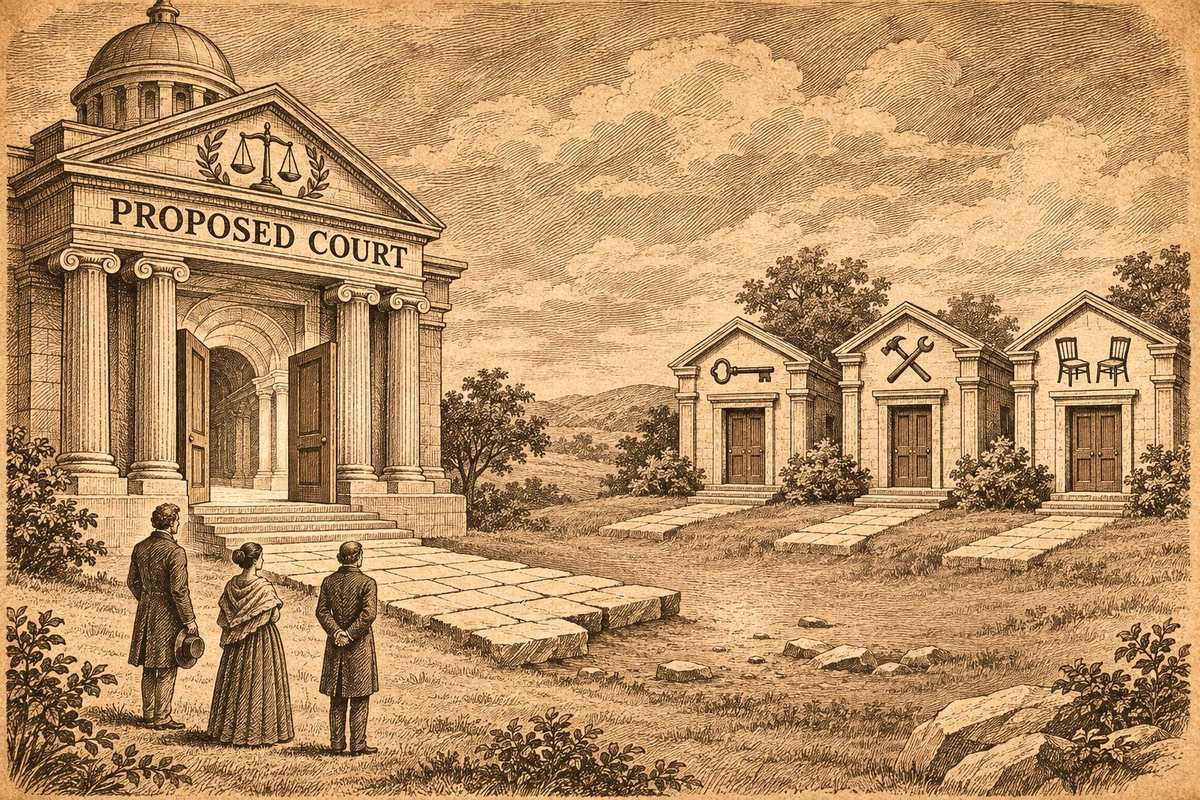
Aiken has taken a step toward a court designed for people experiencing homelessness. That is different from opening one, and different again from making sure participants can get the help it promises.
City Council supported moving forward Oct. 26, WRDW reported. The proposal still requires approval from South Carolina's chief justice. The station reported that a decision was expected in early December, with monthly sessions potentially beginning in 2027.
Under the plan described to WRDW, participation would be voluntary, the court would serve the city rather than all of Aiken County, and eligible charges would carry penalties of 30 days or less. Trespassing was one example.
The reported operating estimate is $50,000 to $60,000 annually, with roughly $30,000 available from the previous year's budget to get started. Those are planning figures, not evidence that a full year's services are funded or that the court has begun accepting cases.
The next questions are practical: Who will take referrals? How many people can receive help? What happens when an appointment, a ride or a place to stay is unavailable?
A new statewide framework
Three days before the council action, Chief Justice John Kittredge approved state treatment-court standards that expressly include homeless courts. His Oct. 23 order calls them guiding principles and recognizes that implementation will be gradual, shaped by local resources.
The standards address partner agreements, written eligibility rules, qualified treatment providers and caseloads matched to capacity. They also describe a participant handbook explaining expectations, sanctions, graduation and termination, and defense counsel's role in explaining rights and alternatives.
Housing support, transportation and employment assistance appear among services programs should make reasonable efforts to connect people with. The framework also calls for tracking participation and outcomes while protecting confidentiality.
That is a useful checklist for assessing Aiken's eventual plan. It is not proof that those arrangements already exist locally, nor a basis for assuming every statewide provision can be implemented immediately.
Voluntary does not answer every question
An important detail is what happens to the underlying charge when someone leaves or cannot finish.
For comparison, the Supreme Court's 2023 order establishing Greenville's homeless court directs unfinished or voluntarily withdrawn cases back to municipal court for disposition. That is Greenville's rule, not a verified term of Aiken's proposal. It shows why the local agreement and any eventual establishment order matter to participants as much as the program's name.
Aiken's full application, provider commitments and participant rules were not available in the materials reviewed for this story. Without them, the public cannot yet assess the complete service plan from this reporting.
The useful next measure is not simply whether the court receives approval. It is whether its approved design pairs clear legal choices with help people can actually reach, and identifies who is responsible for delivering it.