
The first consequence of the Democratic victory is a change in who can demand answers in Washington. The harder consequence to deliver will be a change in what Americans pay to live.
Democrats won control of both chambers in Tuesday’s midterms. The Associated Press called the Senate at 11:36 p.m. Eastern on Nov. 3 and the House at 1:24 a.m. Nov. 4. Those calls establish the news organization’s judgment about the outcome, not an official certification or a final seat count.
GCG’s election roundup traced the changes on the map. The next question concerns the machinery of government: which powers change hands, which remain with President Donald Trump, and what voters can reasonably expect from divided government.
The answer starts with a distinction between investigating an administration, blocking its proposals and enacting a replacement agenda. A congressional majority can do the first two far more readily than the third.
January, not election night
The new congressional terms begin at noon Jan. 3, 2027, under the 20th Amendment. Until then, the outgoing Congress remains in place. A victory speech does not transfer a committee chairmanship or give an incoming senator a vote.
That interval matters. Readers following legislation or nominations in November and December should check which Congress is acting. The people who won Tuesday will not necessarily be the people deciding an issue before January.
The change also leaves the presidency intact. Trump will still head the executive branch when the new majorities take office. Democratic leaders can assemble their own agenda, but they cannot treat the White House as a procedural inconvenience.
The power to ask, and insist
Oversight is where the election can produce a comparatively direct change. Committees can hold hearings, seek records and question how federal programs operate. The Congressional Research Service’s oversight manual explains that congressional investigations can include subpoenas for documents or testimony, subject to legal and procedural limits.
This gives a new majority ways to test an administration’s account against records and testimony. A hearing can examine whether a program is meeting its stated purpose, how an agency is spending money or why officials made a decision.
It also gives voters a way to judge the investigators. The useful questions are specific: What information was obtained? What did it establish? Did the committee identify a remedy, and did anyone implement it?
A televised confrontation may attract attention without answering any of those questions. Conversely, an unglamorous examination of contracts or administrative delays may reveal something worth changing.
Subpoenas have limits. CRS describes requirements for a valid legislative purpose, constitutional protections and disputes over compliance. A committee cannot assume that issuing a demand produces the requested material immediately. Oversight can create a public record; it cannot guarantee a quick result.
A different gate for nominees
The Senate has a separate power the House does not share: advice and consent on presidential nominations. The Constitution’s appointment framework divides responsibility between the president, who nominates, and the Senate, which considers whether to consent to covered appointments.
A Democratic Senate can therefore put a different test to Trump’s choices for judges and other offices requiring confirmation. Senators can demand explanations, scrutinize qualifications and withhold support.
That power does not let the Senate select and install its own Cabinet or judicial nominees. Nor does an election automatically undo appointments already made. The practical change is in the process future nominees must survive.
For voters, that makes personnel an important part of the result even when no new law passes. Who administers a statute or sits on a court can matter long after a particular congressional term ends.
Affordability meets the lawmaking process
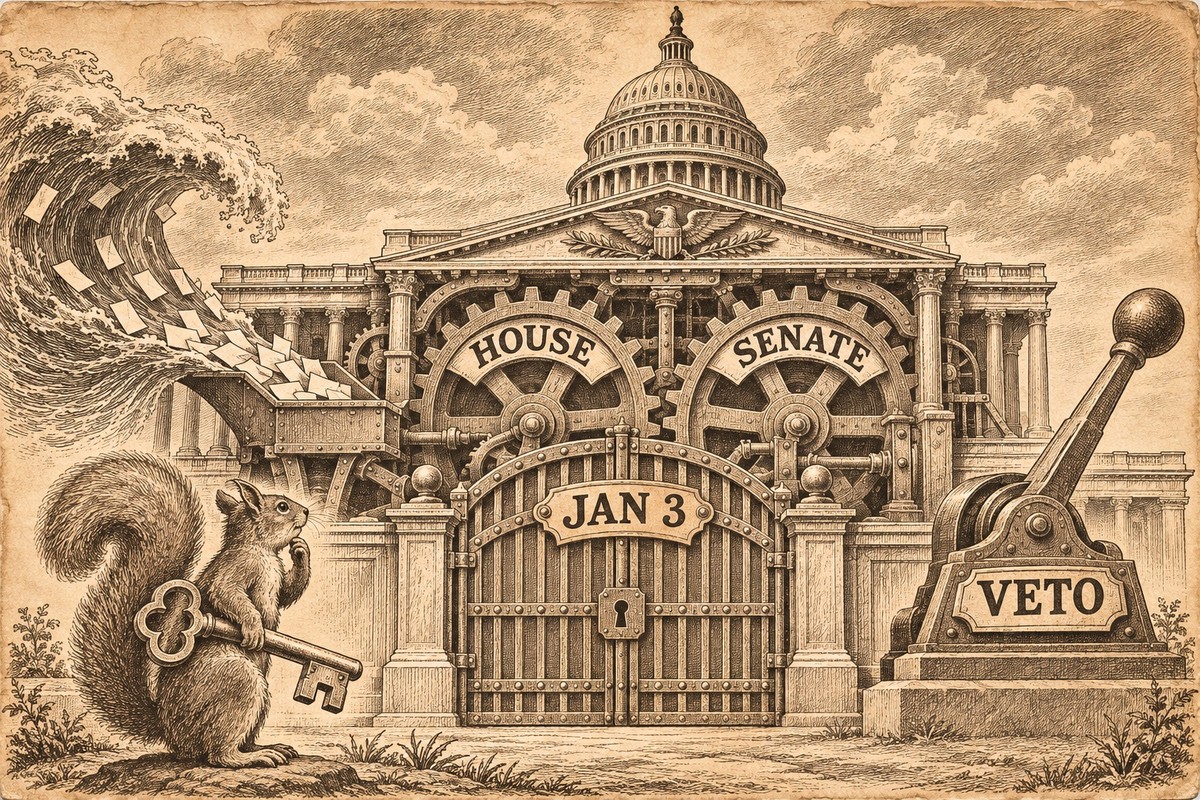
Changing health coverage, taxes or federal spending is a more difficult undertaking. Under Article I’s lawmaking rules, legislation must pass both chambers and go to the president. A veto can be overridden by two-thirds votes in each chamber. Winning a majority is not the same as assembling that support on a particular bill.
The Senate creates another hurdle. Its general cloture rule requires three-fifths of senators duly chosen and sworn, ordinarily 60, to end debate on most legislation. Exceptions and special procedures exist, so 60 is not the threshold for every Senate action. But a simple majority does not by itself remove every obstacle to a legislative program.
These rules make the details of an affordability promise essential. A proposal needs a defined benefit, a way to pay for it, enough votes and a route past a presidential veto or to presidential agreement.
For an Augusta-area household, the useful test is concrete. Would a measure change eligibility for help? Reduce an out-of-pocket expense? Alter a tax bill? When would the change take effect? A campaign commitment supplies none of those answers on its own.
The same discipline applies to claimed savings. Until there is legislative language and a credible estimate of its effects, a promised reduction in household costs remains a goal. It should not become a dollar figure in a family’s budget.
One majority, several arguments
Democrats will also have to agree among themselves. AP’s Nov. 5 account of the winning coalition described victories by progressives and moderates, with competing interpretations of the result. It reported that House Democratic leader Hakeem Jeffries identified reversing Medicaid cuts and extending Affordable Care Act tax credits as areas of agreement, rather than embracing Medicare for All in response to a question about it.
Those are statements of priority, not enacted changes. They illustrate a choice the new majority will face repeatedly: how much agreement is enough to put a proposal on the floor, and how much compromise is acceptable to turn it into law?
The first useful scorecard will be less dramatic than the election map. Watch the bills leaders actually introduce, the evidence committees produce, the nominees the Senate considers and the votes lawmakers cast when a proposal has real costs and trade-offs.
Tuesday settled who will hold congressional power in the next term. Whether that power delivers durable results will depend on decisions the winners have not yet made.