

Columbia County has identified its choice for the next county manager. The terms of the job are the next public question.
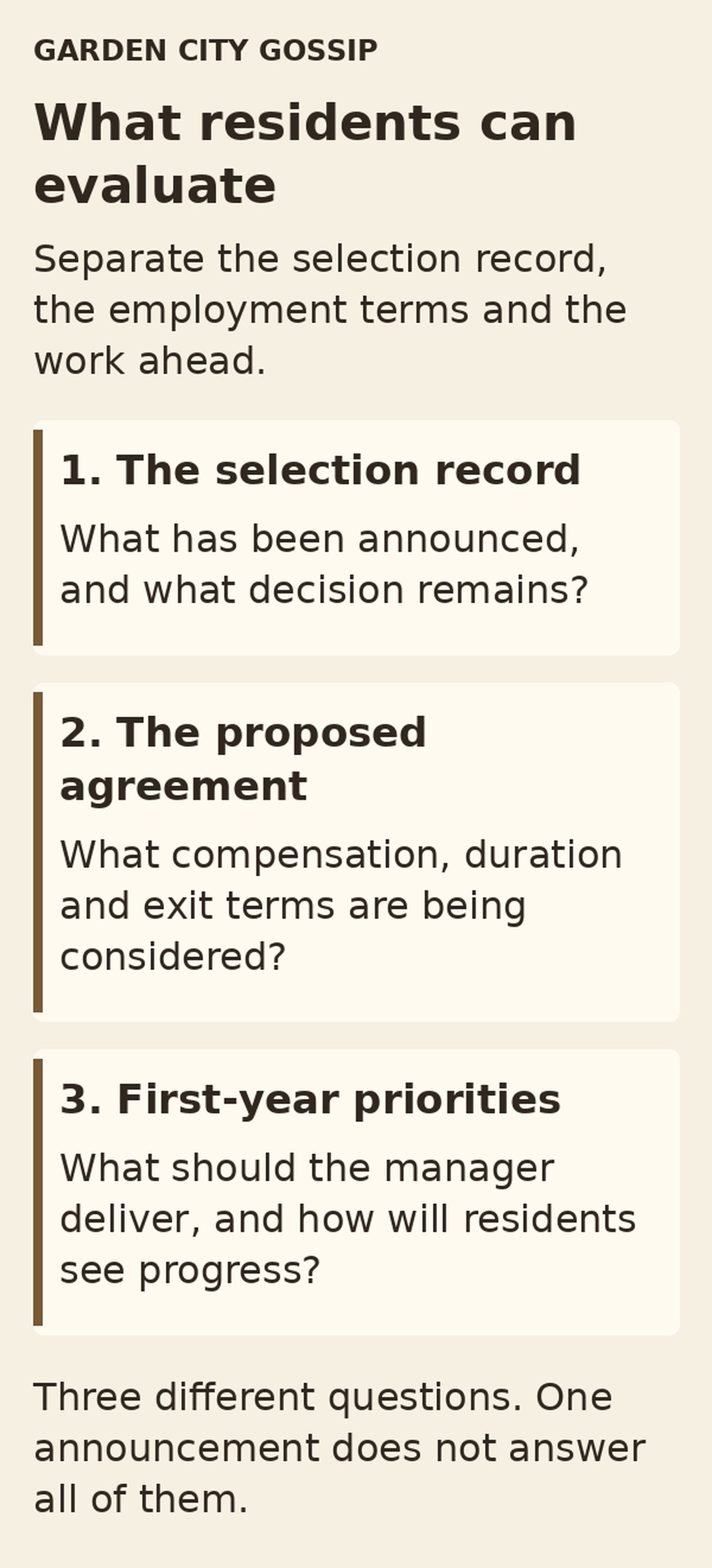
Near the end of the commission's November 3 meeting recording, Deputy County Manager Matt Schlachter was announced as the sole finalist. The announcement described an expected November 17 vote and contract negotiations between then and the vote. It did not announce a completed appointment or an agreed contract.
That sequence gives commissioners an opportunity to explain both decisions: why Schlachter is their choice, and what the county would commit to under the agreement. Residents should be able to evaluate compensation, exit terms and first-year expectations before commissioners make the appointment.
What the announcement establishes
The recording identifies Schlachter as a deputy with ten years in that role. The county administration directory, checked November 4, continues to list him as deputy county manager and Scott D. Johnson as county manager. WRDW's report also identifies Schlachter as the sole finalist and reports the anticipated November 17 confirmation.
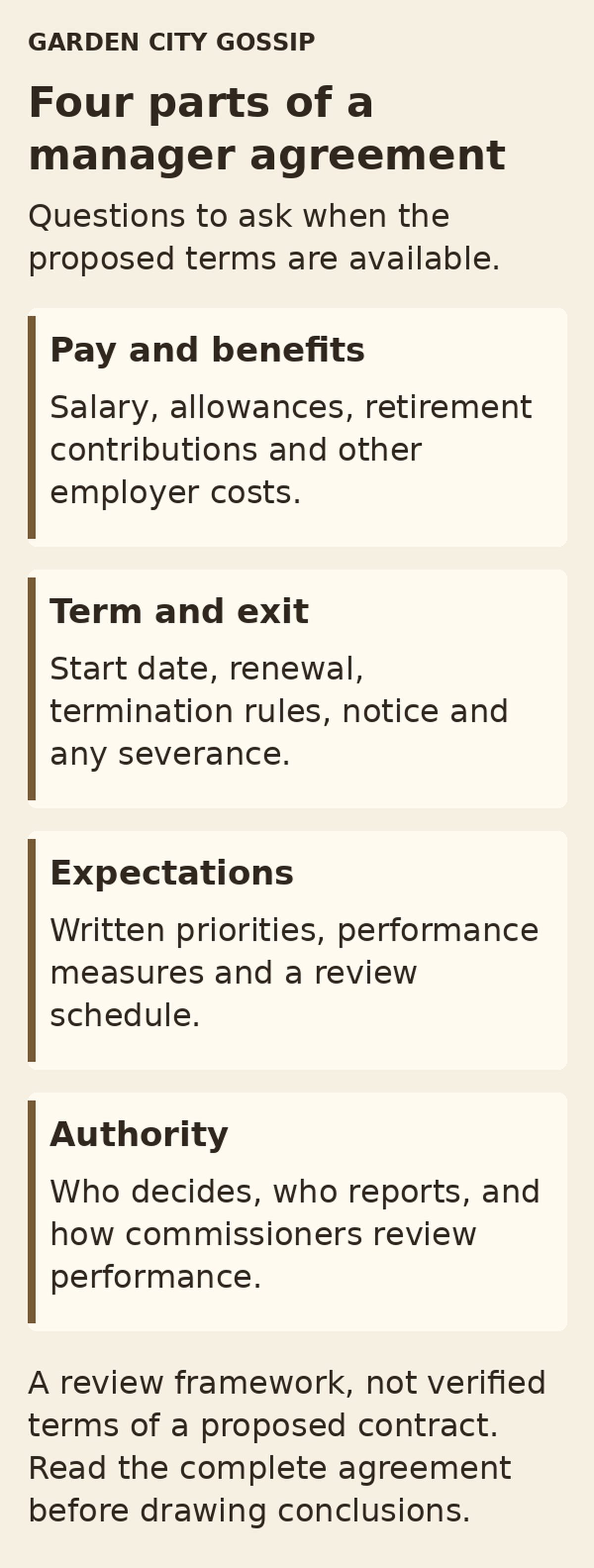
No proposed manager agreement was available in the materials reviewed for this article. Salary, benefits, contract duration and any severance provision remain unverified. The recording establishes the announced finalist and the expected next steps; it does not establish those financial commitments.
Schlachter's experience is relevant to the selection. A clear account of the proposed agreement would let residents consider the county's commitments alongside that experience.
Read the agreement as a whole
Salary will be the first number many readers look for. A useful account of the agreement would also identify allowances, employer retirement contributions and benefits that materially affect the county's cost. Recurring annual expenses should be distinguished from any one-time payment.
The agreement's duration and exit provisions deserve the same attention: its starting date, renewal rules, who can end it, required notice and any severance obligation. An annual salary and a payment owed only under specified termination conditions answer different questions. Adding them together without explaining the conditions could mislead readers; leaving either out could do the same.
Those are questions for the document when it is available. They are not claims that Schlachter has requested or received any particular benefit. A comparison with another manager's compensation would likewise need to account for differences in benefits and contract terms, rather than ranking salaries alone.
Put the first year in writing
The commission can also use this transition to describe what it expects the manager to deliver.
A first-year work plan could name a small set of priorities, the decisions commissioners expect to make and the information they want the manager to provide. Clear measures and reporting dates would help residents follow progress when costs change or work falls behind.
For a capital project, that could mean showing the original budget beside the current estimate, the major milestones and the decisions still unresolved. For a service goal, it could mean identifying the measure and how often the county will report it. These are proposed accountability practices, not commitments attributed to Schlachter.
Commissioners would still be responsible for their policy choices. A written work plan should help residents distinguish those choices from the manager's responsibility for carrying them out.
Give residents time to read
The expected November 17 vote is an opportunity to put the proposed agreement and priorities in front of residents with time to consider them. A plain-language explanation of significant terms would make that review more useful.
The announcement supplies a name and a timetable. The next step should supply the terms of the public commitment and a way to judge the work that follows.