
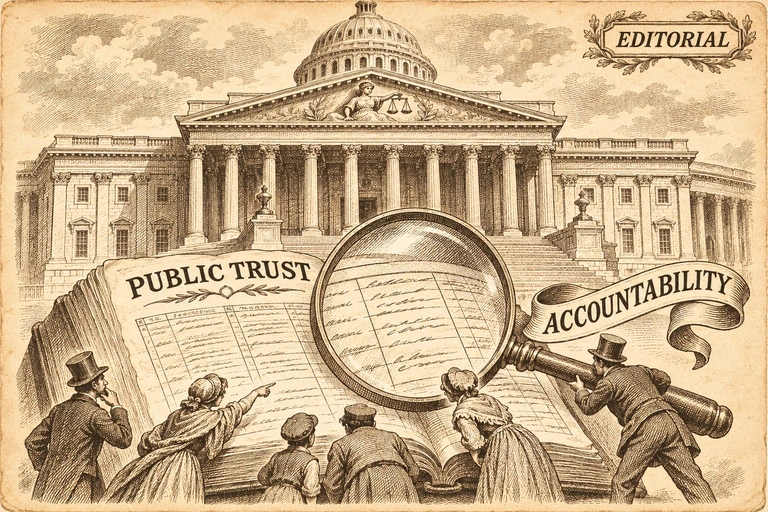
The most useful question in this Senate election is what public power is for. Does it protect people when institutions fail them? Does it make the essentials of ordinary life more secure? Does it insist that officials and contractors answer for what they do with public money?
Garden City Gossip endorses Jon Ossoff for reelection to the United States Senate because his record provides a serious answer to those questions.
Our endorsement rests on work that can be examined: investigations into institutional failure, bipartisan legislation, support for public investment, and a willingness to use government to reduce costs that households cannot negotiate away on their own. We believe that record is stronger than the case offered by his Republican opponent, U.S. Rep. Mike Collins.
The standard should be demanding. A senator has a vote, a staff, access to information, and a platform. The question is whether those resources become protection for the public or simply material for the next campaign.
The work behind the performance
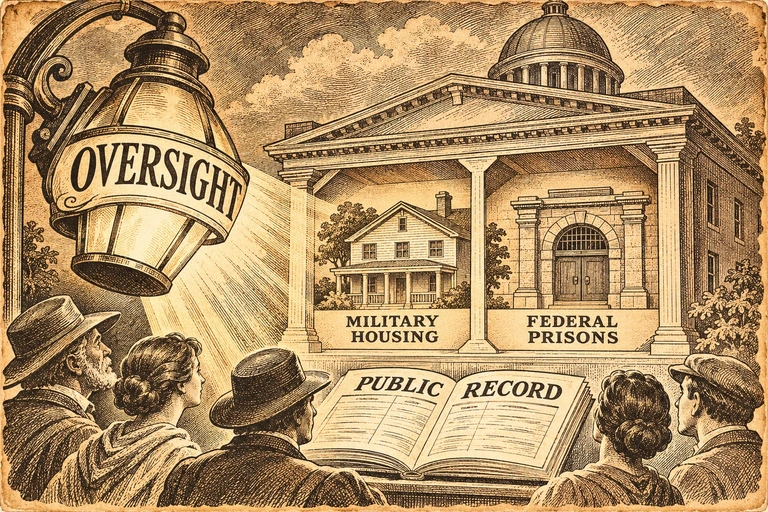
Consider military housing. Ossoff and Republican Sen. Ron Johnson led an eight-month investigation into privatized housing, then pressed the Defense Department for further action. The bipartisan inquiry reported serious failures involving housing conditions and the response to residents' complaints, including at Fort Gordon.
That is a recognizable problem well beyond any one installation: an institution promises a service, a contractor receives public money, and the people living with the failure struggle to make anyone answer. The Senate's investigative power exists partly to break that arrangement. Ossoff has shown that he is willing to use it.
His work on federal prisons follows the same principle. The Justice Department's inspector general credited Ossoff and a bipartisan group of lawmakers as the primary sponsors of the Federal Prison Oversight Act. Signed in July 2024, the law established a framework for independent inspections and an ombudsman.
Passing a law does not establish that every promised safeguard is working. Funding, implementation, and follow-through remain part of the job. But creating a means to examine closed institutions is a substantive achievement. Government's responsibility for safety and human dignity does not disappear when someone enters its custody.
These examples also give the word bipartisan some content. Cooperation is worth praising when it produces a useful investigation or a durable safeguard. It deserves less credit when it is merely an adjective in a campaign advertisement.
Public investment, honestly described
Ossoff voted for the bipartisan infrastructure legislation that passed the Senate in 2021. The vote reflected a sound premise: roads, transit, water systems, and other shared necessities require sustained public investment.
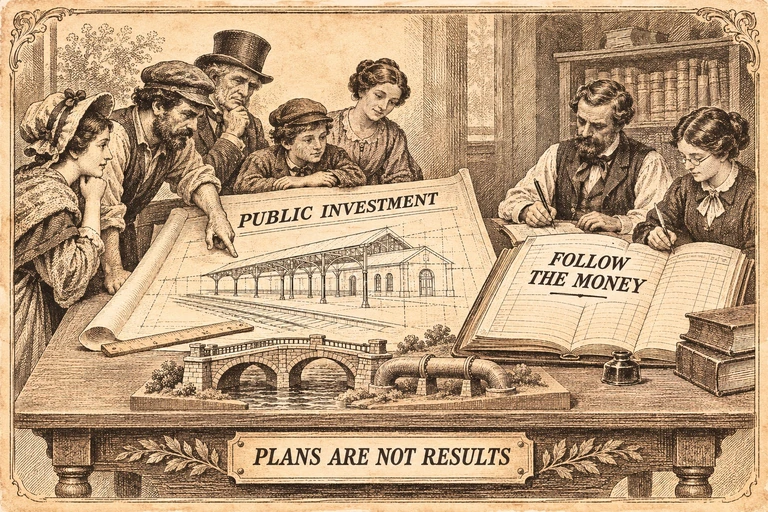
One local example is the $1.7 million federal award announced in 2024 for Augusta's Broad Street transfer-facility planning. Ossoff and Sen. Raphael Warnock announced the award together. A planning award is not a completed facility, and a senator does not personally construct a transit system. The achievement should be described accurately, with credit shared and delivery still subject to scrutiny.
That discipline makes the case stronger. Public investment is collective work. Congress authorizes and funds programs; agencies make decisions; local governments carry projects forward. A useful senator helps that machinery function and remains answerable for the results.
The same practical test applies to health care. Ossoff supported the Inflation Reduction Act. Among its concrete protections is the Medicare insulin cost limit: no more than $35 for a month's supply of each covered insulin product. That is a Medicare protection, not a universal cap for everyone who uses insulin.
The limitation matters. So does the gain. A policy can leave substantial work unfinished and still make an essential expense more manageable. We favor building on such protections rather than treating their incompleteness as an excuse to abandon them.
A choice, not a blank check
Collins deserves to have his positions described fairly. In the October debates, he defended the administration's tariffs, emphasized domestic energy production, and criticized the Affordable Care Act. Ossoff argued for reversing tariffs and Medicaid cuts. Those are documented policy differences, not differences we need to manufacture from personalities.
We find Ossoff's approach more persuasive. Affordable care and economic security require attention to the costs people actually bear, the protections available to them, and the power they possess when dealing with large institutions. Our preference is for a senator prepared to strengthen those protections and challenge an administration's choices, rather than presume that defending its agenda is the same as serving the public.
There are points of agreement worth acknowledging. Both candidates raised privacy concerns about automated license-plate readers. A fair endorsement does not require pretending that an opponent is wrong about everything. It requires explaining why, on balance, one candidate has earned the greater confidence.
Nor does endorsing Ossoff require surrendering judgment about his next vote. We expect him to defend due process, press for accessible health care, demand honest accounting of public investments, and pursue oversight even when the institution under examination is politically inconvenient to his own party. Promises of reform deserve follow-up. Announced funding deserves an accounting. Good intentions deserve questions.
This is an editorial judgment, separate from our news coverage and voter information. The obligation to report accurately, ask difficult questions, and correct mistakes applies to the candidate we endorse as fully as to the candidate we do not.
Ossoff has earned another term through a record of useful work and a stronger understanding of what government owes the public. He has not earned exemption from scrutiny.
The office belongs to the people. The next six years should be spent making its power answer to them.