Aiman Tariq – Regional News Editor
Spartanburg County, SC –
For decades, measles was considered largely eliminated in the United States. That success depended on something simple: most children were vaccinated before entering school.
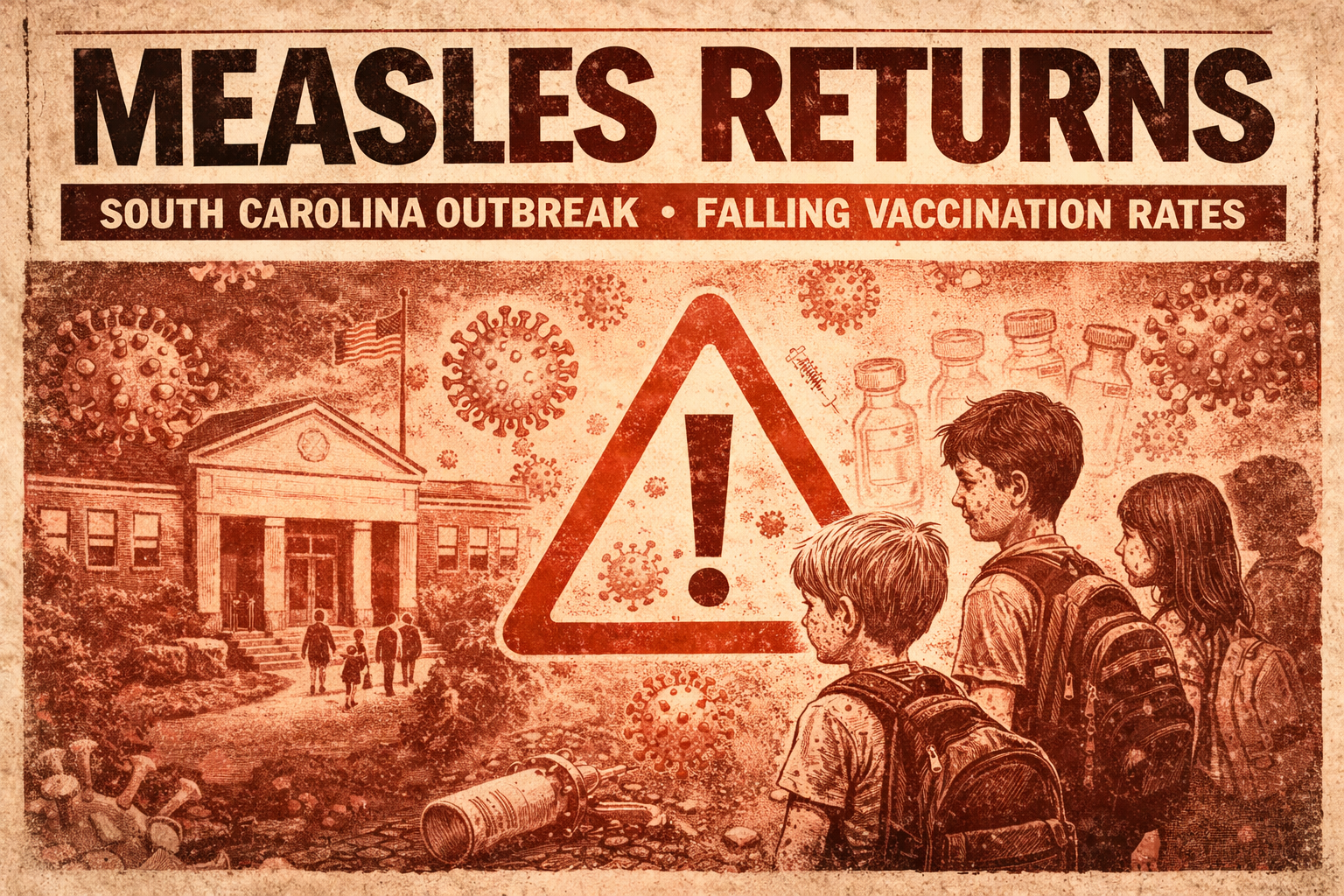
Now, public health officials say that protection is weakening in parts of the country. In Spartanburg County, South Carolina, a rapidly expanding outbreak has become the most significant measles resurgence the region has seen in more than two decades.
The story emerging from the area is complicated. Many parents believed they were protecting their children by avoiding vaccines. Instead, health officials say those decisions may have helped create conditions for a dangerous virus to spread again.
According to South Carolina public health authorities, the measles outbreak in South Carolina has grown to hundreds of cases concentrated around Spartanburg County, with most infections occurring among unvaccinated children.
Health officials say the situation illustrates a simple but difficult reality: measles spreads extremely easily when vaccination coverage drops below the level needed to stop transmission.
How a Local Outbreak Grew So Quickly?
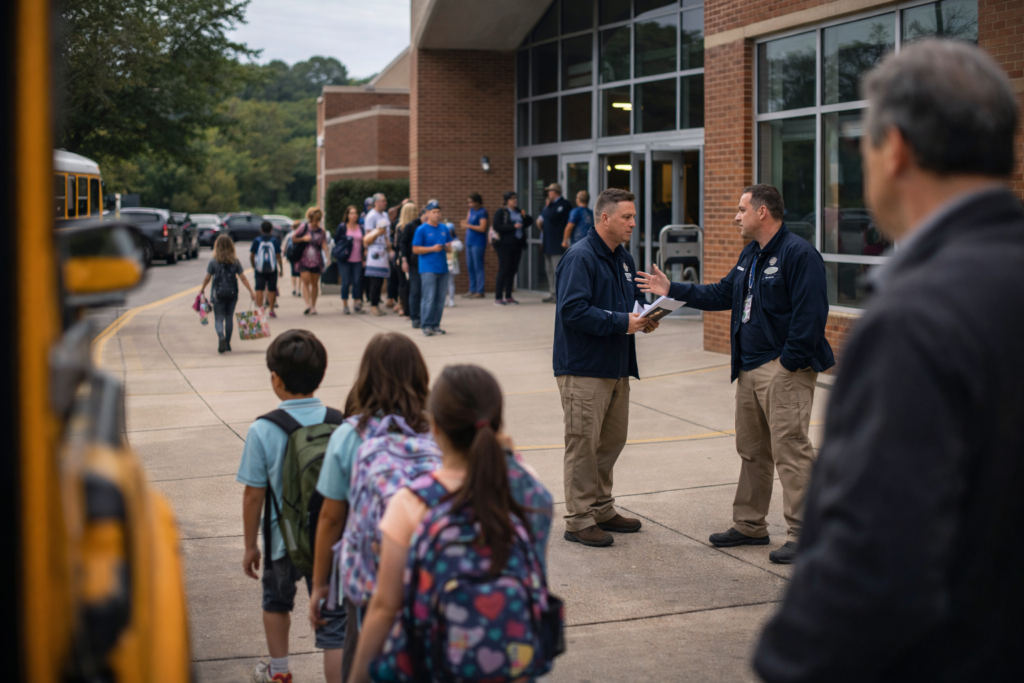
Spartanburg County has become the center of the current outbreak, with infections spreading through schools, churches, and public gathering places. Public health officials say exposures have occurred in everyday locations such as grocery stores, retail outlets, libraries, and restaurants.
One school frequently cited in reporting is the Global Academy of South Carolina, where only about 21 percent of students were vaccinated against measles — a level far below the threshold public health experts say is needed to prevent outbreaks.
That threshold is not arbitrary. According to the U.S. Centers for Disease Control and Prevention, measles typically requires vaccination coverage of about 95 percent to prevent community spread.
Spartanburg County’s current vaccination rate sits noticeably below that level. State health officials say the decline reflects a mix of factors, including rising exemption claims and growing vaccine skepticism following the COVID-19 pandemic.
The result is a situation public health experts say was once considered unlikely in the United States.
“This is not normal,” South Carolina epidemiologist Dr. Linda Bell said during a recent briefing about the outbreak.
The Role of Vaccination Coverage
Measles was declared eliminated in the United States in 2000 after years of widespread childhood immunization. That success relied heavily on the measles vaccine, which public health researchers say is about 97 percent effective after two doses.
But elimination does not mean the virus disappears permanently. It means the virus no longer circulates continuously in the country.
When vaccination rates fall, imported cases can reignite transmission.
In Spartanburg County, officials say that appears to be what happened.
Statewide vaccination coverage for kindergarten students in South Carolina has dropped in recent years. According to CDC reporting, coverage declined from roughly 95 percent in the 2019–2020 school year to about 91 percent in 2024–2025.
Those changes may seem small, but epidemiologists say they can make a meaningful difference in how easily the virus spreads.
Exemptions and the “Save the Childhood” Movement
One factor health officials point to is the growing number of parents seeking exemptions from school vaccine requirements.
South Carolina law allows religious exemptions for childhood immunizations. Parents can sign a form stating that vaccination conflicts with their beliefs.
In Spartanburg County, the number of those exemptions has more than doubled in recent years, rising from about 4.5 percent to nearly 9.6 percent of students.
Some advocacy groups promoting vaccine skepticism — including campaigns that use slogans such as save the childhood — argue that parents should have greater control over medical decisions for their children.
Public health experts say the debate often overlooks a key issue: vaccines protect not only individual children but entire communities.
When enough families opt out, the protective barrier known as herd immunity weakens.
That appears to be what happened in this outbreak.
Why Measles Remain Dangerous?
Measles is often remembered as a childhood illness marked by fever and rash. But doctors emphasize that the virus can cause serious complications.
Those complications can include pneumonia, brain swelling known as encephalitis, and long-term neurological damage.
The measles death rate in developed countries is relatively low compared with many historical infectious diseases, but it is not zero. Public health researchers estimate that one to three deaths occur for every 1,000 measles cases in high-income countries.
Children younger than five and adults older than twenty are considered at highest risk of severe complications.
During the current outbreak, officials say two children developed measles encephalitis, a rare but dangerous inflammation of the brain.
Those cases have intensified concern among health authorities trying to contain the spread.
What Parents Need to Know About Vaccination Timing?
Pediatricians say one challenge in outbreak situations is confusion about when children should receive their shots.
The recommended measles vaccine age schedule is relatively straightforward.
The CDC advises that children receive the first dose of the measles-mumps-rubella (MMR) vaccine at 12 to 15 months of age, followed by a second dose between 4 and 6 years old.
During outbreaks, doctors sometimes recommend early vaccination for infants traveling internationally or living in high-risk areas.
Still, vaccination decisions remain deeply personal for many families.
Doctors say the most effective approach is not confrontation but conversation.
“You have to listen,” said Dr. Joshua Brownlee, a pediatrician in South Carolina, speaking about how physicians talk with vaccine-hesitant parents. “You can’t be too finger-waggy.”
A Shift in Attitudes — Slowly
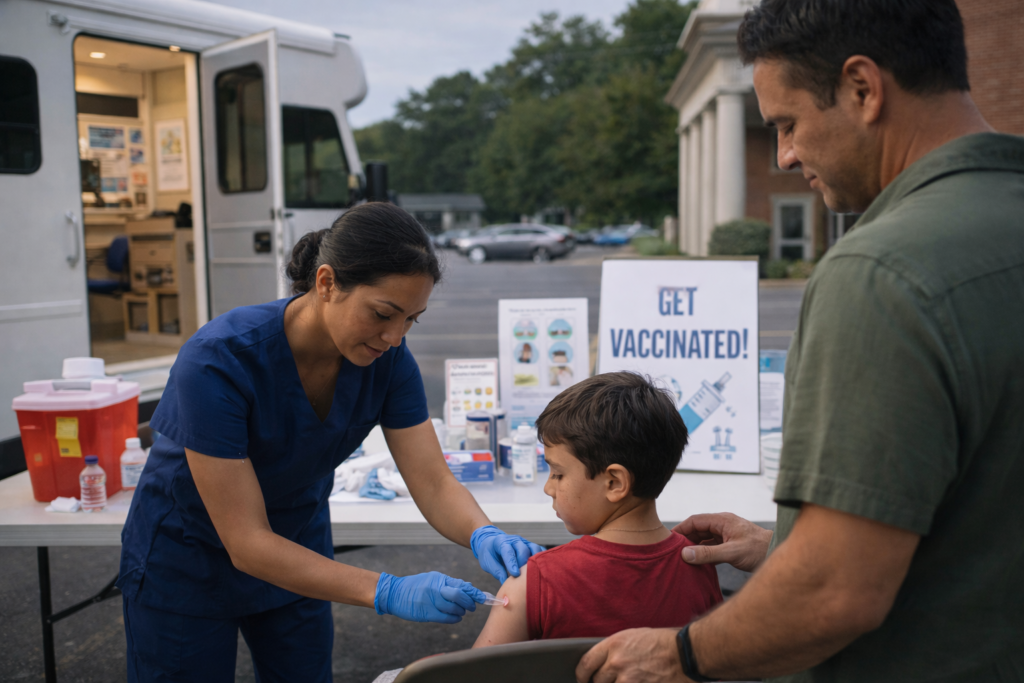
Despite the growing outbreak, health officials say there are signs that attitudes may be shifting.
State vaccination data show that more than 16,800 doses of the MMR vaccine were administered in South Carolina in January 2026, an increase of more than 40 percent compared with January 2025.
In Spartanburg County specifically, vaccinations increased by 162 percent during the same period.
Doctors say that surge suggests that some parents are reconsidering earlier decisions.
In one community vaccination event outside a church in Inman, South Carolina, a mother brought her five-year-old twins to receive vaccines after initially delaying them.
She told health workers she now believed vaccination was important not only for her children but for others around them.
What Happens Next
Public health experts warn that measles outbreaks can expand quickly but also fade once vaccination rates climb again.
That outcome is far from guaranteed. Outbreaks tend to persist where clusters of unvaccinated people remain.
Officials say that is why the current outbreak continues to receive attention from epidemiologists nationwide.
Health experts also note that what is happening in Spartanburg may not remain isolated. Similar patterns of declining vaccination coverage have been documented in several states.
Readers following this issue may recall earlier reporting on how the outbreak first began spreading in South Carolina communities and why officials warned it could persist if vaccination levels remained low. That earlier coverage offers additional context about how the situation developed and why public health officials were already concerned.
The Bottom Line
The outbreak unfolding in Spartanburg County highlights how quickly measles can return when vaccination coverage falls.
Health officials say the situation is not simply about one school or one county. It reflects a broader shift in public attitudes toward vaccines and exemptions.
For decades, the United States relied on high immunization rates to keep measles from spreading. When that protection weakens, the virus can find openings.
The current measles outbreak in South Carolina shows how quickly that can happen — and how difficult it can be to reverse once transmission begins.
Public health officials say the solution remains the same one that eliminated measles more than two decades ago: widespread vaccination and sustained community protection.