by Publisher
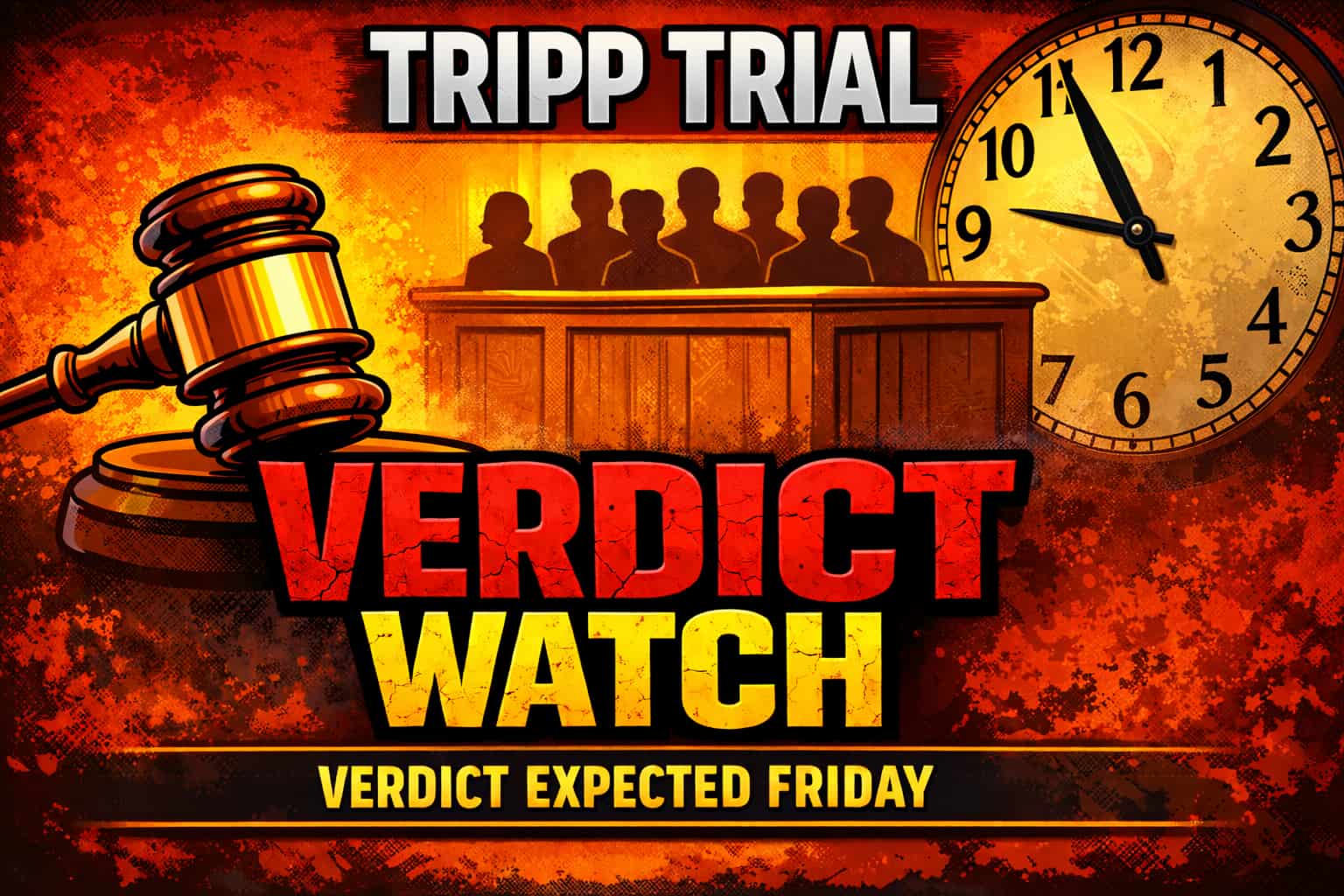
AUGUSTA, Ga. — After nearly nine years of delay, weeks of testimony, and a final round of hard-fought closing arguments, the fate of Leon and Tanya Tripp is now in the hands of a Richmond County jury.
Jurors deliberated for several hours Thursday after closing arguments wrapped in the trial over the death of 16-year-old Janell Carwell, then broke for the day. They are set to return Friday morning to continue deliberations. Garden City Gossip expects a verdict by the end of the day.
When it comes, the verdict will bring a first legal answer in one of Augusta’s most haunting criminal cases — but it may not settle the questions that have followed this case since Janelle vanished on her 16th birthday in 2017.
Public reports Thursday confirmed that closing arguments had ended and the case had gone to the jury.
What the closings made clear is that this trial ultimately comes down to one central fight: whether the jury believes the defendants’ lies and conduct after Janelle’s disappearance are enough to prove murder beyond a reasonable doubt.
For the prosecution, this is a case about coordinated deception, concealment, and guilt.
For the defense, it is a case about suspicion standing in for proof.
That tension has been there from the beginning, but closing arguments stripped the case down to its rawest form.
The state’s final theory was broad and aggressive. Prosecutors urged jurors to see the false stories, shifting explanations, suspicious movements, and post-disappearance conduct of Leon and Tanya Tripp not as side details, but as the real evidence tying them to Janelle’s death. The state’s argument, in essence, was that the many unanswered forensic questions exist because the truth was hidden so effectively.
That is the prosecution’s strongest argument, and it is not a small one.
This has never been a case built around a clean forensic narrative. The state has had to ask jurors to draw meaning from behavior: from what was said, what changed, what didn’t make sense, and what prosecutors say points unmistakably toward a cover-up. The state’s closing argued that jurors should not let the defendants benefit from uncertainty created by concealment itself.
If jurors accept that framing, the prosecution has a path to conviction even without a tidy scientific explanation for every part of Janelle’s death.
But the defense closings highlighted the danger in that theory just as clearly.
Leon Tripp’s lawyer leaned hard into reasonable doubt, arguing that the state still cannot prove the most basic mechanics of the alleged murder: how Janelle died, when exactly she died, where she was killed, or who actually killed her. His defense argued that prosecutors spent much of the trial asking jurors to fill in evidentiary gaps with speculation. The message was simple and forceful: a person can be suspicious, dishonest, and still not be proven guilty of murder.
Tanya Tripp’s defense took a somewhat different route, one that may prove especially important if jurors end up weighing the two defendants differently. Her lawyer argued that Tanya’s lies and bizarre conduct do not automatically make her a co-killer. Instead, the defense presented her as a woman caught in a destructive web of fear, loyalty, and manipulation — morally compromised, perhaps, but not necessarily guilty of murder.
That may have given jurors one of the clearest off-ramps in the case.
Because this is where the trial gets especially complicated: it is possible for jurors to believe both defendants lied, and still disagree about what those lies prove. It is possible to see concealment without being sure who did what. It is possible to view Leon and Tanya through very different legal lenses, even if the state has tried to bind them together through conspiracy and party-to-a-crime theories.
That is why the closing arguments mattered so much.
They revealed that this was never really a classic whodunit with a neat evidentiary finish. It is a circumstantial murder case asking jurors to decide whether the surrounding conduct tells the whole story, or whether too much of that story still has to be guessed at.
And now, after years of delay, motions, litigation over statements, and one of the most closely watched criminal trials Augusta has seen in years, there is nothing left for the lawyers to do.
The jury has the case.
Garden City Gossip will continue following deliberations closely, and once the verdict comes in, we’ll publish additional in-depth analysis on what the jury decided, what evidence likely drove the outcome, and what the result means for the broader case narrative moving forward.
The full closing arguments video is embedded below.
Previous GCG Coverage of the trial:
GCG Newsroom Launches YouTube Channel for Trial Coverage, Candidate Interviews
Jury Selection Continues in Janell Carwell Murder Trial; Opening Statements Likely Thursday
Nearly Nine Years Later, Opening Statements Reveal the Battle Lines in the Tripp Trial