By Perry Hall – Local Technology Columnist
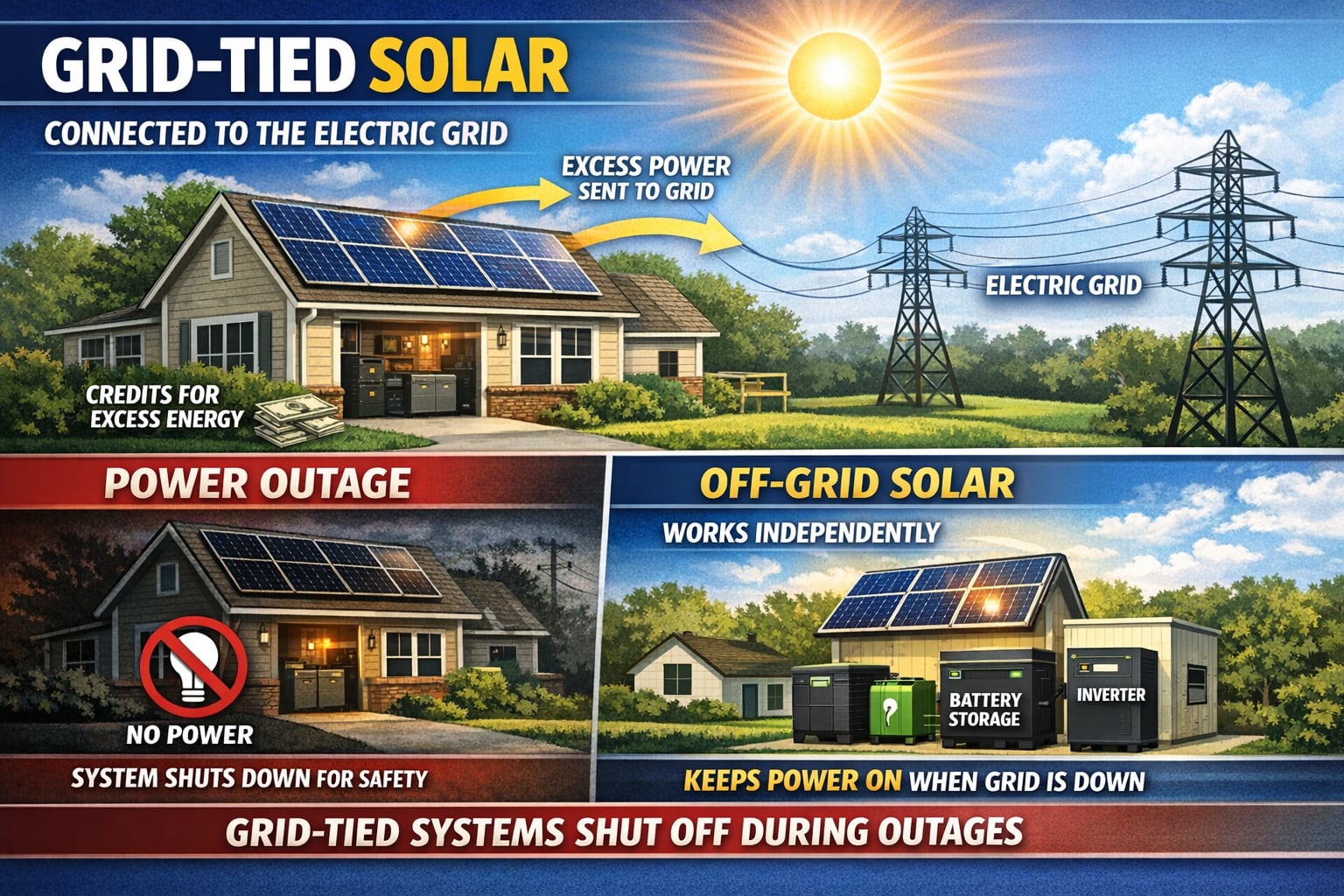
Harlem, GA – You’ve probably seen solar panels on a neighbor’s roof. Most of those systems are grid tied, meaning they are connected directly to the electric utility. When the sun is shining, the panels may produce more electricity than the home is using, and the extra power is sent back to the grid. In return, the power company gives the homeowner a credit.
Here is what often surprises people. Most grid tied solar systems do not have batteries. When the power goes out, the solar shuts off too. That is not a flaw. It is a safety rule. Grid tied inverters must shut down during an outage so electricity does not feed back into power lines and put a lineman at risk. From the beginning, grid tied solar was designed to lower electric bills, not to keep your lights on during a blackout. On top of that, many utilities now pay less for excess solar power than they used to, which has made these systems less attractive over time.
Off grid solar works differently. It is not connected to the utility at all. Solar panels charge batteries, and those batteries power your home. Because the system stands on its own, it keeps working even when the grid goes down. You are not waiting on the power company. You are producing and using your own electricity.
Two big changes have made off grid solar much more practical in recent years. First, solar panels have gotten far cheaper. Today, it is common to find 400 watt panels selling for around 150 dollars. Second, modern off grid systems typically use lithium iron phosphate LiFePO4 batteries. These batteries are very stable, not prone to fire or thermal runaway, and often last 4,000 to 6,000 charge cycles. Battery prices have also dropped significantly and now run roughly 120 to 150 dollars per kilowatt hour of storage.
A basic off grid solar system includes solar panels to make power, a charge controller to safely charge the batteries, batteries to store energy for nights and cloudy days, and an inverter to turn that stored DC power into standard household electricity. A licensed electrician can also install a transfer switch so certain circuits such as a refrigerator freezer or laundry equipment can run from the solar and battery system.
If you do not want to build a system piece by piece, there are also all in one options. Companies like EcoFlow Anker and Bluetti sell solar battery generators that combine batteries inverters and controls into one unit. These systems can keep essential items running during outages and help reduce everyday electric bills.
Off grid solar is not just for remote cabins anymore. With affordable panels and long lasting batteries, it has become a practical option for regular homeowners. Our off grid solar system proved its value during Hurricane Helene by keeping our refrigerator cold, our fish tank running, and our home comfortable. We also power 120 volt mini split heat pumps in each bedroom entirely from our off grid solar system.
If you want to learn more or see real world setups, I moderate a local Facebook group called Off Grid Solar Systems Southeast. It is a place where people share projects, ask questions, and learn how to take control of their power.
GCG is proud to publish the first in what we expect to be an extended series of columns on technology and the latest in how it’s being implemented here in Augusta! Please join us in welcoming Perry Hall to our team!