
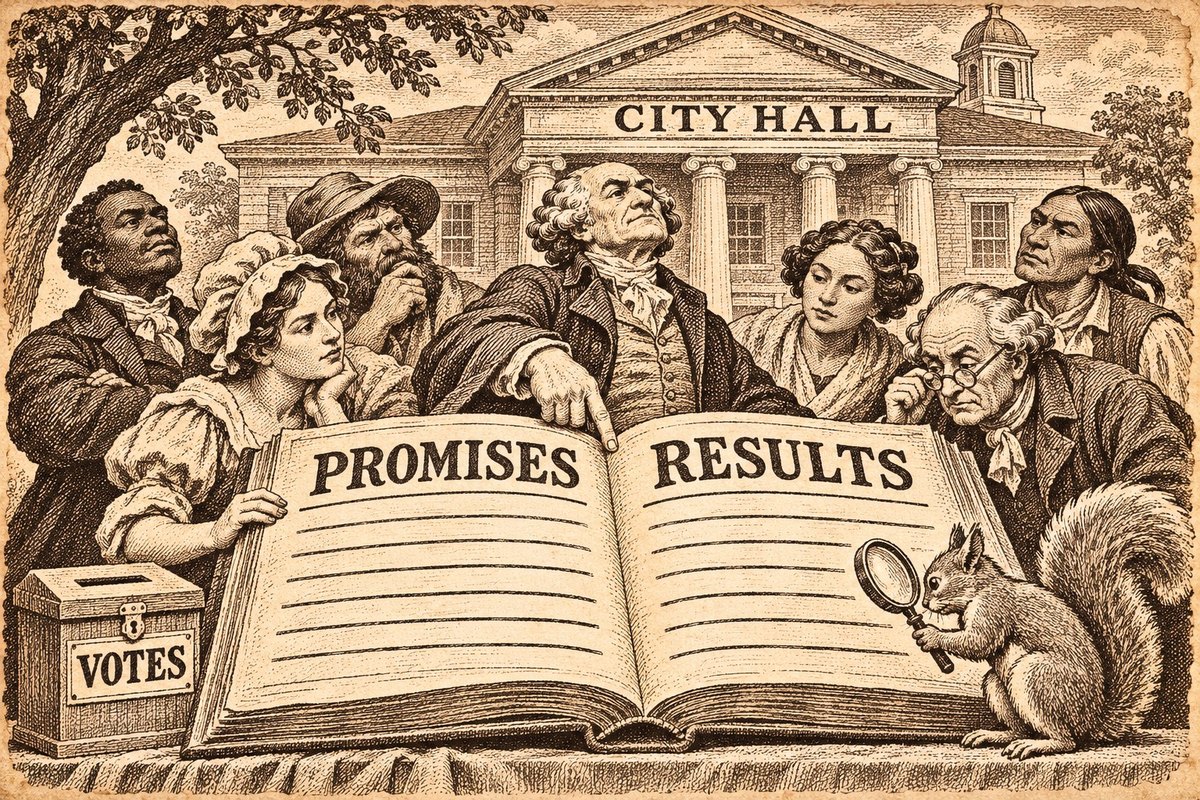
The most useful question after an election is what the winners will do with the authority the public has lent them. In Augusta, the answer ought to be visible in the ordinary arrangements of life: getting to work, receiving a public service, understanding a bill and finding out what happened to the money.
Those are demanding tests. They require more than a change of names on office doors. They require institutions to explain their choices and carry their work through to the people who are supposed to benefit.
On Election Day, I recommended voting for Democrats. The argument drew on Margaret Chase Smith’s warning about fear, intimidation and the abandonment of public duty. It also made a condition explicit: the people elected with those votes must face scrutiny when they exercise power.
Garden City Gossip’s endorsement of Jon Ossoff applied the same standard to a particular office. We favored his record of oversight and public investment. We also said that legislation requires implementation and announced funding requires an accounting.
That standard is most valuable when applying it becomes inconvenient for the people we supported.
Follow the work past the announcement
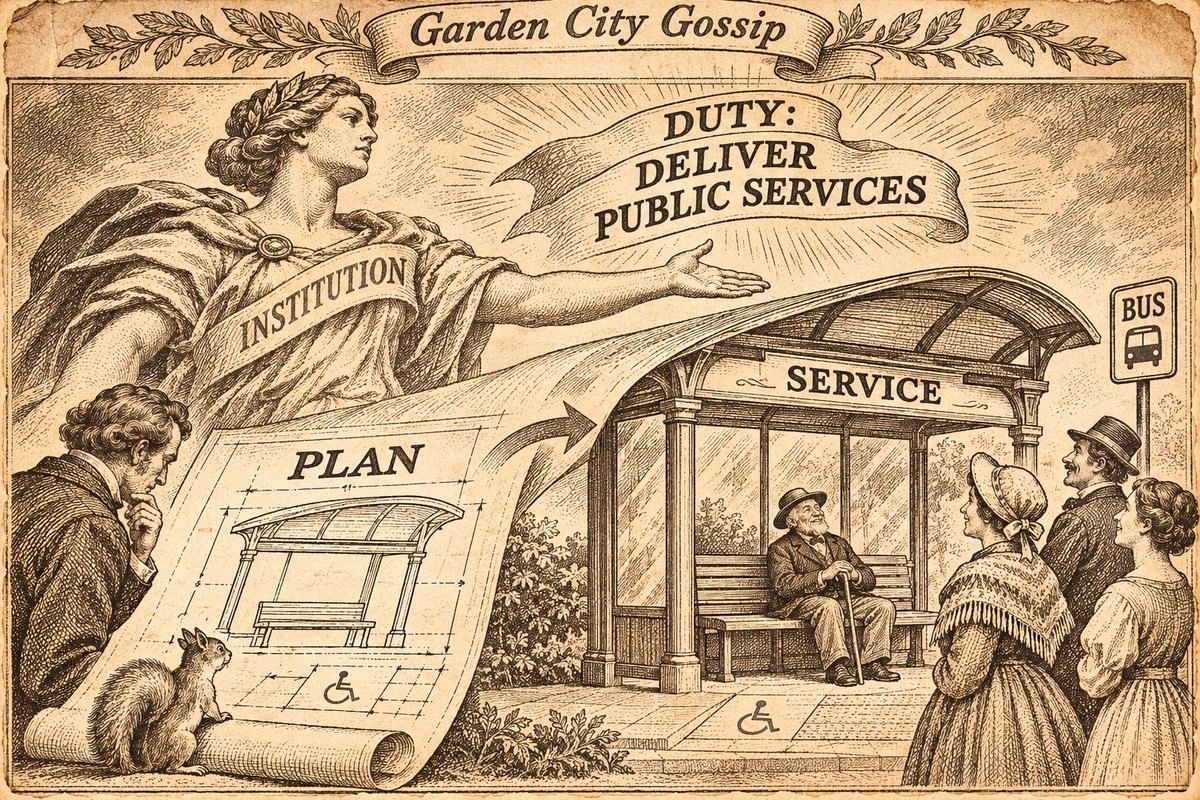
Consider a concrete Augusta example. The U.S. Department of Transportation’s 2024 RAISE fact sheet, page 40, lists a $1.7 million award to Augusta-Richmond County for reimagining the Broad Street transfer facility. The project type is planning. Its stated purpose is to plan a replacement facility with intermodal accommodations and improved navigation.
The distinction between planning and construction belongs in the public account from the beginning. A planning grant can be useful work. It does not establish that a replacement facility has been built, and it should not be described as though it does.
There is a separate, more recent development at the existing facility. According to Augusta’s public announcement, commissioners approved a five-year lease on Aug. 4 allowing FLIX/Greyhound to use space at 1546 Broad Street. The city describes an arrangement bringing local and interstate bus service together and generating lease revenue for Augusta Transit.
That is a specific governing action, with a provider, a place and a term. It deserves to be assessed on those terms. The lease announcement does not establish the completion of the federally funded planning project. The grant announcement does not explain every subsequent transit decision.
Honest credit requires keeping the pieces distinct. Senators help secure federal investment. Agencies administer programs. Local officials make agreements and oversee delivery. Residents live with the combined result.
The questions that follow are practical. What work has the planning award produced? What decisions remain? Who is responsible for the next step? How will riders be able to examine and influence the proposed changes?
These are questions for an accounting, not a finding that the project has failed. Government should make such questions easy to answer before disappointment becomes the only reliable way to attract attention.
Count what the public actually receives
Affordability should be measured with the same care. A household experiences the combined cost of housing, transportation, utilities and care. A policy that lowers one charge while leaving people with a larger expense elsewhere deserves a complete explanation.
The political temptation is to choose the most flattering number: dollars announced, jobs projected, a rate reduced or a subsidy approved. Each may convey something real. None, standing alone, tells a family what has become more secure.
For an Augusta resident who depends on transit, a useful service includes the connection between a route and the hours a job requires. For someone trying to understand a public bill, it includes an explanation that survives comparison with the amount actually owed. For a neighborhood promised an improvement, it includes knowing the schedule, the responsible office and the reason for a delay.
These are ways of judging public work from the receiving end. They also reveal who has been expected to absorb the friction. People with money can often purchase alternatives. People without it must make their lives fit the arrangements available to them.
An honest public account should therefore explain who gains, who pays and who continues to wait. A citywide total can conceal very different experiences across Augusta’s neighborhoods. The distribution of a benefit is part of its value.
Let people inspect the bargain
The same principle applies to records. Citizens should be able to follow a public project from the promise through the contract, the expenditure and the result. They should be able to distinguish an estimate from an obligation and an obligation from money actually spent.
That is an editorial standard for accessible government. It asks public bodies to make the consequential parts of a bargain understandable: the public contribution, the private benefit where one exists, the responsibilities of each party and the risks residents retain.
Officials deserve room to explain a difficult decision. They also owe an explanation that can be checked. A person asking for the underlying figures is participating in government, even when the question interrupts a celebration.
Margaret Chase Smith’s warning matters here as much as it does in the Senate. Public authority becomes dangerous when criticism is treated as disloyalty and the person asking a question becomes the problem to be managed. A party that campaigned against that conduct should welcome the standard when it reaches its own officials.

The obligation after the endorsement
There are real differences between candidates, parties and governing programs. An honest newspaper can explain those differences and make a choice. It should then examine what its preferred officials do with the power they receive.
That means giving credit for useful work, describing the limits of that work accurately and following the result beyond the announcement. It means resisting the urge to turn every legitimate question into assistance for the opposition.
Augusta’s residents remain the people to whom public power must answer. Their authority does not end when a ballot is counted. It continues in the right to question, inspect, organize and expect an explanation.
The next term should be judged by what becomes more usable, more secure and more open to public examination. An election lends authority to officials. The public keeps the right to demand an account.