Aiman Tariq – Regional News Editor
Columbia, SC –
Redistricting is one of those political processes that can sound technical until the consequences become clear.
In South Carolina, those consequences could be significant.
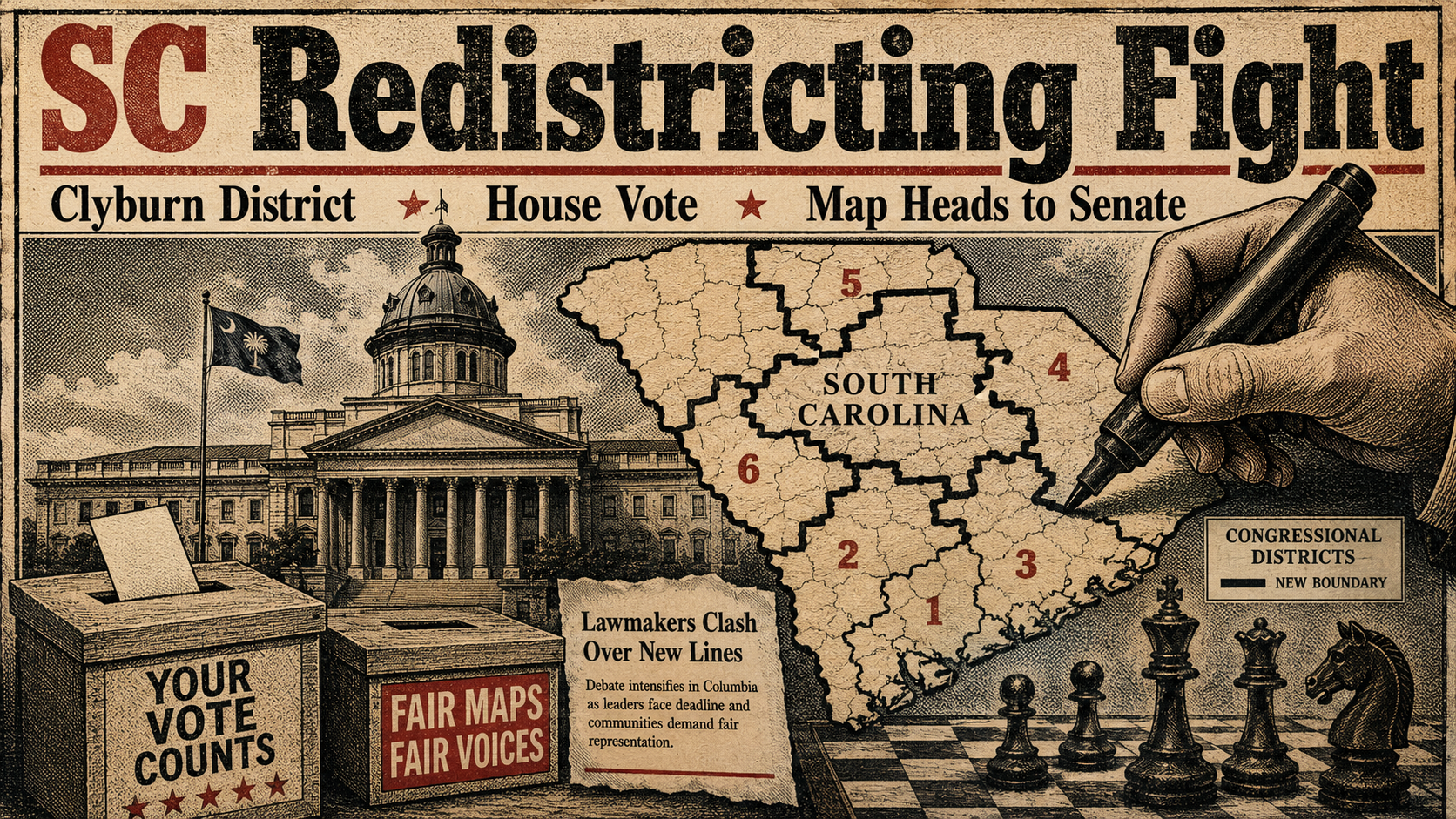
The South Carolina House voted early Wednesday to approve H.5683, a congressional redistricting bill that would redraw the state’s U.S. House districts and reshape the 6th Congressional District, currently represented by longtime Democratic Congressman Jim Clyburn. The bill now moves to the State Senate, where the next round of debate could determine whether the map becomes law before the midterm elections.
According to the official legislative record, the House gave the bill second reading on May 19 by a vote of 74–36, then gave it third reading and sent it to the Senate on May 20 by a vote of 74–37.
That makes the House vote important. But it does not make the fight over.
What H.5683 Would Do?
H.5683 would amend South Carolina law by creating new congressional districts for the state’s U.S. House delegation and repealing the current district map. The bill is framed in legislative language as a redrawing of the districts from which members of the U.S. House of Representatives are elected.
In practical terms, the attention is on the 6th District.
Clyburn’s district is currently the only Democratic-held congressional seat in South Carolina. Republicans hold the other six seats in the state’s seven-member U.S. House delegation. Redrawing the 6th District could give Republicans a chance to move closer to a 7–0 map, depending on how the lines perform in an actual election.
That is why this is not just a state-level procedural story.
It is part of a broader national fight over control of the U.S. House, where even one seat can matter.
The House Vote Came After a Long Debate
The timing alone tells part of the story.
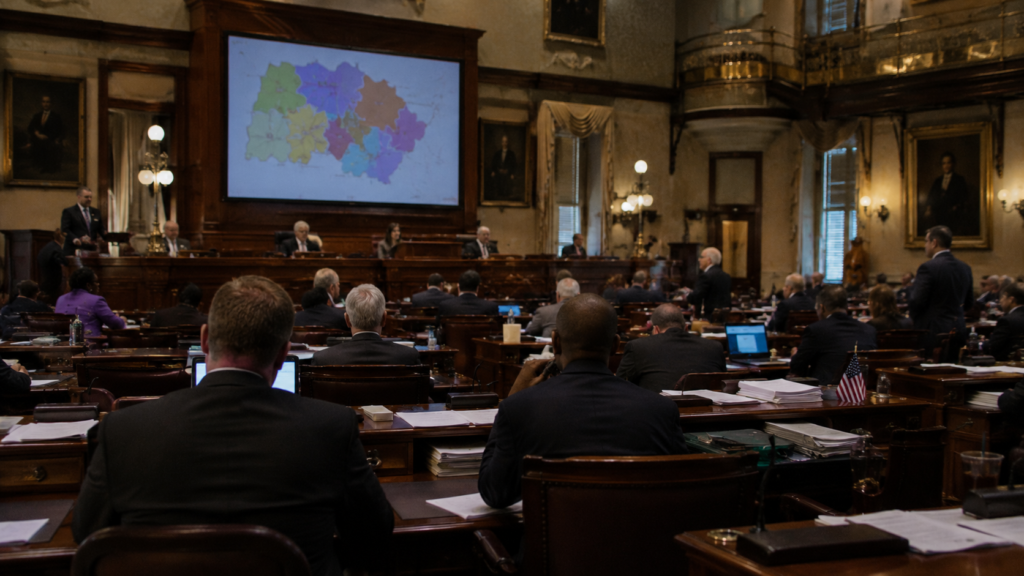
According to local reporting, the House voted on the new map around 12:30 a.m. Wednesday, after extended debate. The bill now heads to the State Senate.
Late-night votes do not automatically mean something improper happened. Legislatures often work long hours when the calendar is tight or when the issue is controversial.
But they do shape public perception.
When major election rules are changed close to an election cycle, and when those changes happen after hours of debate and after midnight, voters have reason to pay attention to the process as much as the result.
That is especially true with redistricting, because the lines drawn on paper can affect political representation for years.
Why Clyburn’s District Is at the Center?
Clyburn is not just another member of Congress.
He has represented South Carolina’s 6th District since 1993 and remains one of the most senior Democrats in the U.S. House. He is also one of the most prominent Black elected officials in the country.
That history is part of why the proposed map has drawn national attention.
Republicans argue that South Carolina is a heavily Republican state and that its congressional map should better reflect that political reality. Democrats and civil-rights advocates argue that the proposed changes would weaken Black political power and target the state’s only Democratic-held seat.
Those arguments are not new in redistricting fights.
What is different here is the timing, the national pressure, and the fact that the map appears designed to change one of the few remaining Democratic footholds in the state.
Trump’s Role Adds National Pressure
President Donald Trump has urged South Carolina Republicans to redraw the state’s congressional map, according to multiple reports. The redistricting push is being watched as part of a broader Republican effort to protect or expand the party’s narrow advantage in the U.S. House.
That does not mean every Republican lawmaker views the proposal the same way.
The Associated Press reported that the Senate may be more skeptical, with some Republicans concerned that a new map could have unintended consequences. One risk in aggressive redistricting is that spreading voters too thin can make multiple districts more competitive than expected.
That is the difference between a map that looks strong in theory and one that holds up in a real election.
A party can redraw lines to improve its odds. It cannot fully control turnout, candidate quality, voter mood, lawsuits, or national conditions.
Why the Senate Matters Now?
The bill’s next stop is the South Carolina Senate.
That matters because House passage is only one step. The Senate can approve the map, change it, slow it down, or reject it.
The Senate’s decision will also determine whether the state has enough time to adjust election administration. AP reported that the proposal could delay South Carolina’s U.S. House primaries from June 9 to August 18 and require a special election process that could cost about $3 million.
That is not a minor administrative detail.
When districts change late in the cycle, election officials may have to adjust ballots, precinct assignments, candidate timelines, absentee voting procedures, and voter communication.
That creates room for confusion even when the process is handled correctly.
The Legal Fight Is Almost Certain
Redistricting bills often move through legislatures first and courts second.
This one appears likely to follow that pattern.
Civil-rights groups and Democrats have already raised concerns that the proposed map could dilute Black voting power. Republicans have generally framed the effort as partisan redistricting, not racial discrimination. That distinction matters legally, because courts have treated partisan and racial gerrymandering claims differently.
That is where the legal debate gets complicated.
A map can be drawn for partisan advantage. A map can also affect racial representation. In states where race and party overlap heavily in voting patterns, those arguments often collide.
The courts may eventually have to sort through whether the map is an ordinary partisan maneuver, an unlawful racial gerrymander, or something in between.
For voters, the practical question is simpler: whether communities that have historically voted together will still have meaningful power to choose a representative.
The Broader Southern Redistricting Fight
South Carolina is not acting in isolation.
Republican-led states across the South have been reexamining congressional maps after recent court rulings changed the legal landscape around majority-Black and majority-minority districts. Reuters has reported that Louisiana, Alabama, Tennessee, and South Carolina are among the states where redistricting fights could threaten Democratic-held seats.
That broader pattern matters because it turns a South Carolina map fight into part of a national numbers game.
If enough states redraw enough seats, the combined effect could influence control of Congress. That is why national parties, outside groups, and civil-rights organizations are watching closely.
Still, each state has its own facts. South Carolina’s question now is whether lawmakers will approve a map that changes the political future of the 6th District — and whether the courts will allow it to stand.
What Voters Should Watch?
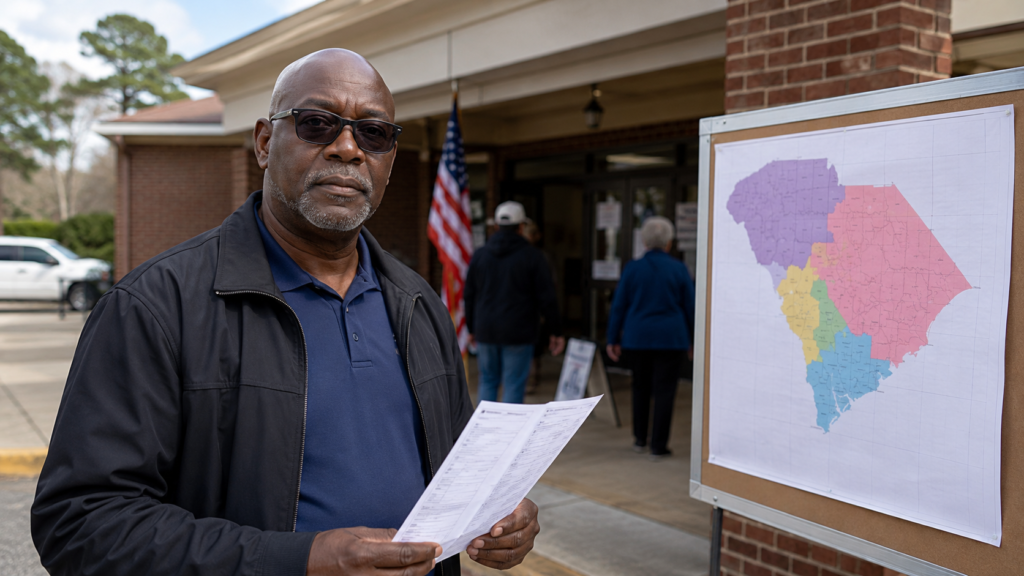
The most important thing for voters is not just whether the bill passes.
It is how the map changes their own district and whether election timelines shift.
Voters should watch for:
- Whether the Senate changes the House-passed map.
- Whether the primary calendar is delayed.
- Whether any lawsuit is filed immediately after passage.
- Whether voters receive new district or precinct information.
- Whether Clyburn’s district remains politically viable for Democrats.
Those details may sound technical. They are not.
They determine who appears on the ballot, when people vote, and whether communities remain grouped together or split apart.
Why This Is More Than a Map?
Every redistricting fight has two versions.
The simple version is that lawmakers are redrawing lines.
The more accurate version is that lawmakers are deciding which voters are grouped together, which communities are separated, and which political coalitions get stronger or weaker before a single ballot is cast.
That is why redistricting fights are rarely just about geography.
They are about power.
In South Carolina, the current fight is especially direct because the map is aimed at a district represented by one of the state’s most recognizable political figures and one of the longest-serving Black Democrats in Congress.
Supporters will argue the change reflects the state’s Republican voting strength.
Opponents will argue it is an effort to dilute Black political influence and remove the state’s only Democratic seat.
Both sides understand what is at stake.
The Bottom Line
The South Carolina House has passed H.5683, a bill that would redraw the state’s congressional districts and reshape the district held by Congressman Jim Clyburn.
The vote moved the bill to the Senate, where lawmakers will decide whether the map advances, changes, or stalls.
The proposal is being pushed in a political environment where Republicans are trying to protect their narrow U.S. House majority and Democrats are warning that the map could weaken Black representation.
The process is not finished.
If the Senate approves the bill, the next fight may move quickly to election offices, campaign teams, and the courts.
For South Carolina voters, the key point is this: the map is not just a technical document. It is the structure through which political power is organized.
And when that structure changes this close to an election, the details matter.