Aiman Tariq – Regional News Editor
Charleston, SC –
South Carolina recreational anglers were preparing for something they had not seen in years: a longer window to catch red snapper in federal waters.
Instead, the expanded season is now on hold.
According to the South Carolina Department of Natural Resources, a recent federal court order has suspended the exempted fishing permits NOAA Fisheries issued to four South Atlantic states, including South Carolina. That means SCDNR cannot issue permits for the expanded red snapper season that had been expected to begin July 1.
The pause does not settle the larger fight over red snapper. It simply moves the debate back into court, where fishing access, conservation rules, data collection and state management are now colliding just weeks before South Carolina anglers expected a longer offshore season.
What Was Supposed to Change?
For years, recreational red snapper fishing in South Atlantic federal waters has been tightly limited.
In South Carolina, anglers often had access to only a very short season — sometimes just a few days — because federal managers have continued to treat the stock cautiously after years of overfishing concerns.
The new plan was supposed to change that, at least temporarily.
NOAA Fisheries had issued exempted fishing permits, known as EFPs, that would have allowed South Carolina, Georgia, Florida and North Carolina to test state-managed recreational red snapper seasons in 2026. For South Carolina, the approved plan listed a recreational season from July 1 through August 31, with a one-fish-per-person daily bag limit and a 20-inch minimum size limit.
That would have created a 62-day season in July and August.
For many anglers and charter captains, the appeal was simple: more predictable access. Instead of dropping everything for a one- or two-day window, fishermen could plan trips, spread out effort and report catch data through the state program.
But that experiment is now paused before it starts.
Court Order Stops the Permit Program
According to Live 5 News, SCDNR announced Friday that the federal court order suspended the red snapper exempted fishing permits issued by NOAA Fisheries to the four South Atlantic states. The agency said that means South Carolina permits expected to begin July 1 can no longer be issued as planned.
NOAA Fisheries later issued its own update saying that, effective immediately, no recreational red snapper fishing is authorized under the South Atlantic EFPs and that federal waters remain closed to recreational red snapper harvest under those permits.
That distinction matters.
The court order did not erase every red snapper rule in South Carolina. It stopped the expanded federal-water program under the experimental permits. Existing state-water rules remain separate.
SCDNR says that in state waters, generally within three nautical miles offshore, South Carolina’s current rules still allow anglers to keep up to two red snapper per person per day with a 20-inch minimum size limit.
For offshore fishermen, though, the practical effect is still significant. The longer federal-water season they expected is not available right now.
Why the Season Was Expanded in the First Place?
The expanded season was not just about giving anglers more days on the water.
According to SCDNR, the South Carolina Red Snapper Project was designed as a state-based, angler-driven effort to collect better data while allowing greater access to the fishery. The agency describes the program as an experiment that relies on cooperation between SCDNR and anglers to document catch and support management decisions.
That data piece is important because red snapper management has long been a source of frustration across the South Atlantic.
Anglers often argue that red snapper are abundant offshore and that short seasons do not reflect what they see on the water. Conservation groups and federal managers have generally focused on a different concern: whether expanded harvest could slow rebuilding or create pressure on a stock that remains closely monitored.
Both things can feel true depending on where someone stands.
An angler who regularly encounters red snapper may see the short season as disconnected from reality. A regulator looking at stock assessments, discard mortality and long-term rebuilding targets may see the same fishery as too risky to open widely without better data.
That is why the EFP program had political support. It promised more access while also requiring reporting that could, in theory, improve future management.
Fishermen Wanted Predictability
For charter captains, a longer season is not just a recreational issue. It is a business issue.
A one- or two-day opening can create a rush. It can also be hard to plan around weather, boat availability and customer schedules. A longer season gives captains more room to work with conditions and gives recreational anglers more than one narrow shot at a legal harvest.
Live 5 News reported that South Carolina DNR Regional Fisheries Manager Amy Dukes described the expanded plan as something anglers had been requesting. The goal, according to that reporting, was to allow fishing during July and August while collecting catch information that could help improve the science behind future decisions.
That is the part many anglers are likely to find most frustrating.
The court order does not mean the state program failed in practice. It means the program never had a chance to begin.
Conservation Groups Raised the Opposite Concern
The legal challenge came from the other side of the debate.
According to Public Radio East, a federal judge issued a preliminary injunction blocking special state-managed pilot programs shortly before they were set to begin in some states. The challenge was led by commercial fishing and conservation groups who argued that expanded state harvesting could threaten South Atlantic red snapper.
The Environmental Defense Fund had also criticized the permits earlier in May, arguing that they would significantly increase fishing days while the South Atlantic red snapper stock was still recovering from historical overfishing.
That does not mean the court has made a final ruling on every question in the case.
A preliminary injunction is not the same as a final decision on the merits. It is a temporary order that stops something from moving forward while legal issues are reviewed.
But for anglers, the timing is what matters most. A temporary pause can still erase a season if the court process lasts long enough.
The State-Water Difference
One confusing part of red snapper rules is the boundary between state and federal waters.
In South Carolina, state waters generally extend three nautical miles from shore. Beyond that, federal rules apply. That line matters because the paused EFP program concerned expanded recreational harvest in federal waters, not the already-existing state-water rules.
SCDNR says nearshore state-water regulations remain unchanged. Anglers may still keep red snapper in state waters under the current two-fish-per-person daily limit and 20-inch minimum size rule.
But that may not offer much comfort to offshore anglers.
Red snapper fishing is often associated with offshore reefs and deeper areas. For many fishermen, the expanded federal-water access was the real prize.
That is why the legal pause has drawn so much attention across the coast.
A Regional Fight, Not Just a South Carolina One
South Carolina is not alone in this.
NOAA’s exempted fishing permits covered four South Atlantic states: Florida, Georgia, South Carolina and North Carolina. NOAA’s approval listed state-specific rules, including July 1 through August 31 seasons for Georgia and South Carolina, with state reporting requirements and daily bag limits.
Florida was affected even sooner because its expanded season had been expected to begin earlier. News reports from Florida described anglers being blocked just before the planned opening, while state officials criticized the timing of the court order.
Georgia had also announced a two-month federal-water red snapper season under the new permit structure, beginning July 1 and ending August 31, before the court order interrupted the program.
That regional scope is why this case matters beyond a single South Carolina season.
If the permits remain suspended, it could undercut a broader experiment in shifting more management authority and data collection to the states.
What Anglers Should Watch Next?
For now, the clearest guidance is simple: do not assume the expanded federal-water season is open.
SCDNR says it cannot issue permits for the July 1 season as planned. NOAA says recreational fishing under the South Atlantic EFPs is not authorized and federal waters remain closed under those permits.
Anglers should watch for updates from SCDNR and NOAA before planning any federal-water red snapper trip.
The key questions now are:
- Whether the injunction remains in place through July and August.
- Whether NOAA or the states seek additional court action.
- Whether the permits are modified, restored or delayed.
- Whether the state data-collection experiment survives in any form.
Those are legal and regulatory questions, not just fishing-calendar questions.
For charter captains, the uncertainty itself is part of the problem. Even if the pause is later lifted, planning trips around a moving legal target is not the same as having a stable season.
The Bottom Line
South Carolina’s expanded red snapper season was supposed to give recreational anglers a longer, more predictable federal-water harvest window in July and August.
That plan is now paused after a federal court order suspended NOAA’s exempted fishing permits for South Carolina and three other South Atlantic states.
State-water rules remain unchanged, but the expanded offshore program cannot move forward unless the legal pause is lifted or the permit issue is resolved.
For anglers, the setback is immediate. For fisheries managers, the larger question is whether state-run data collection can still become part of the long-term answer.
Currently, the safest reading is this: South Carolina red snapper access has not disappeared entirely, but the expanded season fishermen were expecting is on hold.
Image Prompts (3)
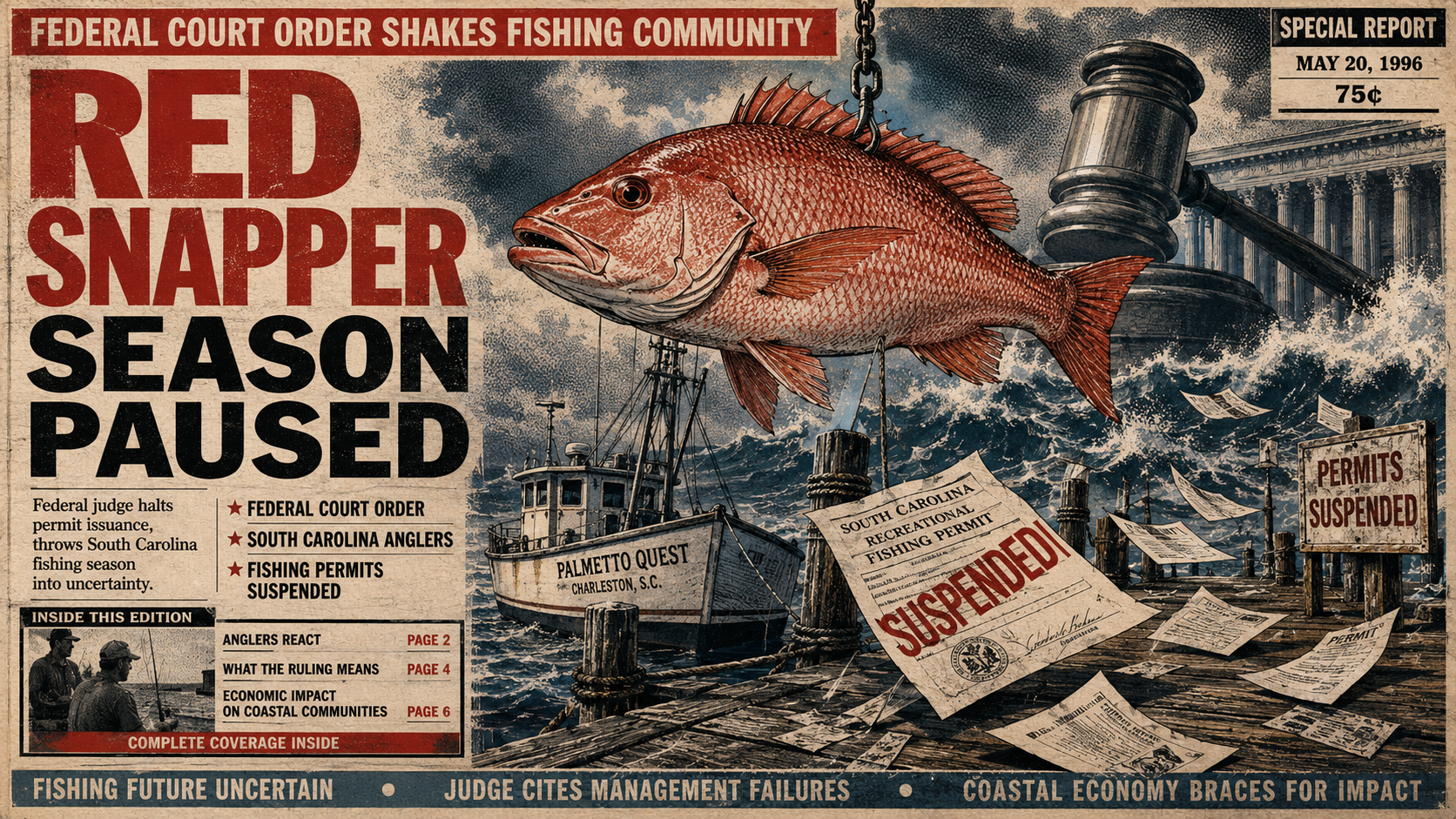
Image 1 — Featured Image Prompt
Prompt:
1990s newsprint tabloid illustration, halftone-dot shading, bold ink outlines, slightly distressed paper texture, dramatic editorial composition showing a large red snapper suspended above a South Carolina fishing boat while a federal courthouse gavel and stormy ocean waves loom in the background, symbolic permit papers blowing across the dock, vintage front-page layout with small headline text reading “Red Snapper Season Paused” and smaller contextual words “Federal Court Order”, “South Carolina Anglers”, and “Fishing Permits Suspended”, muted sepia, blue-gray and red palette, high contrast, no logos, no watermark, high detail, 16:9
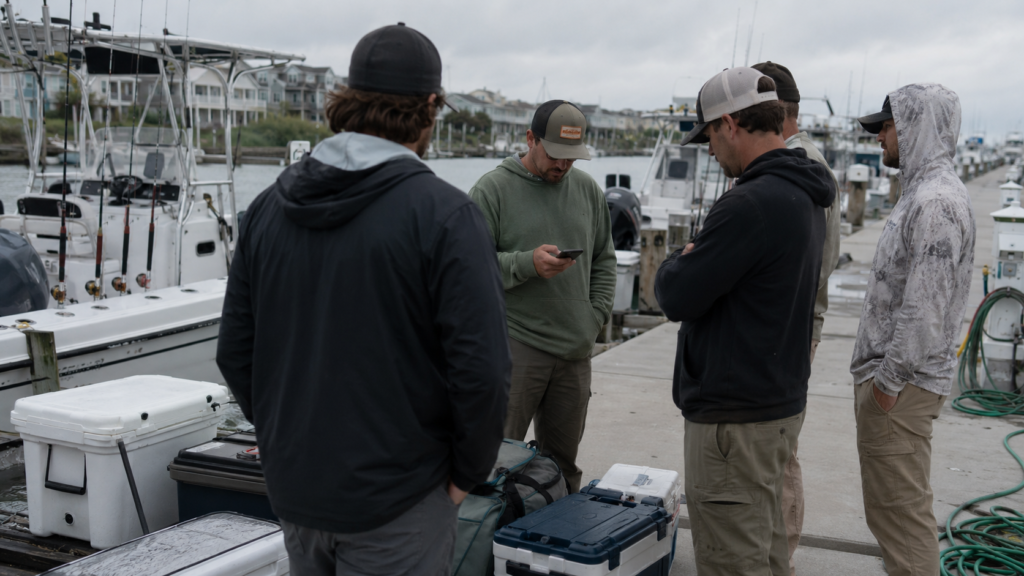
Image 2 — Realistic Prompt for “Court Order Stops the Permit Program”
Prompt:
Photorealistic editorial image of a Charleston-area marina with fishing boats tied at the dock, anglers standing near coolers and fishing gear while checking updates on a phone, overcast coastal morning atmosphere, serious documentary news style, no text, no logos, high detail, 16:9
Image 3 — Realistic Prompt for “What Anglers Should Watch Next”
Prompt:
Photorealistic editorial scene of an offshore charter fishing boat off the South Carolina coast, captain and anglers preparing rods near open water, realistic ocean lighting, restrained documentary tone, red snapper fishing context without showing harvested fish, no text, no logos, high detail, 16:9