Aiman Tariq – Regional News Editor
Blacksburg, SC –
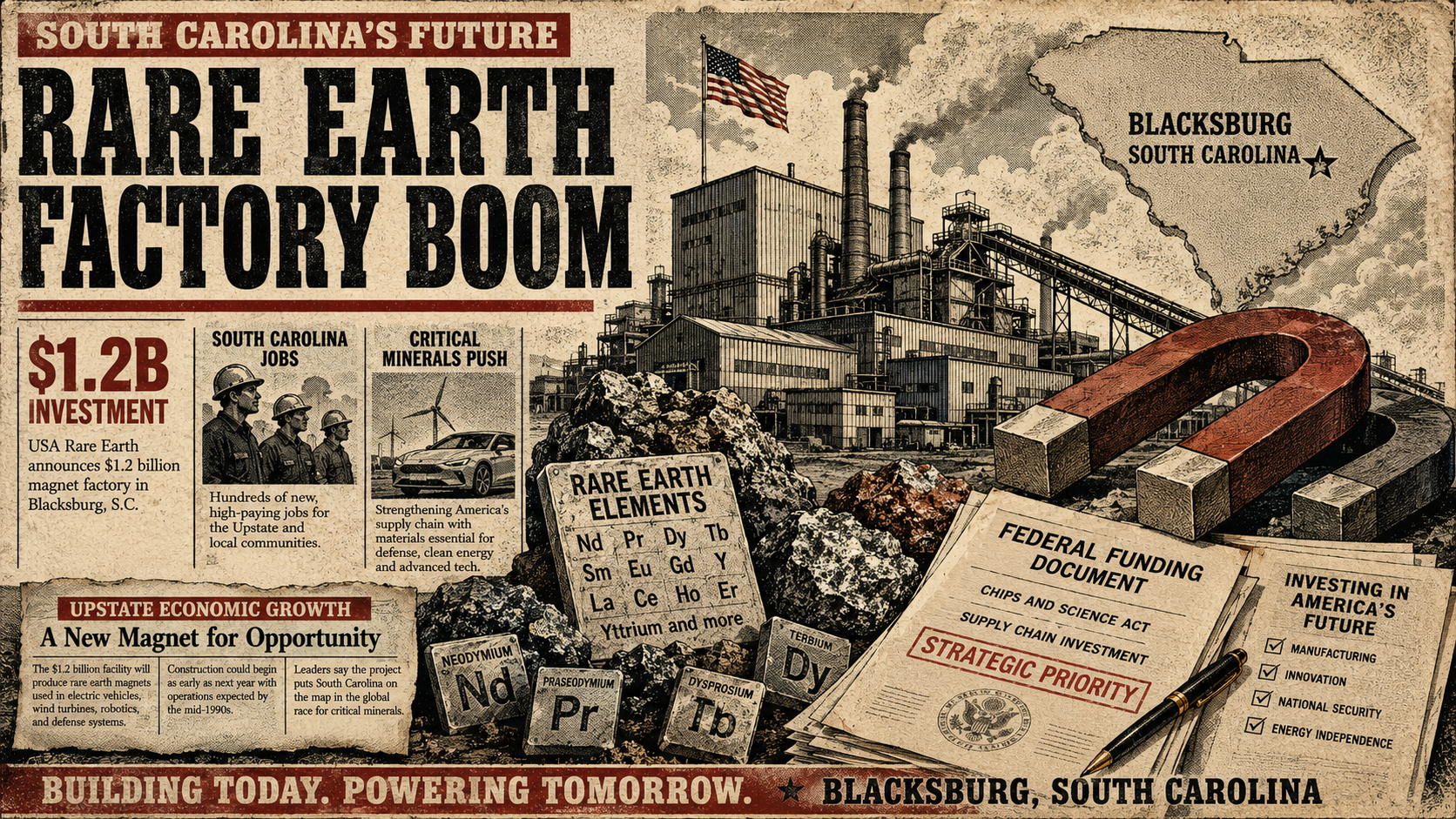
USA Rare Earth says it will invest $1.2 billion to build a rare earth magnet manufacturing and refined metals operation in Blacksburg, South Carolina, a project that state and company officials say could create about 490 jobs and expand domestic production of materials used in advanced manufacturing.
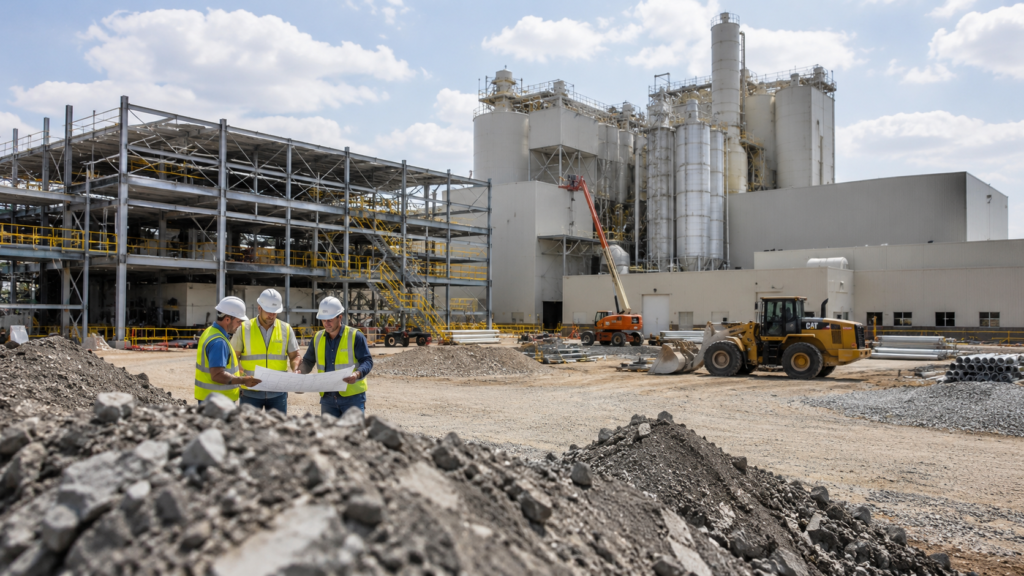
The project is planned for Bailey Industrial Park in Cherokee County. According to the company, site work is expected to begin in the coming months, with commissioning targeted for 2028.
That is the simple version of the announcement.
The larger version is more complicated: South Carolina is not just getting another industrial project. It is being pulled into a national effort to rebuild pieces of a rare earth supply chain that the United States has spent decades allowing to move offshore.
That does not guarantee the project will deliver everything being promised. Large industrial announcements often come with long timelines, public incentives, federal financing, and assumptions about future demand. But it does make the Blacksburg project worth watching closely.
What USA Rare Earth Says It Will Build?
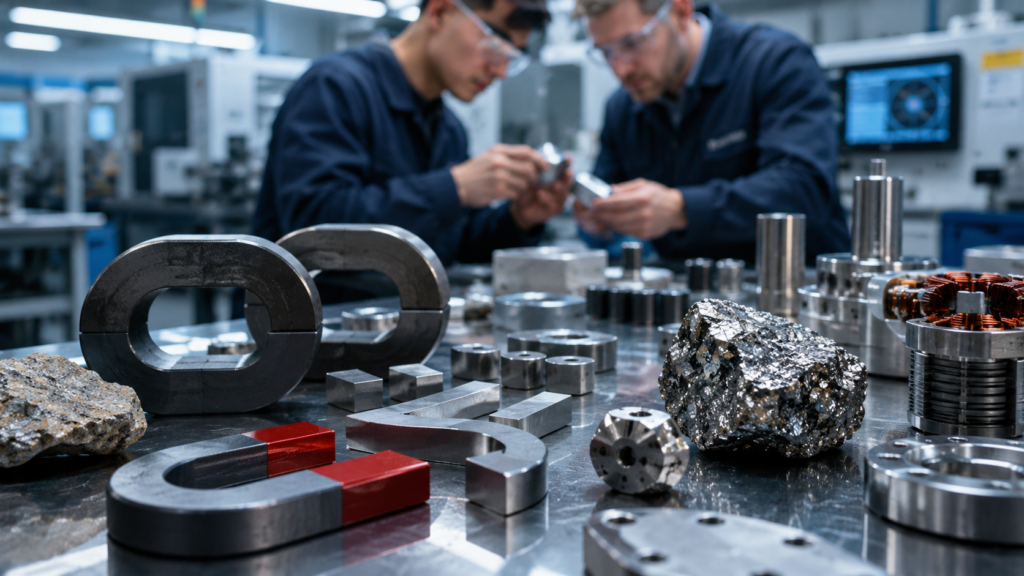
According to USA Rare Earth, the Blacksburg facility will manufacture sintered neodymium-iron-boron permanent magnets and refined rare earth metals.
Those magnets are not the kind most people think about when they hear the word “magnet.” They are high-performance industrial components used in sectors such as aerospace, defense, semiconductor manufacturing, energy, medical technology, artificial intelligence infrastructure, and advanced manufacturing.
The company says the South Carolina plant is expected to produce 6,400 metric tons of NdFeB magnets each year, along with 5,000 metric tons of strip cast, metal, and alloy annually.
Those numbers matter because the magnet stage is one of the more difficult parts of the rare earth supply chain to rebuild domestically. Mining is only one piece. Processing, separation, metals, alloys, and magnet manufacturing are separate links, and weaknesses in any one of them can leave the country dependent on foreign suppliers.
USA Rare Earth has described its strategy as a “mine-to-magnet” model, meaning it wants to connect mining, processing, metal production, and magnet manufacturing under a more integrated platform.
Why Was South Carolina Chosen?
According to company statements, USA Rare Earth selected Blacksburg after evaluating multiple states.
The factors included workforce availability, infrastructure, access to reliable and affordable power, and state-level incentives. Duke Energy is expected to provide utility service to the site.
South Carolina officials have framed the project as another addition to the state’s growing advanced manufacturing base. The state has spent years recruiting major automotive, battery, aerospace, and industrial suppliers. Rare earth magnets fit into that same broader story, though with a more strategic supply-chain angle.
The South Carolina Coordinating Council for Economic Development approved job development credits connected to the project, according to Manufacturing Dive. The exact value of those credits was not disclosed in the initial reporting.
That part is worth noting. Public incentives are common in large economic-development deals, but the size and performance requirements often matter just as much as the headline investment number. The public usually gets the clearest view only over time, as hiring, construction, and capital investment milestones are met — or missed.
Federal Money Changes the Stakes
The South Carolina announcement came alongside a larger federal financing story.
USA Rare Earth said it reached definitive agreements with the U.S. Department of Commerce that provide access to up to $1.6 billion under the CHIPS Act. That package includes up to $277 million in federal funding and up to $1.3 billion in senior secured loan capacity, with disbursements tied to project milestones.
In exchange, the U.S. government is expected to receive 16.1 million shares of common stock and warrants, making it one of the company’s largest stakeholders.
That is not a routine local manufacturing incentive. It is a direct federal bet on a private company in a strategically important sector.
Supporters will likely argue that this is exactly the kind of public-private financing needed to rebuild a domestic supply chain in areas where China has a major advantage. Critics may ask whether the federal government is taking on too much financial risk, whether taxpayers are getting sufficient protection, and whether the CHIPS Act is being stretched into industrial policy well beyond semiconductors.
Both questions are fair.
The federal government is not simply cheering from the sidelines here. It is putting capital behind the effort.
Why Rare Earth Magnets Matter?
Rare earth elements are not rare in the ordinary sense. The challenge is that mining, separating, refining, and turning them into high-performance components is technically complex, expensive, and environmentally difficult.
For permanent magnets, the supply-chain issue is especially sharp.
The International Energy Agency has reported that China’s share of sintered permanent magnet production reached 94% in 2024. That level of concentration gives Beijing significant leverage over industries that rely on those materials.
That is why rare earth magnets show up in national security conversations, not just business pages.
They are used in electric vehicles, wind turbines, industrial motors, medical equipment, robotics, aircraft systems, and defense-related technologies. For manufacturers, the issue is not only whether the minerals exist somewhere in the ground. It is whether the whole chain can deliver consistent, qualified material at scale.
That is what USA Rare Earth says it is trying to build.
The Mine-to-Magnet Ambition
USA Rare Earth was founded in 2019 and has been moving quickly to expand its footprint.
The company has operations connected to mining, separation, metal production, alloy production, and magnet manufacturing. It has also pursued international expansion, including a deal to acquire Serra Verde Group in Brazil, which owns a rare earth mine and production assets.
In March, the company began commissioning a commercial magnet production line at its Stillwater, Oklahoma facility. The Blacksburg project is expected to complement that site.
Together, the company says the Oklahoma and South Carolina operations could eventually support production of 10,000 metric tons of NdFeB magnets and 10,000 metric tons of strip cast, metal, and alloy per year.
That is the target. But targets are not the same as operating capacity.
Industrial projects of this size require permits, power, equipment, skilled workers, financing, customer contracts, and execution over several years. The more ambitious the supply-chain strategy, the more places there are for delays.
That does not mean the project is unlikely to happen. It means the real test will come after the announcement, when construction and commissioning timelines become measurable.
What It Could Mean for Cherokee County?
For Cherokee County, the clearest local impact is jobs.
The company says the project is expected to create about 490 high-skill manufacturing positions. If those jobs materialize, they could bring new payroll, supplier activity, and training needs to the Blacksburg area.
The question for local residents will be what kind of jobs arrive, how many go to workers already living in the region, and whether local schools, technical colleges, and workforce programs can align quickly enough with the plant’s needs.
Large manufacturing projects can change a local economy in useful ways. They can also put pressure on roads, housing, utilities, and public services.
That is why the jobs number is important, but not the whole story.
The more complete question is whether the project strengthens the local economy without creating new strains that local governments have to solve later.
South Carolina’s Manufacturing Bet Gets More Strategic
South Carolina already has a strong manufacturing identity. Automakers, suppliers, battery companies, and logistics operators have made the state a regular player in major industrial announcements.
The USA Rare Earth project adds a different layer.
This is not only about making a product. It is about where a critical supply chain sits, who controls it, and whether the U.S. can reduce dependence on foreign production in a sector tied to both commercial and national security needs.
That does not mean every rare earth announcement should be treated as a guaranteed breakthrough. The sector has seen ambitious promises before, and building a full domestic chain is harder than announcing one.
Still, the Blacksburg project would put South Carolina into a more visible role in the national critical-minerals strategy.
What Happens Next?
According to USA Rare Earth, engineering work and equipment procurement are already underway. Site work is expected to begin in the coming months.
The commissioning target is 2028.
Between now and then, the key questions are practical ones: whether financing milestones are met, whether construction stays on schedule, whether the company can secure equipment and labor, and whether customers commit to long-term demand for the magnets and metals the plant is expected to produce.
The federal funding agreements also include milestone-based disbursements, which means the company will have to move through defined stages before all funding becomes available.
That gives the project structure. It also creates benchmarks for public scrutiny.
The Bottom Line
USA Rare Earth’s planned $1.2 billion Blacksburg facility is a major economic-development win for South Carolina on paper.
The project is expected to create about 490 jobs and expand domestic capacity for rare earth magnets and refined metals used in advanced manufacturing, energy, aerospace, medical technology, semiconductor, artificial intelligence, and defense-related supply chains.
The bigger story is the federal role. With up to $1.6 billion in CHIPS Act-backed funding available to USA Rare Earth across its broader platform, the U.S. government is not just encouraging domestic rare earth production. It is helping finance it directly.
That may prove important if the country is serious about reducing reliance on foreign magnet supply chains.
But the cautious version is still the more accurate one: this is an important announcement, not a finished factory.
The project will become real in stages — through permits, construction, hiring, commissioning, production, and actual customer demand.
For now, South Carolina has landed a high-profile rare earth project. The next test is whether it becomes the strategic manufacturing anchor its backers say the country needs.