Aiman Tariq – Regional News Editor
Columbia, SC –
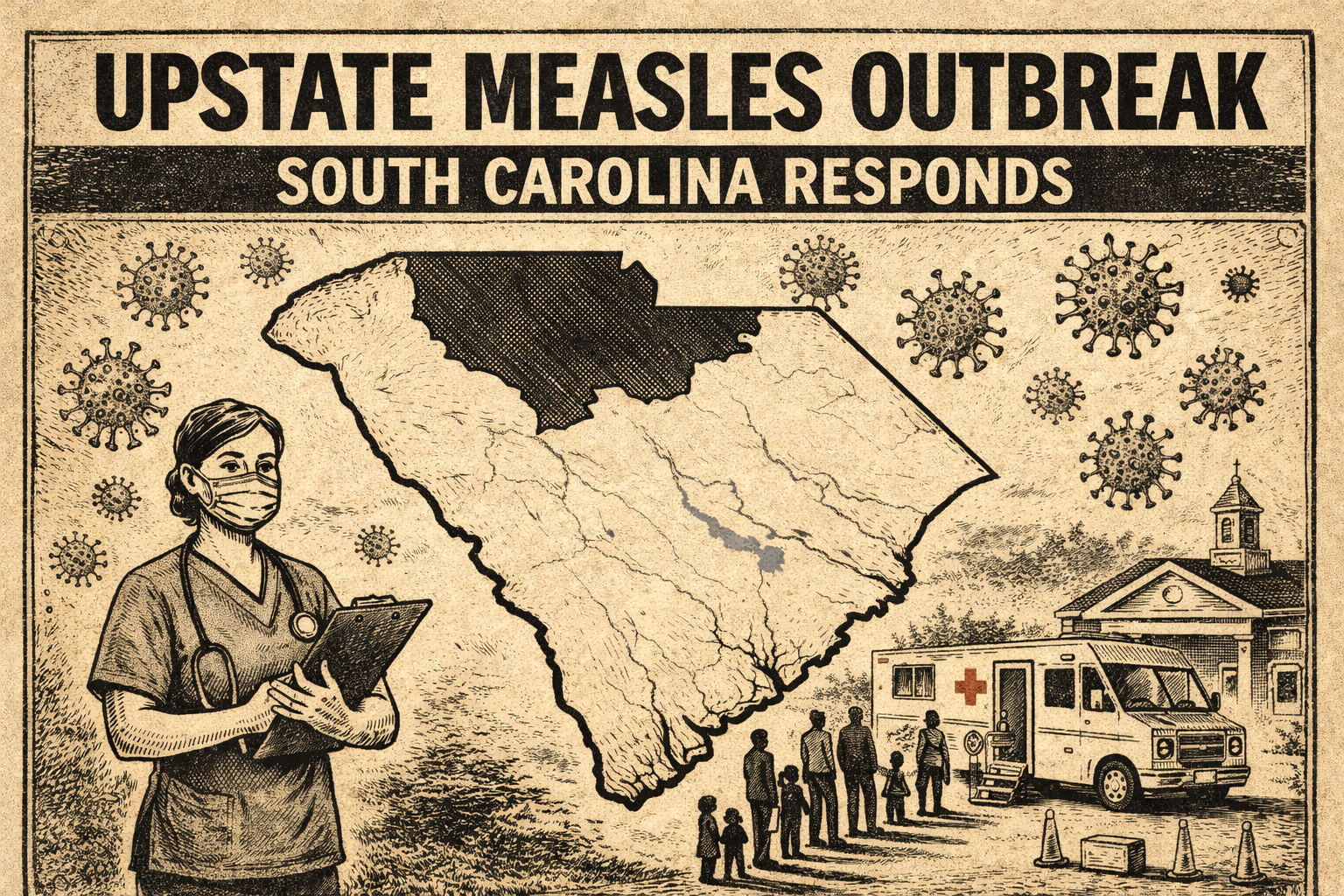
South Carolina’s measles outbreak continues to grow, with state health officials reporting 979 confirmed cases as of this week — six more than the previous update — as public health leaders warn the surge could stretch on for weeks or months.
The South Carolina Department of Public Health said the outbreak, which began in October, remains concentrated in the northwestern part of the state, including Greenville and Spartanburg counties.
The latest figures come as measles cases nationwide surpass 1,000 for the third time in 26 years, according to updated data from the Centers for Disease Control and Prevention (CDC).
State Cases Approach 1,000
State health data show 979 confirmed infections in South Carolina as of Tuesday.
Of those cases:
- 913 involve people who were unvaccinated
- 19 involve individuals who received one dose of the measles-mumps-rubella (MMR) vaccine
- 26 involve individuals who were fully vaccinated
- 21 cases have unknown vaccination status
Officials also reported 21 hospitalizations since the outbreak began. Both adults and children have required hospital care.
At least 91 people are currently in quarantine after exposure to the virus, and one person is in isolation to prevent further spread.
Health officials have not reported any deaths linked to the South Carolina outbreak.
The CDC lists the overall measles death rate in developed countries as low but not zero, particularly among unvaccinated populations and young children. In the United States, fatalities remain rare but have occurred during major outbreaks in recent years.
Children Most Affected
Most South Carolina cases have been reported among children ages 5 to 17, followed by children under age 5.
Measles is highly contagious and spreads through respiratory droplets. The virus can remain in the air for up to two hours after an infected person leaves an area, according to the CDC.
Symptoms typically include high fever, cough, runny nose, and a characteristic rash that spreads across the body.
The CDC recommends the measles vaccine as the primary prevention method. The agency advises two doses of the MMR vaccine, with the first given at 12 to 15 months and the second between ages 4 and 6.
One dose is about 93% effective at preventing measles. Two doses are about 97% effective, according to federal data.
Public health officials continue to emphasize the recommended measles vaccine age schedule, particularly as school vaccination rates have declined in recent years.
Declining Vaccination Rates
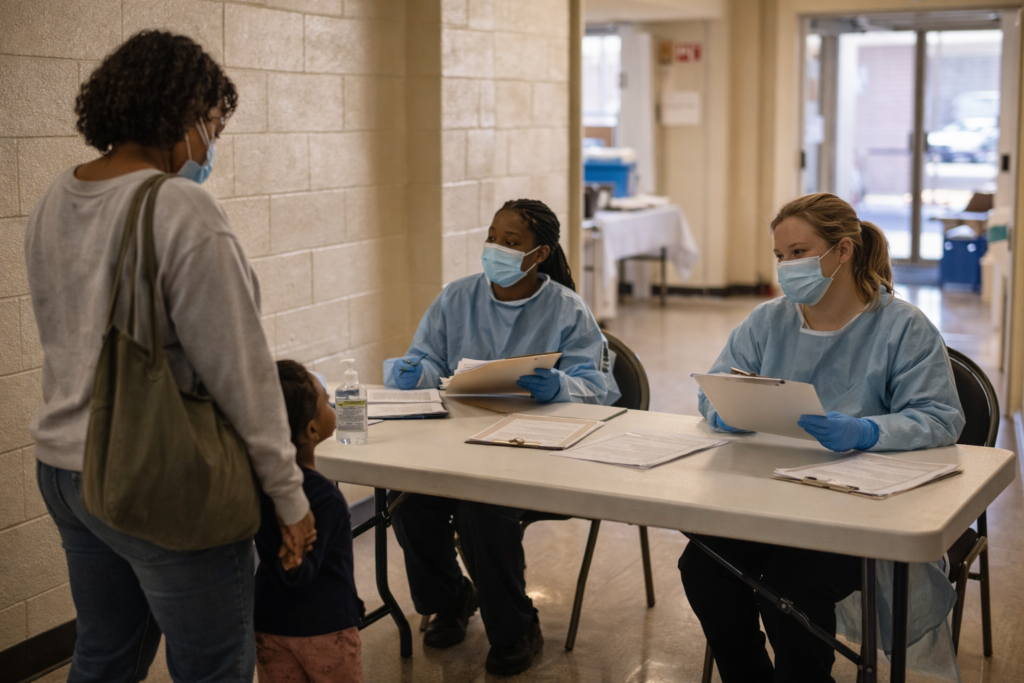
Federal data show that during the 2024–2025 school year, approximately 92.5% of U.S. kindergartners received the MMR vaccine. That is below the 95% threshold often cited by health experts as necessary for herd immunity.
In South Carolina, vaccination uptake has lagged in some communities, particularly in areas where exemptions or hesitancy have increased.
Health officials say the high proportion of unvaccinated individuals among confirmed cases reflects those gaps.
Nationwide, about 92% of measles cases this year have occurred among people who are unvaccinated or whose vaccination status is unknown, according to the CDC.
National Numbers Add Context
As of late February, the CDC reported 1,136 confirmed measles cases across 27 states in 2026.
South Carolina accounts for the majority of those cases, making it the largest outbreak in the country in more than three decades.
Last year, the United States recorded 2,281 measles cases — the highest annual total in 33 years.
Public health officials have warned that without increased vaccination coverage, outbreaks can spread quickly across communities.
Although South Carolina’s outbreak is centered in the northwest, measles has also been reported in neighboring states, including Georgia, according to CDC data.
Health experts note that interstate travel between South Carolina and Georgia — particularly along the I-85 and I-20 corridors — can accelerate spread, especially in communities with lower vaccination rates.
The CDC has not reported confirmed measles cases in Erie county in Pennsylvania as part of the South Carolina outbreak. However, the Georgia Department of Public Health continues to monitor potential exposure risks as national case totals rise..
Quarantine and Public Health Response
The state has sought assistance from infectious-disease specialists affiliated with the CDC Foundation to help manage the outbreak.
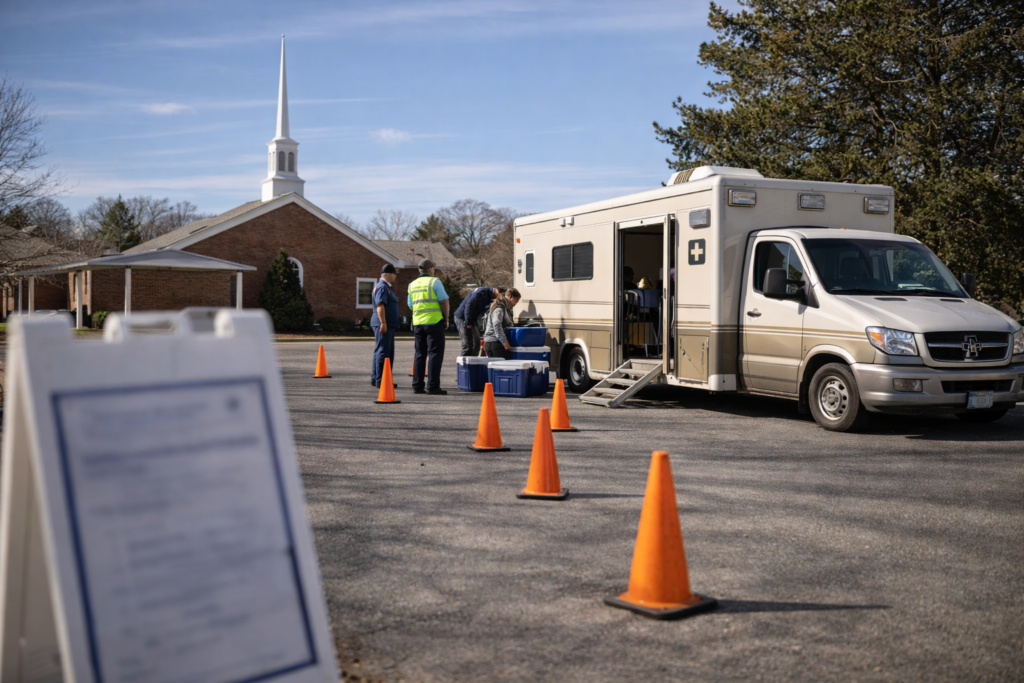
Officials have expanded testing capacity, deployed mobile health units, and issued guidance for schools and healthcare providers.
Quarantine measures remain in place for exposed individuals who are not fully vaccinated. In certain cases, isolation orders may be issued to prevent further transmission.
Public health authorities have not indicated any current quarantine suit litigation related to South Carolina’s outbreak. However, quarantine orders in measles outbreaks historically have prompted legal challenges in other states when individuals object to restrictions.
In South Carolina, officials say compliance with quarantine guidance has been largely voluntary.
What This Means for Georgia Families?
For families in Georgia — particularly those living near the South Carolina border — the outbreak is more than a distant headline.
The Upstate region where most South Carolina cases are concentrated is within easy driving distance of Augusta and North Georgia communities. Interstate travel for work, school sports, church events, and family visits is common.
Public health experts say measles spreads most easily in areas with pockets of unvaccinated individuals, which means even a small number of imported cases can lead to localized outbreaks.
Georgia health officials have not reported a surge comparable to South Carolina’s outbreak, but the CDC lists Georgia among the states with confirmed cases this year.
For parents in Georgia, the guidance mirrors that in South Carolina: review vaccination records, consult pediatricians about recommended MMR doses, and call ahead before visiting a clinic if exposure is suspected.
What Families In South Carolina Can Do Right Now?
Public health guidance for families tends to be straightforward, even when politics around vaccination can be loud.
Here’s what South Carolina residents can do without waiting for the next outbreak update:
- Check immunization records for children and adolescents, especially if school attendance, sports, or group activities involve close contact.
- Call a healthcare provider before arriving if measles exposure is possible, so clinics can reduce exposure to others.
- Watch for symptoms after known exposure and follow health department instructions on quarantine timelines.
- Use trusted sources for vaccine guidance, including CDC and state health department updates.
For parents who are unsure whether their child has received both doses of the MMR vaccine, pediatricians and local health departments can confirm records and advise on next steps based on age and exposure risk.
Hospitals and Healthcare Impact
While the majority of measles cases resolve without severe complications, hospitalizations have occurred in South Carolina’s outbreak.
Complications can include pneumonia, brain swelling (encephalitis), and dehydration.
Health systems in the affected region have not reported capacity strain but continue to monitor patient volume closely.
Medical experts say prompt isolation and vaccination remain the most effective tools to limit spread.
The Bottom Line
South Carolina’s measles outbreak has risen to 979 confirmed cases, with the majority involving unvaccinated individuals.
State officials report 21 hospitalizations and ongoing quarantine measures as health teams work to contain the virus.
Nationwide, measles cases have surpassed 1,000 this year, with South Carolina accounting for the largest share. Georgia families, particularly those near the state line, are being urged to review vaccination records and stay alert to public health guidance as regional travel continues.
Public health leaders continue to stress the importance of vaccination and adherence to quarantine guidance to slow transmission.
Follow us for updates on this developing public health situation and more regional coverage.