by Charles Rollins – Publisher
April 18, 2026
You Cannot Serve God and Wealth
In brief: the American tax code is not malfunctioning. It is operating as part of a political order that protects ownership, disciplines labor, and teaches the public to mistake small adjustments for structural change. The right defends that order as inevitable. The center-left diagnoses some of its mechanics and proposes cleaner management. Neither approach touches the deeper structure that turns wealth into power and leaves ordinary people feeling, correctly, that every promised fix arrives too small.
This essay is a follow-up to my earlier Tax Day argument: people are not confused because they are stupid. They are confused because they are being given explanations that are too small for the world they actually inhabit.
That problem was on full display this Tax Day.
The White House and Treasury celebrated larger refunds and the uptake of new tax breaks, saying more than 53 million filers claimed at least one of the new provisions and that the average refund rose to roughly $3,400. Senate Republicans called those cuts “real results,” proof that working families were keeping more of what they earn. Those claims are not invented. They are simply too small for the reality they are being used to explain.12
On the right, the argument hardens into something more familiar: the rich already pay a great deal, the code is already progressive, liberals are trying to punish success, and any more serious attempt to reach concentrated wealth will either be unconstitutional, unadministrable, or an invitation for capital to flee.34 Strip away the cleaner language and the core claim is simpler still: concentrated private wealth is natural, public claims on it are suspect, and politics has no real business disturbing the ownership structure of society.
Margaret Thatcher gave that worldview its most famous slogan: “There Is No Alternative.”5 That line still does enormous work. It tells ordinary people that capitalism in its present form is just the weather, that the ownership structure above them is beyond politics, and that democratic life can do little more than trim around the edges.
The center-left tells a more sophisticated story. That is where the recent New York Times interview with tax-law professor Ray Madoff becomes useful. Madoff explains, accurately and clearly, that ordinary Americans live inside one tax system while the ultrawealthy often live inside another. Wages are taxed as they are earned. Payroll taxes begin with the first dollar. But the very rich can often avoid tax by avoiding taxable income in the first place: low salary, appreciating assets, borrowing against those assets, and then passing them on under rules that erase gains at death. Her shorthand is memorable because it is true: “salaries are for suckers,” and then, once one reaches a certain altitude, selling stock is for suckers too. Later in the interview, when Ezra Klein presses her on the deeper political problem of concentrated wealth, she says that a more muscular response is a “fantasy world” because “the public isn’t going to buy it.”6
Read the Times interview here: https://www.nytimes.com/2026/04/17/opinion/ezra-klein-podcast-ray-madoff.html
That interview is worth taking seriously precisely because Madoff is not wrong about the mechanism. She is right about a great deal. She is right that the endlessly repeated claim that the top 1 percent pay 40 percent of federal income taxes tells us less than people think, because it tracks taxable income rather than concentrated wealth insulated from taxable realization. She is right that payroll taxes matter far more to ordinary Americans than elite tax discourse usually admits. She is right that step-up in basis and estate-planning devices have made a mockery of the old promise that inherited wealth would at least face a backstop at death. She is right that “family farm” rhetoric was used as moral cover for protecting dynastic fortunes. She is right that if one wants to understand modern aristocracy in America, one has to begin with the difference between someone who lives on wages and someone who lives on appreciating assets.6
But that is exactly why the interview is so revealing. It shows the limits of liberal technocracy better than a dozen bad arguments from the right.
Because once the diagnosis has been made, the horizon narrows. The problem becomes one of improved tax design: tax accrued gains at gift and death, eliminate the preference for capital gains, stop pretending the estate tax in its current form does meaningful work, clean up the code, bring wealthy people back into the income-tax system. Those are not foolish ideas. Some of them would be genuine improvements. Brookings has made similar arguments about the “angel of death” loophole and the enormous tax advantages created by step-up in basis.7 But that is precisely why the Madoff interview is such a useful example. It shows how even the sharper critiques of the tax system in respectable liberal circles still tend to treat oligarchy as a design problem. They want a more rational aristocracy. They do not really want to name the regime.
The data are less evasive than the rhetoric.
Wealth in the United States did not merely grow. It concentrated. Since 1989, the top 1 percent’s share of net worth has remained many multiples larger than the bottom 50 percent’s share, and by 2025 that gap had widened further.8
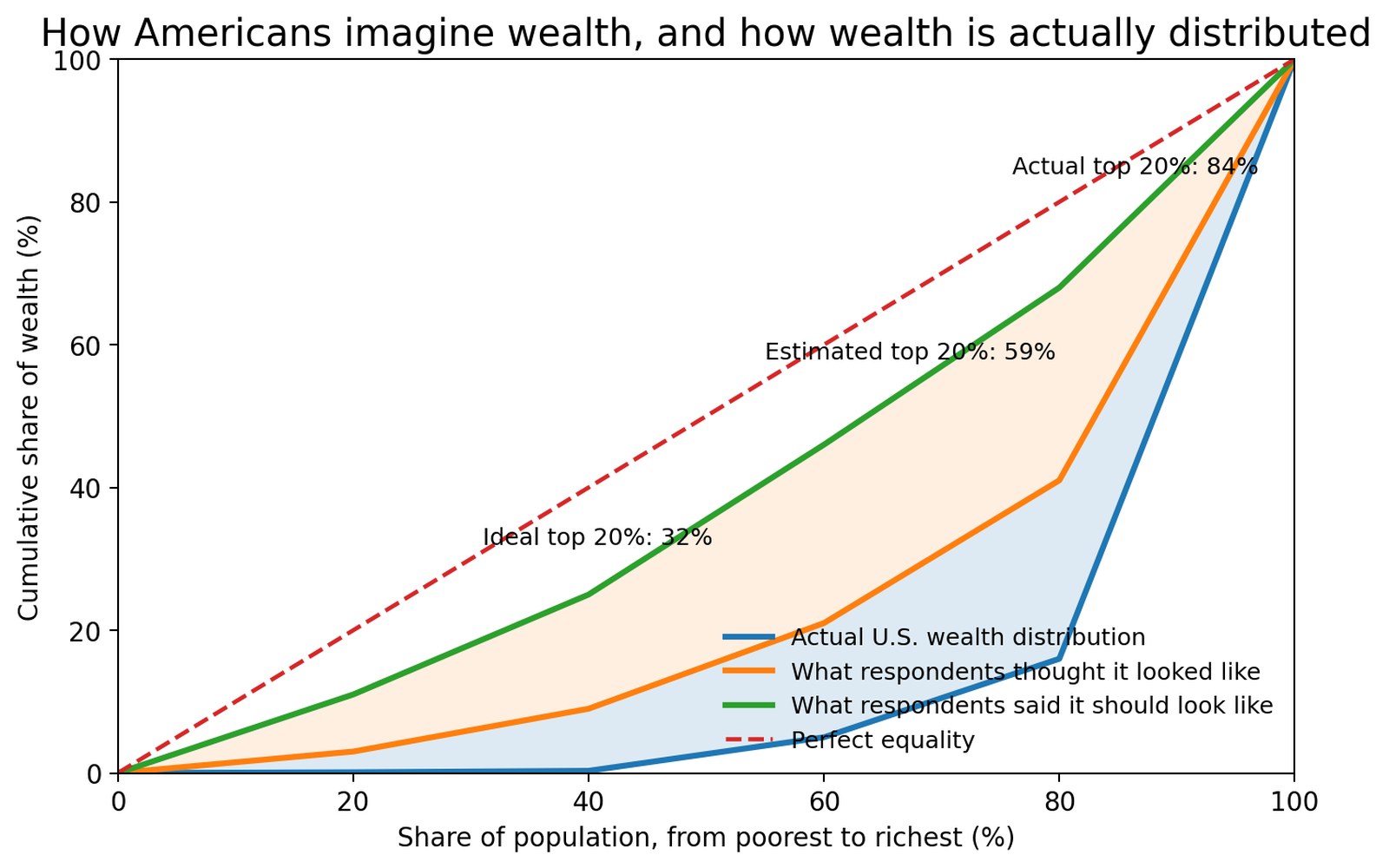
Figure 1. Cumulative share of wealth as people think it should be, how they think it actually is, and the truth.
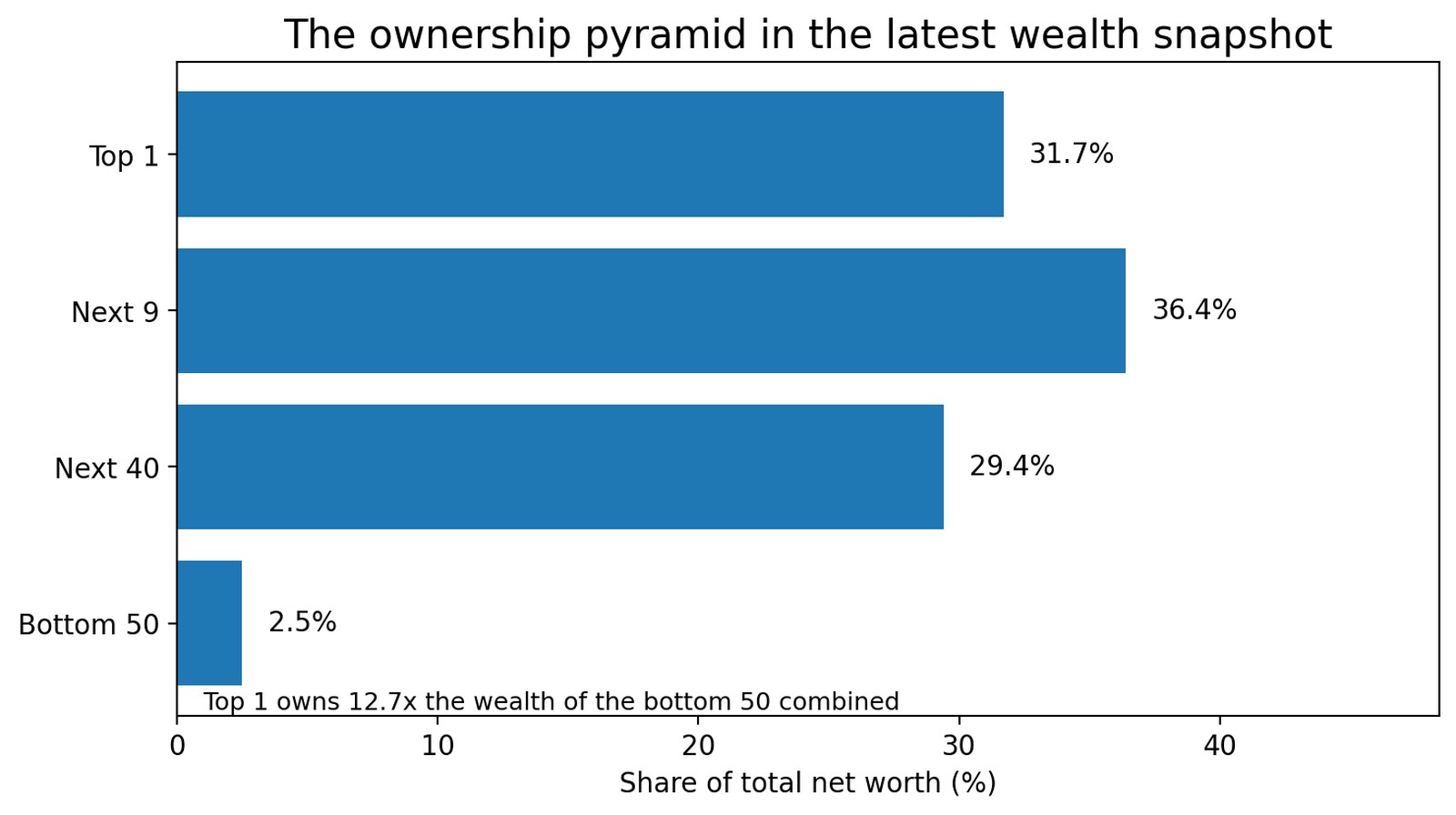
Figure 2. Table showing massive wealth disparity.
That point matters because not all assets carry the same political meaning. Real estate is one thing. Corporate equities and financial assets are another. The top 1 percent controls a much larger share of equities and financial assets than it does of real estate, which helps explain why tax preferences for capital gains, inherited stock, and financial appreciation overwhelmingly protect the same class over time.9
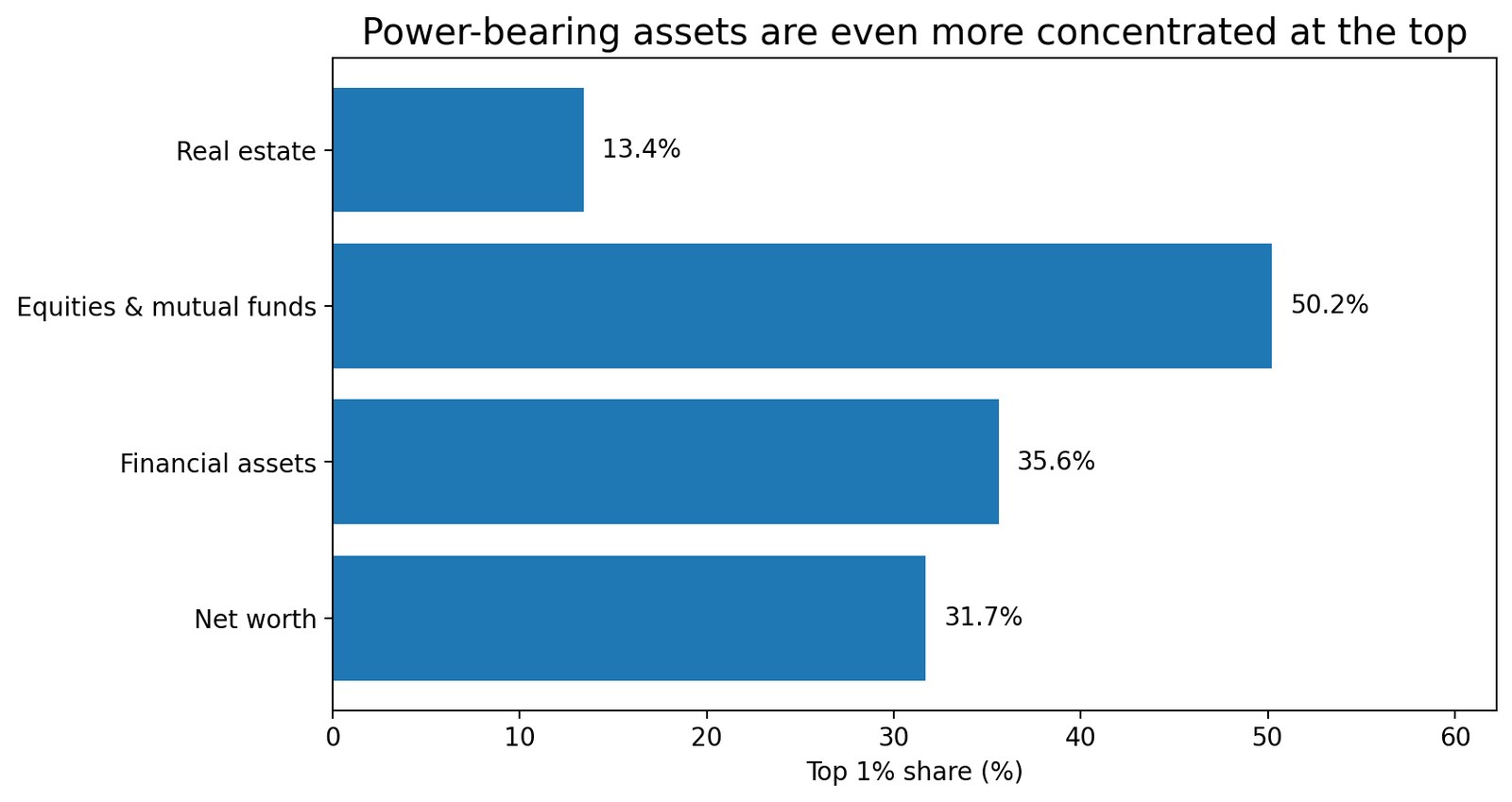
Figure 2. Chart showing how the top 1 percent captured a growing share of total income while the broad middle and bottom lagged behind.
That is where ProPublica’s reporting, built on the Charles Littlejohn leak, changed the terrain. The first stories landed because they made the abstract concrete. Jeff Bezos paid no federal income tax in 2007 and 2011. Elon Musk paid none in 2018. Michael Bloomberg did the same in recent years. George Soros went three straight years without paying federal income tax. ProPublica’s point was not merely that these outcomes looked unfair. It was that the legal definition of taxable income had become radically detached from the economic reality of concentrated wealth.1011
And the later ProPublica work matters even more than the headline names. It showed an entire ecology of escape: dynasty trusts, GRATs, real-estate depreciation games, pass-through preferences, sports-franchise write-offs, charitable and political vehicles that preserve family control while reducing tax exposure, one carefully defended passage after another. The ultrawealthy were not merely exploiting a few cracks. They were moving through a system of connected chambers. If Congress closed one passage, the wealth-preservation industry found another. That is not what a broken system looks like. That is what a successful one looks like—successful, that is, at doing its deeper job.111213
This is the point at which the tax discussion ceases to be merely about taxes. The tax code is not just a revenue instrument. It is a statement about what kinds of claims on the world the state will recognize, discipline, and protect. Labor is visible. Labor is dependent. Labor can be withheld from at the source. Wealth, by contrast, can be deferred, valued strategically, borrowed against, routed through trusts, and treated as if it were somehow less real than a paycheck. The result is not just undertaxation at the top. It is a political order in which ownership is sovereign and work is exposed.
The newest empirical work supports that reading. A 2025 NBER paper matching Forbes 400 wealth data to individual, business, estate, and gift tax returns found that the top 400 Americans paid an average total effective tax rate of 24 percent in 2018 through 2020, compared with about 30 percent for the full population and about 45 percent for top labor earners.14 That is a devastating comparison because it strips away one of the most common evasions in public debate. The issue is not whether the rich pay some taxes. Of course they do. The issue is whether the people most insulated by wealth are paying a lower total effective rate than people who live on labor. The answer is yes.
The older IRS series tells a related story from a different angle. Between 1992 and 2014, the average AGI of the Top 400 returns exploded upward while the average effective federal income-tax rate for those returns trended downward for much of the period.15 Even where very high earners still pay large nominal sums, the relationship between income scale and effective rate has not worked the way ordinary people are told it does.
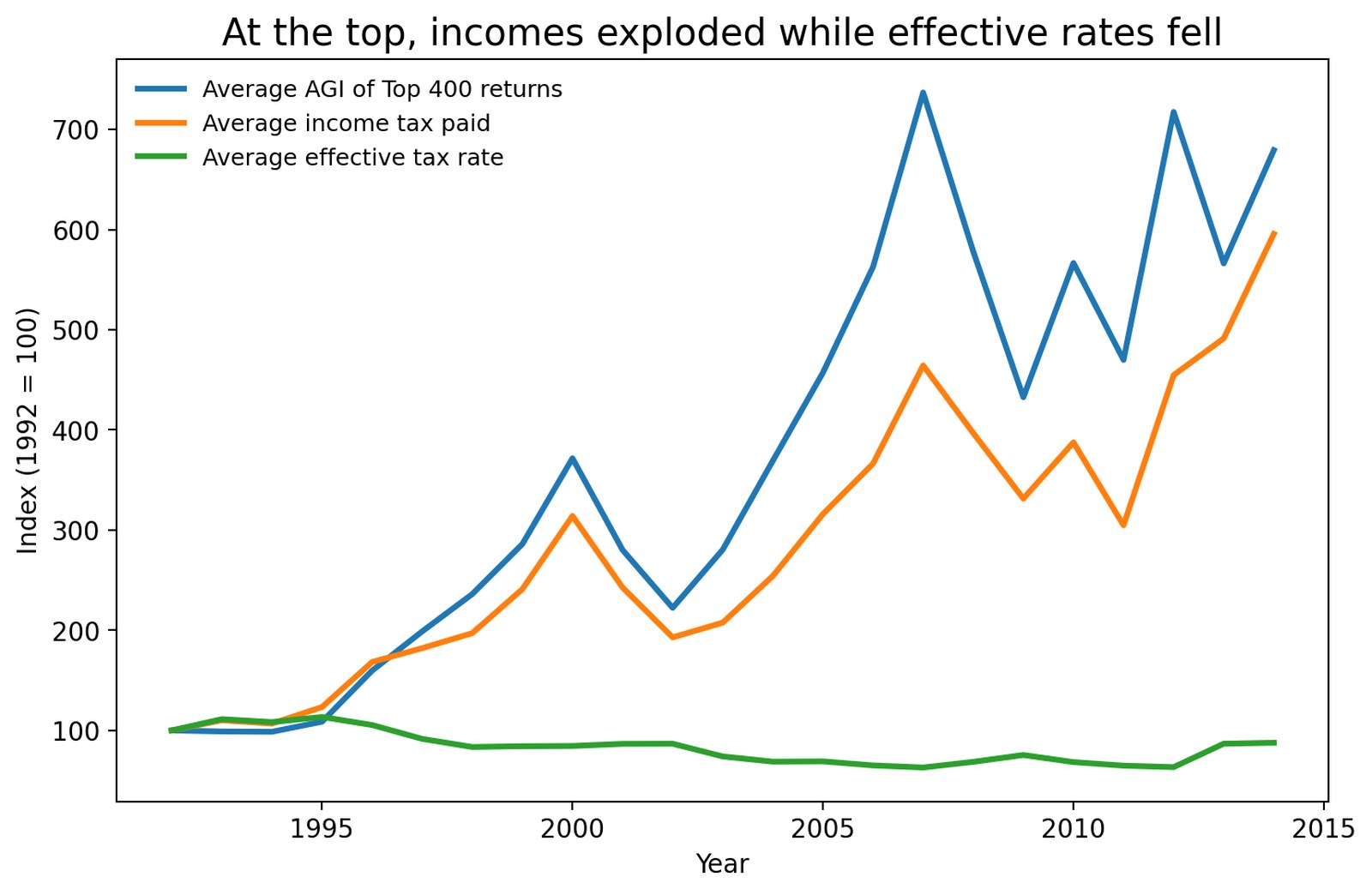
Figure 3. Indexed change: average AGI and taxes rose while tax rate fell for the IRS Top 400 returns, 1992–2014.
And before any of that income is taxed, it is worth asking who is receiving it. Income concentration itself has a structure. Federal Reserve SCF data show that from 1989 to 2019 the top 1 percent’s share of total income generally rose while the broad middle and bottom saw their shares squeezed or stagnate.16 The tax debate usually begins after distribution has already done much of its political work.
That is also why I do not find the line that “the public won’t buy it” persuasive. It is true in one shallow sense: the public often does not support proposals once they are translated into the usual language of punishment, envy, confiscation, or class resentment. But that is not because the public lacks moral intuition. It is because the public has been disciplined into a narrow way of seeing. Pew found this month that 61 percent of Americans say they are bothered a lot by the feeling that wealthy people do not pay their fair share, and 60 percent say the same about corporations. Only 12 percent say the same about poor people.17 The public already senses the unfairness at the top. What it is denied, over and over again, is a structural explanation equal to what it is experiencing.
Instead it gets a thousand little catechisms of containment: the top 1 percent already pays plenty, refunds are up, the problem is complexity, the problem is waste, the problem is immigrants, the problem is poor people, the problem is inflation, the problem is greed, the problem is one president, one bill, one election, one bad quarter. The public is not stupid. It is being miseducated.
That is not a side point. It is part of the structure itself. A regime that depends on ordinary people continuing to work, pay, borrow, and hope cannot allow them to see too clearly how different the system looks from above. So it teaches them to think in fragments. One month’s refund. One year’s rate. One deduction. One outrage. One scapegoat. That fragmentation is not just bad journalism or bad politics, though it is both. It is social management.
The same is true of race, and any serious tax analysis that tries to stay above race in the name of neutrality is already conceding too much. Dorothy Brown has shown that the tax code’s supposedly neutral preferences often advantage the forms of marriage, homeownership, and retirement accumulation more accessible to white households because history distributed those forms unevenly to begin with.18 The racial wealth gap remains enormous. And the IRS has acknowledged research finding that Black taxpayers were audited at significantly higher rates than non-Black taxpayers, largely through correspondence audits tied to low-income credits.1920 So when we talk about a tax system that privileges appreciated assets over wages and scrutinizes low-income claims more cheaply than complex wealth, we are not describing an abstract field of equal taxpayers. We are describing a racialized social order acting on a racialized social landscape.
The Federal Reserve’s own data make the point in long view. White median family wealth rose from $164,000 in 1989 to $285,000 in 2022, in 2022 dollars. Black median family wealth rose from about $9,200 to $44,900 over the same period. Hispanic median family wealth rose from about $12,000 to $61,600.21 That is improvement at the bottom of an old hierarchy, not the disappearance of one.
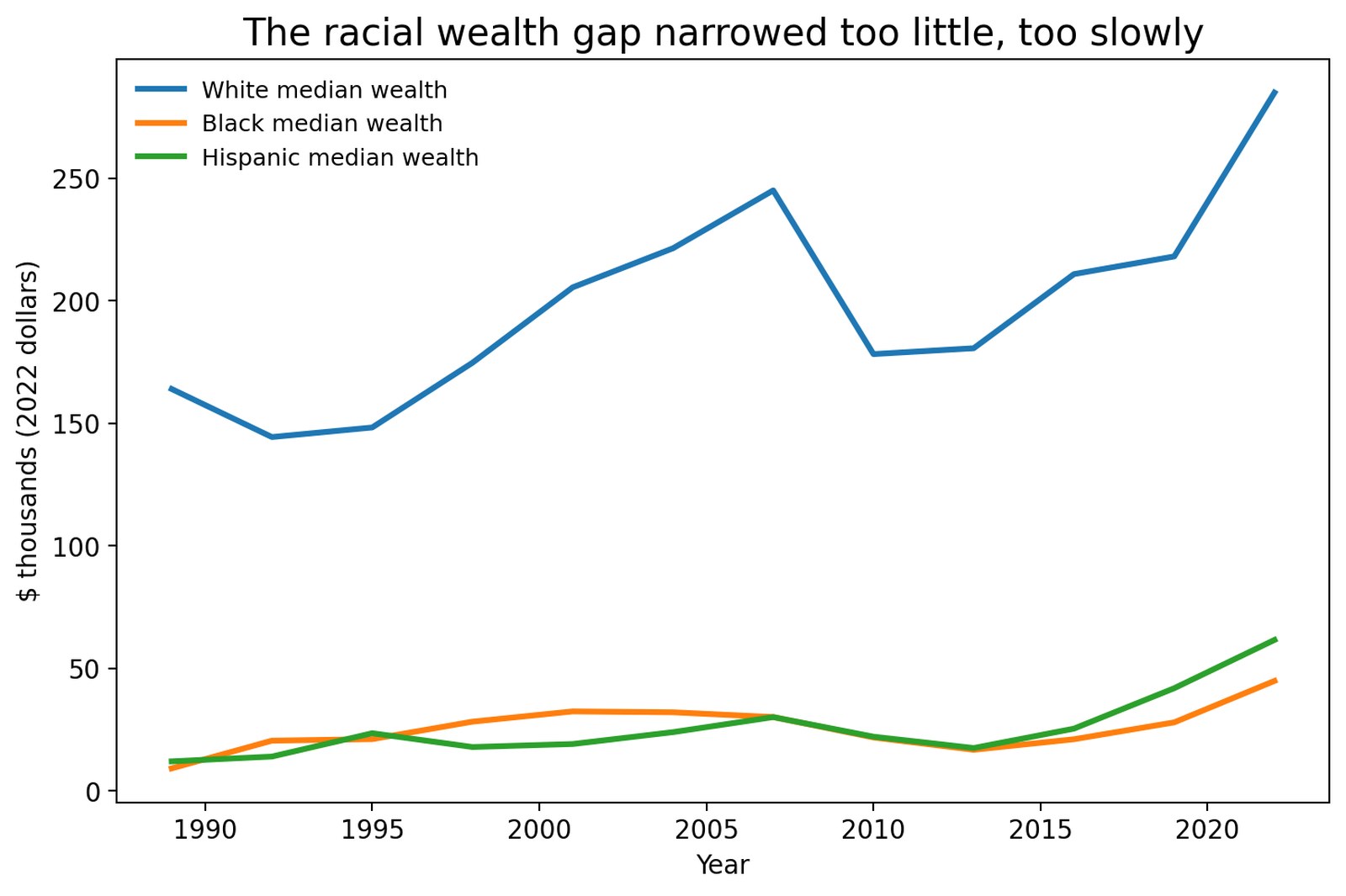
Figure 5. Median family wealth by race, 1989–2022, in 2022 dollars.
Gender belongs in the same sentence. The lived world presupposed by elite tax discourse—a world of appreciated assets, inherited stock, trust structures, and tax-managed wealth transfer—is not evenly distributed by household structure or care burden. A great many people, and disproportionately women carrying children, care work, and thin asset cushions, do not inhabit that world at all. They live where the tax system is still immediate, visible, and unavoidable: wages, payroll withholding, sales taxes, rent, debt, medical bills. Pew found that unmarried women without children had median wealth of $87,200 in 2022, roughly in line with single men at $82,100, while the median wealth of single mothers was just $10,700.22
And if I may return briefly to Augusta, that is still the local translation of this national argument. Most people in this city are not trying to optimize the tax consequences of nine figures in appreciated stock. They are trying to survive bills, wages, rent, insurance, debt, and too little cushion. That was the point of the last essay, and it remains the point now. The national tax debate is usually conducted from the vantage point of people arguing over how best to reach the ownership class. Ordinary people are living downstream from the ownership class.
If there is a different tradition worth recovering here, it is not another white paper and not another fantasy of clean managerial repair. It is the older municipal tradition that enemies once mocked as “sewer socialism”: politics rooted in place, in labor, in public goods, in the practical and moral insistence that ordinary people deserve more than elegant explanations for why their lives remain constrained. Milwaukee’s example mattered not because it offered a doctrinal template for every city, but because it paired concrete improvements with organized working-class power. As Eric Blanc writes, Milwaukee’s organizers “pushed the bread and butter question in the forefront” and sought “concrete political achievements, not theoretical treatises … less mouth-work, more footwork.”23 That is a very different thing from both right-wing fatalism and liberal tinkering. It does not ask people to admire the system more intelligently. It asks them to change the terms on which public life is organized.
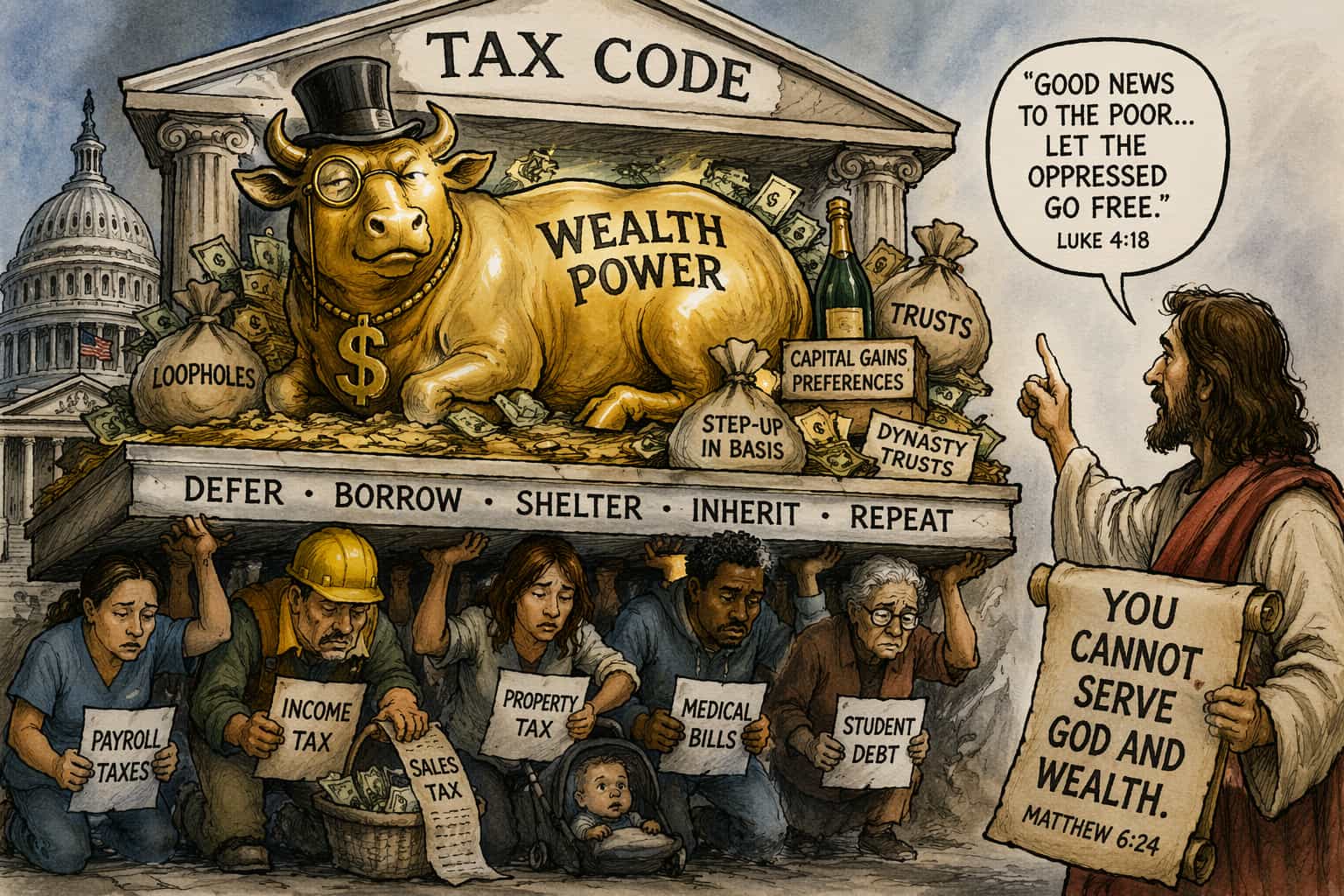
This is where Christian language clarifies rather than obscures. The problem with the tax code is not merely that it is inefficient or outdated or riddled with loopholes. The deeper problem is idolatry. We have built a society that treats wealth not as a tool to be judged by whether it serves human flourishing, but as a sign of virtue, competence, and near-sovereignty. We then organize law and politics around protecting that false god. We flatter owners, moralize workers, and call the result realism.
Even the better reformers often stop at the point where a more serious moral imagination would actually begin. They want a better formula without a conversion of vision. They want to improve the legitimacy of a regime they are still unwilling to name. They want the billionaires to pay more, but not in a way that forces the country to ask what sort of civilization it has become when so much of its political imagination is fenced in by owners, donors, lobbyists, and the experts who instruct the public on what is and is not realistic.
That is why Piketty and Acemoglu remain useful here. Piketty insists that inequality is not simply the outcome of neutral economic forces. It is political and ideological, structured through institutions that justify and reproduce it.24 Acemoglu reminds us that institutions are not background scenery but the actual legal and political arrangements that distribute power and resources.25 The ProPublica files did not disprove those claims. They gave them documentary flesh.
So no, Ray Madoff is not the enemy. She is more honest than many people who write about taxes for a living. But honesty about the mechanism is not the same thing as honesty about the order. Her proposals may improve the accounting of oligarchy. They do not touch the deeper fact that wealth in America is not only income deferred. It is power organized, protected, and taught back to the public as common sense.
And that is the point that has to be stated plainly.
The problem is not only that the tax code lets the rich get away with too much. The problem is that the tax code is one of the places where the country tells the truth about what it worships. It shields ownership, overexposes labor, and then trains the public to regard that arrangement as inevitable. The right calls that inevitability realism. The center-left calls it pragmatism. Ordinary people experience it as pressure, confusion, and the repeated failure of promised solutions to change anything deep enough to be felt.
Christians, at least, should be less afraid of naming that than anyone. Christ did not call his followers to become better managers of a comfortable injustice. He called them to tell the truth, to stand with the poor, and to refuse the worship of false gods. “You cannot serve God and wealth.” (Matthew 6:24).
That is not just a private warning about personal greed. It is a public standard. A Christ-centered politics would judge an economy by what it does to the poor, the indebted, the sick, the worker, the single mother, the abandoned neighborhood, the person whose labor is visible enough to tax and police but not powerful enough to protect. It would hear in Christ’s own mission not a vague spiritual comfort, but a social command: “good news to the poor … release to the captives … let the oppressed go free” (Luke 4:18). If our politics cannot yet imagine a world ordered more closely to that standard, then the problem is not that the public will not buy justice. It is that we have spent decades catechizing the public into believing there is no alternative when what really threatens them is the one they have been told to accept.
Notes
- White House, “This Tax Day, Americans Are Keeping More of What They Earn,” April 2026. https://www.whitehouse.gov/releases/2026/04/this-tax-day-americans-are-keeping-more-of-what-they-earn/ ↩
- U.S. Treasury, “Tax Day 2026: More Than 53 Million Filers Claimed New Tax Relief,” April 2026. https://home.treasury.gov/news/press-releases/sb0441 ↩
- National Review tax commentary, 2026. https://www.nationalreview.com/ ↩
- Tax Foundation tax commentary, 2026. https://taxfoundation.org/ ↩
- Margaret Thatcher Foundation archive, use of the phrase “There Is No Alternative.” https://www.margaretthatcher.org/document/108369 ↩
- New York Times / The Ezra Klein Show, “How the Wealthy Avoid Taxes, and What to Do About It,” April 17, 2026. https://www.nytimes.com/2026/04/17/opinion/ezra-klein-podcast-ray-madoff.html ↩ ↩
- Brookings / Tax Policy Center, “Taxing the Angel of Death,” and related work on step-up in basis and wealth transfer. https://www.brookings.edu/articles/taxing-the-angel-of-death/ ; https://www.brookings.edu/wp-content/uploads/2024/12/20241209_TPC_Galeetal_GreatWealthTransfer.pdf ↩
- Federal Reserve Distributional Financial Accounts / FRED, Top 1 percent and Bottom 50 percent wealth-share series, 1989–2025. ↩
- Federal Reserve Distributional Financial Accounts / FRED, Top 1 percent share by asset class, 1989–2025. ↩
- ProPublica, “The Secret IRS Files: Trove of Never-Before-Seen Records Reveal How the Wealthiest Avoid Income Tax,” June 2021. https://www.propublica.org/article/the-secret-irs-files-trove-of-never-before-seen-records-reveal-how-the-wealthiest-avoid-income-tax ↩
- ProPublica, “Billionaires’ Tax Avoidance Techniques Revealed by IRS Files,” and related Secret IRS Files coverage. https://www.propublica.org/article/billionaires-tax-avoidance-techniques-irs-files ↩ ↩
- ProPublica, “More Than Half of America’s 100 Richest People Exploit Special Trusts to Avoid Estate Taxes.” https://www.propublica.org/article/more-than-half-of-americas-100-richest-people-exploit-special-trusts-to-avoid-estate-taxes ↩
- ProPublica, “The Great Inheritors: How Three Families Shielded Their Fortunes From Taxes for Generations.” https://www.propublica.org/article/the-great-inheritors-how-three-families-shielded-their-fortunes-from-taxes-for-generations ↩
- NBER, Balkin, Saez, Yagan, and Zucman, “How Tax Systems Shape Inequality: The Top 400 Americans, 1950–2020,” 2025. https://www.nber.org/papers/w34170 ↩
- IRS Statistics of Income, “The 400 Individual Income Tax Returns Reporting the Largest Adjusted Gross Incomes Each Year, 1992–2014.” https://www.irs.gov/pub/irs-soi/14intop400.pdf ↩
- Federal Reserve Board, “Wealth and Income Concentration in the SCF: 1989–2019, Accessible Data.” https://www.federalreserve.gov/econres/notes/feds-notes/wealth-and-income-concentration-in-the-scf-accessible-20200928.htm ↩
- Pew Research Center, “Top tax frustrations for Americans: Feeling that some wealthy people, corporations don’t pay fair share,” April 6, 2026. https://www.pewresearch.org/short-reads/2026/04/06/top-tax-frustrations-for-americans-feeling-that-some-wealthy-people-corporations-dont-pay fair-share/ ↩
- Dorothy A. Brown testimony before the U.S. Senate Finance Committee. https://www.finance.senate.gov/imo/media/doc/Professor%20Dorothy%20Brown%20Testimony.pdf ↩
- IRS acknowledgment of audit disparity research concerning Black taxpayers and correspondence audits. https://www.irs.gov/pub/newsroom/werfel-letter-on-audit-selection.pdf ↩
- Federal Reserve Board, “Greater Wealth, Greater Uncertainty: Changes in Racial Inequality in the Survey of Consumer Finances, Accessible Data.” https://www.federalreserve.gov/econres/notes/feds-notes/greater-wealth-greater-uncertainty-changes-in-racial-inequality-in-the-survey-of-consumer-finances-accessible-20231018.htm ↩ ↩
- Pew Research Center, “Among unmarried adults, women without children have as much wealth as single men,” November 4, 2024. https://www.pewresearch.org/short-reads/2024/11/04/among-unmarried-adults-women-without-children-have-as-much-wealth-as-single-men/ ↩
- Eric Blanc, “The Lessons of ‘Sewer Socialism,’” Catalyst, Vol. 9 No. 4 (Winter 2026). ↩
- Thomas Piketty, Capital and Ideology, and related summary essay on inequality as political and ideological. https://piketty.pse.ens.fr/files/Piketty2021BJS.pdf ↩
- Daron Acemoglu, Nobel lecture and related work on institutions, power, and distribution. https://www.nobelprize.org/uploads/2025/01/acemoglu-lecture.pdf ↩
Previous Coverage in Garden City Gossip:https://gardencitygossip.com/augusta-charter-reform-collapse/
Tax Day in Augusta: What the Affordability Debate Refuses to See
🌺 UNDER THE AZALEAS 🌺 – Who Killed Augusta’s Charter? A Reform Effort Dies Under Political Pressure