Aiman Tariq – Regional News Editor
Savannah, GA –
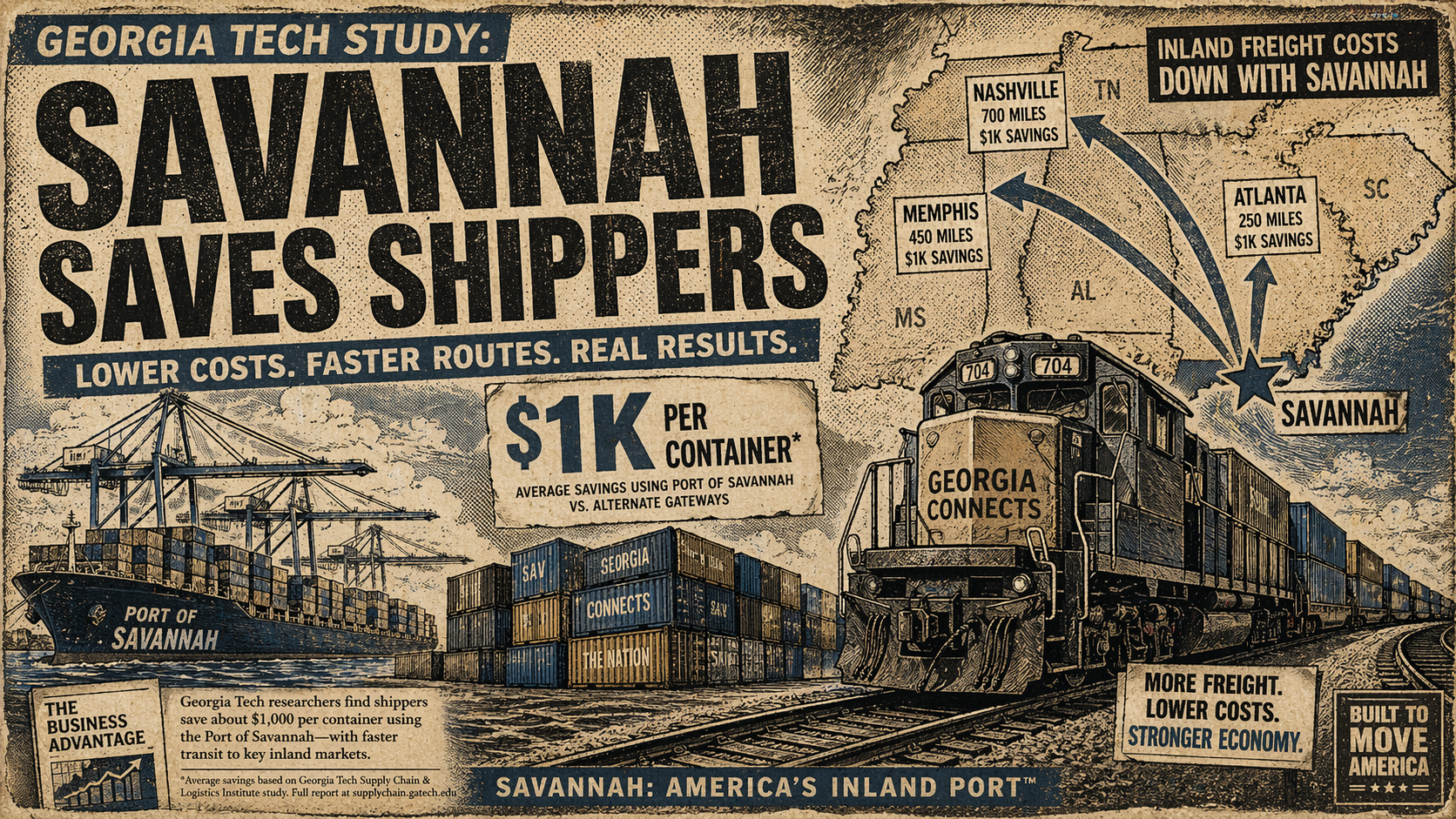
A new Georgia Tech study says the Savannah port may offer a cheaper and more predictable gateway for cargo headed to Atlanta, Memphis, and Nashville than many West Coast alternatives, especially when the full supply chain is counted rather than ocean transit alone. According to the research, routing freight through Savannah can save shippers more than $1,000 per container once inland transport, congestion exposure, and reliability are factored in.
That finding does not mean Savannah is automatically the best choice for every shipment. It does mean the old shorthand — shorter ocean route equals lower total cost — does not always hold once containers reach the U.S. side of the trip. In that sense, the study is less about one port “winning” and more about how gateway decisions change when inland performance matters as much as ocean miles.
What the Study Found?
According to Georgia Tech’s Supply Chain and Logistics Institute, researchers analyzed vessel and inland transportation data from 10 Asian ports to three inland U.S. markets: Atlanta, Memphis, and Nashville. Their conclusion was that Savannah offered the most cost-effective and reliable gateway among the options studied, largely because of lower inland complexity and more consistent end-to-end performance.
The study argues that gateway choices should not be based only on ocean rates or sailing time. West Coast routes may be faster at sea, but the report says congestion, cargo rehandling, and inland transportation variability can erase that advantage once freight moves inland. Savannah, by contrast, benefited in the study from efficient terminal operations, direct interstate access, and on-terminal rail capacity.
Why “Cheaper” Does Not Just Mean Ocean Freight?
This is the part supply-chain studies often try to separate: a lower ocean rate is not always the same thing as a lower total landed cost.
According to Georgia Tech, Savannah’s edge came from a broader cost picture. The researchers framed the choice as a “total cost and time reliability decision,” not simply an ocean-rate decision. That matters because many delays and extra charges happen after a ship reaches the U.S. coast.
For readers searching broad freight or cost Georgia tech comparisons, that is the central takeaway. The study is not claiming that shipping through Georgia is always cheaper at every stage. It is saying that when the entire route is modeled end to end, Savannah performed better for the three markets examined.
Why Savannah Looks Strong in the Model?
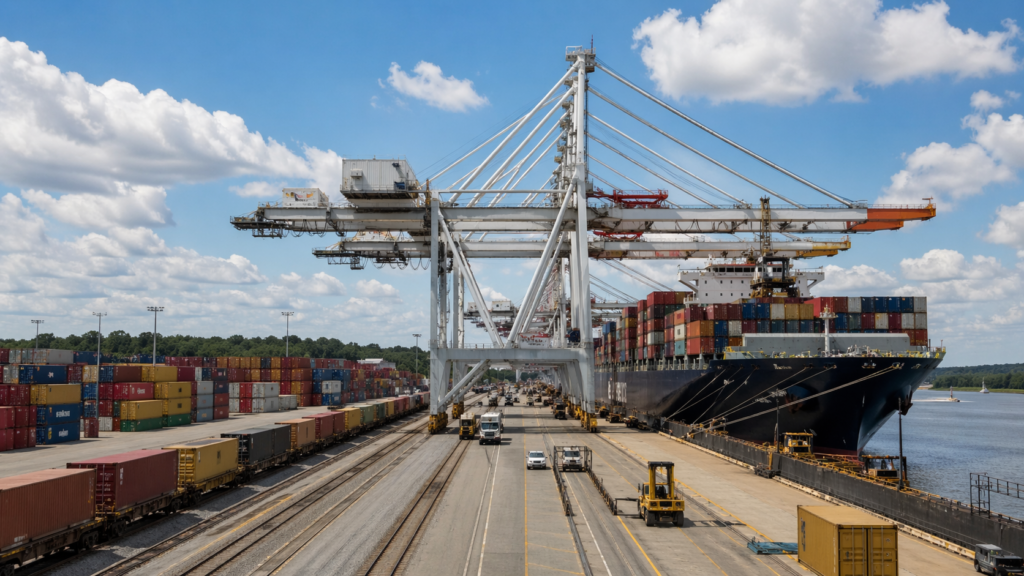
Part of Savannah’s advantage comes from infrastructure the state has spent years expanding.
The Georgia Ports Authority says Mason Mega Rail expanded on-terminal rail lift capacity to 2 million TEUs per year, with 34 miles of track and 18 working tracks designed to move containers inland more efficiently. That does not prove every shipper will save the same amount. It does help explain why inland reliability has become a larger part of Savannah’s pitch to customers.
The Georgia ports authority has also emphasized that Savannah’s rail and interstate access make it better positioned for inland Southeast distribution than ports that rely more heavily on additional cargo transfers after arrival. That aligns with the study’s broader conclusion that reliability and handling friction can matter as much as travel distance on the water.
The Study’s Markets Matter
It is also worth noting what the study did — and did not — examine.
The findings were specific to cargo moving to Atlanta, Memphis, and Nashville. Those are major inland markets with different freight patterns from, say, Chicago, Dallas, or the Northeast. So while the report strengthens Savannah’s case as a Southeast gateway, readers should be careful about treating it as a blanket rule for every supply chain.
That is especially true for logistics planners or any shippers authority making network decisions across multiple regions. A port may look strong for one set of inland destinations and less compelling for another, depending on rail access, drayage costs, warehouse strategy, and timing requirements. The Georgia Tech study is specific — and that specificity is part of what gives it value.
Why the Port of Savannah Keeps Showing Up in Supply-Chain Planning?
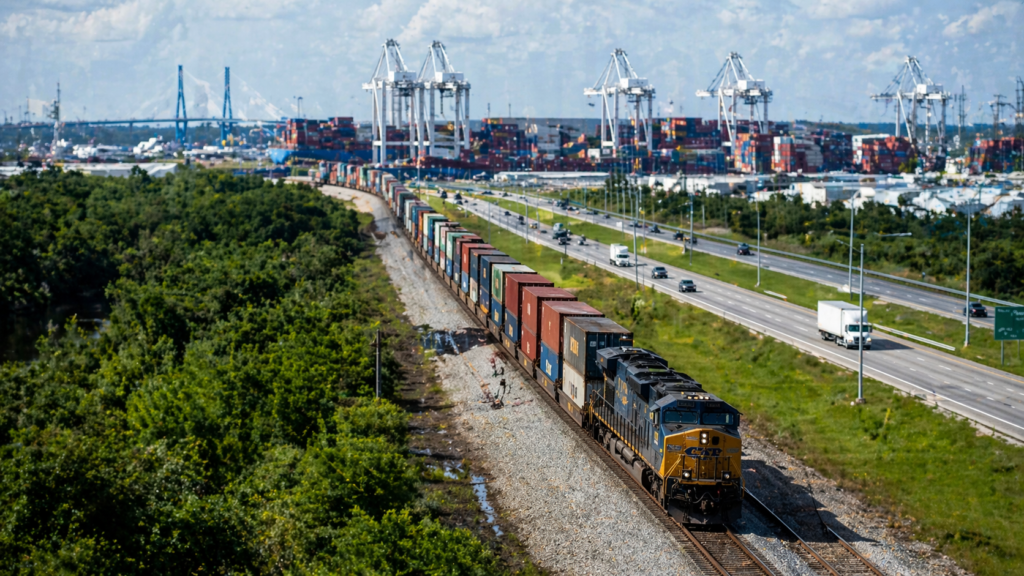
Savannah has already been moving at a large scale even before this latest study.
The Georgia Ports Authority reported in January that the Port of Savannah had just recorded its second-busiest year ever, noting that 2022 traffic had reached about 5.9 million TEUs and that the most recent year trailed only that peak. Those topline numbers do not by themselves prove cost efficiency. They do suggest Savannah is no longer operating as a niche alternative in East Coast freight discussions.
That scale helps explain why the study is getting attention beyond Georgia. The question is no longer whether Savannah can handle major container volume. The question is whether it can consistently convert that scale into lower costs and fewer delays for inland markets.
What the Research Is Really Saying?
In practical terms, the study’s message is simple: gateway selection is no longer just a coastline question.
For years, many shippers defaulted to West Coast entry for Asian cargo because the voyage itself was shorter. Georgia Tech’s researchers are arguing that inland execution can flip that math. A longer ocean route may still produce a better overall result if the cargo moves more smoothly once it lands.
That is where the Savannah port appears to have gained ground. According to the study, its terminal efficiency and inland connections reduced exposure to the kinds of delays that can turn a nominally faster route into a less reliable one.
For some readers, search terms like east coast tires may turn up around freight, warehousing, or consumer imports. But this study is not about one product sector. It is about whether East Coast routing, through Savannah specifically, now gives inland Southeast markets a stronger total-cost option than older West Coast-first assumptions.
The Bottom Line
Georgia Tech’s latest research says cargo routed through the Port of Savannah can save shippers more than $1,000 per container for three key inland markets: Atlanta, Memphis, and Nashville. The argument is not based on ocean distance alone. It is based on total cost, transit reliability, and how smoothly containers move after reaching the U.S. coast.
That makes the study significant for Georgia, but also for a wider freight industry that has spent years rethinking how vulnerable long supply chains can be to congestion and disruption.
The broader claim should still be read carefully. The study is market-specific, not universal. But for those three inland destinations, the report suggests Savannah is no longer just a regional port with growing volume. It is increasingly being modeled as a preferred gateway in its own right.