Aiman Tariq – Regional News Editor
Atlanta, GA –
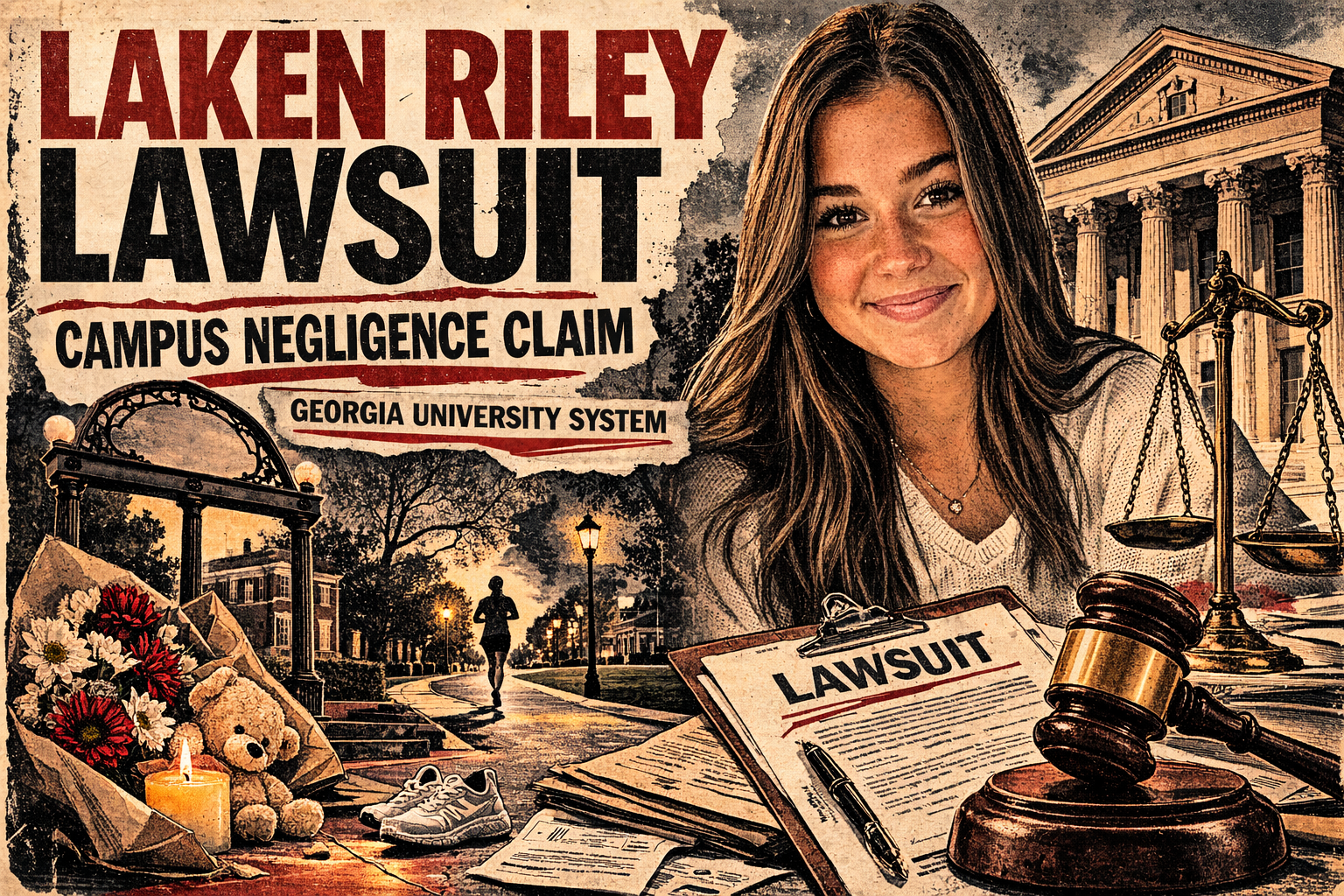
According to court filings first reported by the Associated Press, the father of Laken Riley has filed a wrongful-death lawsuit accusing Georgia’s public university system and several property management companies of negligence in the events leading up to his daughter’s killing on the University of Georgia campus.
The lawsuit does not reopen the criminal case against Jose Ibarra, who was convicted of murder and other charges in Riley’s death. Instead, it shifts attention to a different question: whether campus officials and others had warning signs that morning and failed to act in a way that might have reduced the risk.
That distinction matters. A wrongful-death suit is not a retrial, and it does not by itself prove negligence. But it does put the university system’s safety procedures, internal communications, and response obligations under renewed scrutiny.
What the Lawsuit Alleges?
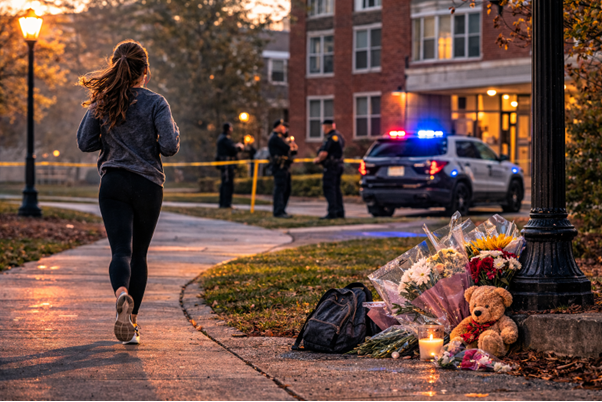
According to the complaint filed by Jason Riley, the Board of Regents of the University System of Georgia “failed in its duty to provide reasonably safe premises” and failed to notify students and visitors after an earlier encounter involving Ibarra on campus that same morning.
The filing says that just over an hour before Riley was killed, Ibarra allegedly looked through the window of a University of Georgia graduate student’s apartment and tried to open the front door before fleeing into a wooded area.
The lawsuit argues that students and guests were not warned about that incident in time.
“Soon thereafter, with no knowledge of the potential assailant and no reason to suspect any danger, nursing student Laken Riley went for her routine morning run near the Intramural Fields on the UGA campus,” the complaint says.
The Board of Regents, according to AP, has said it does not comment on pending litigation.
The Timing Issue at the Center of the Case
The filing’s central argument appears to be about timing.
According to the lawsuit, the earlier apartment incident should have triggered a stronger response from campus authorities, including some form of warning to students and visitors in the area. The complaint also says the Board of Regents failed to follow its own screening and employment policies in ways that, according to the filing, contributed to broader safety failures.
That does not automatically mean the university system will be found liable. Civil claims like this often hinge on foreseeability, notice, and whether a duty existed under the circumstances. But the timing issue gives the case a more focused shape than a general complaint about campus crime.
It is also why this filing may get more attention than a routine premises-liability dispute. The lawsuit is not simply saying the campus was unsafe in a broad sense. It is saying there was a specific warning moment and that the response fell short.
Who the Lawsuit Names?
The lawsuit names the Board of Regents as well as several property management companies connected to the apartment complex where Ibarra lived with other people, including two of his brothers.
According to the complaint, the property manager failed to properly screen prospective tenants and allowed Ibarra to live there despite what the lawsuit describes as immigration-related issues and a criminal history. Those are allegations in the civil filing, not findings of liability.
Jason Riley is seeking compensatory and punitive damages, along with legal costs, and is asking for a jury trial.
The criminal case, by contrast, already resulted in a conviction. That is part of why this lawsuit is likely to be read less as a question of who killed laken and more as a question of whether institutions around the campus environment could have responded differently.
What the Civil Case Is Actually About?
The new suit does not suggest the killer was wrongfully accused. It does not challenge the murder conviction. Instead, it argues that institutions beyond the convicted defendant may bear civil responsibility for what happened.
That is an important line, especially in a case that has drawn national political attention and heavy public reaction. In high-profile cases, public debate can easily blur together criminal guilt, political messaging, and institutional accountability. This lawsuit focuses on the third category.
Why the Story Still Resonates?
The killing of Riley quickly became a national story, not only because of the violence of the crime, but because it was pulled into a wider debate over immigration, campus safety, and public policy.
That larger political framing is one reason the case still carries unusual weight. Online search traffic and public discussion have remained intense, sometimes reducing the victim to shorthand terms such as Riley Laken while flattening the legal and factual distinctions that matter in court.
It has also been the kind of case that attracts unrelated name recognition and cross-case confusion online. Some public discussion has mixed it with unrelated criminal cases involving figures such as Nikolas Cruz or even unrelated search-name spillover like Colt Johnson, though neither has any direct connection to the Riley lawsuit or the underlying homicide case.
That kind of confusion is common in highly publicized cases. It is also why careful reporting matters.
Campus Safety Questions Return
The filing is also likely to renew broader questions about campus warning systems, trespassing incidents, student alerts, and how universities assess threats that may seem ambiguous in real time.
Those questions are difficult precisely because hindsight is sharper than the moment itself. Not every suspicious encounter becomes a violent crime. Not every unusual report leads to a campuswide alert. Universities and law enforcement agencies make judgment calls every day based on incomplete information.
Still, the complaint argues that this case involved enough warning to require more action.
That makes the lawsuit significant even beyond the Riley family’s claims. If the case moves forward, it could force a closer look at how quickly universities are expected to alert students when a possible threat is reported nearby.
Why This Matters Beyond One Lawsuit?
If the case moves deeper into discovery or toward trial, it may put internal procedures, safety protocols, and communication timelines under a brighter spotlight.
That does not mean the lawsuit will succeed. But it does mean the legal focus is widening. The questions are no longer limited to the conduct of one convicted defendant. They now include what institutions knew and whether their response matched the risks that were already emerging.
What Happens Next?
The case was filed in Gwinnett County State Court, and the early stages will likely focus on motions, responses from the defendants, and the legal question of whether the institutions named in the complaint owed Riley a duty under the facts alleged.
Civil litigation like this can move slowly. Defendants may dispute the allegations, challenge specific claims, or argue that the chain of causation described in the complaint is too attenuated to support liability.
For now, what exists is a set of allegations, a prior criminal conviction, and a family seeking damages through the courts.
The Bottom Line
According to the lawsuit, Laken Riley’s father is accusing Georgia’s university system and property management companies of negligence in the events leading up to her death.
The suit does not revisit who killed Riley. It asks whether others failed to respond appropriately after earlier warning signs that morning.
That makes this a different kind of case from the murder trial that already ended in conviction. It is a civil challenge centered on duty, notice, and institutional response.
Whether those claims succeed will be decided in court.
But the filing ensures that the questions surrounding Riley’s killing are no longer limited to the actions of one convicted defendant. They now extend to what campus officials and others knew, when they knew it, and whether they acted quickly enough once concern had already surfaced.