Aiman Tariq – Regional News Editor
Atlanta, GA –
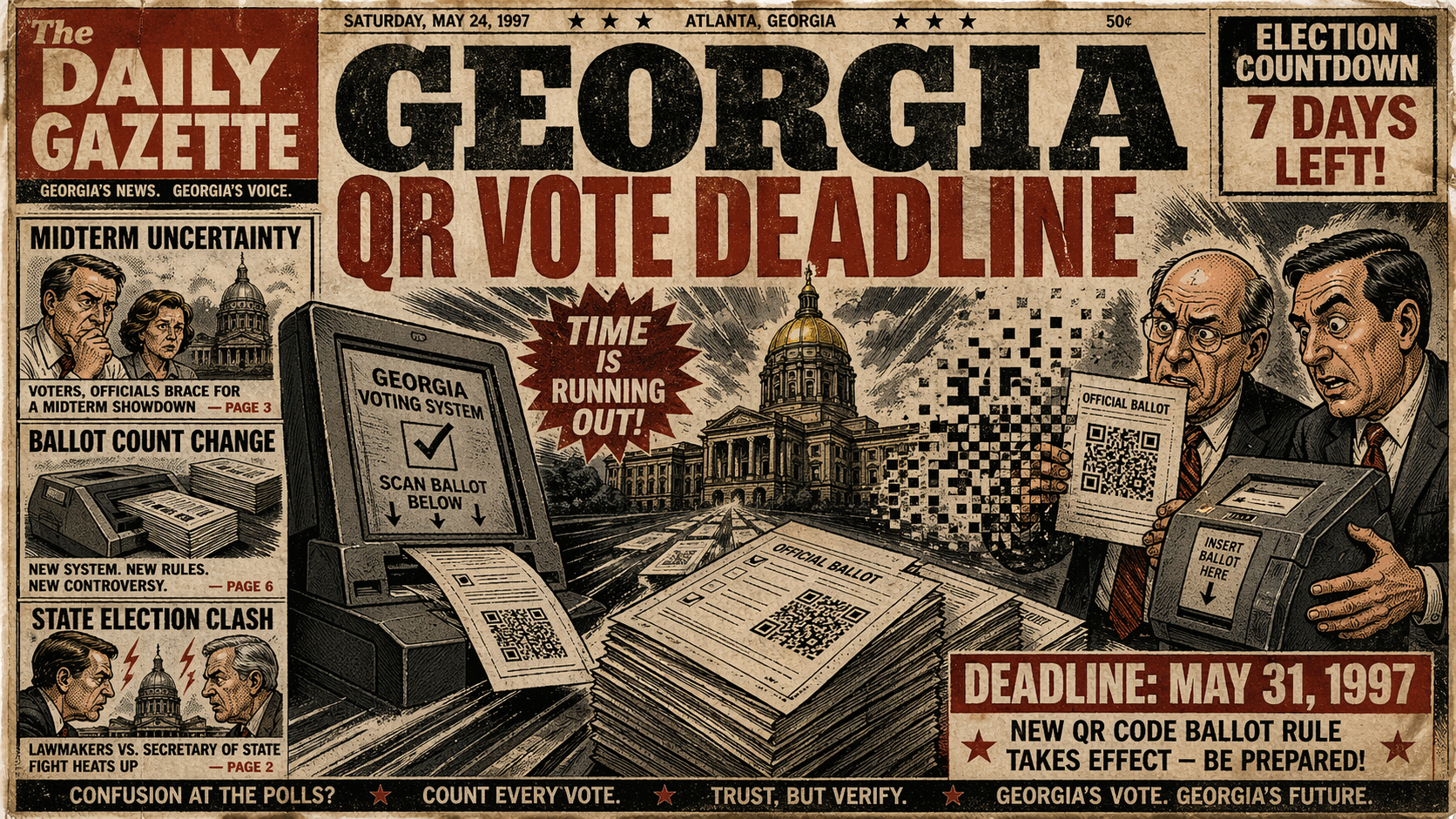
Georgia election officials are warning that the state is running out of time to resolve a problem lawmakers created themselves: beginning July 1, ballots can no longer be tabulated using QR codes, even though the state has not fully settled on a replacement system. That has left local administrators, state officials, and voting advocates looking at the same calendar and reaching very different conclusions about what happens next.
The issue is not whether Georgia elections will happen. They will. The question is whether the state will head into the November midterms with a clear, lawful, and workable method for counting millions of ballots — or whether counties will be left improvising around a deadline the Legislature imposed in 2024 and then failed to fully solve during the 2026 session.
That is why election officials have been sounding less like partisans and more like administrators trying to avoid preventable chaos. The concern is not abstract. Georgia uses touchscreen ballot-marking devices statewide, and those machines print ballots containing both human-readable text and a machine-readable QR code. Under current law, the state can no longer use that QR code to count votes after July 1, 2026.
Why Does the QR Code Deadline Matters?
The QR code issue has been argued over for years, often in the broader shadow of post-2020 election distrust. Critics say voters cannot personally verify the code that scanners use to count their votes, even though they can read the printed text on the ballot. Supporters of the current system, including officials in the secretary of state’s office, have long said the system remains accurate and secure.
But the legal deadline is now closer than the rhetoric. The law signed by Gov. Brian Kemp in 2024 says that beginning July 1, 2026, Georgia can no longer use QR codes to count ballots produced by the state’s ballot-marking devices. That means a change is required whether election officials think it is wise, rushed, or underfunded.
That is where the problem sharpens. Lawmakers created the deadline, but they did not complete a consensus replacement plan before leaving Atlanta this spring. A proposal to delay the deadline to 2028 moved during the session but did not make it through the process in time.
Why Are Officials Nervous About November?
Local election officials have been unusually blunt about the planning burden.
WTOC reported that Chatham County Elections Director Brook Schreiner said election planning begins months in advance and that changing systems this late in the cycle is not something counties can do casually. She said the larger concern is not simply which system gets chosen, but the lack of a coherent statewide plan in a major election year.
That concern has been echoed elsewhere. Election administrators have warned that the backup use of hand-marked paper ballots was designed for emergencies such as outages or equipment failures, not as a first-choice statewide solution for a high-turnout midterm. AP reported that Georgia’s State Election Board rejected a proposed rule that would have broadened when hand-marked ballots could be used, leaving the legal ambiguity largely intact.
This is the difference between having an emergency procedure and planning to make the emergency procedure the system.
Why Is a Paper Pivot Not So Simple?
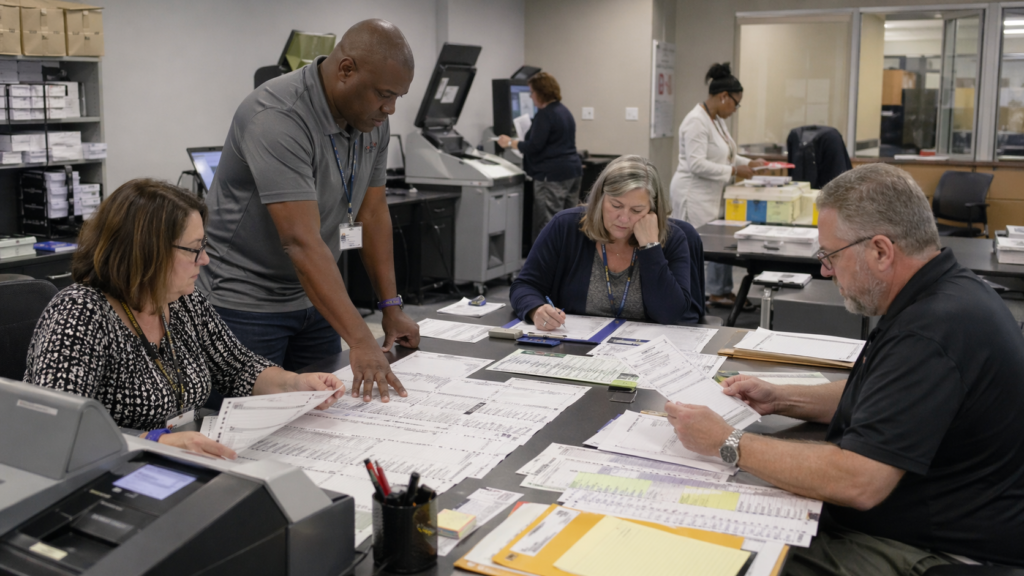
On paper, hand-marked ballots can sound straightforward. In practice, county officials say the system becomes more complex when precincts have multiple districts and many ballot styles.
That is one reason election directors have focused so heavily on logistics. In larger counties, poll workers may be handling dozens of ballot combinations tied to city council, county commission, school board, legislative, and congressional races. The risk, they say, is not only delay. It is error — especially if the wrong paper ballot is given to the wrong voter.
For a Georgia voter, that distinction may not be visible when walking into a polling place. But it matters on the back end. Election administration tends to look simple only when it works. Once the system changes late, training, staffing, ballot handling, and recount procedures all become heavier lifts.
The Cost Fight Has Never Really Gone Away
The financing dispute is part of why this still is not resolved.
According to AP, Secretary of State Brad Raffensperger told lawmakers it could cost about $66 million to swap out election systems with three years left on the current contract. Other reporting has shown a wider range depending on whether the state tries to rework existing equipment or purchase something new. Votebeat reported that estimates ran from roughly $25 million to $300 million, depending on the path chosen.
Raffensperger also proposed a narrower workaround using optical character recognition, or OCR, which he said had performed accurately in a pilot and could cost about $300,000 rather than tens of millions. The Legislature, however, did not resolve that path during the regular session either.
That helps explain why the state now appears stuck between legal requirements, budget caution, and implementation realities.
What This Means for Results Night?
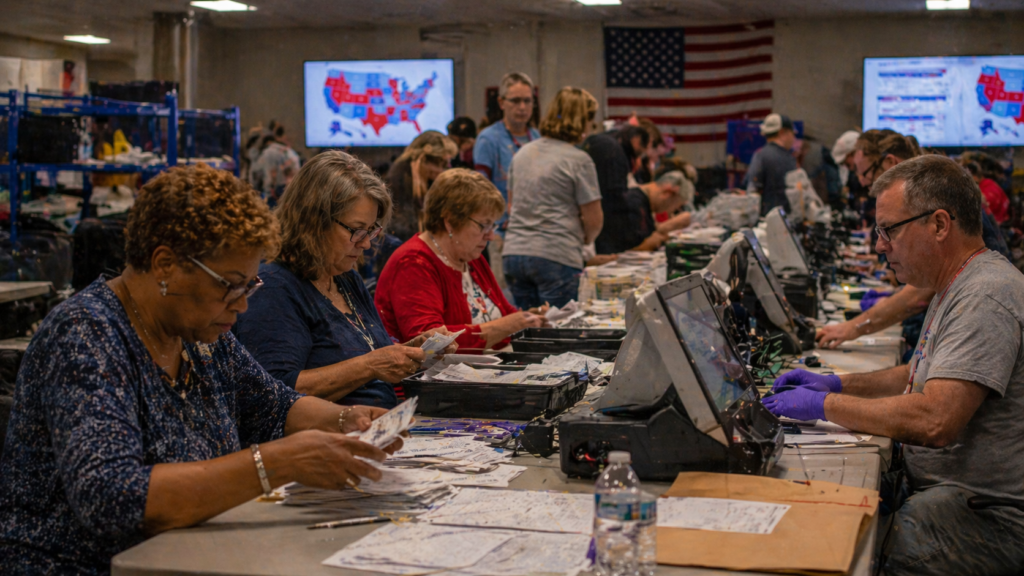
For most people, election administration becomes real only when polls close and vote totals begin to appear.
That is why this debate matters beyond lawyers and election boards. If the state heads into November without clarity, the risk is not only operational confusion inside polling places. It is also a system that could be more vulnerable to mistrust if delays, inconsistent procedures, or county-by-county differences start affecting how GA election results are reported.
The same goes for readers who usually track Georgia election results by county on election night. County breakdowns only feel routine when the tabulation process underneath them is settled. If that process changes late or unevenly, even ordinary reporting delays can become politically charged.
Some of the public discussion around the deadline has already taken on that edge. For readers encountering confusing search phrases like collision results, the underlying issue is less a single machine failure than a legal and logistical collision: a statewide deadline, a missing replacement plan, and a major election coming anyway.
Why Is the State Still Saying It Will Be Ready?
Despite the uncertainty, the secretary of state’s office has continued to project confidence.
According to the reference reporting, a spokesperson for Raffensperger said Georgia’s election directors will be ready to run an election in November. That may prove true. Georgia’s local officials have repeatedly shown they can adapt under pressure. But confidence is not the same thing as closure. The more basic problem remains: the state still has to match its legal deadline with a system counties can actually execute.
And that is why the debate has lingered. It is not only about whether QR codes should stay or go. It is about whether lawmakers created a deadline faster than they created a solution.
The Bottom Line
Georgia is heading toward a July 1 ban on QR-code ballot tabulation without a fully settled replacement system in place.
Officials say they will be ready. County election directors say the lack of a clear plan is a serious problem. Both statements can be true at the same time.
The state still has time to clarify what will happen before November. But that window is narrowing, and election administration does not improve by guessing late.
For now, the most accurate way to describe the situation is not as a finished solution or a proven disaster. It is a self-created deadline with major unanswered questions — and a November election moving closer whether the state is fully ready or not.