Aiman Tariq – Regional News Editor
Atlanta, GA –
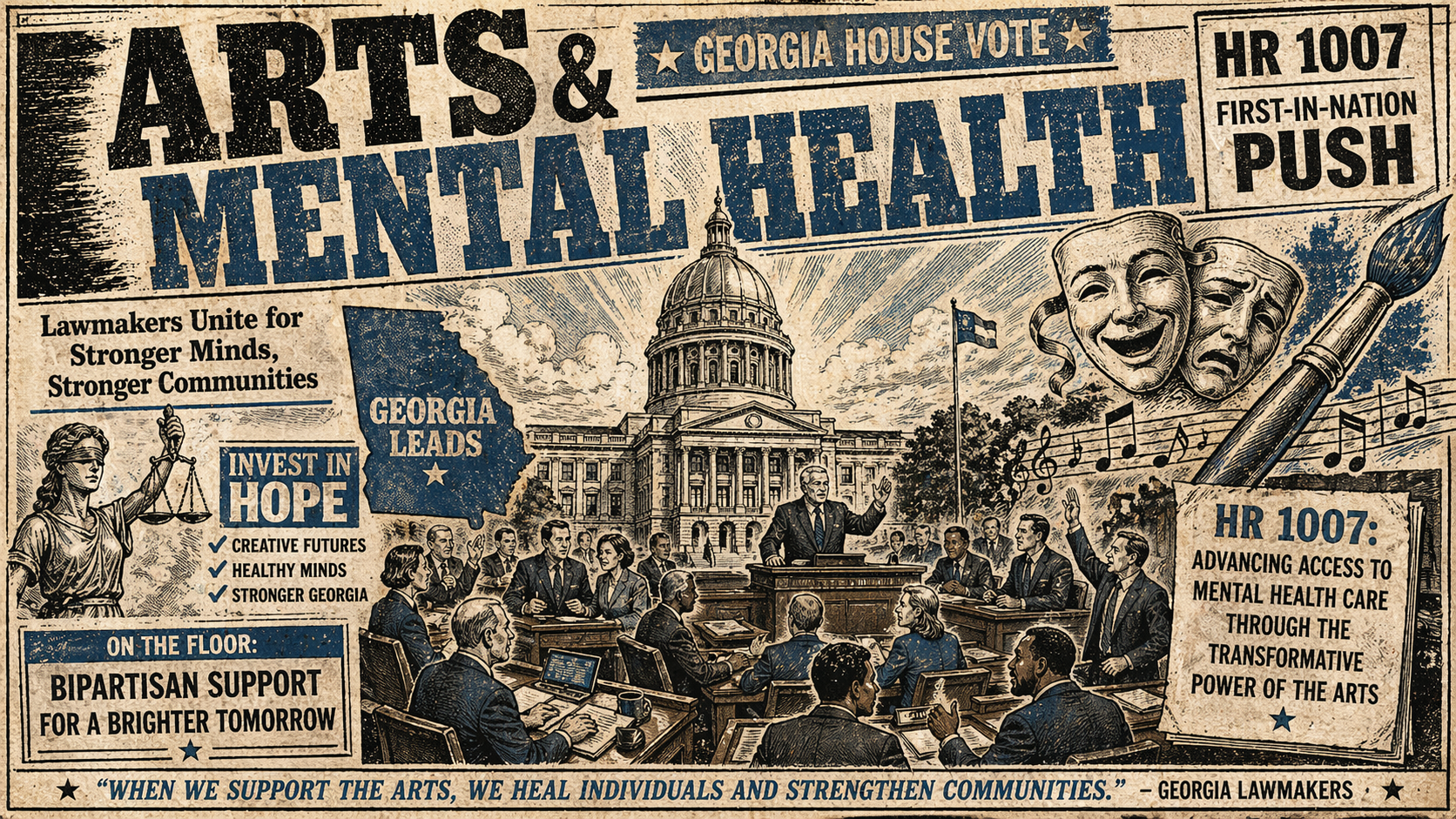
The Georgia House has unanimously approved a resolution supporting the use of the arts as part of mental-health care, giving advocates a symbolic but notable win as they prepare for a more difficult budget fight next year.
According to SaportaReport, House Resolution 1007 passed the House on March 31 after earlier clearing the Special Rules Committee in February, with supporters describing it as the first statewide legislative measure in the country to explicitly connect the arts with mental-health outcomes. The resolution itself acknowledges the role of arts-for-health initiatives in improving mental-health outcomes and supporting care across communities.
That matters, but it is also worth being precise about what happened here. A House resolution is not the same thing as a funded statewide program. It does not by itself create a new treatment system or guarantee access. What it does is give legislators, arts organizations, and healthcare advocates a formal policy statement they can point to as they push for appropriations and program development in the next session.
What the Resolution Says?
HR 1007 frames the arts as a legitimate support for mental-health and well-being, reflecting a broader “arts for health” movement that has been gaining visibility in medical and public-health circles. The resolution text says the arts can help support mental-health outcomes and recognizes the role of artists, arts organizations, arts therapists, and related initiatives in that work.
Supporters have described that language as more than ceremonial. State Rep. Kim Schofield, one of the resolution’s leading sponsors, told SaportaReport that lawmakers are “recognizing the arts as medicine” and called the measure the first step in a broader effort that could eventually include funding.
That next step is important because resolutions often do two things at once: they send a political signal, and they test whether there is enough bipartisan support to move from language to dollars. In this case, the House vote suggests there is little open resistance to the idea. Whether that consensus survives an actual budget debate is a different question.
Why Advocates See This as Significant?
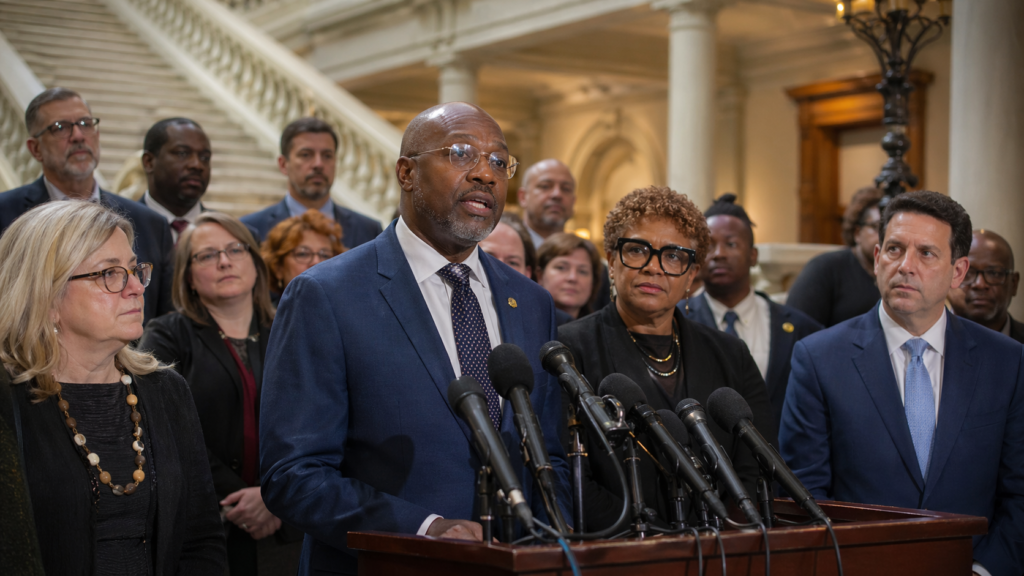
The push behind the resolution brought together lawmakers, arts leaders, and public-health advocates in an unusually broad coalition. Schofield told SaportaReport the effort was intentionally bipartisan, with Democratic and Republican sponsors backing the measure. She also said supporters plan to return next session seeking an appropriation so the idea can move beyond recognition and into implementation.
That is one reason the vote drew attention outside Georgia. Marcel Foster, who helped rally support for the measure and is affiliated with Performance Hypothesis as well as the University of Florida’s Center for Arts in Medicine, said the Georgia action was nationally historic because other states may license creative arts therapy, but Georgia’s resolution is broader in how it links the arts to mental-health outcomes. Foster’s institutional affiliations and advocacy role are reflected in both the SaportaReport coverage and related materials tied to the resolution campaign.
Supporters also point to a wider body of research around arts engagement and health. The World Health Organization has previously reviewed evidence suggesting that the arts can support mental health, social connection, and recovery in a range of settings. Georgia advocates are clearly trying to place the resolution within that broader evidence-based conversation, not present it as a standalone cultural gesture.
The Heavy Lift Comes Next
If the House vote was the easy part, funding will almost certainly be harder.
Schofield told SaportaReport that supporters want to seek budget support in the next legislative session. That would move the conversation from principle to cost — and from symbolic unanimity to the more complicated politics of appropriation.
That is usually where broad consensus starts to narrow. Legislators can unanimously endorse a concept and still disagree over how much state money should be attached to it, which agencies should oversee it, and how success should be measured.
Doug Shipman, now president and CEO of South Arts, told SaportaReport that Georgia is leading a national conversation connecting arts and health, and that the next task is to build partnerships across healthcare, nonprofit, public, and arts sectors. South Arts separately announced Shipman’s appointment in late 2025, with his tenure beginning in January 2026.
That helps explain the current posture from supporters. They are not treating the House vote as the finish line. They are treating it as groundwork.
How Georgia Framed the Resolution?
One notable part of the debate is how carefully supporters have described the proposal. Schofield called it a “people issue,” not a partisan one, and the measure drew backing from lawmakers including Todd Jones and Mary Margaret Oliver. That mix matters because it gives the effort a broader political base than an arts-only campaign might usually have.
It also gives advocates a more practical message heading into next year: the resolution passed unanimously, the sponsors were bipartisan, and the idea can be presented as a public-health tool rather than a niche cultural program.
That does not guarantee success. But it does make the case easier to carry forward.
The Role of Public Language
There is also a messaging element here that supporters seem to understand well. Mental-health policy can quickly become abstract. The arts, by contrast, offer something concrete: music, visual art, performance, storytelling, and community participation. That may be part of why the resolution attracted such broad support in the first place.
The challenge now is proving that broad support can survive contact with the budget process.
What the Vote Does — and Does Not — Mean
The House action does not mean Georgia has created a new statewide therapy infrastructure. It does not mean insurers are suddenly paying for arts-based programs. And it does not mean the clinical or legal questions around treatment standards have been fully settled.
What it does mean is narrower, but still important: the state House has publicly embraced the idea that the arts can play a role in mental-health care and recovery, and it has done so unanimously. For a state that is not usually first in per-capita arts funding, that is a meaningful signal.
Some of the online chatter around the resolution has also drifted into irrelevant search spillover — phrases like rally house Dallas, Georgia hart, Jones Foster, Tom Forsyth, and the gift Mary Oliver — but none of that changes the central point of the vote: the House has given arts-and-health advocates a bipartisan platform, and they are now trying to turn that platform into policy.
The Bottom Line
Georgia’s House has unanimously approved a resolution recognizing the arts as a tool that can support mental-health outcomes.
Supporters describe it as a first-in-the-nation step, and the official resolution language does make Georgia’s action unusual in statewide legislative terms.
Still, the harder part comes next. A resolution can signal priorities. It cannot fund them.
So the real test is no longer whether lawmakers are willing to praise the connection between art and mental health. It is whether they are willing to pay for programs that would make that idea real.