Aiman Tariq – Regional News Editor
Charleston, SC –
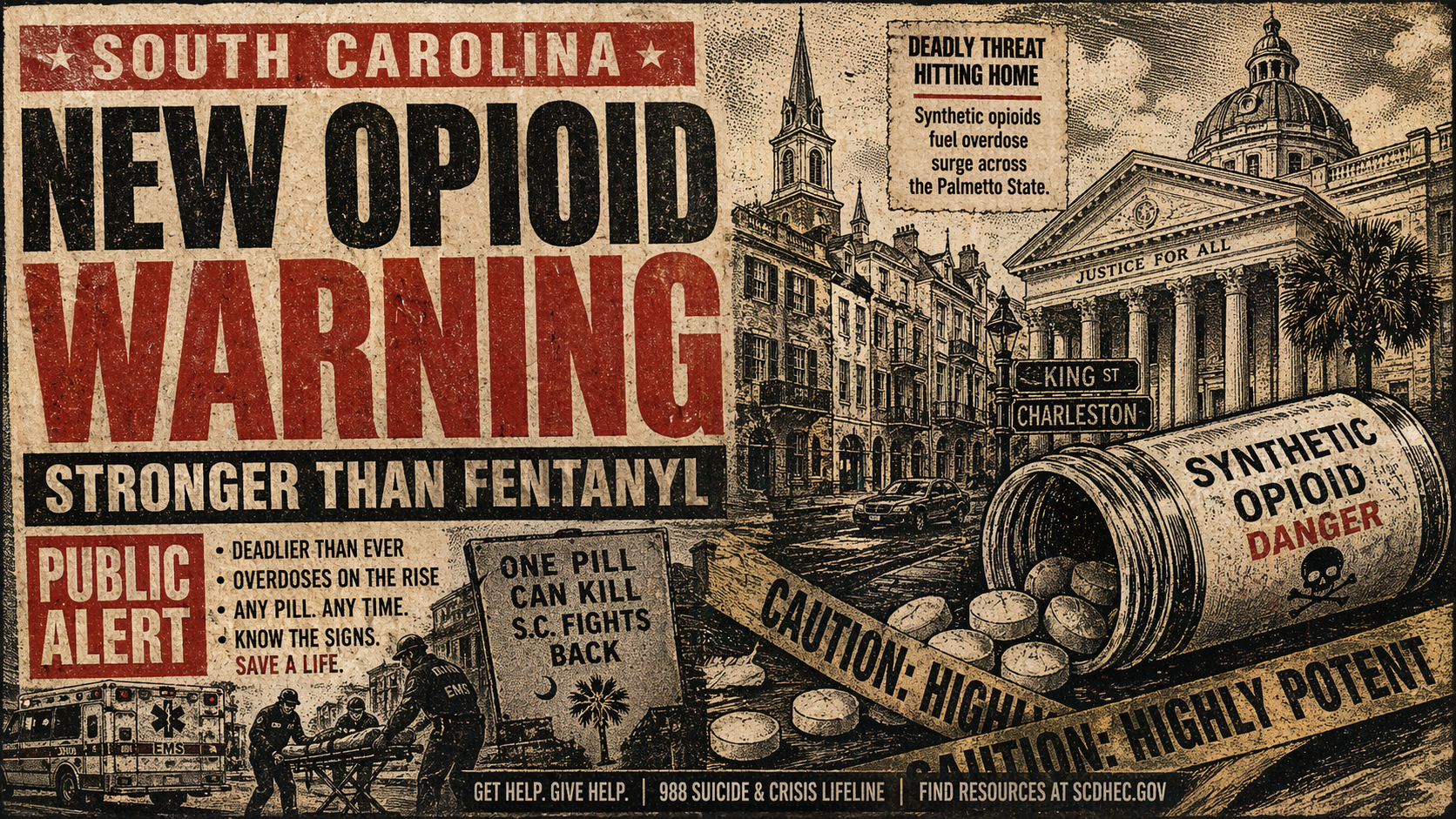
South Carolina officials are warning about an emerging opioid they say has now been linked to at least one death in the state, adding another layer of uncertainty to a drug landscape that has already been dominated for years by fentanyl and related compounds.
Local reporting and statements from the attorney general’s office describe the drug as cychlorphine, a potent opioid that authorities say has recently appeared in toxicology investigations in South Carolina and across parts of the Southeast.
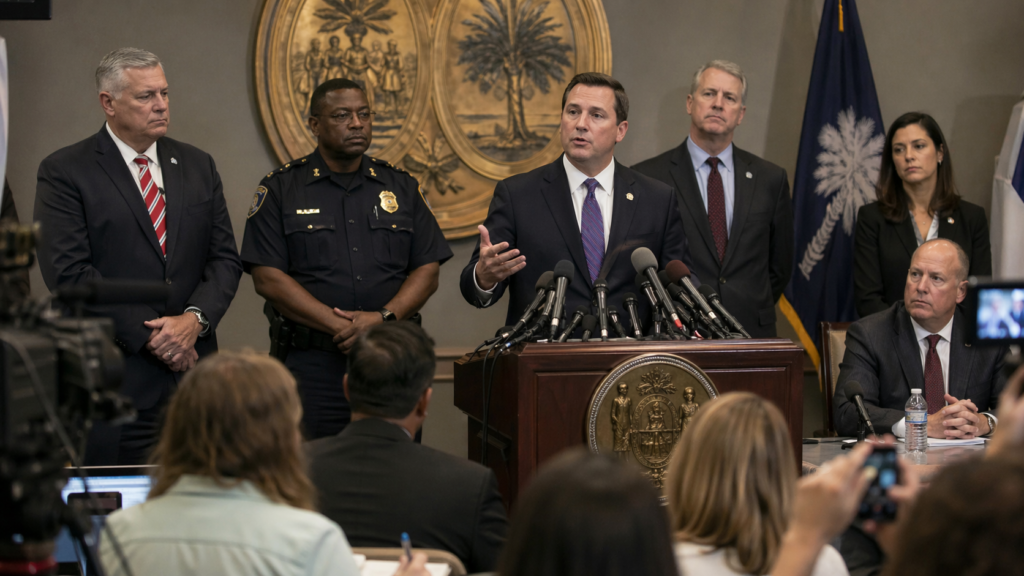
According to Live 5 News, Attorney General Alan Wilson said one death in Richland County has been associated with the drug, while officials in East Tennessee have reported a larger cluster of deaths tied to the same substance.
That does not mean cychlorphine has displaced the familiar fentanyl drug threat that already defines much of the overdose crisis. It does mean public health agencies and law enforcement are now watching for another highly potent opioid entering an already unstable market.
What Officials Are Saying About the Drug
According to Live 5, Wilson described the substance as stronger than fentanyl and said state officials do not want to wait for more fatalities before warning the public.
Similar alerts have also appeared in other South Carolina and regional coverage, including reports that the drug has shown up in toxicology work tied to overdose investigations.
Public discussion around the drug has not been perfectly consistent. Some local stories have used slightly different spellings, including “cyclorphine,” “cychlorphine,” and related chemical references.
But across those reports, the core message has been similar: officials believe this is one of a growing number of synthetic drugs appearing in the illicit supply with potency that may exceed what users, families, or even some responders expect.
Why the Warning Is Getting Attention?
The larger context matters here. The CDC says synthetic opioids — primarily illegally made fentanyl and fentanyl analogs — were involved in about 69% of all U.S. overdose deaths in 2023.
In 2024, the CDC recorded 47,735 overdose deaths involving synthetic opioids other than methadone. Those national figures help explain why any new opioid described as stronger than fentanyl immediately draws attention from state and local officials.
That also helps explain why phrases like drugs stronger than fentanyl travel quickly once a new compound appears in local reporting. The concern is not only potency in the abstract. It is that the existing overdose environment is already shaped by unstable mixtures, uneven toxicology detection, and a drug supply in which users may not know what is actually present.
Experts interviewed in regional coverage have warned that newer compounds can be especially difficult to track early because testing and awareness often lag behind the appearance of the drug itself.
Why Detection and Response Can Be Complicated?
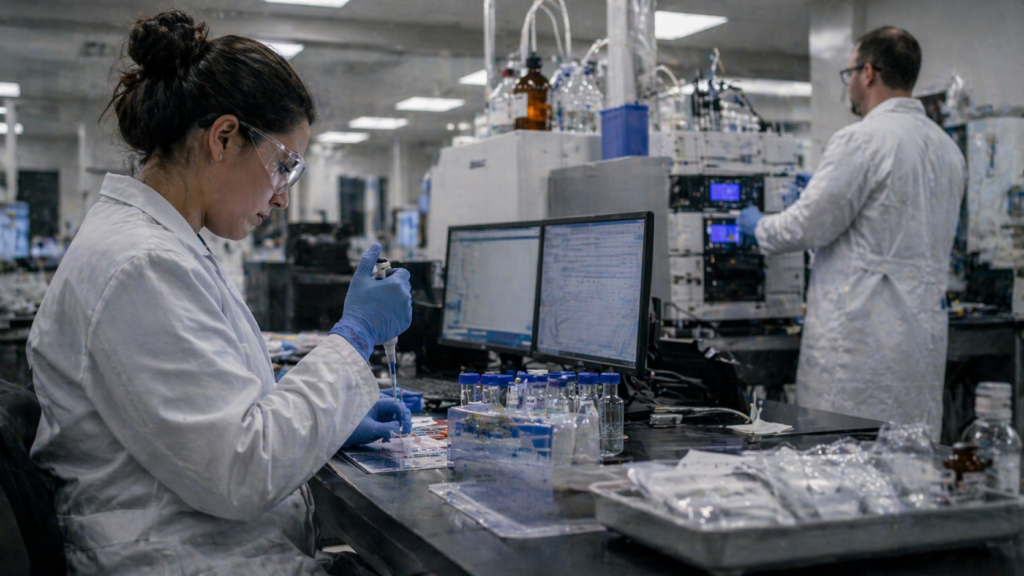
Part of what makes newer opioids difficult for public-health systems is that they can show up before there is broad familiarity with how often they appear, how they are mixed, or how consistently they are being identified in postmortem testing.
A University of Tennessee public-safety research discussion on cychlorphine said the drug has drawn attention not only because of potency concerns but also because of limits in detection and identification.
That does not mean officials are powerless, and it does not mean every alarming claim should be repeated without caution. It does mean the early stage of a new drug warning is often messy.
South Carolina authorities are effectively warning the public while they are still learning how widespread the problem is. That uncertainty is one reason state messaging has focused so heavily on awareness rather than precise statewide counts.
The Fentanyl Comparison Still Shapes the Story
For years, public warnings about overdose risk have revolved around fentanyl and synthetic fentanyl compounds because they became the dominant force in overdose mortality nationwide.
CDC reporting in late 2024 said approximately 70% of overdose deaths in 2023 were estimated to involve illegally manufactured fentanyls. Even as national overdose deaths have recently declined, fentanyl and related compounds still define the baseline danger that new substances are being measured against.
That is why regional stories keep making the comparison. When a local official says a new opioid may be stronger than fentanyl, the point is not simply chemical novelty.
The point is that the benchmark is already a drug category associated with tens of thousands of deaths nationwide. In that context, even one confirmed South Carolina death tied to a newer opioid is enough to trigger concern.
Why Public Language Around New Drugs Gets Messy?
Online searches and public discussion around emerging drugs often become imprecise fast. That kind of confusion matters because it can blur together distinct substances, street labels, and rumors.
In a story like this, the safer approach is to stay with attributed language: officials say cychlorphine has appeared in South Carolina, and they say it may be significantly more potent than fentanyl. That is more precise than turning an early warning into a fixed statewide conclusion.
What Happens Next?
For now, South Carolina’s warning appears to be in the early-awareness phase. Officials have not publicly described a broad statewide caseload tied to cychlorphine, but they have said the drug has been detected and linked to at least one death.
Reporting from Tennessee and other southeastern outlets suggests authorities across the region are watching for a wider footprint.
That means the next stage of this story is likely to be less about a single headline number and more about toxicology findings, regional alerts, and whether investigators begin seeing the substance more often in overdose cases.
With newer opioids, the first warning rarely answers every question. It usually signals that agencies are trying to get ahead of a pattern before it becomes more visible in the death data.
The Bottom Line
South Carolina officials are warning about cychlorphine, an emerging opioid they say has already been linked to one death in the state and multiple deaths elsewhere in the Southeast.
According to local reporting, the concern is that it may be more potent than fentanyl and may be entering an illicit drug supply that is already difficult to monitor.
That does not mean the state has a full picture yet. It does mean a new drug warning is now part of South Carolina’s overdose conversation.
In a crisis long shaped by fentanyl and other synthetic opioids, officials are signaling that the chemistry of the threat may be changing again — and that early uncertainty is part of the problem, not a reason to ignore it.