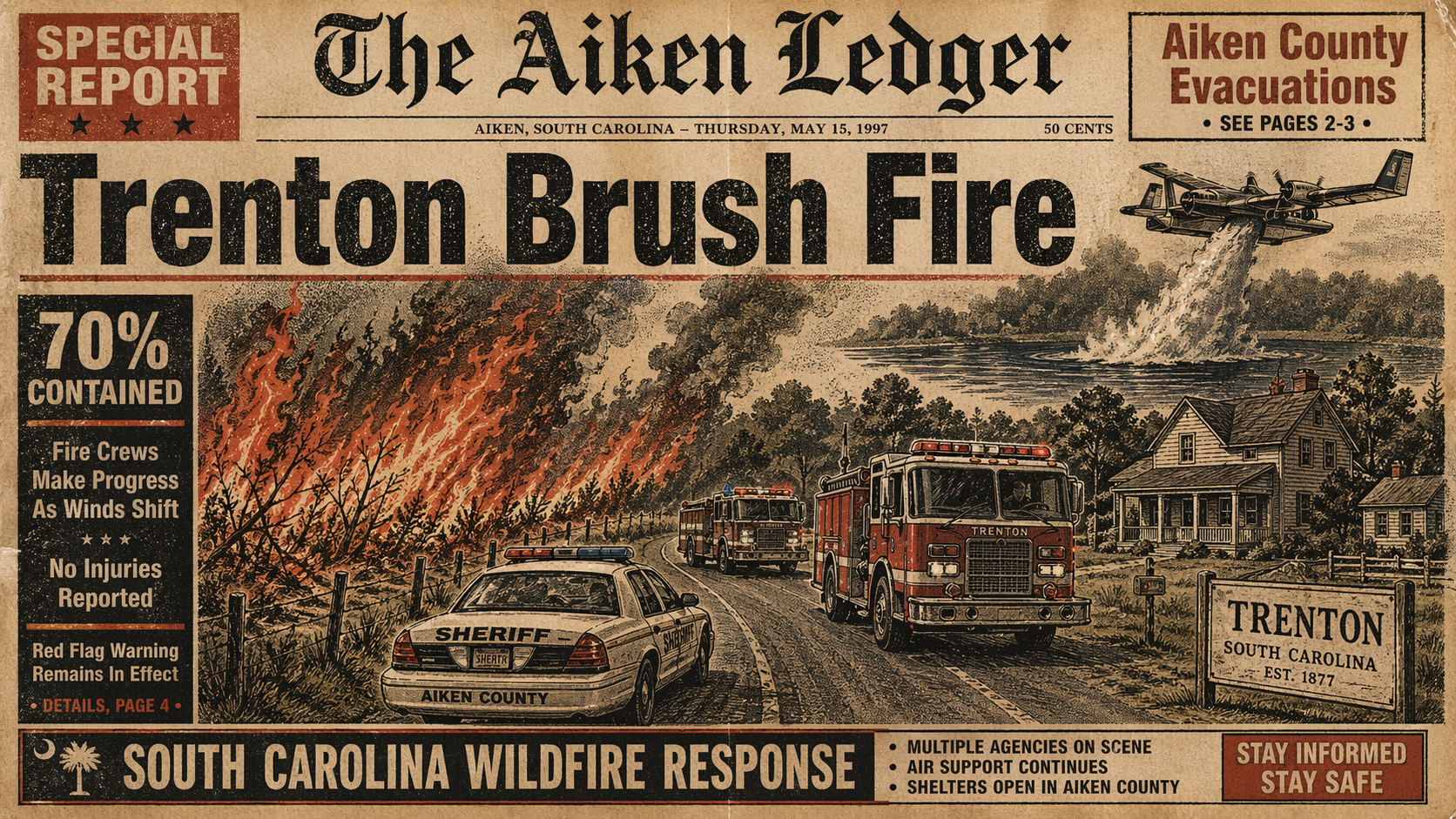
Aiman Tariq – Regional News Editor
Trenton, SC –
According to South Carolina forestry officials and local reporting, a brush fire near Sunnybrooke Road in Trenton that forced evacuations and road closures has now been largely contained after burning close to 300 acres in Aiken County.
The fire was first reported Thursday afternoon and quickly became one of the more closely watched South Carolina fires of the week, not only because of its size but because it threatened nearby homes and drew a multi-agency response that included local fire crews, sheriff’s deputies, forestry officials, and federal assistance.
That sequence matters. In fast-moving brush fires, the first question is not only how many acres burn. It is whether the fire is moving toward structures, whether evacuations are needed, and how quickly crews can get enough equipment in place to slow the spread. According to officials, that was the challenge in Trenton on Thursday.
Fire Grew Quickly as Crews Worked to Protect Nearby Homes
According to WRDW/WAGT, the fire was first reported around 2:30 p.m. Thursday along Sunnybrooke Road and led to the temporary closure of the roadway as well as evacuation warnings for some nearby residents. Officials said the blaze threatened structures as firefighters worked to gain control.
By Friday afternoon, the South Carolina Forestry Commission said the near-300-acre wildfire was about 70% contained, after earlier reports described it as 60% contained during the response period. WRDW later reported the fire had expanded to roughly 265 acres by late Friday, with the most active flames concentrated on the south end earlier in the day.
Those shifts in acreage and containment are typical in active wildland responses. Early numbers often change as crews improve perimeter mapping and as officials refine how much of the fire line is actually secure.
Evacuation Warning Lifted as Conditions Improved
Residents near the fire were told to leave as conditions worsened Thursday. According to local reporting, the evacuation warning was lifted later that night after firefighters spent hours working the perimeter and reducing the immediate threat to homes. All roads in the area were later reopened.
One Trenton resident told WRDW/WAGT that her family had little time to react once deputies came to the door and warned them that the fire was approaching. That kind of account helps explain why fires in South Carolina can become local emergencies even when they do not ultimately destroy homes. The disruption comes first: smoke, emergency vehicles, sudden departures, and uncertainty about whether conditions will worsen before nightfall.
Multi-Agency Response Included Heavy Equipment and Air Support
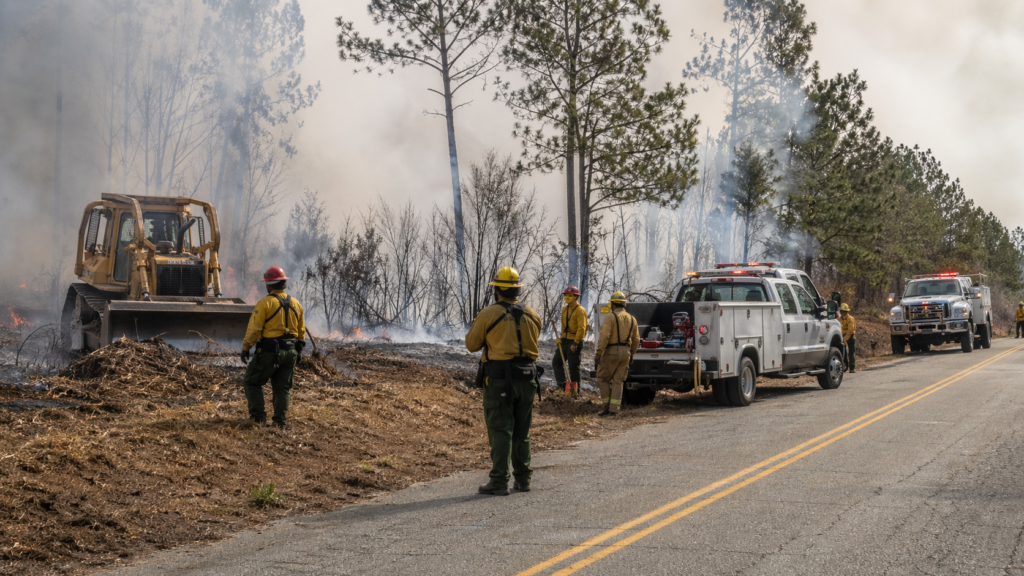
Crews from the Graniteville-Vaucluse-Warrenville Fire Department responded alongside the South Carolina Forestry Commission and the Aiken County Sheriff’s Office, according to WRDW. Officials also said the U.S. Forest Service was asked to assist.
By Friday morning, officials described “a lot of resources” on scene, including three bulldozers and two brush trucks. Aircraft were used Thursday to drop water, though WRDW reported the planes were not flying Friday, which officials said suggested crews were no longer dealing with the same level of aggressive fire behavior.
That is often one of the clearer signs in brush-fire coverage: once aerial drops are reduced or paused, it can indicate that the fire is still active but no longer spreading in the same fast, open way that defined the earliest hours of the response.
Cause Has Not Been Formally Confirmed, Officials Point to Passing Train
Officials said the fire was likely sparked by a passing train, according to WRDW/WAGT. That is an important distinction. At this stage, the cause has been described by officials as likely, not definitive.
In wildfire and brush-fire reporting, that wording matters. Early cause assessments often rely on timing, witness accounts, location patterns, and visible ignition clues. A likely cause is not the same thing as a formally completed investigative finding.
Still, the report fits a pattern seen in some rail-adjacent brush fires, where sparks, heat, or mechanical issues are suspected when fires break out close to tracks during dry conditions.
Part of a Broader Spring Pattern in SC fires
This Trenton response arrived during a stretch when fire conditions have kept emergency officials alert across parts of the Carolinas and Georgia. That does not mean every local fire is part of one connected event. But it does mean residents are seeing more smoke alerts, more burn warnings, and more rapid-response activity than they might in quieter seasons.
For readers following SC fires more broadly, the Trenton case is a reminder that many of the most disruptive incidents are not necessarily the biggest ones statewide. A near-300-acre brush fire can still become a major local emergency if it reaches homes quickly, cuts off roads, or forces families to evacuate with little warning.
What This Fire Shows About Local Preparedness?
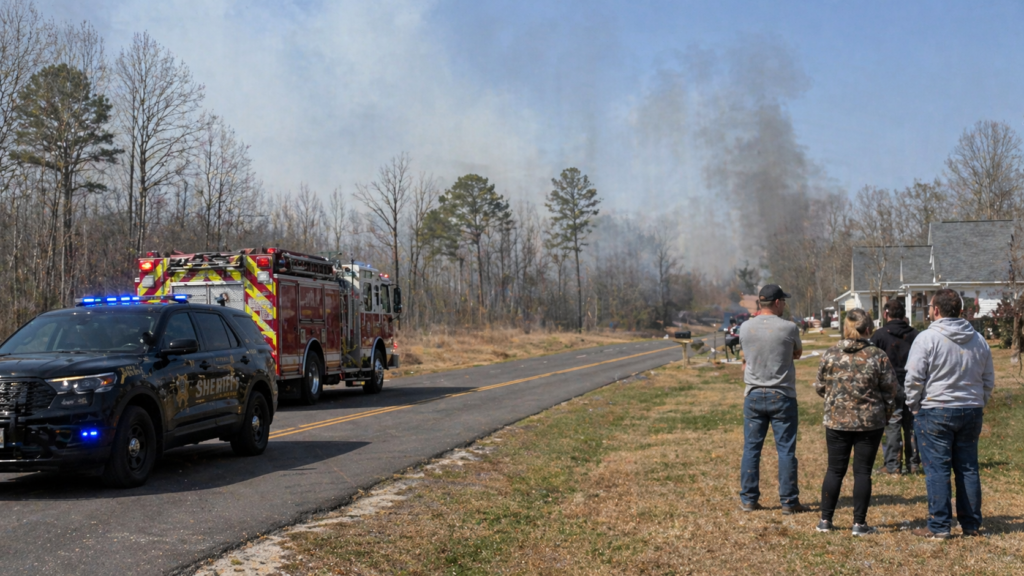
One of the more notable parts of the Trenton response was how quickly multiple agencies moved into a shared operation. Local fire units, forestry officials, sheriff’s deputies, mutual-aid personnel, bulldozer crews, and air support were all part of the response picture described in reporting. Langley Pond Park officials also warned residents to avoid the area while emergency aircraft used the pond for aerial water operations.
That does not mean every gap is solved. Fire responses of this kind are labor-heavy, equipment-heavy, and dependent on weather, terrain, and access. But it does suggest that for this incident, the containment effort was able to stabilize before the fire became a broader structure-loss disaster.
That is not a small thing in a season when South Carolina wildfires have already kept many communities watching conditions more closely than usual.
What Happens Next??
For now, the immediate emergency appears to have eased. The evacuation warning has been lifted, roads have reopened, and containment has continued to improve, according to local reporting.
The next phase is usually less visible: monitoring hot spots, strengthening containment lines, and watching for flare-ups if wind or dry conditions change. That is often when a fire moves out of breaking-news mode but still requires steady on-the-ground work.
For residents tracking wildfires South Carolina this spring, that is the broader lesson. Containment does not mean the story ends immediately. It means the balance has shifted — from urgent expansion to controlled management.
The Bottom Line
A brush fire near Sunnybrooke Road in Trenton burned close to 300 acres, triggered evacuations, and drew a significant multi-agency response before officials said it was largely contained.
According to officials, the fire likely started after a passing train and threatened nearby structures as crews worked through Thursday and Friday. Air support, bulldozers, brush trucks, and mutual-aid units were all part of the containment effort.
The Trenton fire may not be the largest of this season’s South Carolina wildfires, but it is a clear example of how quickly a roadside or brush ignition can turn into a neighborhood-level emergency.
For local residents, the most important measure is not just acreage. It is that families were able to return, roads reopened, and crews were able to surround the fire before it produced wider damage.