Aiman Tariq – Regional News Editor
Gwinnett County, GA –
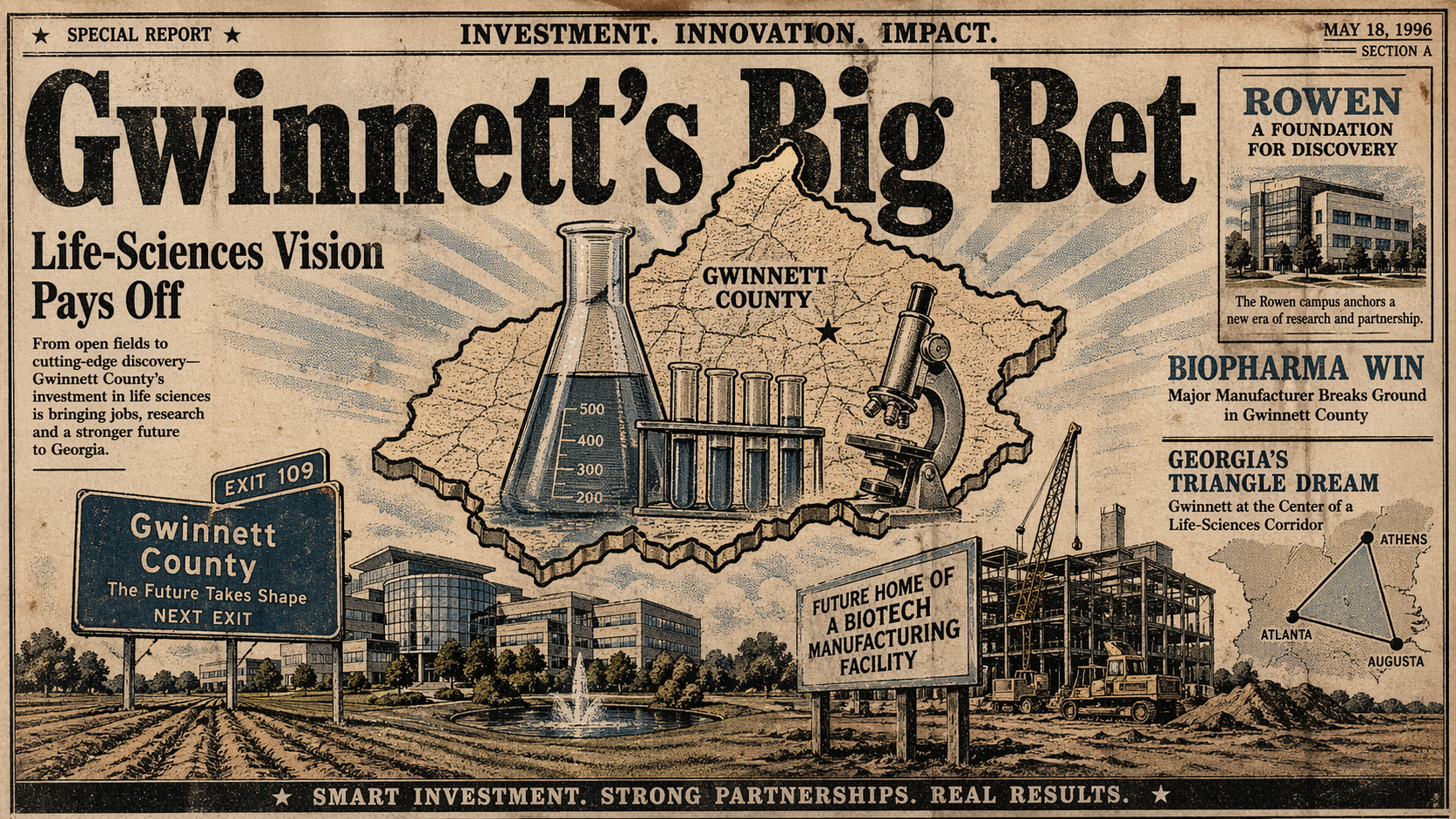
Gwinnett County’s long-running effort to build a research-and-industry hub in eastern Gwinnett has landed its clearest validation yet, with Belgian biopharmaceutical company UCB announcing a $2 billion manufacturing project at Rowen. County and project leaders say the deal marks an important milestone for a campus that spent years in planning, land assembly, infrastructure work, and recruitment before signing a major tenant.
According to the Atlanta Journal-Constitution, UCB will become the first major tenant at rowen, a 2,000-acre innovation district in Gwinnett County that has often been described as Georgia’s attempt to build something akin to North Carolina’s Research Triangle Park. That comparison has been part of the project’s pitch for years, though local officials say the real test was always whether the district could attract a globally significant employer willing to commit real capital.
That is why the UCB announcement matters. Big ideas around research districts are common in economic development. Fewer of them survive the slower part: rezoning land, extending infrastructure, and waiting long enough for a first tenant to decide the site is ready.
What UCB Is Planning to Build?
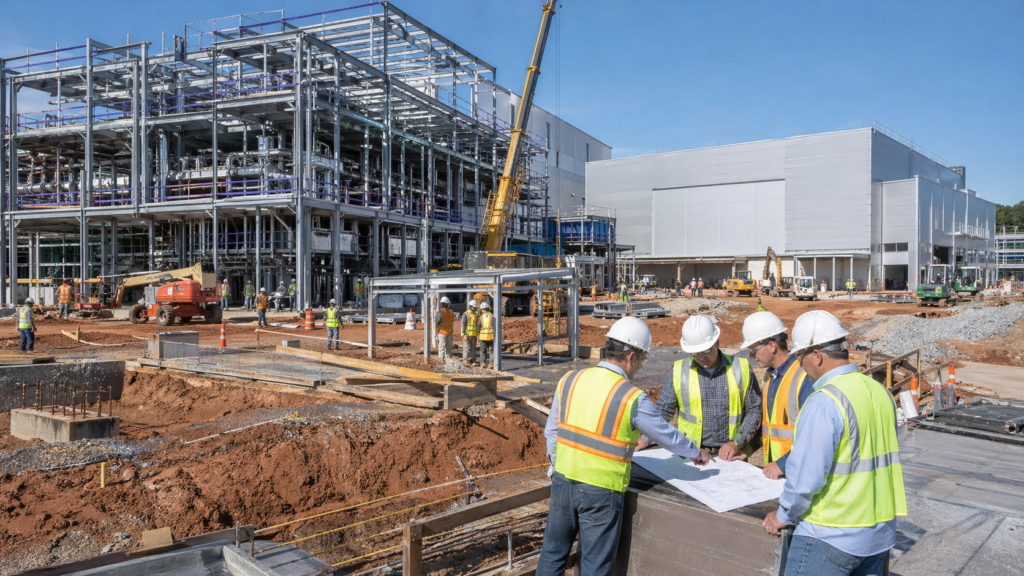
According to Gwinnett County and UCB, the company plans to build a biologics manufacturing facility at Rowen that will involve about $2 billion in investment and create more than 330 permanent jobs. Officials have also said the project is expected to generate more than 1,000 construction jobs as the site is built out over the next several years.
The plant is expected to cover roughly 460,000 square feet. UCB has described it as its first U.S. biologics manufacturing site, which makes the project notable not just for Gwinnett County but for Georgia’s broader life sciences ambitions. That phrasing also fits one of the easiest ways to explain the announcement: this would be UCB’s first manufacturing facility of its kind in the United States, not simply another office expansion.
Construction is expected to take six to seven years, according to company and local officials. That means the announcement is significant now, but the visible physical transformation of the site will take time.
Why Rowen Has Taken So Long?
Projects like this are often judged by ribbon cuttings, but they are usually built in the years before the ribbon exists.
The AJC reported that Rowen was first envisioned more than 20 years ago. Work on the site formally broke ground in 2022, and infrastructure preparation has already included road work, utility integration, and the early development of a mixed-use core. Local officials say that groundwork was necessary if Gwinnett wanted to compete for a life sciences project at this scale.
That is also why county leaders keep describing the UCB deal as proof of concept rather than the finish line. UCB is taking a relatively small share of the overall site, leaving most of the campus still available for future tenants. The argument from Rowen’s backers is that a first large tenant changes how the remaining acreage is viewed by other companies watching from the outside.
The Research Triangle Comparison Is Useful — and Limited
The comparison to North Carolina’s triangle park is easy to understand. Both projects are framed around proximity to universities, talent pipelines, and long-term research and manufacturing growth. But the comparison can also oversimplify what Gwinnett is trying to build.
Research Triangle Park is the result of decades of layering institutions, firms, and workforce development in one place. Rowen is still in the early part of that story. The better reading may be that Gwinnett is trying to create a Georgia version of that ecosystem, not claim that it has already done so.
Why Gwinnett County Thinks It Can Compete?
One reason Rowen has drawn attention is location. The site sits along Georgia 316 and has been promoted as being relatively close to research and training institutions in Atlanta, Athens, and Gainesville. That geography is central to the project’s pitch: if companies want access to scientists, engineers, technical workers, and university partnerships, Gwinnett can offer a wider regional pipeline than a single-campus development.
That pipeline is often described through major universities, but technical education matters too. In practical terms, facilities like this do not only need Ph.D. researchers. They also need operators, technicians, logistics staff, and process workers — the kind of workforce conversations that often bring institutions like gwinnett tech into the broader regional discussion, even when the flagship recruitment pitch is built around major research universities.
The Public Investment Question
Large economic development deals nearly always trigger the same question: how much public money went in before the private investment arrived?
According to the AJC and Gwinnett County officials, the county has committed about $174 million in infrastructure improvements and incentives connected to the project and broader site readiness. County officials argue that those investments were necessary to make the site competitive. Critics of incentive-heavy development models often counter that the return has to be measured over time, not at announcement stage.
That does not make the project unusual. It does mean the public case for Rowen depends on more than one company. If the district fills in with additional employers, research partnerships, housing, and commercial activity, the upfront spending will look more defensible. If growth is slower than promised, the public investment will draw more scrutiny.
A Broader Shift in What Georgia Is Recruiting
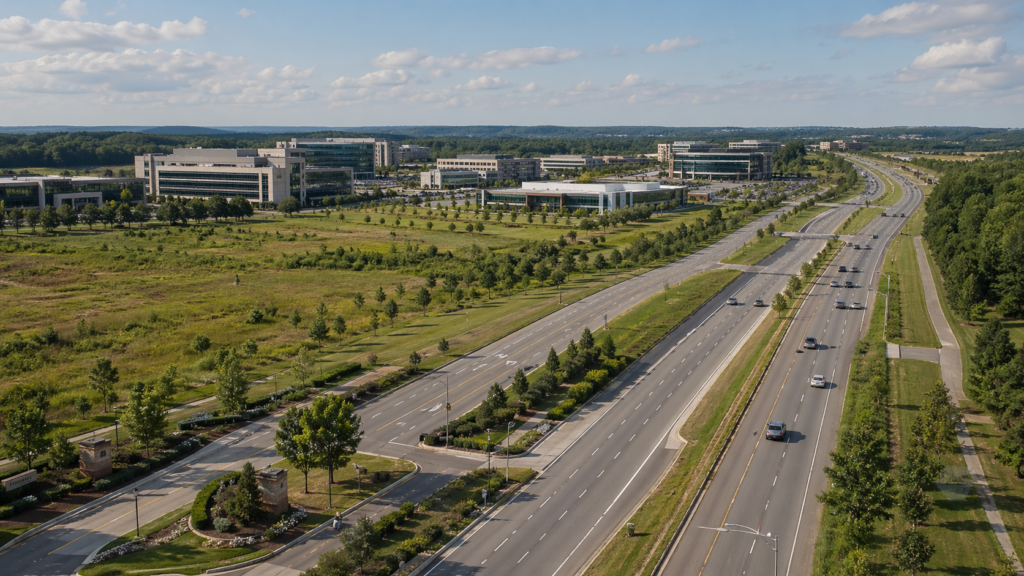
For years, Georgia’s recruitment strategy often leaned heavily on logistics, warehousing, film, and automotive growth. Rowen represents a more deliberate effort to deepen life sciences and advanced manufacturing.
That is part of why UCB’s decision is getting so much attention. It adds to Georgia’s effort to build a more connected bioscience ecosystem around institutions and employers already in the state. Local leaders have argued that the value of Rowen is not only one facility, but the possibility of cross-pollination between life sciences, agriculture technology, energy, and research.
That broader framing also helps explain why older business references do not really define the project. This is not the state chasing a legacy seed-house or distribution model, even if names like parks seeds company may still surface in broader conversations about Georgia’s agricultural business history. The point of Rowen is newer: research-driven industry, advanced production, and long-cycle institutional growth.
What Comes Next?
The easiest mistake in reading projects like this is to assume the announcement settles the question.
It does not.
What it does is move Rowen into a new phase. The first tenant has arrived. The county can now point to a real company, a real project, and a real construction timeline. That matters. But the harder work now is follow-through: building the facility, attracting additional tenants, and proving that the district can develop into something larger than a single headline.
The Rowen site still has roughly 1,900 acres left to develop, according to the AJC. That means this story is better understood as a beginning than an ending.
The Bottom Line
Gwinnett County’s long bet on Rowen has produced its first major payoff, with UCB choosing the site for a $2 billion biologics manufacturing project.
The deal gives county leaders a concrete answer to years of skepticism about whether the campus could attract a globally significant employer. It also gives Georgia a stronger foothold in life sciences manufacturing.
Still, the announcement is best read as proof that the project is moving from theory into reality — not as proof that the full vision has already arrived.
Rowen now has a first major tenant. The next question is whether that first win is enough to pull in the rest.