Aiman Tariq – Regional News Editor
Social Circle, GA –
A small Georgia city is now taking its fight over a proposed federal immigration detention center to court.
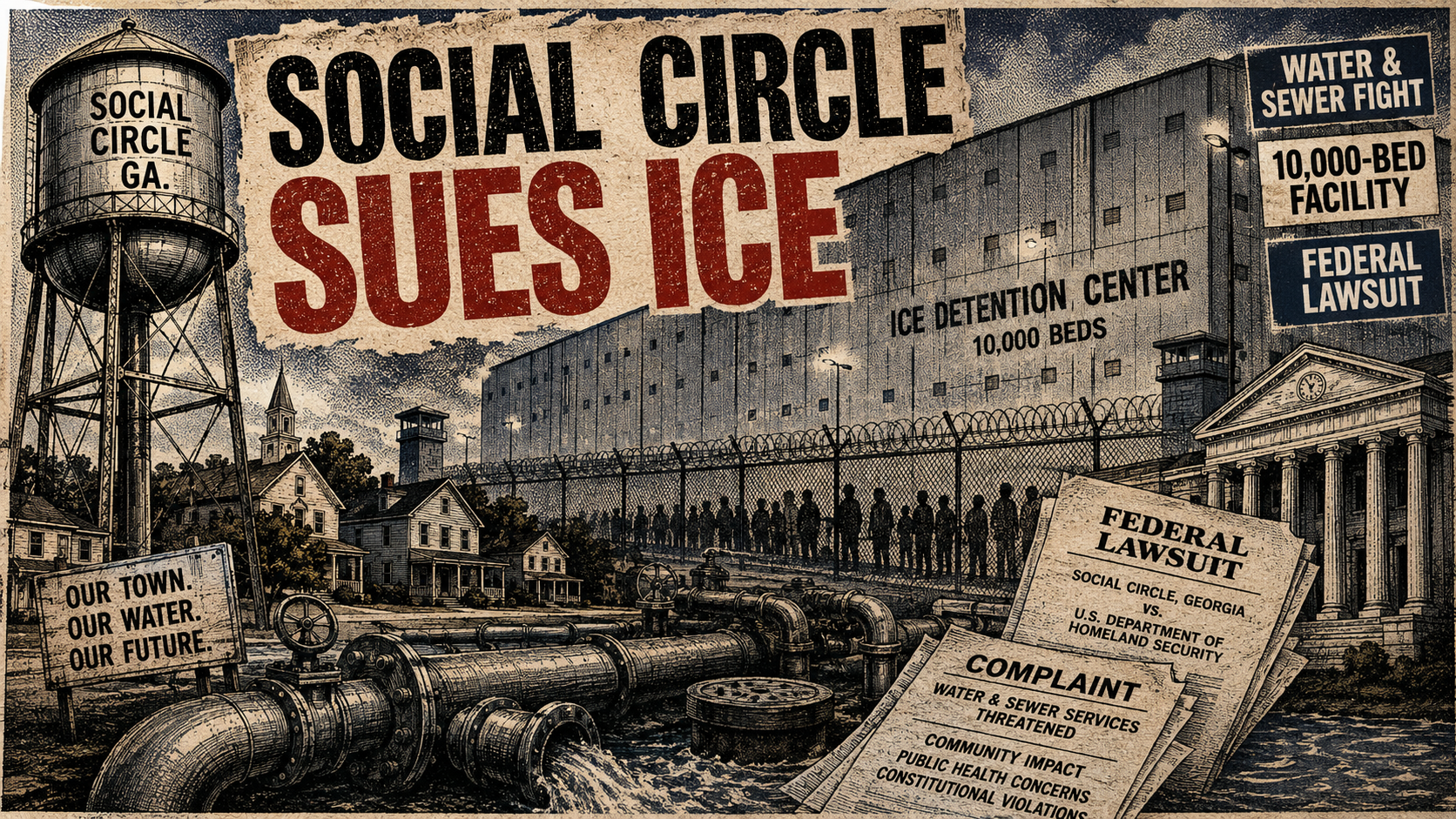
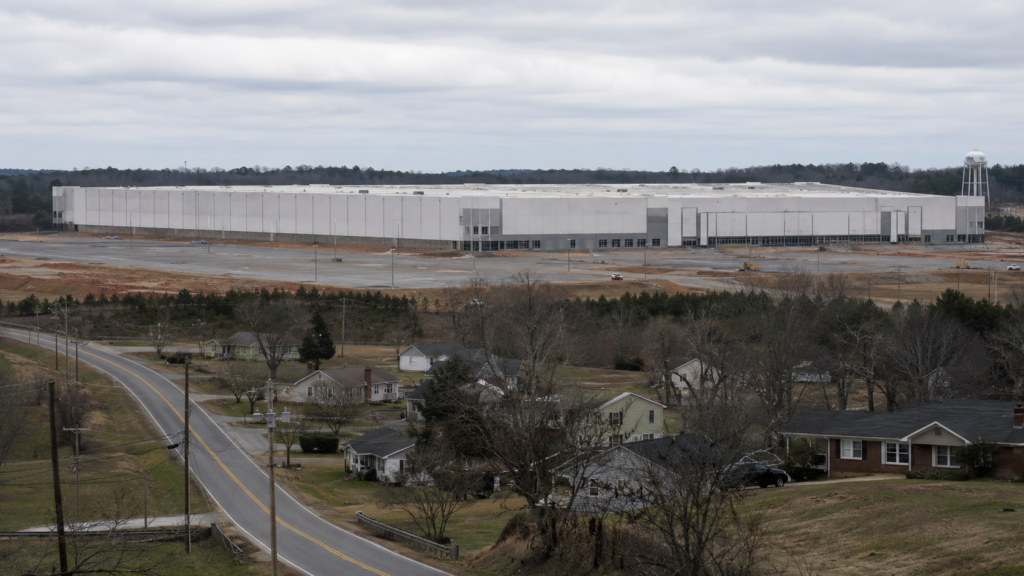
According to Georgia Public Broadcasting, the City of Social Circle has sued U.S. Immigration and Customs Enforcement and the Department of Homeland Security over plans to convert a vacant warehouse east of Atlanta into a detention facility that could hold as many as 10,000 people.
City officials say the issue is not only immigration policy. It is whether a town of about 5,000 residents can absorb a project that could more than double its daily population and place heavy demands on water, sewer and public safety systems.
That is why this case is different from a routine zoning fight.
The federal government may have broad authority over immigration detention. But Social Circle’s lawsuit argues that federal agencies still have to follow environmental review laws, account for local infrastructure limits and explain how a facility of that size would function without creating risks for the community around it.
What the Lawsuit Says
According to the complaint filed in federal court, Social Circle argues that DHS and ICE moved forward with the warehouse detention plan without completing required environmental review under the National Environmental Policy Act, or NEPA. The lawsuit also cites the Administrative Procedure Act and Georgia public nuisance law.
The city’s argument is not that federal immigration detention can never happen in Georgia. It is narrower than that.
Social Circle says federal officials made a major decision — converting a large warehouse into a mass detention site — without properly studying the effect on the surrounding town. In the city’s view, that includes the effect on water supply, sewage treatment, traffic, public safety and the environment.
The complaint says the facility would be located at 1365 East Hightower Trail, inside an existing commercial warehouse. The federal government purchased the property earlier this year, according to the complaint and public reporting.
That purchase is now part of the legal dispute.
A Town of 5,000 Facing a Facility for 10,000
Social Circle’s core concern is scale.
The city has about 5,000 residents. The proposed detention center could hold up to 10,000 detainees and employ thousands of personnel, according to local and national reporting. That means the warehouse could function, in practical terms, like a second city placed inside the existing one.
That does not automatically mean the project is unlawful. But it does explain why local officials have reacted so strongly.
A detention center that size would need water, sewage capacity, road access, emergency planning, security coordination and staffing assumptions that go far beyond a typical warehouse conversion. Those are the details Social Circle says federal officials have not adequately addressed.
City officials have been making that point for months.
According to GPB, Social Circle City Manager Eric Taylor said the city’s position has not changed: the project would cause significant problems for the city’s water and sewer infrastructure.
The Water and Sewer Problem
The numbers are central to the city’s case.
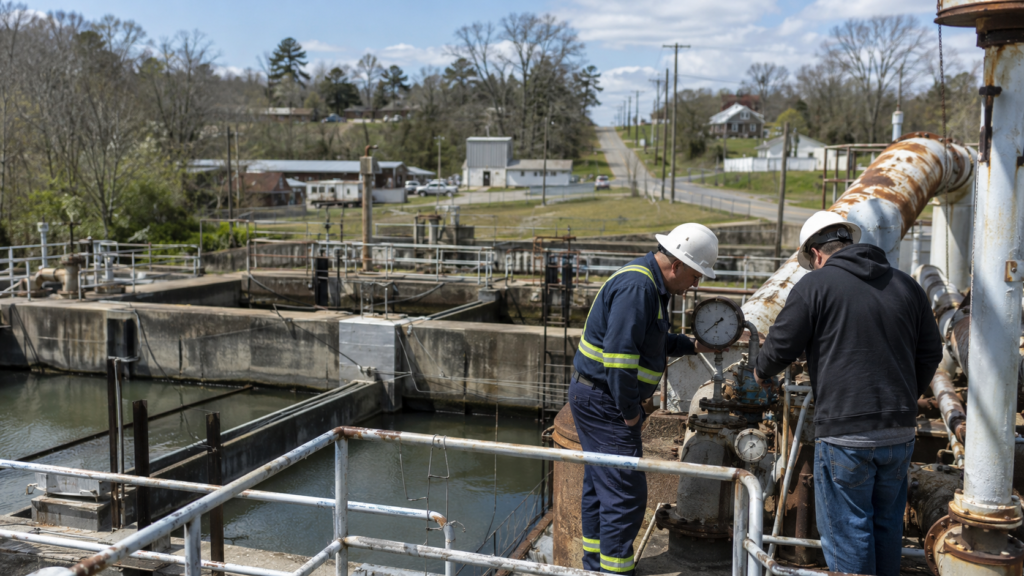
Taylor told GPB that Social Circle’s current sewage treatment capacity is about 660,000 gallons per day. The city has been working on a long-planned upgrade that would increase capacity to about 1.5 million gallons per day.
On paper, that sounds like progress.
But according to Taylor, ICE’s own documents discuss wastewater discharge of more than one million gallons per day from the site. If that estimate is accurate, the proposed detention center would consume most of the city’s upgraded capacity by itself — and would exceed the city’s current capacity before the new plant is complete.
That is why local officials are not treating the project as a simple building-use change.
A warehouse that stores goods and a detention center that houses thousands of people do not place the same burden on a city. One mainly needs roads, power and logistics. The other needs water, toilets, showers, food service, medical support, wastewater handling and emergency response at a much larger human scale.
That gap is the heart of the lawsuit.
Why Environmental Review Matters
NEPA is often described as a procedural law. It does not always force the government to choose a different project. But it does require federal agencies to examine environmental consequences before major decisions are locked in.
That is the process Social Circle says DHS and ICE skipped.
According to the complaint, the agencies did not prepare the kind of environmental assessment or impact review the city believes is required before converting the warehouse into a mass detention facility. The city also argues that federal officials did not meaningfully consult local leaders who understand the limits of the local water and sewer network.
That distinction matters.
The lawsuit is not only about whether Social Circle opposes the project. It is about whether the federal government made a reasoned decision before buying and preparing the site.
If the city is right, the problem is not just political disagreement. It is process.
Communication Has Been a Sticking Point
Social Circle officials have also complained about limited communication from federal agencies.
Taylor told GPB that when news of the warehouse plan first emerged, the Department of Homeland Security was largely incommunicative with the city. He said that even with new leadership at DHS, local officials still had not had meaningful conversations about how the facility would work.
That is not a small issue in a project of this size.
Local governments are the ones that deal with road conditions, emergency calls, water pressure, sewer overflows and neighborhood complaints. When they say they were not brought into the planning process, it raises a basic question: who had the practical information needed to evaluate the site?
The federal government may control the immigration system. But Social Circle controls the local infrastructure that would have to carry much of the burden.
That tension is now headed to court.
Part of a Larger Warehouse Detention Push
Social Circle’s case is not happening in isolation.
Associated Press reporting earlier this year described a broader ICE effort to acquire or evaluate warehouse sites across multiple states for possible immigration detention or processing use. That reporting found that local officials in several communities learned about proposed sites late in the process or after deals had already advanced.
Similar disputes have emerged elsewhere.
The Guardian reported that attorneys general in Arizona and Maryland have filed challenges related to federal detention-center plans, while Social Circle appears to be among the first municipalities to sue directly over alleged overreach in the warehouse detention program.
That broader context matters because it suggests the Social Circle fight may become a test case.
If a small town can force environmental review or delay implementation, other communities may look to the same argument. If the federal government prevails, the case may reinforce how difficult it is for local governments to slow federal detention projects once property has been acquired.
Local Opposition Is Not Easily Categorized
One of the more unusual features of the Social Circle fight is that opposition has not followed a simple partisan script.
Social Circle sits in a conservative part of Georgia. Earlier reporting described local pushback from officials and residents who may support stricter immigration enforcement generally but oppose placing one of the nation’s largest detention centers in their town without clear infrastructure planning.
That is why this story is not just about immigration.
For many residents and city officials, the question appears more basic: can the town handle it?
A person can support federal immigration enforcement and still object to a 10,000-bed detention facility near local schools, homes and limited utility systems. That is the political reality federal officials now face in Social Circle.
The lawsuit turns that local objection into a legal challenge.
What Happens Next
The case will likely begin with procedural arguments over what DHS and ICE were required to do before moving forward with the project.
Social Circle is asking the court to halt or set aside the federal decision while the legal issues are reviewed. The city’s lawyers argue that the agencies failed to follow NEPA, failed to satisfy reasoned decision-making requirements under the Administrative Procedure Act and created the risk of a public nuisance under Georgia law.
The federal government is likely to argue that immigration detention falls within federal authority and that the project is lawful.
That does not answer every local question. But it frames the legal fight: federal power on one side, local infrastructure and environmental review on the other.
For now, the project remains contested.
The Bottom Line
Social Circle is not merely objecting to a federal immigration facility in general terms. The city is arguing that a proposed 10,000-person detention center could overwhelm a town built for a much smaller population.
According to city officials, the clearest problem is water and sewer capacity. The city says its current system cannot support the project, and even planned upgrades may not leave enough room for the amount of wastewater the facility could produce.
The lawsuit asks a court to decide whether DHS and ICE moved too quickly and skipped required environmental review before advancing the warehouse detention plan.
That makes this more than a local political dispute. It is a test of how far federal agencies can move on major detention projects before accounting for the towns expected to support them.
For Social Circle, the question is practical: if Washington wants to build a detention center the size of a small city, who has to make the pipes, roads and public services work?