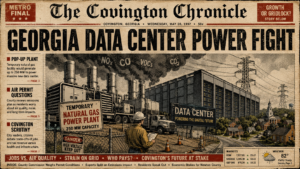
Aiman Tariq – Regional News Editor
Covington, GA –
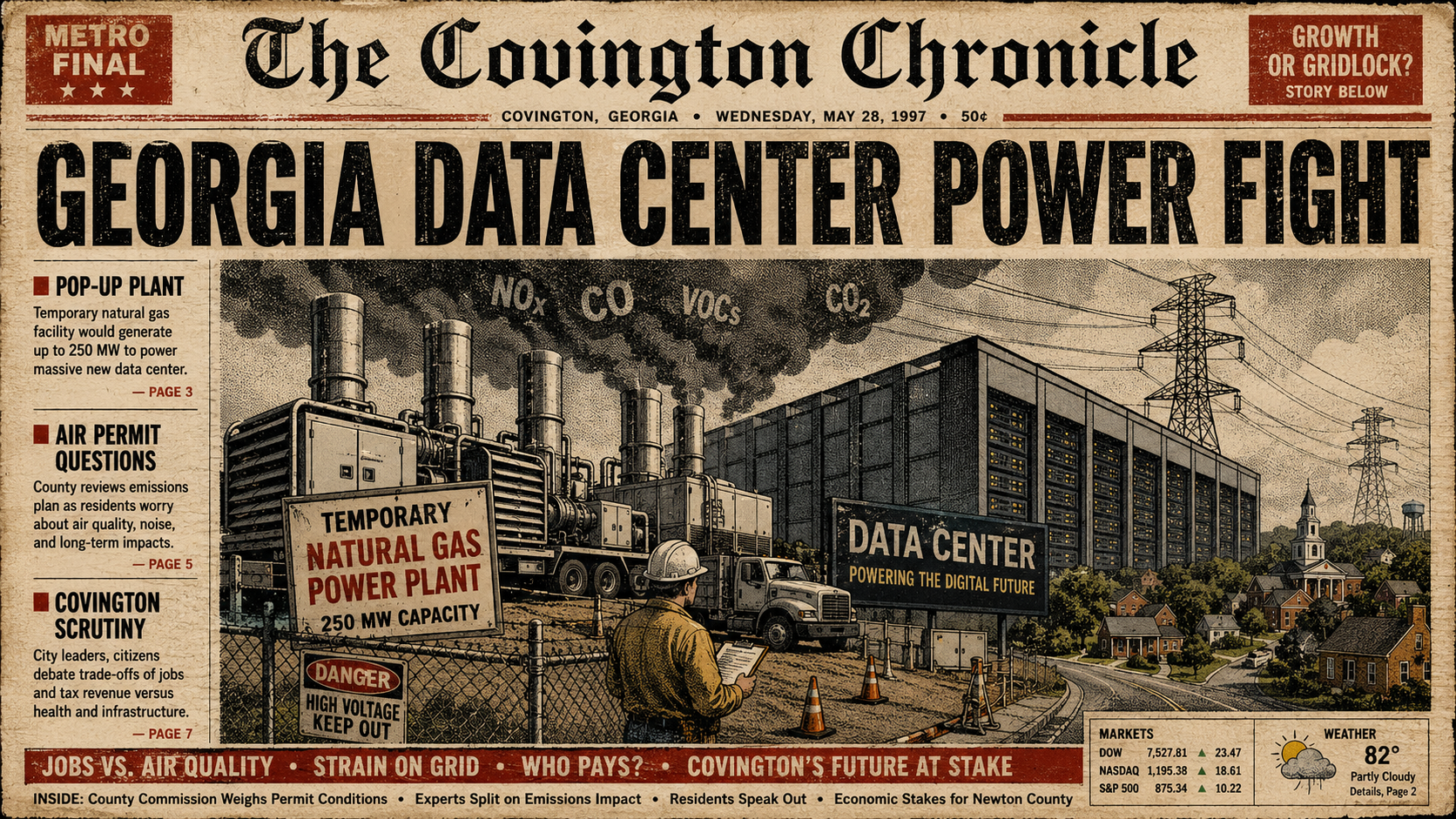
A Georgia data center project is drawing scrutiny after environmental groups and state regulators said construction appeared to begin on power-generating equipment before required air permits were in place.
The project, tied to Serverfarm’s data center in Covington and a proposed natural gas power plant from Houston-based VoltaGrid, is being watched closely because it could test how far data center developers can go in bringing their own power supply to Georgia.
That is the larger question behind the local dispute. Data centers need enormous amounts of electricity. Utilities are trying to catch up. Developers are looking for faster options. And now Georgia regulators are being asked to decide where ordinary infrastructure planning ends and where state air and utility laws begin.
What the Covington Project Would Do?
According to reporting and environmental filings, VoltaGrid has proposed building a 90-megawatt natural gas-fired power plant next to Serverfarm’s data center in Covington, roughly east of Atlanta.
The plant would use natural gas-fired engines to provide dedicated power to the data center. Serverfarm also proposed backup diesel generators for the data center campus.
In practical terms, the idea is simple: instead of waiting entirely on the electric grid, a data center gets a nearby power source built for its own demand.
But that model is also why the project matters beyond one site in Newton County. If regulators allow privately operated “pop-up” power plants to serve data centers outside the ordinary utility structure, similar projects could follow elsewhere in Georgia.
Why Regulators Got Involved?
The dispute began after environmental groups said aerial photos showed construction already underway before final air permits were issued.
The Southern Environmental Law Center said VoltaGrid and Serverfarm had both applied for air permits, but that final permits had not been issued when construction activity was documented. The group said aerial images showed VoltaGrid had constructed at least eight methane gas-fired engines and that Serverfarm had constructed at least 36 of 37 proposed diesel-fired emergency generators.
That matters because Georgia’s air rules generally require a permit before construction begins on a facility that may produce air pollution. Atlanta News First reported that Georgia Rule 391-3-1-.03(1)(a) requires a permit before beginning construction or modification of a facility that may result in air pollution.
The Georgia Environmental Protection Division later sent notices of violation to both VoltaGrid and Serverfarm, alleging construction began before the required air quality permits were obtained.
That does not mean the companies have been found liable in court. It means state regulators have flagged possible violations and opened the door to enforcement decisions.
The Permit Question Is Not Just Paperwork
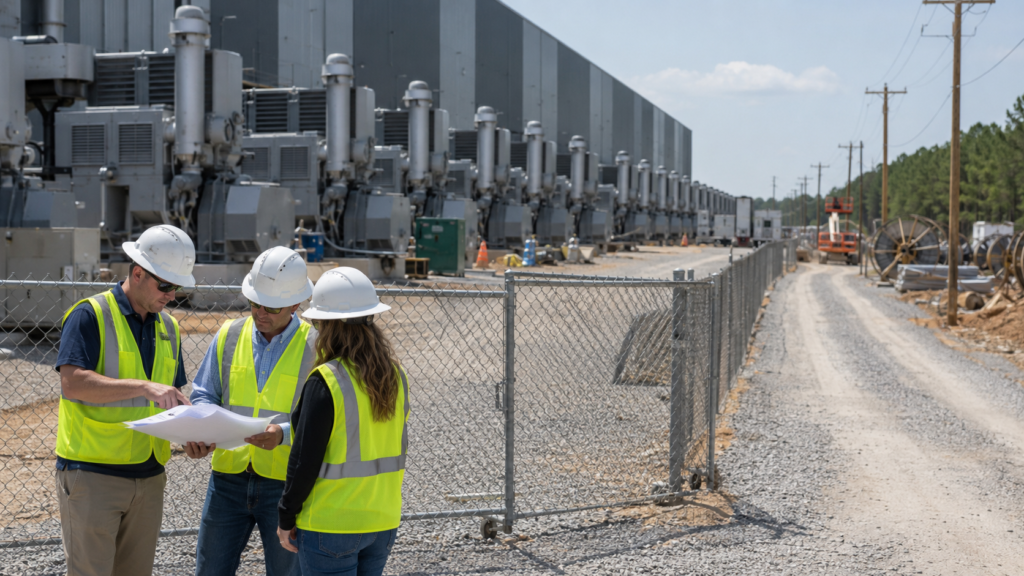
Permits can sound procedural. In projects like this, they are not.
The point of an air permit is not simply to collect documents after a project is already built. It is to allow regulators and the public to evaluate emissions, pollution controls, operating limits, and community impacts before construction locks in the basic design.
That is why environmental groups argue the timing matters.
The Southern Environmental Law Center said companies are not guaranteed air permits just because they apply. Regulators can require additional safeguards, change permit conditions, limit equipment, or deny a permit depending on the review.
In this case, the concern is that construction could make it harder to meaningfully revise the project after public comments and technical review.
That is the difference between a real review process and a rubber stamp.
What the Companies Have Said?
Serverfarm has pushed back on the idea that it acted improperly.
A Serverfarm representative told Atlanta News First that every action taken on the project had been in “careful consultation” with the relevant authorities and said none of the generators had been operated or would be operated without a permit.
That distinction is likely to matter in how the company frames the dispute. Serverfarm appears to be arguing that construction and operation should not be treated the same way, and that it has not operated the equipment without approval.
Regulators, however, have focused on construction timing. Atlanta News First reported that state officials said Serverfarm applied for a permit in October 2025 and that an air quality permit was issued June 29, 2026, but that construction had already begun before that permit was in hand.
VoltaGrid did not respond to some media requests for comment, according to local reporting. GPB reported that EPD said it had confirmed assertions in the SELC letter and that VoltaGrid likely violated Georgia clean air rules by building pollution-emitting infrastructure without state permission.
A Stop-Work Order Raises the Stakes
The response from Georgia regulators was not identical for both companies.
Atlanta News First reported that EPD ordered VoltaGrid to stop all remaining construction of air pollution emissions sources or control equipment until a permit is issued. The same report said Serverfarm received a notice of violation but not the same stop-work order, after its permit was issued.
That difference does not end the dispute. It simply narrows part of it.
VoltaGrid’s proposed power plant remains the more unusual piece of the project because it would generate electricity directly for a neighboring data center, rather than operating as a conventional utility-owned power source.
That is why state air regulators are only one part of the story.
The Utility Law Question
Separate from the air permitting issue, environmental groups have asked the Georgia Public Service Commission to examine whether VoltaGrid can legally generate power for Serverfarm under Georgia utility law.
The Southern Environmental Law Center said it filed a petition on behalf of Sustainable Newton asking the PSC to determine whether VoltaGrid is violating state energy laws at the Covington project and to halt any unlawful operations.
The issue centers on Georgia’s Territorial Electric Service Act, which generally gives electric utilities exclusive rights to serve customers within designated service territories.
That may sound like a technical utility question. It is more than that.
If a private power provider can build a dedicated gas plant next to a data center and sell or supply power directly, that could create a new path for large power users that do not want to wait on ordinary grid connection timelines.
If regulators say no, data center developers may have to remain more dependent on Georgia Power, electric membership corporations, or other assigned utilities.
Either way, the decision could shape how Georgia handles the next wave of data center growth.
Why Data Centers Are Driving the Debate?
Georgia has become one of the states most directly affected by the data center boom.
Atlanta News First cited Georgia Tech’s Data Center Ordinance Hub as saying Georgia has more than 200 data centers online, and cited a Pew Research Center report that found the state had another 141 planned — the third-most in the country.
That growth is already reshaping utility planning.
In December 2025, the Georgia Public Service Commission approved a major Georgia Power expansion plan. AP reported that Georgia Power said it needed to increase power capacity by 50% to meet projected demand, with much of that demand tied to data centers and artificial intelligence growth.
AP also reported that the utility’s plan involved 10,000 megawatts of new capacity, with about 80% expected to serve data centers. The construction program was estimated at $16.3 billion, though staff said customers could pay far more over decades when interest and utility profit are included.
That broader debate matters in Covington because it explains why a “pop-up” power plant would be attractive to developers.
Grid power is becoming harder to secure quickly. Demand forecasts are rising. Projects are competing for capacity. And the companies building data centers are looking for ways to reduce delays.
The unresolved question is whether speed should come before environmental review and utility oversight.
Local Concerns in Newton County
The Covington site has also drawn concern because of where it is located.
The Southern Environmental Law Center said the proposed facilities are within three miles of residential neighborhoods, the county drinking water reservoir, and a nature preserve.
Local groups have raised concerns about air pollution, transparency, and whether residents had a meaningful chance to weigh in before construction moved ahead.
According to SELC, the proposed equipment could raise concerns involving pollutants such as formaldehyde, a toxic pollutant that was raised in public comments.
That does not mean the project will necessarily violate air standards once fully reviewed. It does mean the permitting process is where those questions are supposed to be examined.
For residents, that distinction can feel thin. A project may be legal by the end of the process, but if neighbors believe construction started before review was complete, the issue becomes trust as much as compliance.
What This Could Mean Beyond Covington?
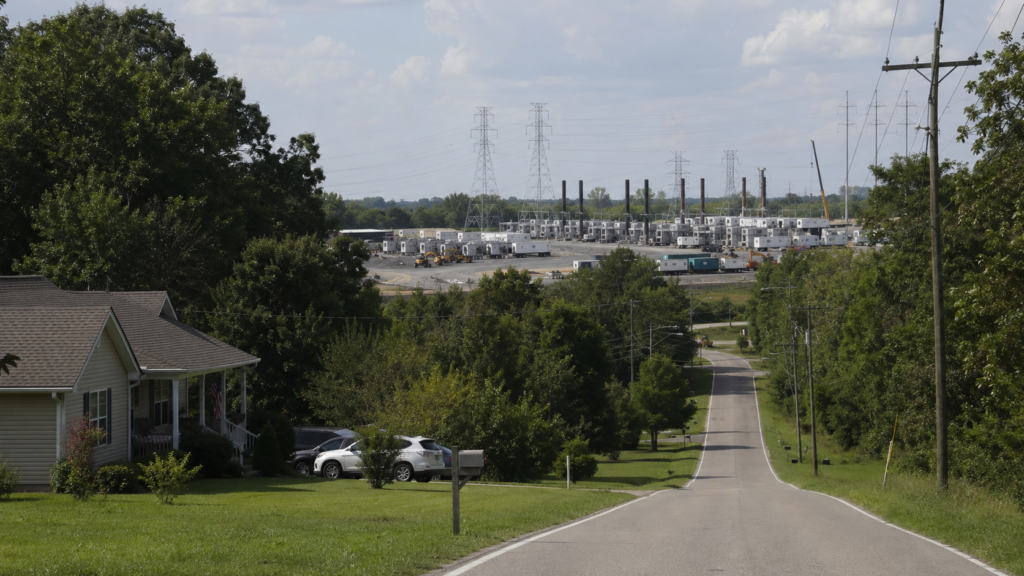
The Covington case is not happening in isolation.
Similar fights are emerging in other states as data centers turn to on-site gas and diesel generation. In Texas, environmental groups recently raised Clean Air Act concerns involving data centers and power systems, including projects connected to VoltaGrid.
The pattern is clear enough: data center developers want reliable power quickly, and on-site generation is one way to get it. Regulators and residents are now being asked to catch up with a model that can move faster than traditional planning processes.
Georgia’s decision could become an early test case.
If state regulators allow the Covington project to proceed after enforcement actions and legal review, other developers may see that as a path forward. If regulators take a harder line, the message may be that data center growth cannot bypass ordinary air permitting and utility rules.
What Happens Next?
The immediate next steps are likely to come from two directions.
First, Georgia EPD will decide whether the notices of violation lead to additional enforcement actions, penalties, or permit conditions. VoltaGrid’s construction remains especially important because regulators ordered work stopped on remaining emissions-related equipment until a permit is issued.
Second, the Georgia Public Service Commission could determine whether the private power arrangement violates state utility law or requires additional approval.
Neither question is simple.
Air regulators are looking at construction, emissions, and permitting. Utility regulators are looking at who is legally allowed to provide electricity to whom. Local residents are looking at whether the project moved too fast and whether their concerns were heard early enough.
The Bottom Line
The Covington data center dispute is not just about one construction site.
It is about how Georgia manages a data center boom that is already testing the state’s electric grid, environmental rules, and local planning systems.
According to environmental groups and state regulators, VoltaGrid and Serverfarm moved ahead with generator construction before required air permits were fully in place. The companies have not been found liable in court, and Serverfarm has said the project has been handled in consultation with authorities.
But the broader issue remains.
If data centers can bring their own power plants, Georgia will have to decide how those projects fit within clean air rules, utility territories, and community review.
For now, the Covington project is a warning sign. The demand for power may be moving fast, but the rules around pollution, public input, and who gets to sell electricity were not built to be skipped.
Follow us for updates on this developing energy and technology story.