Aiman Tariq – Regional News Editor
Atlanta, GA –
The Voting Rights Act is one of the reasons Georgia politics looks the way it does today. It helped open doors that had been closed for generations, created legal tools to challenge discriminatory maps, and gave Black voters a stronger chance to elect candidates of their choice.
Now, some Black officials and voting-rights advocates fear that one of those tools has been weakened at the worst possible time.
According to the Atlanta Journal-Constitution, longtime state Sen. Ed Harbison, a Columbus Democrat who was first elected to the Georgia Senate in 1992 and is retiring this year, sees the U.S. Supreme Court’s recent voting-rights decision as a warning about what could come next. Harbison grew up in segregated Montgomery, Alabama, and later became the longest-serving member of the Georgia Senate. The Voting Rights Act did not simply shape his career. In a practical sense, it helped make that career possible.
That is why the current fight over voting maps feels bigger than one court ruling. It is about whether the political gains built over decades can be rolled back through redistricting, litigation, and a narrower reading of federal voting protections.
Why the Voting Rights Act Mattered in Georgia?
The Voting Rights Act of 1965 changed elections across the South because it gave Black voters and civil-rights groups a way to challenge systems that diluted minority voting strength.
That mattered in Georgia because the state’s political geography has long been shaped by race, population growth, and district lines. The law did not guarantee any candidate a seat. But it did create a framework for asking whether minority voters had a fair opportunity to elect representatives.
That distinction is important.
Voting-rights law is not only about who wins an election. It is also about whether voters are packed into districts, split across districts, or arranged in ways that reduce their influence before the first ballot is cast.
For decades, Section 2 of the Voting Rights Act was one of the main tools used to challenge maps that diluted minority voting power. In Georgia, that tool has mattered repeatedly, including in recent litigation over congressional and legislative districts.
The Court Ruling That Changed the Debate
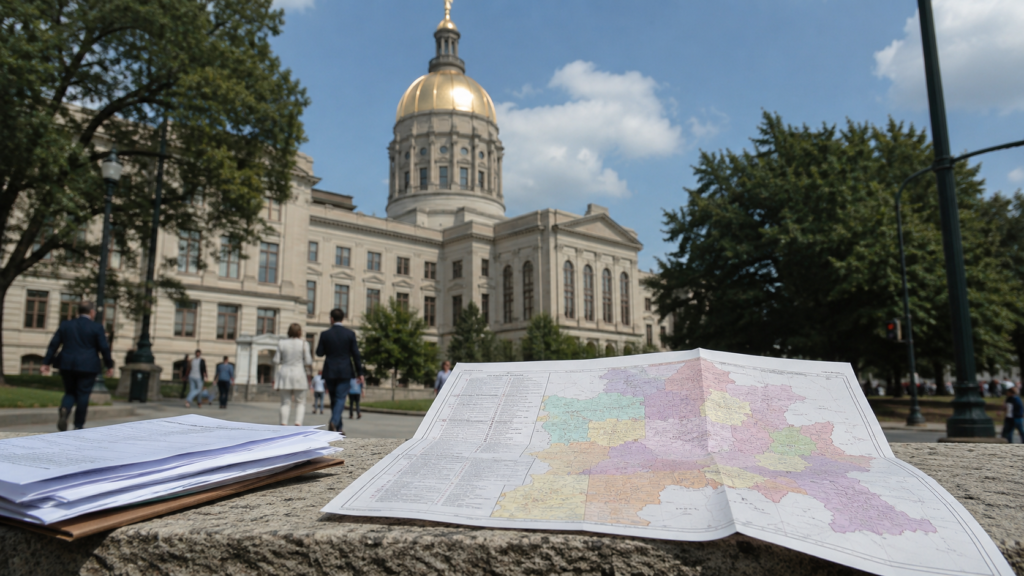
The immediate concern comes from the U.S. Supreme Court’s recent ruling in Louisiana v. Callais, which voting-rights advocates say weakened a key part of the Voting Rights Act’s protection against racial discrimination in redistricting.
According to Georgia Recorder reporting carried by WABE, the ruling changes the legal landscape by making it harder for plaintiffs to challenge gerrymandered districts unless they can prove intentional racial discrimination. That is a higher bar than showing that a map has the effect of diluting minority voting power.
That difference may sound technical. It is not.
If the legal question shifts from “does this map dilute Black voting strength?” to “can plaintiffs prove lawmakers intended to discriminate?” then many cases become harder to bring and harder to win. Intent is often difficult to prove, especially when mapmakers can point to partisan goals, geography, compactness, or other explanations for how lines were drawn.
That is why critics say the ruling could have consequences far beyond Louisiana.
Georgia Already Went Through This Fight
Georgia’s map fights are not theoretical.
In 2023, a federal judge ruled that some of Georgia’s congressional, state Senate, and state House districts violated the Voting Rights Act and had to be redrawn. The judge ordered lawmakers to create an additional Black-majority congressional district, two new Black-majority state Senate districts, and five new Black-majority state House districts.
That ruling came after plaintiffs argued that Black voters in Georgia still lacked equal opportunity in the political process.
The state later redrew maps during a special session. But voting-rights groups continued to argue that the fixes were incomplete, and Georgia’s redistricting litigation did not simply disappear after new lines were approved.
That history matters because it explains why Black officials are not treating the Supreme Court’s new ruling as a distant legal development.
In Georgia, maps have already been found to dilute Black voting power. The fear now is that the legal tool used to challenge that kind of dilution may be weaker the next time the maps are drawn.
Why Black Officials Fear Losing a Pipeline?
The AJC’s story focuses not only on current officeholders but also on the next generation of Black political leaders.
That is the part that can be easy to miss. Districts do not only determine who wins this year. They help shape who gets recruited, who can build a base, who has a realistic path into public office, and who voters get used to seeing in leadership.
If districts that give Black voters a meaningful chance to elect candidates of their choice are weakened or eliminated, the impact may not appear all at once.
It can show up slowly.
Fewer competitive districts. Fewer Black candidates with a viable path and fewer young political leaders emerging from majority-Black or minority-opportunity communities. Less leverage in legislative negotiations. Less policy attention to communities that already feel underrepresented.
That is why Harbison’s retirement carries symbolic weight. He represents a generation that came into office after the civil-rights era changed what was politically possible. The concern now is whether the next generation will inherit the same chance.
Republicans See a Different Map Question
Republicans have framed the issue differently.
According to the Georgia Recorder, some prominent Republicans began calling for new maps soon after the Supreme Court ruling. Lt. Gov. Burt Jones said he supported Georgia moving forward with new congressional maps that do not take race into account. Other Republicans have argued that new maps may be needed to comply with the court’s decision and keep districts within constitutional limits.
That is the argument supporters of redrawing are likely to make: that the ruling limits how far states can go in using race as a factor in district design.
But critics see something else.
They argue that “race-neutral” mapmaking can still produce racially unequal results when voters are geographically clustered and racially polarized voting patterns remain strong. In practical terms, a map can be described as partisan or race-neutral while still reducing the influence of Black voters.
That is where the debate becomes difficult. Race, party, geography, and political power are often tangled together in Georgia. Pulling one thread usually affects the others.
The National Fight Is Moving Fast
Georgia is not alone.
Reuters reported this week that the NAACP launched a campaign urging Black athletes, recruits, fans, and donors to withhold support from public universities in eight Southern states, including Georgia, after the Supreme Court decision and subsequent redistricting moves. The NAACP says those states are undermining Black political power through congressional maps.
That campaign shows how quickly the voting-rights fight has moved beyond courtrooms and state capitols.
It is now spilling into college athletics, donor pressure, and public campaigns aimed at institutions with large Black student-athlete populations and major financial stakes.
That does not mean every state is doing the same thing or that every map change will have the same legal effect. But it does show the scale of concern among civil-rights groups. They see the Supreme Court ruling as a signal that Southern legislatures may move quickly to redraw districts before the 2026 midterm elections.
Another Voting Rights Question Remains Open
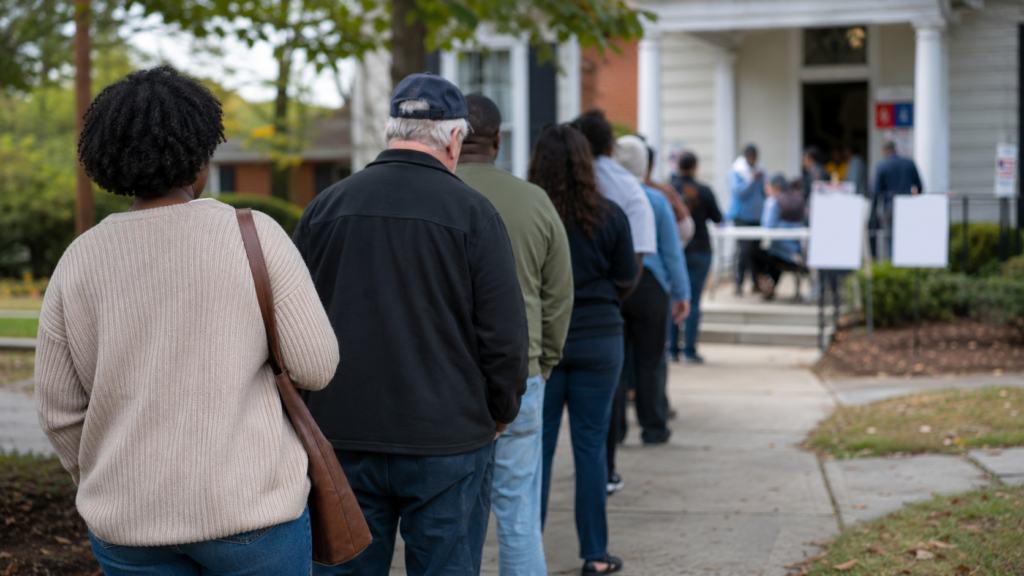
The Supreme Court also recently avoided taking up another major question about who can enforce Section 2 of the Voting Rights Act.
According to Georgia Public Broadcasting, the court declined for now to decide whether private individuals and advocacy groups can continue bringing Section 2 lawsuits, or whether only the U.S. attorney general can enforce that part of the law. Legal experts say limiting private lawsuits would sharply reduce the number of voting-rights challenges.
That matters because many voting-rights cases have historically been brought by voters, civil-rights organizations, and advocacy groups.
If those groups lose the ability to sue, enforcement would depend more heavily on the federal government. That could make voting protections more vulnerable to political changes in Washington.
For now, that question remains unresolved. But it is part of the same larger concern: the Voting Rights Act may still exist on paper, while its practical enforcement becomes narrower and harder to use.
What This Means for Georgia Voters?
For Georgia voters, the issue is not just whether one district changes.
The larger question is whether communities that have grown in population and political importance will be represented in a way that reflects that growth.
Georgia has become more diverse, more competitive statewide, and more central to national politics. At the same time, Republican lawmakers continue to control the Legislature and therefore the mapmaking process.
That combination creates pressure.
If lawmakers redraw maps after the Supreme Court ruling, the fight will likely center on whether new lines are being drawn to comply with the law, protect partisan advantage, or weaken Black voting strength.
Those arguments will not be easy to separate.
That is why advocates are paying attention not only to final maps, but to process: who draws the lines, how quickly they move, whether public hearings are meaningful, and whether communities most affected by redistricting get a real chance to respond.
The Bottom Line
The simplest version of the story is that the Supreme Court has weakened a key tool used to challenge racially discriminatory redistricting, and Georgia could feel the effects quickly.
The more accurate version is that Georgia has already been through recent Voting Rights Act litigation, already had maps ordered redrawn, and now faces a legal environment that may make future challenges harder.
Black officials and voting-rights advocates are worried because the Voting Rights Act helped create the political space that allowed leaders like Ed Harbison to serve. If that protection becomes harder to enforce, the concern is not only about current seats. It is about the next generation of representation.
Republicans argue that new maps may be needed to follow the Supreme Court’s direction. Critics argue that the ruling gives lawmakers a new opening to dilute Black political power while presenting the changes as legal compliance.
That is the tension Georgia now faces.
The real test will not be one statement from one official. It will be whether voters can look at the next set of maps and see fair representation — not just clean legal language.