Aiman Tariq – Regional News Editor
Atlanta, GA –
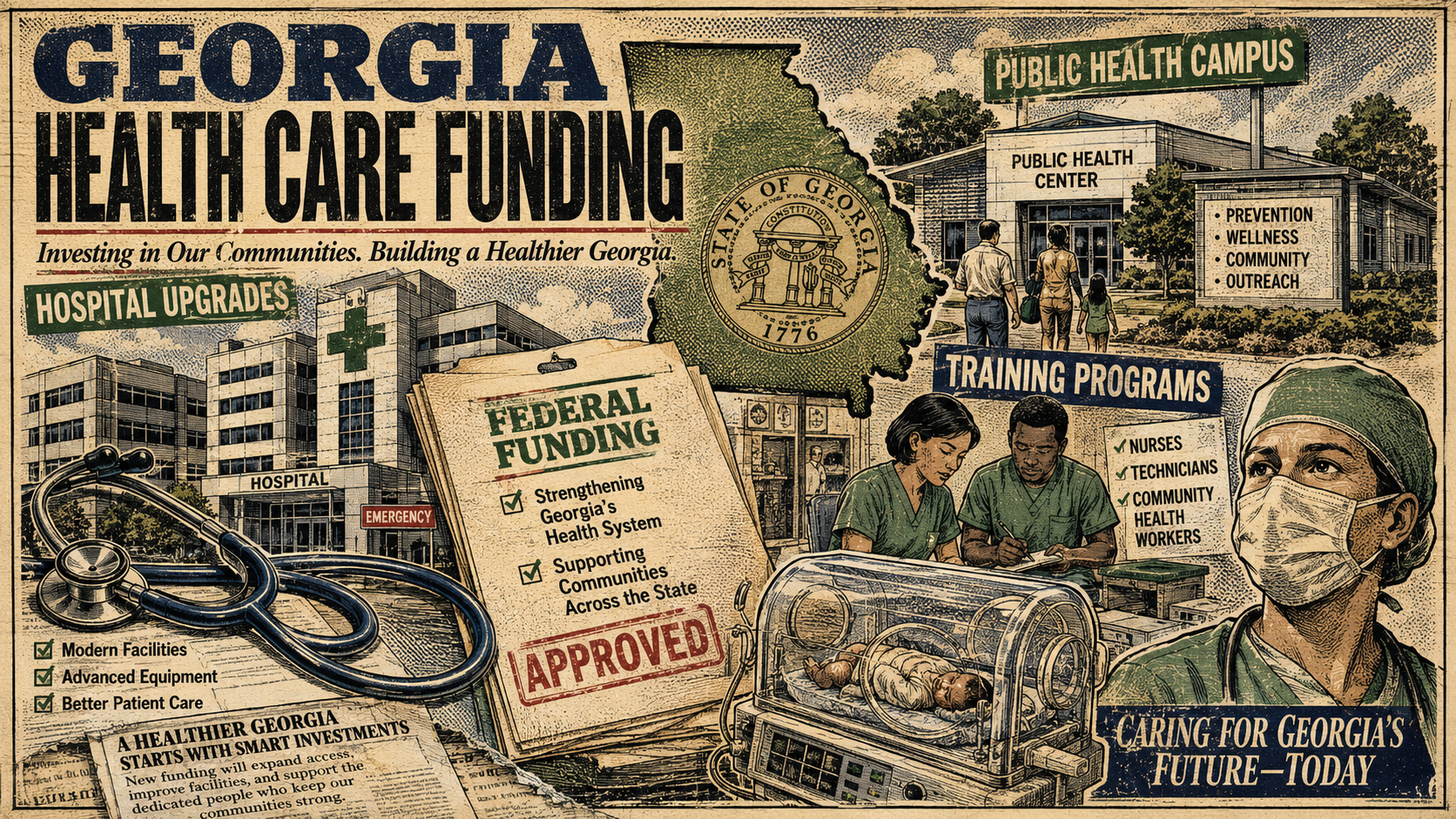
Georgia’s two U.S. senators say millions of dollars in new federal funding will go toward hospital upgrades, health care training, neonatal equipment, public health services and family support programs across metro Atlanta, North Georgia and Athens.
According to reporting from 11Alive, U.S. Sens. Jon Ossoff and Raphael Warnock announced the funding through legislation signed into law Feb. 3, with projects spread across Ringgold, Dahlonega, Atlanta, Cobb County and Athens.
The announcement is straightforward enough: several local health care programs are getting federal money. The more useful question is what those dollars are supposed to fix — and whether one-time project funding can meaningfully address deeper access problems in a state where hospitals, public health departments and workforce programs have been under pressure for years.
What the Funding Covers?
The projects named in the announcement range from hospital technology to diaper distribution.
According to 11Alive, CommonSpirit Health Memorial Hospital in Ringgold will receive $964,000 to upgrade hospital technology, including telehealth systems and tools to help track patient care needs. The University of North Georgia will receive $700,000 to expand clinical training at its Dahlonega and Blue Ridge campuses. Emory University will receive $476,000 for neonatal intensive care equipment upgrades at Emory Decatur Hospital. Cobb and Douglas Public Health will receive $3 million for a new South Cobb Public Health Campus. Athens Area Diaper Bank will receive $200,000 to help provide free diapers for families in the Athens area.
Those are different kinds of projects, but they point toward the same broad pressure point: access.
Some of the money is intended to help hospitals upgrade equipment. Some are aimed at training the next generation of health care workers. Some are meant to bring basic public health services closer to residents who may already face transportation, cost or insurance barriers.
That does not mean the funding solves Georgia’s health care access problem. It does mean federal dollars are being used to patch several places where the system is already showing strain.
Hospital Technology and Telehealth in Ringgold
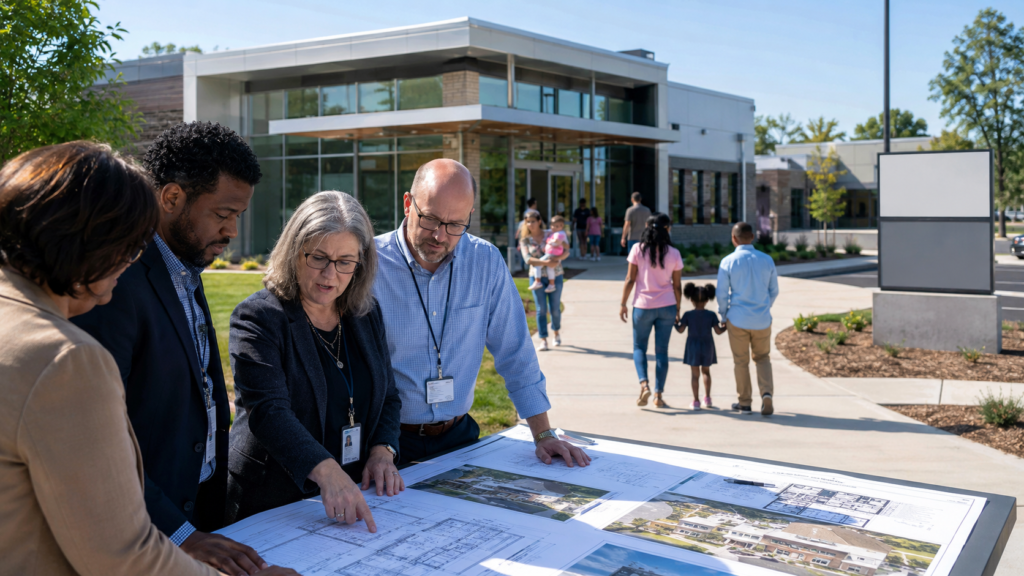
The Ringgold project is focused on technology.
According to the project listing from Sen. Ossoff’s office, the $964,000 request for CHI Memorial Hospital Georgia was tied to the purchase and installation of critical equipment for the new Ringgold hospital, including patient beds and infusion pumps. 11Alive’s report described the funding as support for hospital technology upgrades, including telehealth systems and tools to help track patient care needs.
That may sound less dramatic than a new wing or a new emergency department. But in practice, technology upgrades can affect how quickly hospitals move patients through care, how providers monitor needs, and how smaller or regional facilities connect patients to specialists.
Telehealth is not a substitute for every kind of in-person care. It cannot replace surgery, imaging or hands-on emergency treatment. But for follow-up visits, specialty consultations and some chronic-care management, it can reduce travel burdens — especially in communities where patients may not live near a large medical center.
That is the practical frame for the Ringgold funding: not a cure-all, but a tool to improve capacity and coordination.
Training More Health Care Workers in North Georgia
The University of North Georgia project is about the workforce.
According to Now Georgia, Ossoff and Warnock secured $700,000 for UNG to expand clinical training capacity at the Dahlonega and Blue Ridge campuses through new patient simulators and clinical education supplies. UNG President Michael Shannon described health care workforce readiness in rural North Georgia as both an academic and community need.
That point matters because Georgia’s health care access issues are not only about buildings and equipment.
A hospital bed does not help if there are not enough nurses, technicians and clinicians to staff the system. A rural clinic cannot expand services without trained workers. And training programs cannot grow if students do not have the simulation tools, lab supplies and clinical practice environments needed to prepare safely.
Patient simulators are one way schools try to bridge that gap. They allow students to practice clinical decision-making before they are placed in real patient-care settings.
The funding does not create a workforce overnight. But it is aimed at one of the more basic pipeline questions: how to prepare more health care workers closer to the communities that need them.
NICU Equipment at Emory Decatur Hospital
The Emory funding is more specific.
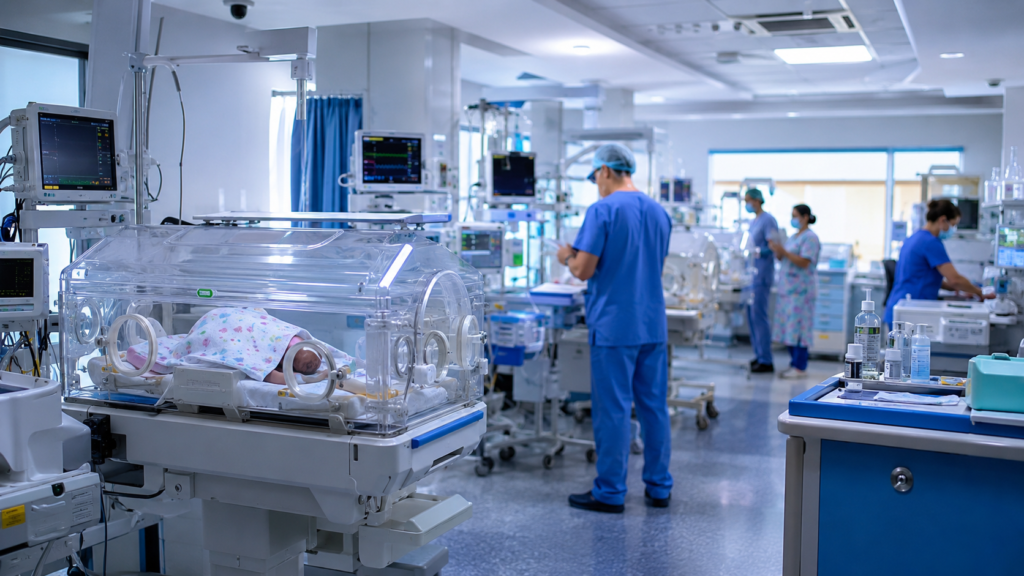
According to 11Alive, Emory University will receive $476,000 for neonatal intensive care unit upgrades at Emory Decatur Hospital, including temperature management systems and incubators designed to support babies after traumatic births. Sen. Ossoff’s appropriations listing describes the project as an NICU equipment reset at Emory Decatur Hospital in DeKalb County.
NICU equipment does not draw the same public attention as broader debates over insurance or hospital closures. But for families who need it, it is the difference between a hospital being able to provide highly specialized newborn care and having to rely more heavily on transfers or older equipment.
That is why small-dollar health care projects can still matter.
The amount here is less than half a million dollars. In federal budget terms, that is not a large number. In a neonatal unit, however, equipment upgrades can affect the daily work of nurses, physicians and respiratory teams caring for fragile newborns.
South Cobb’s Public Health Campus
The largest single project in the 11Alive list is Cobb County.
Cobb and Douglas Public Health will receive $3 million to help build a new South Cobb Public Health Campus offering public health, behavioral health and primary care services. Cobb and Douglas Public Health also confirmed the funding in a social media post, saying the campus is intended to expand access to care, mental health services and community resources.
This project comes with a longer backstory.
The Cobb & Douglas Public Health Foundation says the current South Cobb Public Health Center was originally built in 2000 and is about 4,000 square feet, providing services such as WIC nutrition and prenatal case management. The foundation says local health leaders had recognized the need to expand services well before the pandemic.
That context is important because the $3 million should not be read as a brand-new idea appearing out of nowhere. It appears to be part of a larger effort to expand a facility that local health leaders have already said is too limited for the area’s needs.
Healthbeat Atlanta reported last year that Cobb and Douglas Public Health was dealing with federal funding uncertainty and that the South Cobb project had previously faced a gap when funding did not come through in the earlier cycle. At the time, officials said the project remained a priority despite those challenges.
That makes the latest announcement significant, but not final. Funding is one step. Construction, staffing and long-term operating support are separate questions.
Diapers as a Public Health Issue
The Athens project is smaller but still notable.
According to 11Alive and Now Georgia, Athens Area Diaper Bank will receive $200,000 to help provide free diapers for families in the Athens area.
At first glance, diaper assistance may seem separate from health care. It is not.
Diaper need can affect infant hygiene, family stress, child care access and household budgets. Families who cannot afford enough diapers may be forced to stretch supplies longer than recommended. That can create health concerns for babies and additional pressure for parents already dealing with food, housing or medical costs.
Public health does not only happen inside hospitals. It also shows up in the basic supplies that allow families to keep infants safe, clean and cared for.
The Athens funding fits that broader definition. It is not a hospital upgrade. It is family support — and in many communities, those supports are part of how health problems are prevented before they become medical emergencies.
What the Senators Are Saying?
Ossoff framed the funding around access to care.
“There’s no worse nightmare for any family than having a loved one who’s sick, but who cannot get the health care they need,” Ossoff said, according to 11Alive.
Warnock described the projects as part of a broader effort to strengthen health care across Georgia.
“I’ve long fought to strengthen health care in Georgia, and I am proud to have worked alongside Senator Ossoff to secure federal funding for these vital projects across metro Atlanta,” Warnock said, according to the same report.
Those statements are political, and they should be read that way. Senators routinely announce local project funding as evidence of their work in Washington.
But the underlying projects are also real. Hospitals need equipment. Training programs need supplies. Public health centers need space. Families need basic support.
The fair reading is not that these grants solve Georgia’s health care problems. It is that they give several local programs money to address specific gaps.
Why These Projects Matter Beyond Metro Atlanta?
Although the headline focuses on metro Atlanta health care upgrades, the list reaches beyond Atlanta.
Ringgold is in northwest Georgia. Dahlonega and Blue Ridge are in North Georgia. Athens is its own regional hub. Cobb and DeKalb are central to metro Atlanta’s public health and hospital network.
That spread matters because Georgia’s health care system is not one system in practice. It is a patchwork of urban hospitals, regional facilities, county health departments, training programs, nonprofit providers and family-support organizations.
When one part of that patchwork is weak, patients often feel the strain somewhere else.
A lack of rural training capacity affects staffing. Limited public health space affects preventive care. Under-resourced family support can increase pressure on clinics and social services. Aging hospital equipment can affect patient flow and quality of care.
That is why targeted funding can be useful even when the amounts are relatively modest.
What Does This Not Answer?
The announcement leaves several questions open.
It does not say how quickly every project will be completed. It does not answer whether the South Cobb campus will have enough long-term staffing once built. It does not tell families how soon they will see direct changes in appointment availability, wait times or service hours.
It also does not address broader health care affordability.
For many Georgians, the biggest barrier is not whether a hospital has upgraded equipment. It is whether they have insurance, whether their plan is accepted, whether they can take time off work, or whether they can get transportation to an appointment.
Those are bigger problems than any single funding package can fix.
Still, infrastructure matters. A clinic that is too small cannot offer enough services. A training program without equipment cannot prepare enough students. A neonatal unit without modern equipment faces limits. A hospital without updated technology may struggle to coordinate care efficiently.
The announcement should be understood in that narrower but still meaningful way.
The Bottom Line
Georgia’s two U.S. senators say new federal funding will support health care projects in Ringgold, Dahlonega, Atlanta, Cobb County and Athens.
The money will go toward hospital technology, clinical training, NICU equipment, a South Cobb public health campus and diaper assistance for families.
The strongest version of the story is not that Washington has fixed Georgia’s health care access problem. It has not.
The more accurate version is that several local programs are receiving targeted federal support for specific gaps — equipment, training, facilities and basic family needs.
Those gaps matter.
Whether the funding produces lasting improvements will depend on execution: how quickly projects move, how services are staffed, and whether patients actually see better access on the ground.
For now, the announcement gives several Georgia health care providers something they have been asking for: money to expand capacity in places where the need was already visible.