Aiman Tariq – Regional News Editor
Columbia, SC –
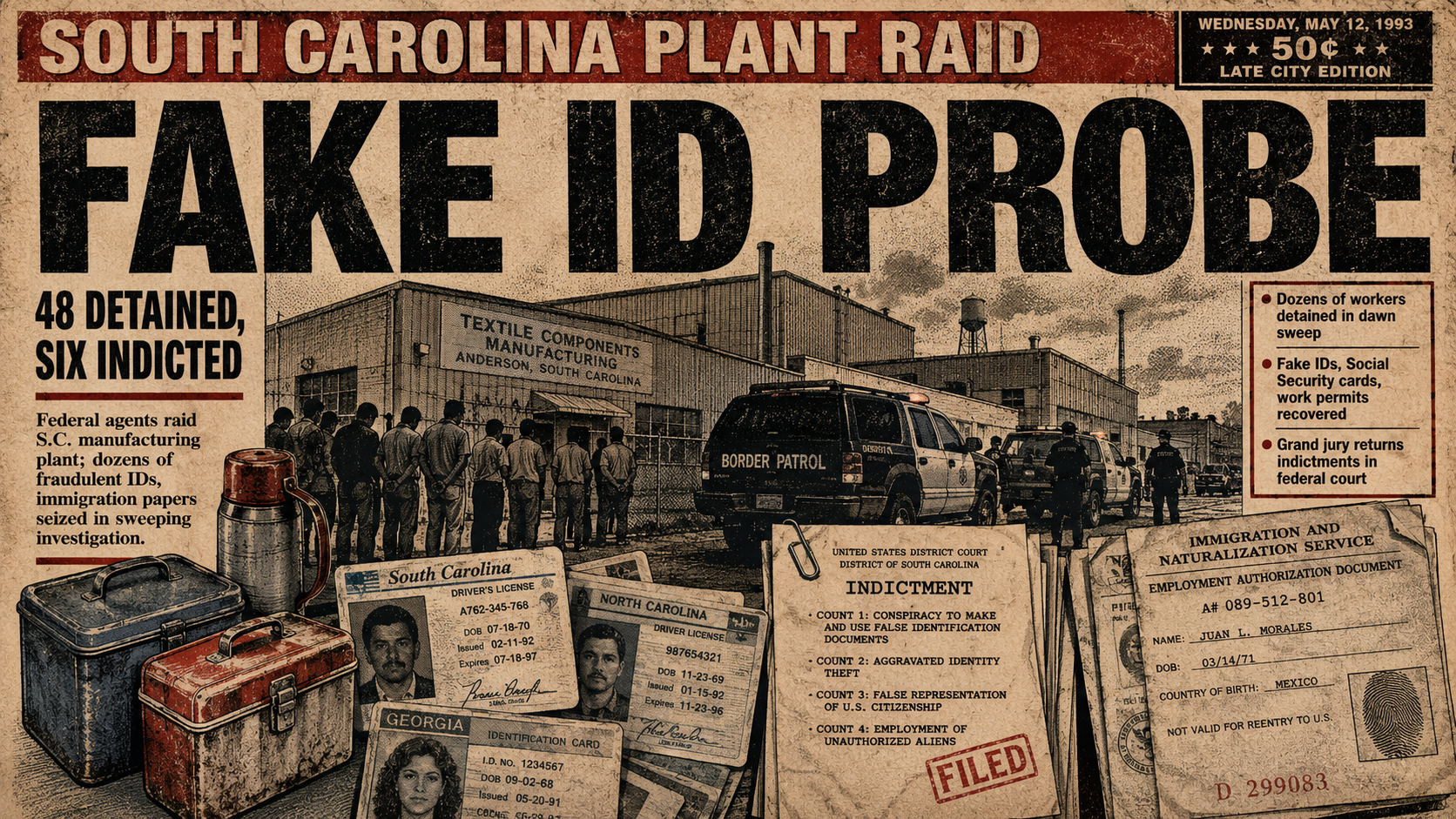
According to state and federal officials, a two-year investigation into fake identification documents and identity theft led to the detention of 48 workers at a South Carolina metal casting business and the indictment of six people, including two managers at the plant.
The operation took place Wednesday at Burnstein von Seelen Precision Castings in Abbeville, a small city in western South Carolina near the Georgia line. Officials said U.S. Immigration and Customs Enforcement took 48 workers into custody on alleged immigration violations, while state authorities announced charges tied to identity fraud and criminal conspiracy.
That makes the case more complicated than a standard workplace raid. State Attorney General Alan Wilson described the investigation as focused on a broader document-fraud network, not simply workers showing up for a job. Civil-liberties advocates, meanwhile, urged caution about early government claims and said the workers’ treatment should be scrutinized.
Both things can be true at once: identity theft and forged documents are serious allegations, and early statements from law enforcement still need to be treated as claims, not final findings.
What Officials Say Happened?
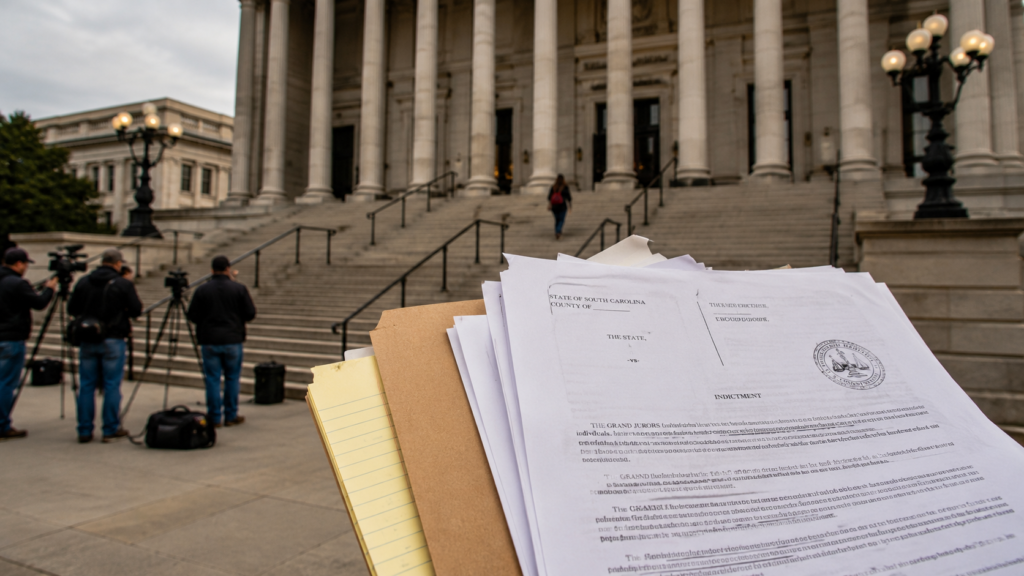
According to the South Carolina Attorney General’s Office, the investigation was known as “Operation Ghost Story” and began in the fall of 2024. The office said a state grand jury issued six indictments after a multi-jurisdictional investigation involving state, federal and local law enforcement agencies.
The Associated Press reported that dozens of officers raided Burnstein von Seelen Precision Castings in Abbeville on Wednesday. ICE officers detained 48 workers, while two top managers at the plant were arrested on allegations that they knowingly hired immigrants who were in the country illegally.
The two managers were expected to appear at the Richland County Courthouse in Columbia on charges of criminal conspiracy and identity fraud to obtain employment, according to AP. It was not immediately clear from early reporting whether they had lawyers who could respond to the allegations.
That point matters. An indictment is not a conviction. The charges describe what prosecutors believe they can prove, but the defendants are entitled to contest those allegations in court.
Six People Indicted in State Probe
The state grand jury indicted six people in connection with the alleged fake-document scheme.
According to AP and state officials, the indictments include two company officials and four others accused of making or selling false U.S. and state identification documents using stolen personal information. Prosecutors described the case as one involving identity theft, forged Social Security cards, fake driver’s licenses and false immigration documents.
Wilson said at a news conference that the case was not aimed at people “trying to feed their family” or businesses that unknowingly hired unauthorized workers. He said prosecutors were targeting what they described as a larger conspiracy involving stolen identities and forged documents.
That is the state’s framing. Whether the evidence supports it will depend on court records, witness testimony, document trails and whatever defense arguments emerge as the case moves forward.
The Workers Detained by ICE
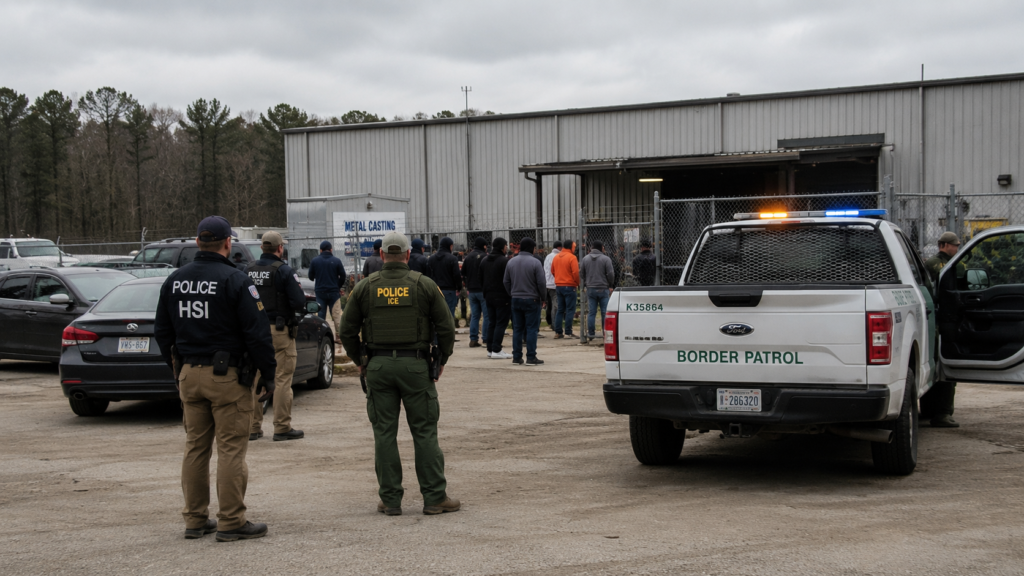
The most immediate impact fell on the 48 workers taken into ICE custody.
According to AP, ICE officials said they were reviewing the immigration status of the detained workers. Officials said the group included people with prior ICE encounters and some who had previously been ordered deported.
Local reporting from The State said the detained workers came from Mexico and Guatemala, based on information provided by officials. That detail adds context, but it does not answer the larger questions about each worker’s legal status, family situation or possible claims for relief.
That is why broad statements about the group should be handled carefully. Immigration status can be complex, and being detained by ICE does not by itself resolve every legal question.
For many families, however, the result is immediate: someone went to work and did not come home.
ACLU Raises Civil-Liberties Concerns
The American Civil Liberties Union of South Carolina said it was seeking more information about the detentions and urged the public to treat early official claims with caution.
Jace Woodrum, the group’s executive director, said in a statement that the workers “showed up for work” and that many would not be able to return home to their families. The group also pointed to other immigration operations around the country where, it said, early government descriptions did not always match later scrutiny.
That does not mean the allegations are false. It means the public record is still developing.
Workplace raids can involve multiple legal tracks at once: criminal charges against some people, immigration detention for others, possible identity-theft victims, employer-liability questions and civil-rights concerns. Treating all of that as one simple headline usually misses something.
Why Does Business Matters Locally?
Burnstein von Seelen Precision Castings is not a small anonymous storefront.
The company describes itself as a permanent mold casting business specializing in copper, brass, nickel and aluminum work. Its website lists an Abbeville address on Carwellyn Road, and state business listings place it in Abbeville County.
The company’s own materials describe it as working with alloys and manufacturing components. A trade case study also described Burnstein von Seelen as a copper precision casting manufacturer in Abbeville.
That makes the raid significant for the local community. In smaller counties, a major workplace is not just an employer. It is part of the local tax base, local supply chain and daily economic rhythm.
When enforcement actions hit a workplace like that, the effects can move beyond the people charged or detained. They can also affect coworkers, families, customers and a community trying to understand what happened.
Why Do Authorities Say the Case Is Different?
Officials described the investigation as broader than a typical immigration sweep.
According to AP, prosecutor Creighton Waters said authorities approached the case in ways similar to drug investigations, pursuing not only people accused of using false documents but also those accused of supplying them.
That framing is important because it tells readers how prosecutors want the case understood: not simply as an employment-compliance case, but as an alleged identity-theft and document-fraud network.
Still, that is also where caution is needed.
The public has heard only the prosecution’s early version. Court filings, defense responses and future hearings may clarify how much each defendant allegedly knew, what role each person is accused of playing, and whether prosecutors can connect the workplace to the alleged document network in the way they claim.
The Politics Around the Investigation
The case also lands in the middle of a broader national debate over immigration enforcement.
Wilson said the state investigation began in October 2024, during the Biden administration, when local officials were frustrated by what he described as limited federal enforcement involving fake IDs and identity theft. He said cooperation changed after President Donald Trump returned to office and federal authorities joined the investigation.
That political context matters, but it should not replace the legal questions.
The defendants still face specific charges. The detained workers still have individual immigration cases. And any claim about a broader conspiracy still has to be proven through evidence, not press-conference language.
If you have an internal link to your earlier immigration or South Carolina enforcement coverage, this would be a natural place to add it as background for readers following the region’s recent enforcement activity.
What Remains Unclear?
Several major questions remain unanswered.
Officials have not yet laid out the full evidence behind the indictments in public. It is also not clear from early reporting how many of the detained workers may challenge removal, seek immigration relief or argue that they were victims of a document-fraud scheme rather than participants in it.
The company did not immediately respond to messages seeking comment, according to AP. That means the public has not yet heard a detailed response from Burnstein von Seelen itself.
There are also practical questions:
- How long were the alleged fake documents being used?
- How did managers allegedly know the documents were false?
- How many identity-theft victims were involved?
- What happens to the detained workers’ families?
- Could additional businesses or individuals be charged?
Authorities said the investigation is continuing and that more indictments and arrests are possible.
What Happens Next?
The criminal cases will move through state court, beginning with bond hearings, arraignments and early filings.
The immigration cases will move separately through federal immigration processes. Those proceedings can involve detention reviews, immigration-status checks, prior removal orders, possible relief claims and decisions about removal.
That separation matters. A state indictment against managers and document suppliers is not the same thing as an immigration detention case against a worker.
The overlap is what makes this case complicated — and why the early public narrative should be treated as incomplete.
The Bottom Line
A South Carolina fake-ID and identity-theft investigation has now led to 48 workers being detained by ICE and six people being indicted by a state grand jury.
According to officials, the case centers on forged identification documents, stolen personal information and alleged hiring practices at Burnstein von Seelen Precision Castings in Abbeville.
Prosecutors say the case targets a wider document-fraud network, not ordinary workers trying to support their families.
Civil-liberties advocates say the public should be cautious about early government descriptions and pay close attention to the rights of the detained workers.
Both the criminal case and the immigration proceedings are still developing.
For now, the safest version of the story is also the most accurate: authorities say they uncovered a fake-document operation tied to a South Carolina workplace, but the details still have to be tested in court.