Aiman Tariq – Regional News Editor
Richmond Hill, GA –
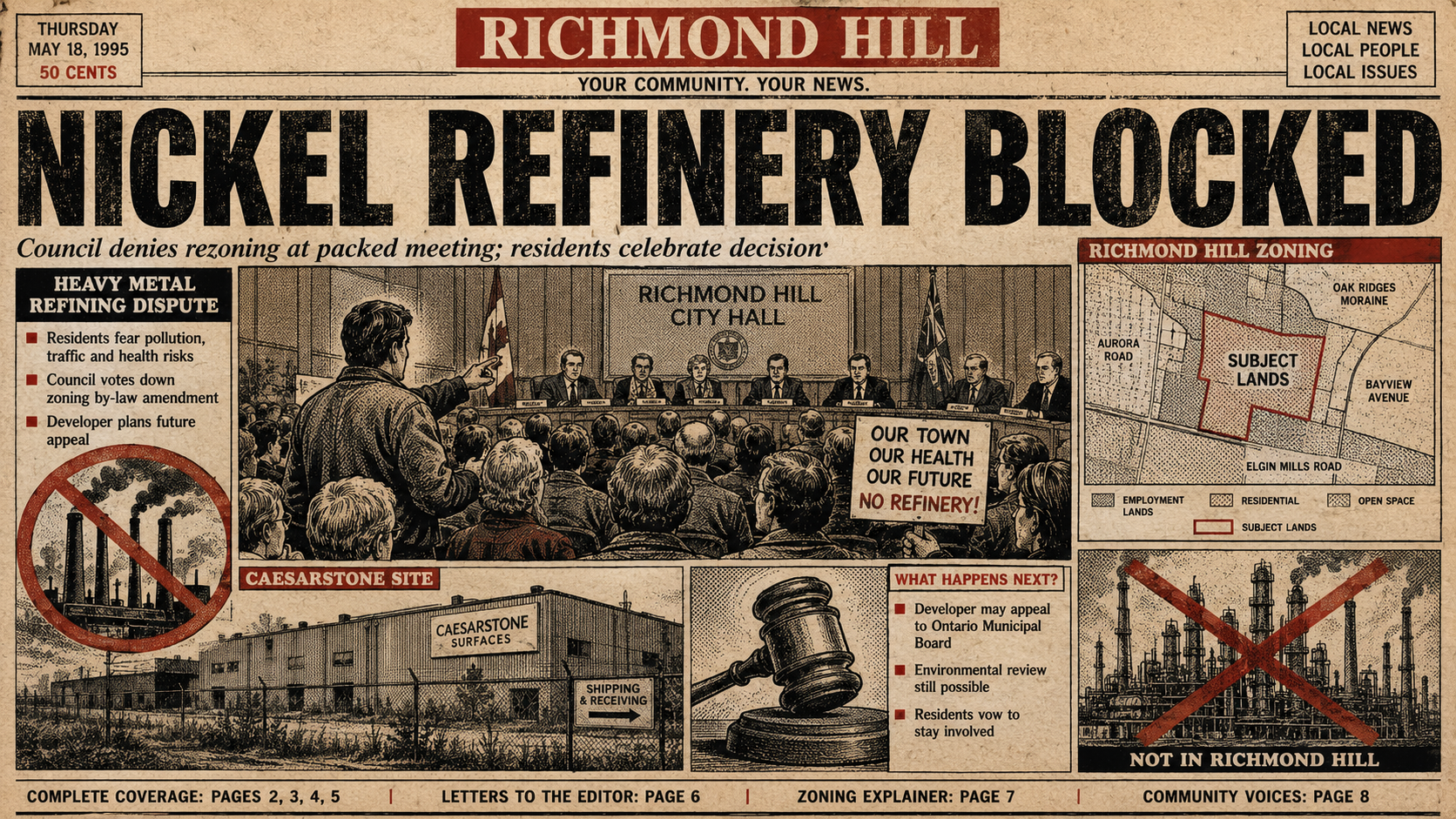
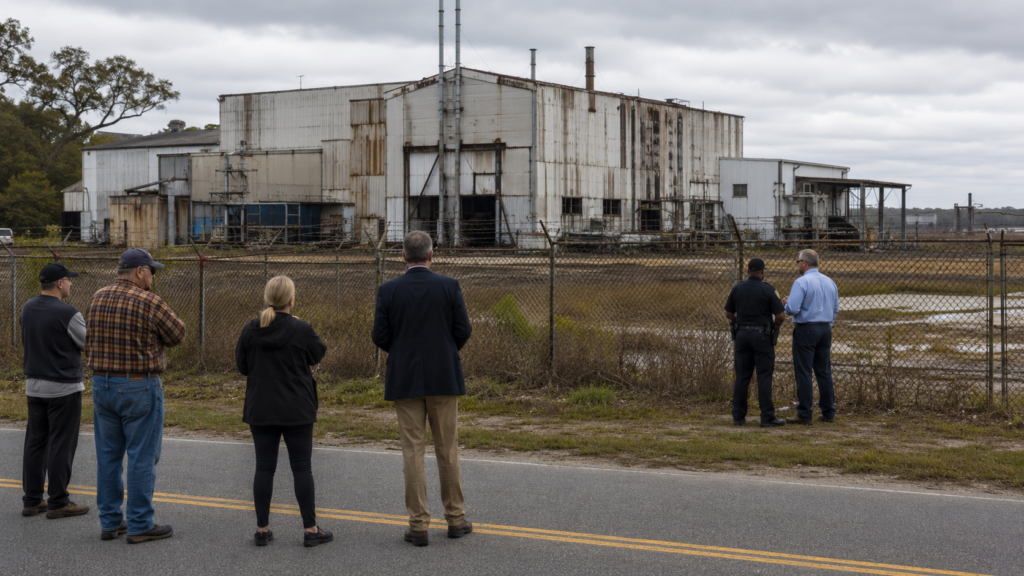
A proposed nickel refinery in coastal Georgia has hit another major obstacle, after Richmond Hill officials affirmed that nickel refining is not allowed under the existing zoning for the former Caesarstone facility in Belfast Commerce Park.
The decision does not end every possible path for Westwin Elements. But it does close the specific zoning appeal tied to the site and makes one thing clear: if the company wants to operate a nickel refinery there, it would need a different land-use approval.
That distinction matters.
The issue before the city was not whether nickel refining is a good or bad policy. It was whether the proposed use fits the zoning already approved for the property. Richmond Hill’s answer was no.
City Officials Affirm Zoning Interpretation
According to the Statesboro Herald, Richmond Hill officials unanimously affirmed that nickel refining, cobalt refining and other heavy-metal refining operations are not permitted uses at the former Caesarstone site at 1 Caesarstone Drive.
The property sits within Belfast Commerce Park and was previously used by Caesarstone, a countertop manufacturing company that closed its Richmond Hill operation in January 2024.
Westwin Elements, an Oklahoma-based company founded in 2022, has sought to purchase the site as part of its effort to build a domestic supply chain for nickel and other critical minerals.
Company leaders have argued that nickel refining in the United States is important for national security, electric vehicle production, and reducing dependence on foreign supply chains.
That argument may carry weight in broader industrial policy debates. But zoning decisions are usually more specific than that. They turn on what a particular property is allowed to do under a particular set of local rules.
In this case, city officials said the proposed refinery does not fit.
What the Appeal Was Actually About?
The appeal was filed by Caesarstone, not Westwin.
That is an important detail because Westwin did not appeal the city’s February determination that the proposed refinery was not permitted under the existing zoning. Caesarstone, as the property owner, challenged that interpretation instead.
According to the City of Richmond Hill’s public summary, the appeal asked officials to review the planning director’s determination that a nickel refinery does not qualify as “manufacturing” under the 2013 Belfast Commerce Centre Planned Unit Development.
The city also emphasized what the appeal was not.
It was not a rezoning request. It was not a variance request. It was a review of how the existing zoning language should be interpreted.
That gave the hearing a narrower frame than some residents may have expected. The question was not whether Richmond Hill should welcome or reject a refinery as a matter of economic development. The question was whether the use was already allowed.
The Public Response Was Hard to Miss
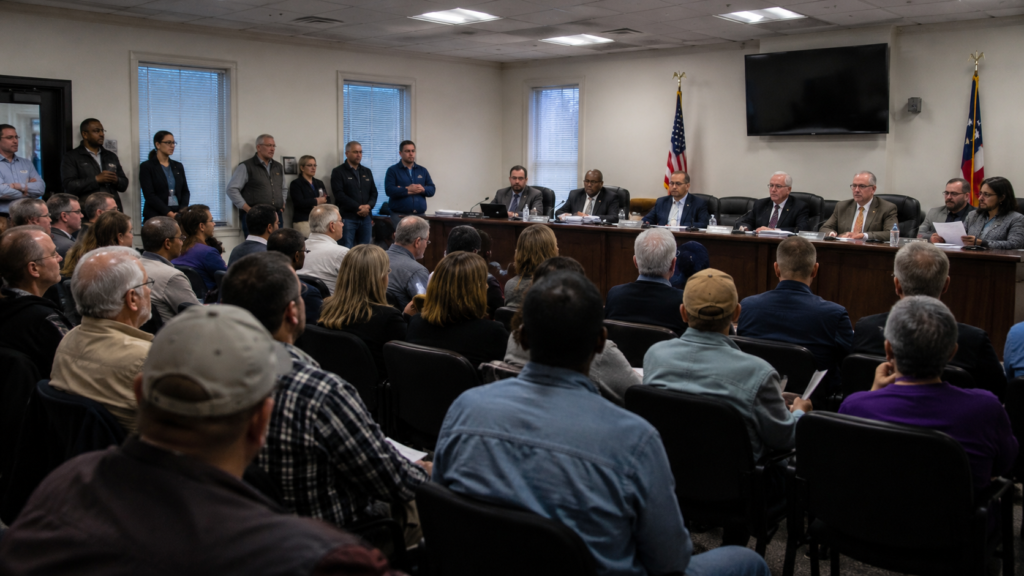
The hearing drew a packed crowd.
According to local reporting, a line of attendees stretched outside Richmond Hill City Hall, and law enforcement began turning people away once the building reached capacity.
That kind of turnout usually tells its own story.
The proposed refinery has drawn concern from residents since becoming public, especially after discussions about possible environmental conditions at the former Caesarstone property and the type of refining Westwin proposed to conduct there.
In February, Bryan County officials launched an investigation into possible contamination at the site after comments made during a town hall raised concerns about conditions at the former manufacturing facility. County officials said at the time that they did not yet know whether the site was contaminated.
That is another reason the zoning decision landed in a community already on edge.
For residents, the question was not only whether the project fit a zoning category. It was also whether a heavy industrial use belonged near homes, schools, and sensitive coastal environments.
Why the “Manufacturing” Label Was Not Enough?
One of the central arguments in the dispute involved whether nickel refining could be treated as a form of manufacturing already allowed under the site’s zoning.
That is where the city’s interpretation matters.
A broad word like “manufacturing” can sound simple from the outside. But zoning law often breaks industrial uses into more specific categories, especially when chemicals, emissions, waste streams, or heavy-metal processing may be involved.
Richmond Hill officials ultimately sided with the planning director’s interpretation: heavy-metal refining is not permitted by right under the Belfast Commerce Center zoning designation.
The final clarifications approved by the city stated that nickel, cobalt and other heavy-metal refining operations are not permitted under the current zoning, whether conducted through a carbonyl process or other methods.
That does not mean every industrial use is barred from the site.
It means this specific proposed use does not get to move forward simply by calling itself general manufacturing.
Westwin’s National-Security Argument Meets Local Control
Westwin has framed its mission around critical minerals and domestic supply chains.
On its own website, the company describes itself as working to address U.S. dependence on imported nickel and to build domestic refining capacity. That message fits a larger national conversation about electric vehicles, batteries, manufacturing independence, and geopolitical risk.
But national importance does not automatically override local zoning.
That is the tension at the center of the Richmond Hill dispute. A company may argue that its project serves a national purpose. Local residents and officials may still ask whether the proposed use is appropriate for a specific site, under specific rules, in a specific community.
Both things can be true at once.
The United States may need more domestic critical-mineral processing. Richmond Hill may also decide that this location, under this zoning, is not the place for it.
Environmental Questions Remain Part of the Backdrop
The city’s decision was a zoning determination, not an environmental ruling.
Still, environmental concerns have followed the project from the beginning.
Westwin applied for an air permit through the Georgia Environmental Protection Division earlier this year. According to local reporting, the permit materials gave city officials more specific information about the company’s plans, including the use of a carbonyl process to refine nickel and other metals.
That appears to have changed how city officials viewed the proposal.
Before that permit application, local officials had been responding to broader descriptions of the project. Once the process was described in more detail, Richmond Hill staff reevaluated whether the use was allowed.
That sequence matters because many land-use disputes become clearer only after the proposed operation is described in technical terms.
A project may sound like ordinary industrial redevelopment at first. Once the actual process, materials and permitting requirements are known, the zoning question can look different.
What Happens If Westwin Still Wants the Site?
The city’s decision does not necessarily stop Westwin from pursuing the property forever.
But it does mean the company cannot proceed under the current zoning interpretation.
To operate a nickel refinery at the site, Westwin or the property owner would likely need to seek rezoning or another land-use approval. That would open a different kind of public process, one likely to draw even more scrutiny from residents.
That process would also give opponents and supporters a clearer forum to argue the bigger questions: jobs, tax base, environmental risk, industrial compatibility and community trust.
For now, though, the immediate legal path has narrowed.
The appeal is over. The city’s interpretation stands.
The Regional Development Question
The Westwin fight also comes at a time when southeast Georgia is being asked to absorb major industrial growth.
The Hyundai Metaplant in Bryan County has already reshaped conversations about roads, housing, water, labor and infrastructure. Related suppliers and manufacturing proposals are likely to keep arriving.
That does not make every project automatically acceptable.
It does mean local governments are going to face more pressure to sort ordinary industrial development from uses that may require heavier review.
The Westwin case shows how quickly that pressure can land at the city council level. A project presented as economic development can become a zoning fight, an environmental concern, and a test of public trust within a matter of weeks.
Why Local Process Matters?
There is a temptation in debates like this to jump straight to the largest argument.
Supporters may say the country needs domestic nickel refining. Opponents may say the project poses unacceptable risk. Both claims may be part of the bigger discussion.
But local process exists for a reason.
Zoning rules are supposed to tell residents, businesses and property owners what can happen where. If a proposed use falls outside those rules, the burden shifts to the applicant to seek approval through the proper channel.
That is what Richmond Hill officials appear to be saying here.
The city did not rule on whether America needs nickel. It ruled on whether nickel refining was already allowed at this site.
That answer was no.
The Bottom Line
Richmond Hill officials have affirmed that nickel refining is not permitted under the current zoning for the former Caesarstone facility in Belfast Commerce Park.
The decision ends Caesarstone’s appeal and reinforces the city’s position that Westwin Elements would need additional approval before operating a nickel refinery at the site.
The ruling is a significant setback for the project, but not necessarily the end of the larger debate.
Westwin can still argue that domestic nickel refining is important. Residents can still argue that this location is wrong for heavy-metal refining. City officials can still insist that zoning rules have to mean what they say.
For now, the clearest takeaway is simple: the proposed refinery does not have a by-right path forward at 1 Caesarstone Drive.
The next question is whether Westwin, Caesarstone, or any other interested party tries to reopen the fight through a formal rezoning process.
Until then, Richmond Hill’s message is direct: heavy-metal refining is not allowed there under the current rules.