Aiman Tariq – Regional News Editor
Atlanta, GA –
Electric bills are one of the clearest ways families feel summer heat. They are also one of the easiest household costs to oversimplify.
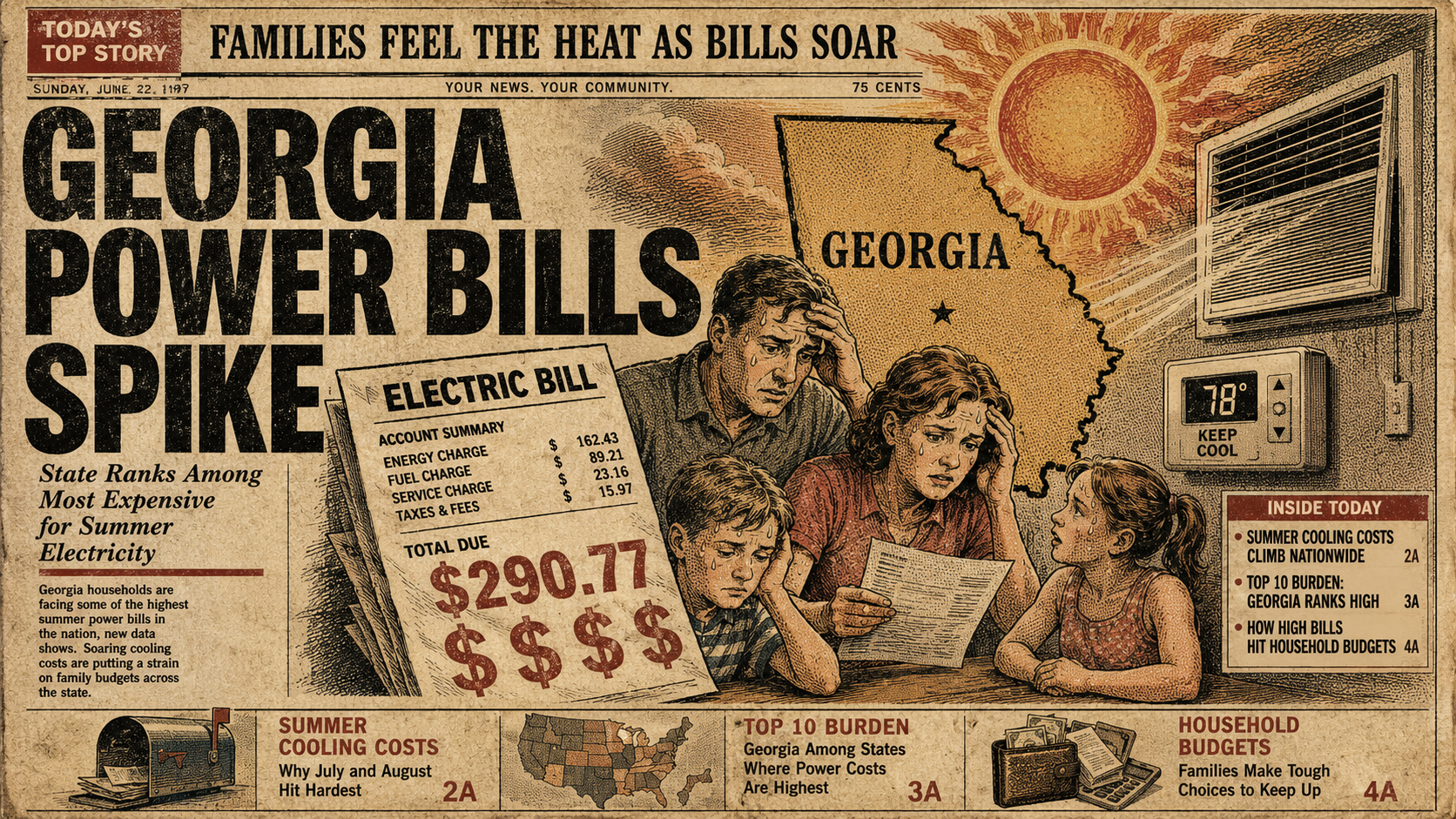
According to a ConsumerAffairs analysis reported by FOX 5 Atlanta, Georgia ranks eighth in the country for the share of household income spent on summer electricity bills. The report estimates that Georgia households spend about 3.4% of their income on summer cooling costs, compared with a national average of 2.9%.
That does not mean every Georgia household is paying the same bill. It does not mean every family is using energy the same way. But it does suggest that summer power costs are taking a larger bite out of household budgets in Georgia than in most states.
That distinction matters. A statewide average can show pressure. It cannot tell you exactly how that pressure feels in an older home in Augusta, a new subdivision outside Atlanta, or a rural county where residents may have fewer options for upgrades.
Why Georgia Landed in the Top 10?
The ConsumerAffairs analysis placed Georgia behind Alabama, Mississippi, Louisiana, Arizona, Texas, Oklahoma and Arkansas. South Carolina ranked tenth, putting much of the Southeast near the top of the list.
That regional pattern is not especially surprising.
Southern states tend to have long cooling seasons, heavy air-conditioning demand and many homes built around central air. Even when electricity rates are not the highest in the country, usage can push bills up quickly.
In Georgia’s case, FOX 5 reported that the average summer electricity bill used in the analysis was about $225 per month, roughly 13% above the national average. The report also listed Georgia’s median monthly household income at about $6,700, close to the national median, which means the burden is being driven more by the bill than by unusually low income.
This is the difference between a cheap rate and an affordable bill.
A state can have electricity prices that look moderate on a cents-per-kilowatt-hour basis and still leave households with high bills if homes use a lot of power during hot months.
The Rate Picture Is Not the Whole Story
Federal data gives some additional context.
The U.S. Energy Information Administration reported Georgia’s average residential electricity price at 15.37 cents per kilowatt-hour in April 2026, up from 14.82 cents in April 2025. That rate was still below many states in the Northeast and West Coast, but it does show that residential electricity was more expensive than a year earlier.
That is why the bill burden can be confusing.
Georgia may not have the highest residential rate in the country. But during summer, many households use more electricity because cooling becomes a daily necessity rather than a comfort choice. A slightly lower rate does not help much if the air conditioner has to run for hours in 90-degree heat.
In practical terms, the number on the bill reflects two things at once:
- The price of electricity
- The amount of electricity a household uses
For many Georgia families, the second number is where summer becomes expensive.
Why Do Summer Bills Hit Differently?
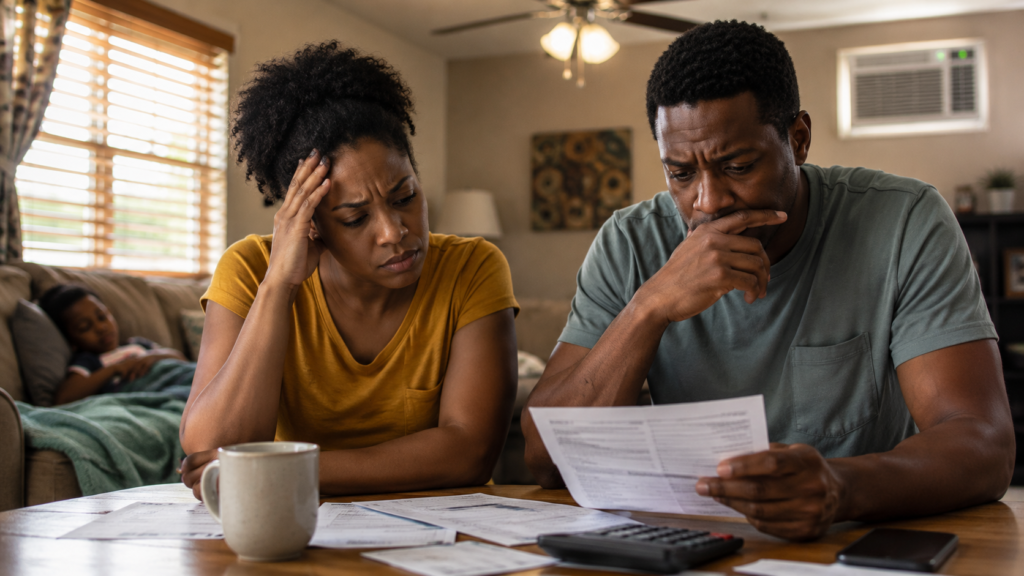
Air conditioning is not optional for many households in Georgia.
That is especially true for families with young children, older adults, medical conditions, pets or homes that heat up quickly. During stretches of extreme heat, turning the system off completely may not be realistic or safe.
The Associated Press recently reported that energy experts generally recommend setting air conditioning a few degrees higher when away rather than shutting it off entirely, especially in humid climates where moisture can become a separate problem. Experts told AP that the best approach depends on climate, insulation, home design and the type of cooling system.
That is the part often missing from basic “save money” advice.
A well-insulated newer home may respond quickly to small thermostat changes. An older rental with poor insulation, leaky windows or an aging HVAC system may not. Two households can follow the same advice and see very different results.
This is why summer power bills are not just a personal finance issue. They are also a housing issue.
Rate Relief May Help, But Only So Much
There is some short-term rate relief in the picture for Georgia Power customers.
In May, Georgia Power announced that the Georgia Public Service Commission approved a plan expected to lower overall rates beginning in June 2026. The company said the typical residential customer using 1,000 kilowatt-hours per month would save about $50 per year, or roughly $4.04 per month.
That relief is real, but it is modest when measured against a summer bill near $225.
It may soften the edge of the bill. It does not change the basic math of long, hot summers, high cooling demand and homes that vary widely in efficiency.
Georgia Power also notes that it offers multiple residential rate plans, including options tied to time-of-use pricing, seasonal rates and fixed billing. The company says summer peak periods can affect costs and that some customers may benefit from shifting usage away from more expensive hours.
That may be helpful for households with flexibility. It is less useful for people who cannot easily change when they cook, wash clothes, work from home or cool bedrooms for children and older relatives.
What Households Can Actually Do?

The standard advice still matters. It just needs to be understood as partial relief, not a cure.
According to the U.S. Department of Energy guidance cited by AP, adjusting a thermostat by 7 to 10 degrees for eight hours a day can save up to 10% a year on heating and cooling.
But the details matter.
In Georgia’s humid climate, experts generally caution against turning air conditioning off for long periods if that creates moisture problems, mold risk or system strain. Setting the thermostat slightly higher while away is often more realistic than shutting the system down entirely.
For most households, the useful steps are ordinary:
- Replace or clean HVAC filters
- Use ceiling fans to circulate air
- Block direct sunlight during the hottest part of the day
- Avoid running ovens and dryers during peak heat
- Seal obvious air leaks where possible
- Compare rate plans if the household has flexible usage patterns
None of those steps should be oversold. A clean filter will not make a poorly insulated home cheap to cool. A smart thermostat will not fix a broken HVAC system. But small changes can reduce waste, especially in homes where equipment is working harder than it should.
Why Averages Hide Local Differences?
The ConsumerAffairs ranking is useful as a broad signal, not a precise neighborhood-level measurement.
That is important because Georgia is not one energy market in lived experience. Atlanta-area homeowners, coastal residents, apartment renters, manufactured-home residents and rural households may face very different cooling costs.
A household’s bill can be shaped by:
- Home age and insulation
- Square footage
- Tree cover and sun exposure
- HVAC age and efficiency
- Rental restrictions on upgrades
- Number of people in the home
- Rate plan and utility provider
This is why the ranking should not be read as saying every Georgia household is equally burdened. It means that, on average, the state appears to rank high when summer bill size is compared with household income.
That is still meaningful. It just does not answer the question most families care about: why is my bill this high?
The Larger Energy Demand Question
Georgia’s summer electricity burden is also part of a larger national trend.
The U.S. Energy Information Administration expects national electricity use to set records in 2026 and 2027, with rising demand from data centers, cryptocurrency operations, electrification and broader power use across sectors. Reuters reported that U.S. power consumption is projected to climb from 4,195 billion kilowatt-hours in 2025 to 4,269 billion kilowatt-hours in 2026.
That does not mean household air conditioning is the only driver of rising electricity pressure. It is not.
But it does mean residential customers are living inside a power system where demand is growing in multiple directions at once. When demand rises, utilities, regulators and customers all face harder questions about generation, transmission, reliability and cost.
For Georgia families, those questions show up first as a monthly bill.
What This Means for Georgia Families?
The simplest version of the story is that Georgia ranks among the worst states for summer electricity burden, according to the ConsumerAffairs analysis reported by FOX 5.
The more accurate version is that the ranking reflects a mix of heat, usage, rates, income and housing conditions — and those factors do not land evenly across the state.
A $225 summer bill may be manageable for one household and destabilizing for another. The difference often depends less on personal discipline than on housing quality, income stability, family size and whether a household can afford upgrades before the bill arrives.
That is why the ranking should be treated as a warning sign, not a final diagnosis.
It tells Georgia residents that summer electricity costs are high enough to matter. It does not tell them which household is wasting power, which utility is responsible, or which policy change would solve the problem by itself.
The Bottom Line
Georgia’s ranking as the 8th-worst state for summer electricity burden is a useful signal that cooling costs are putting real pressure on household budgets.
According to the ConsumerAffairs analysis reported by FOX 5, Georgia households spend an estimated 3.4% of income on summer electricity bills, above the national average of 2.9%.
Federal data also shows Georgia’s average residential electricity price was higher in April 2026 than a year earlier, even though the state’s rates remain below some higher-cost regions.
The practical takeaway is not that every household has the same problem. It is that Georgia’s summer heat, housing stock and electricity usage can turn even moderate rates into expensive bills.
For families, small efficiency steps can help. For policymakers and utilities, the larger question is whether the state can reduce the summer burden without leaving the solution entirely on households already struggling to keep cool.