Aiman Tariq – Regional News Editor
Atlanta, GA –
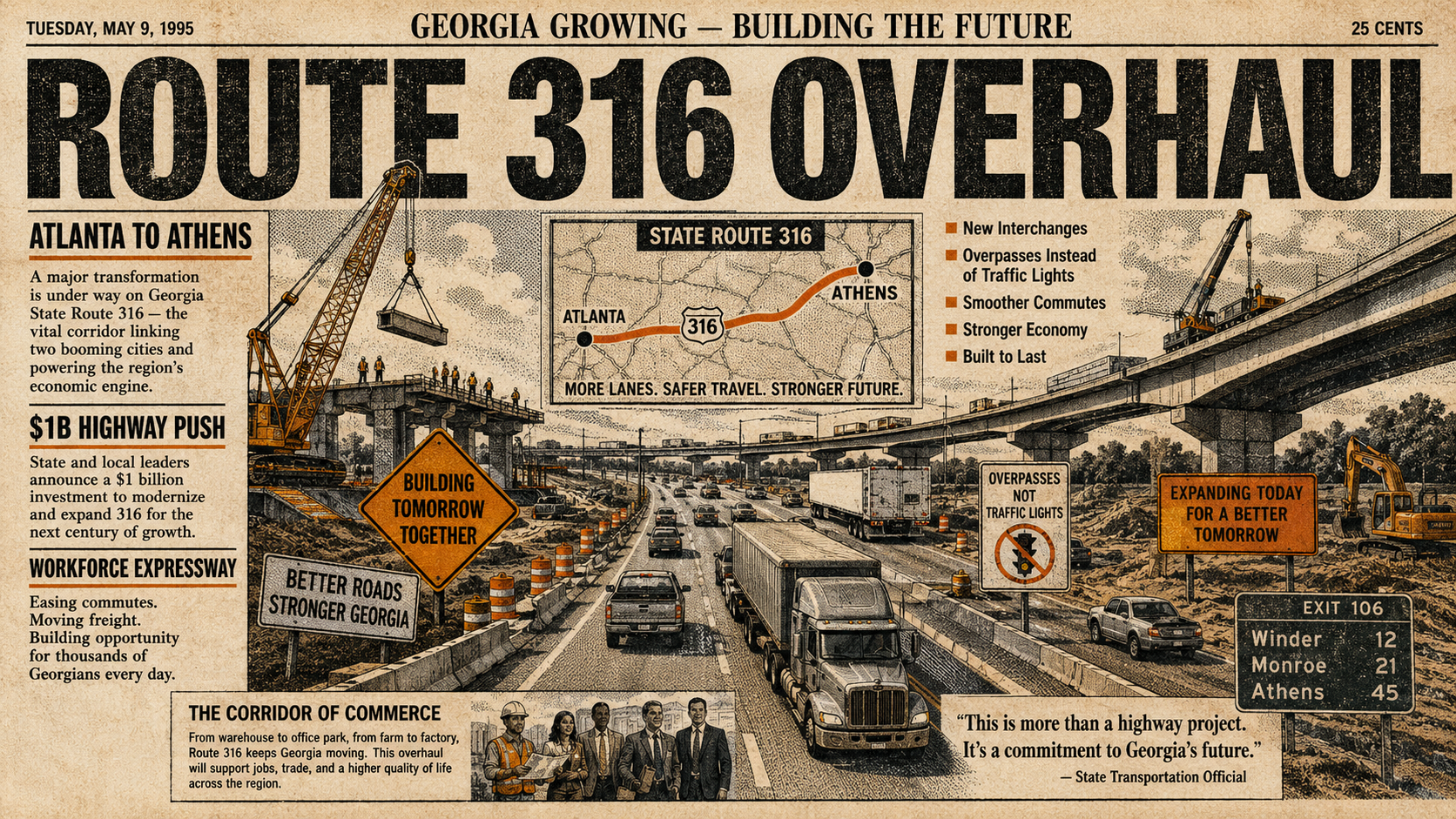
Georgia is putting roughly $1 billion behind a long-running effort to remake State Route 316, the highway that links metro Atlanta to Athens, into something closer to a true expressway.
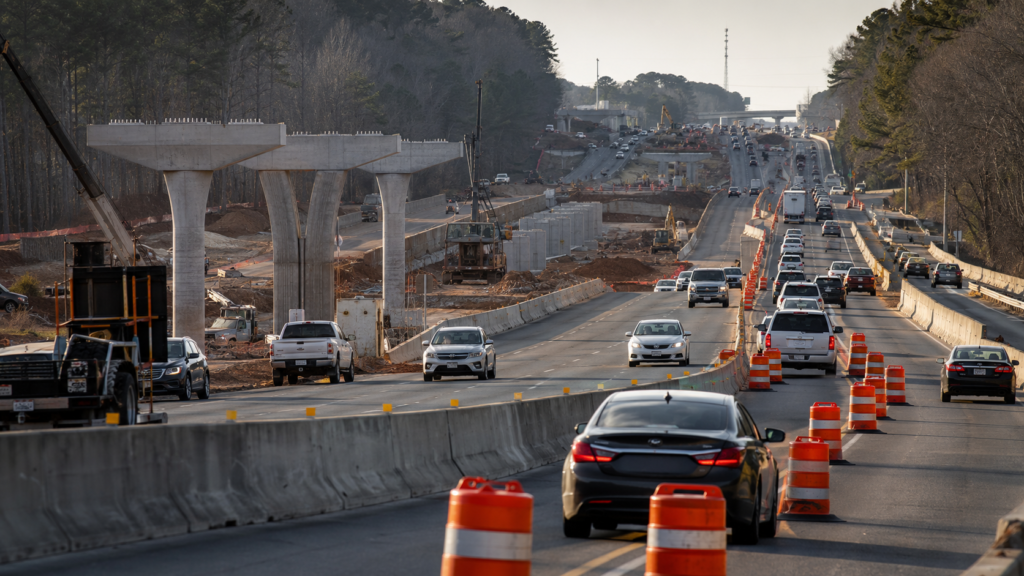
The idea is simple enough: remove signalized intersections, build interchanges, improve traffic flow and reduce the risk of crashes along a corridor that is carrying more commuters, more freight and more development pressure than it was built to handle.
But the bigger story is not just road construction. It is what the state thinks this corridor is becoming.
Route 316 runs through Gwinnett, Barrow and Oconee counties before feeding into the Athens area. Those counties are not growing evenly, and they are not all facing the same development pressures. But together, they form one of the clearest examples of how metro Atlanta’s expansion is pushing east — toward college towns, research hubs, industrial sites and once-rural communities now trying to absorb suburban growth.
That’s why the state’s latest investment should be read as both a transportation project and an economic development bet.
Why Route 316 Is Getting This Much Attention?
According to the Atlanta Business Chronicle, the Georgia Department of Transportation is investing about $1 billion into the long-term Route 316 overhaul, including a series of projects meant to convert remaining signalized intersections into interchanges with on- and off-ramps. The same report says Georgia lawmakers allocated $185 million in the amended fiscal 2026 state budget for interchange conversions along the 40-mile highway.
That funding is part of a broader state transportation push. Gov. Brian Kemp’s office said the amended budget includes more than $1.6 billion for I-75 express lanes, $185 million for SR 316 interchange conversions, $100 million for rural bridge work and $250 million for local maintenance and improvement grants.
The 316 piece is smaller than the I-75 investment, but it matters because of where the highway sits.
It connects Georgia’s largest metro region to one of its major university centers. It also runs through places where residential growth, medical development, logistics demand and large-scale research projects are starting to overlap.
In January, Kemp described the goal as turning Georgia 316 into “a true and safe expressway,” saying the state needed to continue upgrading intersections to interchanges, overpasses and safer connections.
That is the selling point. Whether the finished corridor delivers on it will depend on execution.
What The Road Looks Like Now?
Route 316 is not a normal local road. It is also not fully a freeway.
That in-between status is part of the problem.
According to GDOT project materials, the corridor between I-85 in Gwinnett County and the SR 10 Loop in Oconee County currently includes a mix of grade-separated interchanges and at-grade crossings. One GDOT project page describes the route as having nine grade-separated interchanges and 33 at-grade intersections in that stretch.
That mix creates a predictable tension.
Drivers may treat the road like a high-speed highway, but the corridor still has conflict points where vehicles cross, turn or merge in ways that can slow traffic and raise safety concerns. For a commuter driving between Athens and Atlanta, that can mean stop-and-start conditions. For freight carriers, it can mean less predictable travel times. Local residents, it can mean construction disruption now in exchange for a promise of fewer bottlenecks later.
This is why converting intersections to interchanges is more than a design preference. It changes how the highway functions.
The Growth Argument Behind the Spending
The state’s case for the investment rests heavily on growth.
Barrow County, once more rural in character, has grown sharply since 2020. Census Bureau estimates show Barrow County’s population increased by about 19.4% from April 2020 to July 2025. Oconee County grew by about 7.4% over the same period, while Gwinnett County grew by about 6.3% from an already much larger base.
Those numbers do not prove that every interchange is necessary or that every project will produce the same benefit. But they help explain why the corridor is being treated differently than it was a generation ago.
When a highway connects a county approaching 100,000 residents, a county outside Athens with rising medical and commercial activity, and the second-most populous county in Georgia, the traffic question becomes harder to treat as a local inconvenience.
It becomes a regional planning issue.
That is where the state’s framing starts to make sense: Route 316 is no longer just the road between Atlanta and Athens. It is becoming a growth spine.
Rowen Adds Another Layer
One of the most important development pieces along the corridor is Rowen, the planned research and employment hub in eastern Gwinnett County.
State officials announced earlier this year that UCB, a global biopharmaceutical company, plans to invest $2 billion in a new manufacturing facility at Rowen. The governor’s office described Rowen as a 2,000-acre planned community designed around collaboration, research and innovation.
That matters for Route 316 because Rowen’s pitch depends heavily on location.
The project sits between Atlanta and Athens, with access to major research universities, workforce pipelines and future development land. If the highway remains slow, inconsistent or difficult to access, the development story becomes less convincing.
According to the Atlanta Business Chronicle, the 316 overhaul includes projects tied to access around Rowen, including a new interchange at Williams Farm Drive and a Rowen Way overpass. Local development officials have described those improvements as part of the infrastructure needed to support the scale of the planned project.
That does not mean the highway improvements are only about Rowen. But Rowen is one of the clearest examples of why state and local officials are thinking about the corridor as a workforce route, not just a commuter route.
A “Workforce Expressway” Is Still a Bet
The phrase “workforce expressway” sounds clean. The reality will be messier.
Better road access can help connect workers to jobs, students to employers, and companies to suppliers. It can also make land more attractive for development, especially in places already feeling pressure from metro Atlanta’s outward expansion.
But transportation projects do not automatically solve workforce problems. A faster road does not guarantee affordable housing near jobs. It does not guarantee that lower-wage workers can live near the opportunities being promoted. It does not answer whether growth will be coordinated or simply pushed farther east.
That’s why this project should be understood as a tool, not a cure.
If managed well, the Route 316 overhaul could make regional movement safer and more predictable. If managed poorly, it could simply invite more traffic, more development pressure and a new set of bottlenecks farther down the line.
What Drivers May Notice First
For many residents, the first visible impact will not be economic development. It will be construction.
GDOT project pages show several individual projects already planned or underway along the corridor, including interchange and access changes in Gwinnett, Barrow and Oconee counties. One Gwinnett project includes a new partial diamond/clover interchange at Hurricane Trail, while another project involves changes near Fence Road and Sugarloaf Parkway.
In Barrow County, GDOT describes work at SR 11 as a grade-separation project that would convert the existing at-grade intersection into a full interchange. In Oconee County, another project involves Dials Mill Road and Dials Mill Extension near the Barrow-Oconee line.
Those are the kinds of projects that can make a corridor safer and more efficient when complete. They can also create years of inconvenience before drivers see the payoff.
That is the tradeoff residents will likely experience first.
Safety Is the Hardest Promise to Measure Early
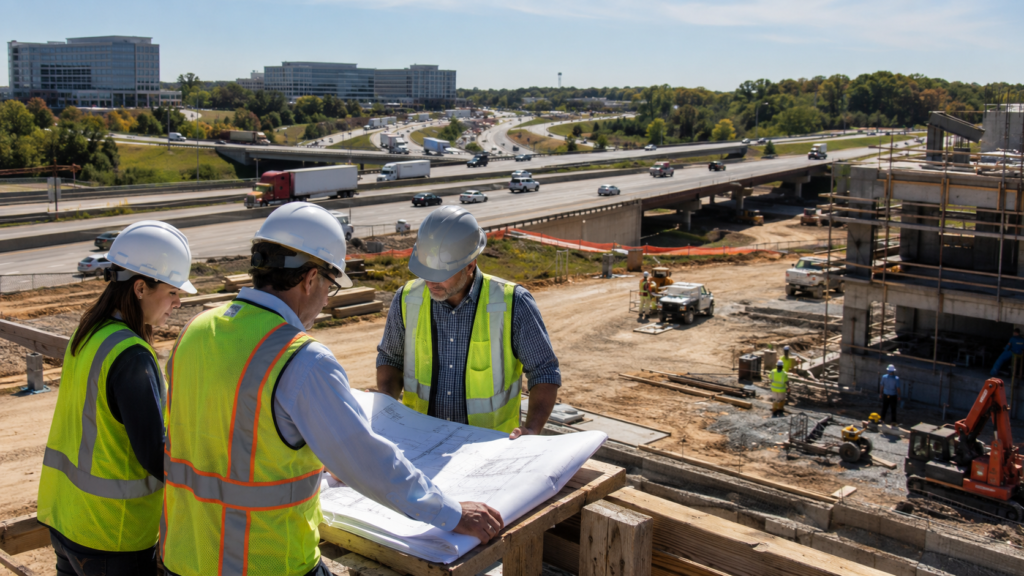
Officials have described the 316 upgrades as a way to reduce crash risk and improve travel times.
That claim is plausible. Grade-separated interchanges generally reduce the kind of crossing and turning conflicts that exist at signalized intersections. But measuring the final safety benefit will take time.
The responsible way to view the safety argument is not as a guarantee, but as the stated purpose of the design.
If traffic grows quickly enough, new capacity can fill faster than expected. If access changes are confusing during construction, local roads can absorb pressure, and if surrounding land use accelerates, the corridor could face new demand even as existing intersections are improved.
In other words, the project can make sense and still require scrutiny.
That is especially true because transportation projects of this size tend to be judged twice: first by what officials promise at the beginning, and later by whether drivers actually feel the difference.
Smaller Communities May Feel the Biggest Changes
Much of the public attention goes to Gwinnett and Athens, but Barrow and Oconee may experience some of the most visible transformation.
Barrow’s rapid population growth means more residents are already using 316 as a daily route. Oconee’s growth around medical offices, retail and the Athens edge makes access to the Oconee Connector and Epps Bridge area especially important.
For local governments, improved interchanges can make nearby property more attractive for commercial development. That can bring jobs and tax revenue. It can also bring pressure on schools, local roads, housing and public services.
This is the part that tends to sit behind the ribbon-cutting photos.
A new interchange is not just a traffic project. It can change where people build, where businesses locate and how quickly rural edges become suburban centers.
The Bottom Line
Georgia’s Route 316 overhaul is being sold as a safer, faster connection between Atlanta and Athens.
There is a strong case for why the corridor needs attention. The highway serves fast-growing counties, connects major education and employment centers, and still includes intersections that do not fit neatly with its role as a high-speed regional route.
The state has already committed major money to the effort, including $185 million in the amended fiscal 2026 budget for interchange conversions and roughly $1 billion in long-term corridor investment.
But the project is also a bet: that removing traffic lights and building interchanges will support growth without simply moving congestion somewhere else.
For now, the simplest version is that Georgia is trying to turn 316 into a true expressway.
The more complete version is that the state is using transportation infrastructure to shape the next stage of growth between Atlanta and Athens — and the results will be measured not just in travel time, but in what the corridor becomes.