Aiman Tariq – Regional News Editor
Atlanta, GA –
Crime is one of the most frequently cited measures of whether the government is “working.” It’s also one of the easiest numbers to oversell.
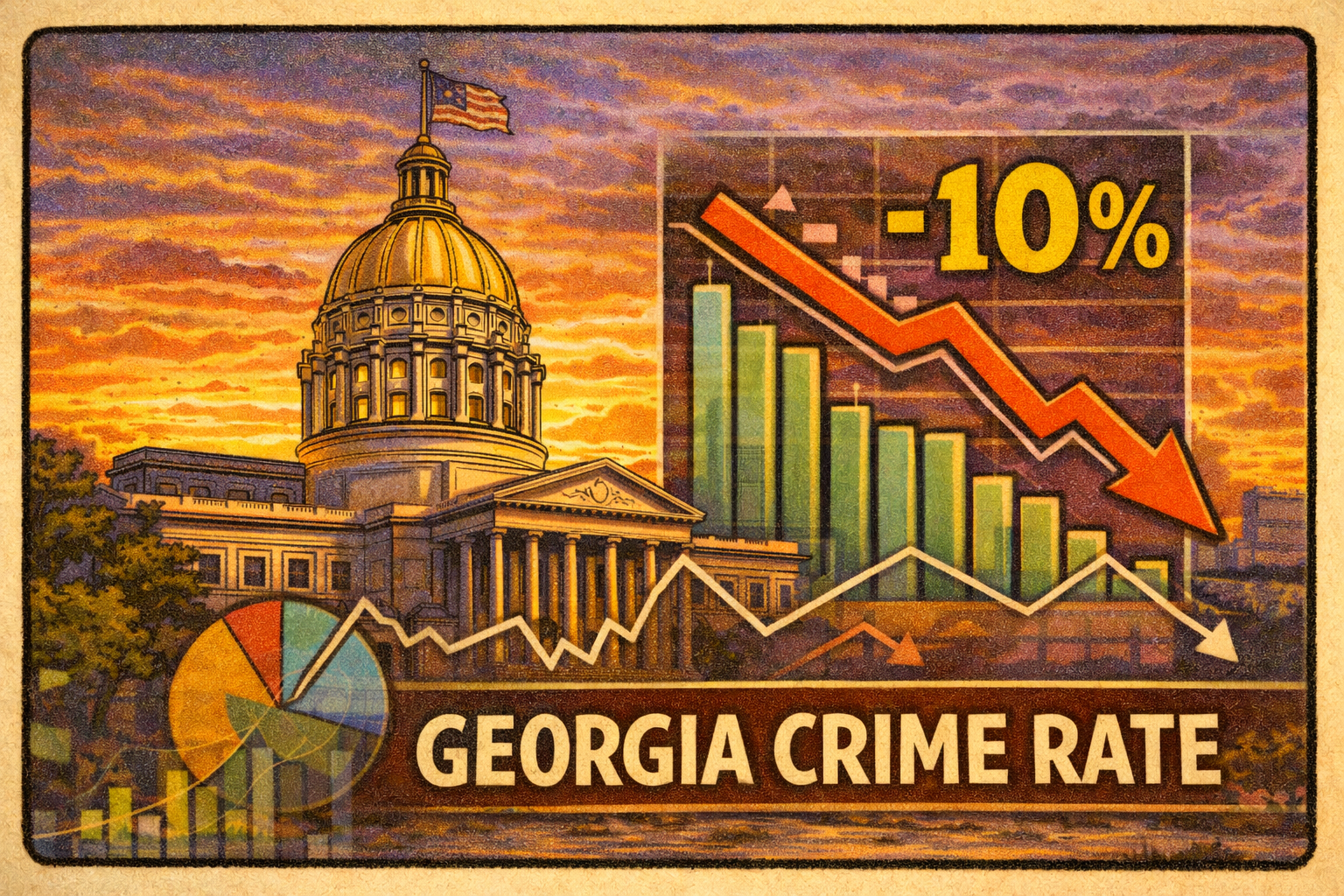
As new FBI crime reporting for 2024 circulates — including summaries that suggest declines nationally and in states like Georgia — readers should treat the headline as a starting point, not a verdict. Georgia crime data can be useful, but it is not a single clean scoreboard. It is a patchwork built from thousands of agencies, shifting reporting systems, uneven participation, and decisions made in real time by people under pressure.
That’s why it’s possible for two things to be true at once: crime can be trending down in broad strokes, and the data can still be too incomplete or inconsistent to support confident, point-by-point claims — especially when politicians or agencies use it to declare victory.
Why “Crime Is Down” Can Be True and Still Misleading
In recent years, national reporting has been disrupted by a major transition in how police departments submit crime data to the FBI. Many agencies have modernized their systems. Many others have not. And even for agencies that do report, the way incidents are classified can vary.
This is the difference between a broad signal and a precise measurement.
A broad signal might tell you, generally, that violent crime is trending downward nationwide. A precise measurement would require nearly complete participation from agencies and stable, consistent reporting rules over time. The U.S. often has the first, but not always the second.
That gap matters because “crime” is not one thing. Some categories are more reliably captured than others. Some are heavily dependent on whether victims report them. Few are influenced by staffing levels, investigative practices, or policy choices that affect how an incident is recorded.
When officials claim a sharp drop, the responsible response is not to dismiss it automatically — but to ask: drop in what, measure how, compared to which baseline, and using whose count?
The Participation Problem: Missing Data Shapes the Story
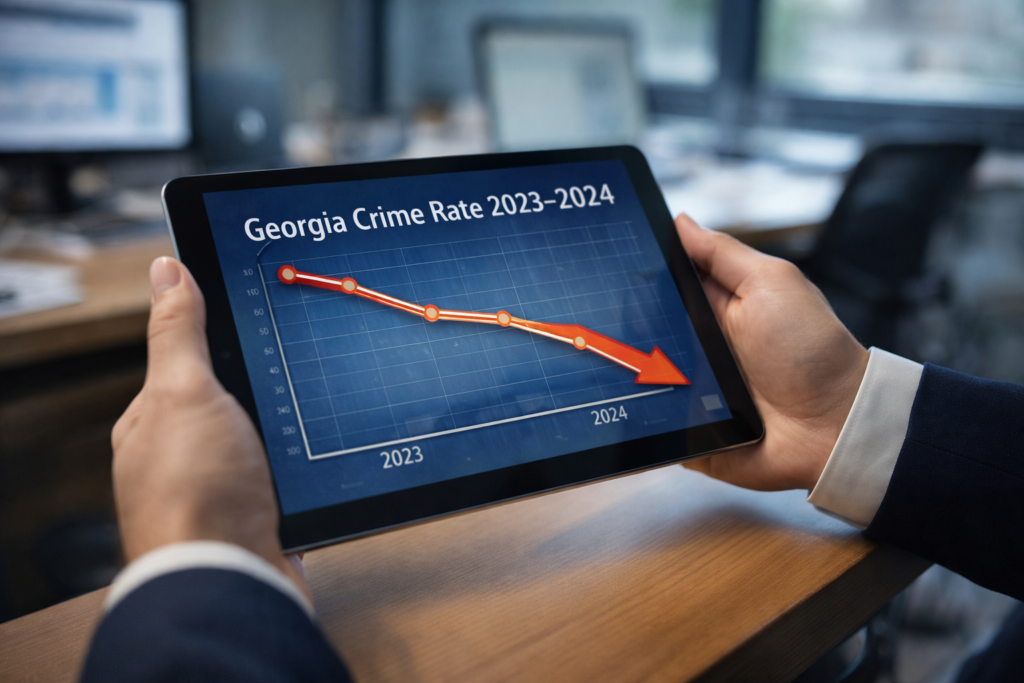
One of the central issues in recent FBI reporting cycles is missing participation. Some agencies report all months. Others report only part of the year. Others report nothing in a given cycle.
That can create an illusion of change that reflects reporting gaps rather than real-world shifts. When large agencies are missing, statewide totals can look cleaner than the reality on the ground. When agencies submit partial months, year-to-year comparisons can become unstable. And when the reporting rules change, trend lines can break in ways that are hard for readers to see.
For Georgia readers trying to interpret Georgia crime statistics, that means this: you can take note of direction — but you should be cautious about treating exact totals as definitive proof of what is happening in every city or county.
Why Local Claims Require Even More Skepticism?
Local agencies often release year-end summaries or public-facing “drops” in crime. Those summaries can be useful, but they are not the same as independent audits, and they don’t always line up neatly with what gets submitted to federal systems.
There are several reasons those numbers can diverge without anyone necessarily “lying”:
- Timing: a homicide that occurs late in the year may be classified or cleared in the next.
- Counting rules: one incident can involve multiple victims or multiple offenses, depending on the system.
- Reclassifications: cases can be re-labeled as investigations develop.
- Boundaries: countywide totals can mix multiple agencies, jurisdictions, or reporting practices.
This is why newsroom language matters. When a sheriff’s office says something is down, the phrase “according to the sheriff’s office” is not a throwaway. It’s the difference between relaying a claim and certifying it.
That is also why sweeping claims about the Georgia crime rate should be read with the same caution: even if the overall trend is downward, the “how we know” matters.
The Murder Question: Why It’s Watched Closely — and Still Not Perfect
If there’s one number the public tends to trust more than others, it’s homicide.
There’s a reason: homicide is less likely to be underreported than many other crimes. Robberies can go unreported. Sexual assaults can go unreported. Even aggravated assaults can be classified differently depending on injuries and investigative decisions. But homicides tend to leave a clear, documented trail through medical examiners, death certificates, and investigations.
Even then, homicide data can still become messy — not because bodies vanish, but because accounting systems and classifications can differ. Cases may be reclassified. Jurisdictional questions can arise. And agencies sometimes use different baselines when comparing “this year” to “last year.”
That’s why readers should treat any single-year declaration about the georgia murder rate with caution, particularly when it’s used for political messaging. It may still be directionally meaningful — but if a number seems inconsistent with what residents, reporters, and court systems have observed over years, it deserves a second look before it becomes a headline.
What Crime Data Can and Cannot Tell You?

Crime reporting is best at showing broad movement over time — especially when participation is stable and the reporting framework doesn’t change midstream.
It’s worse at answering the questions people actually care about, like:
- Are people safer in their neighborhoods?
- Are repeat offenders being held accountable?
- Are victims willing to report?
- Are police staffing shortages changing how incidents are recorded?
- Are clearance rates improving?
Those questions require more than annual totals. They require context: court dockets, jail booking data, 911 calls, hospital trauma data, community reporting patterns, and sustained local reporting.
This is also why national “crime debates” often feel disconnected from daily life. The data can move in one direction while residents still feel unsafe — or while a particular neighborhood experiences a spike that a statewide average smooths out.
For readers trying to make sense of GA crime statistics, the best approach is to use crime data the way analysts do: as one input, not the whole story.
How Politicians and Agencies Use Uncertainty?
Crime statistics are powerful in campaigns and press conferences because they carry the aura of objectivity. But uncertainty gives room for cherry-picking.
A politician can cite a year when reporting participation is low and claim success. An agency can highlight the categories that fell and omit those that rose. A spokesperson can compare against a baseline that flatters the present year. None of that requires inventing numbers — only selecting the most convenient slice.
That’s why the healthiest public posture toward crime data is skepticism without cynicism:
- Don’t accept victory laps as proof.
- Don’t treat every decline as fake.
- Don’t treat every increase as moral panic.
- Do demand clarity about sources, participation, and definitions.
In practical terms, when you hear claims about crime in georgia, the follow-up questions should be: Which reporting system? Which agencies? Full year or partial? Any missing major departments? Any definition changes?
Final Thoughts
The simplest version of the story is: the national trend line appears to be moving downward, and Georgia’s topline reporting appears to be moving in the same direction.
The more accurate version is: those signals are worth noting, but the details matter — and crime data in America remains too uneven to support confident, precision-level claims without deeper verification.
That is especially true at the local level, where agency messaging and incomplete reporting can distort comparisons.
As Georgia communities watch these numbers, the real test isn’t a press release. It’s whether residents see fewer shootings, fewer break-ins, fewer repeat offenders cycling through the system — and whether the public can trust the recordkeeping used to measure all of it.