Aiman Tariq – Regional News Editor
Greenville, SC –
Corporate grants are often announced in the language of celebration. The harder question is what they actually pay for once the press release fades.
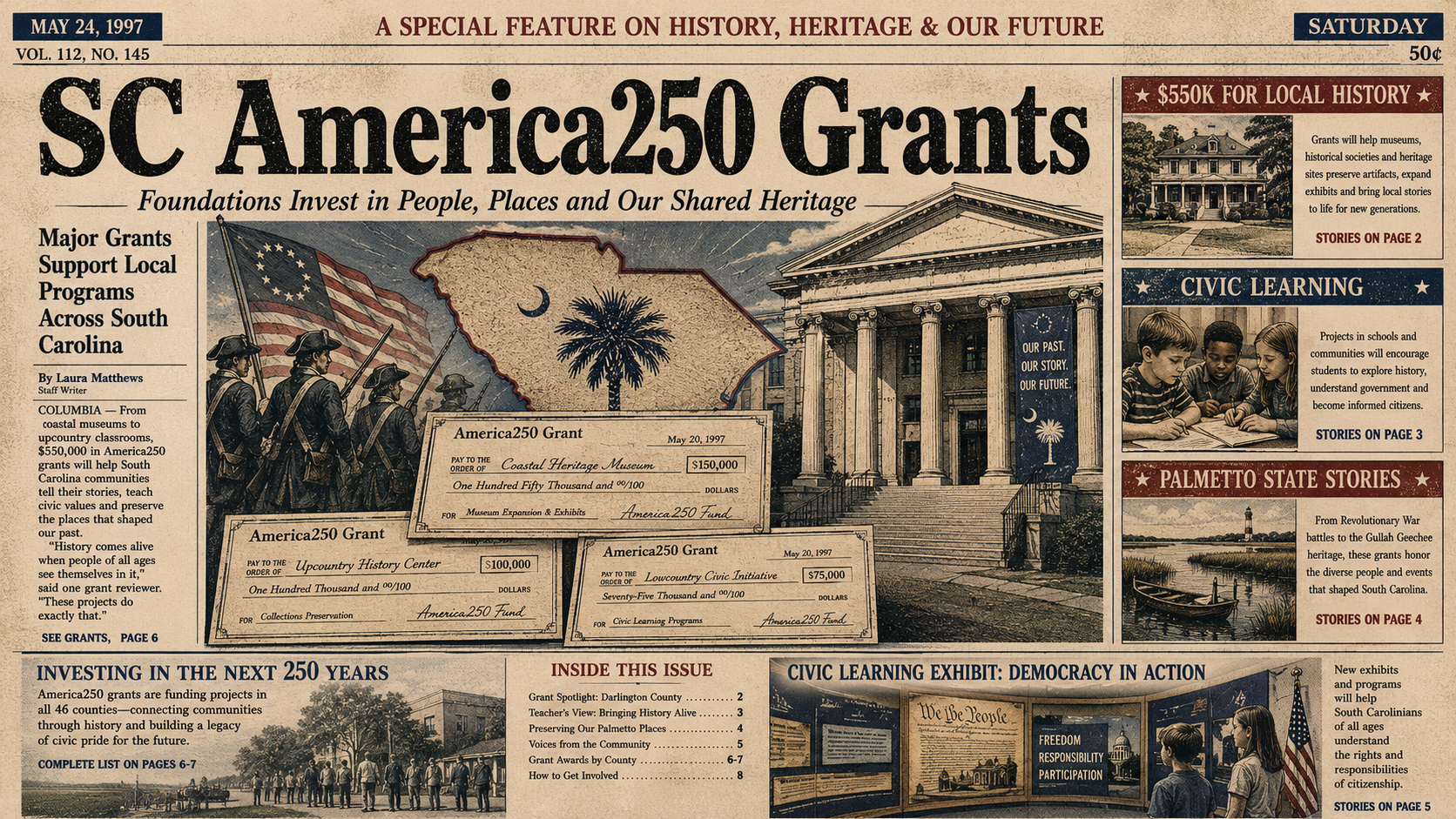
Duke Energy Foundation says it has completed more than $550,000 in America250-related grants to South Carolina organizations, including a final round of more than $260,000 to 14 nonprofits focused on local history, civic learning, public memory, and community programs tied to the nation’s 250th anniversary.
The funding comes as South Carolina, like the rest of the country, prepares for America’s semiquincentennial in 2026. That anniversary will bring ceremonies, tourism campaigns, classroom programs, museum events, and more than a few speeches about national identity.
The useful part of this grant round is more specific: the money is being directed to organizations that already work close to the ground.
Where the Latest Grants Are Going
According to Duke Energy Foundation, the latest round of grants went to 14 South Carolina organizations.
The recipients include:
- SC American Revolution Trust
- Lancaster Council of Arts
- Kids Upstate
- International African American Museum
- Performing Arts and Science Academy
- Beautiful Places Alliance
- Black Creek Arts Council
- Oconee History Museum
- Sumter Museum
- Dillon County Boys and Girls Club
- Honor for Heroes
- Anne Springs Close Greenway
- Fine Arts Center of Kershaw
- Partners for Active Living
That list matters because it is not limited to one kind of institution.
Some recipients are history-focused. Some are arts organizations. Some work with children. Some are tied to parks, trails, heritage, or community access. That mix suggests the funding is less about one central anniversary event and more about smaller programs spread across the state.
That can be harder to measure. It can also be more useful.
A museum exhibit, student trip, local performance, or living-history program will not carry the same visibility as a statewide ceremony. But for a child, teacher, veteran, visitor, or family, those are often the places where history becomes real.
Why America250 Funding Matters Locally?
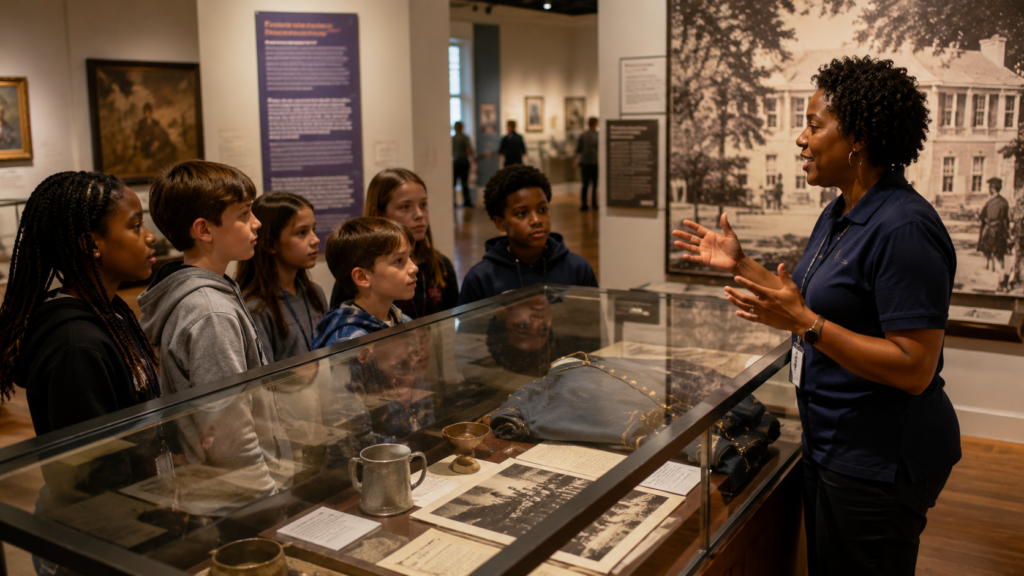
The United States turns 250 in 2026. That is a national milestone, but the story is not only national.
South Carolina’s history is especially tied to the American Revolution, the Civil War, Reconstruction, civil rights, military service, agriculture, migration, and industrial change. The challenge for America250 programming is how to tell those stories without flattening them into slogans.
That is where local organizations become important.
A national commemoration can easily become broad and abstract. A county museum, arts council, youth center, or historic site usually works differently. It can point to a specific road, battlefield, building, neighborhood, family archive, or local memory.
That is also why civic learning matters here.
The point is not just to celebrate a birthday. It is to help residents understand how the country’s history has passed through their own communities — and how those communities shaped the larger story.
The Foundation’s Larger America250 Package
The latest South Carolina grants are the final round of Duke Energy Foundation’s America250 initiative in the state.
According to the company, the final round completes a $550,000 investment in South Carolina tied to the anniversary. Earlier this year, the foundation said it awarded $275,000 to organizations working on shared green spaces and another $30,000 for veteran workforce development.
Across the six states Duke Energy serves, the company says its America250 grantmaking totals more than $1 million.
That broader number gives the announcement scale. But the South Carolina portion is the more relevant figure for local readers.
The state-level grants appear to fall into three general categories: history and civic learning, public spaces, and veteran support. Those are not unrelated. Parks, museums, trails, classrooms, and veterans programs all become part of how a community tells its story.
The real test will be whether those projects reach people who would not otherwise have easy access to them.
What Recipients Say the Money Will Support
Duke Energy’s announcement included several statements from grant recipients describing how the funds will be used.
Molly Fortune, chief executive officer of the South Carolina American Revolution Sestercentennial Commission, said the support will help provide students across the state with access to immersive historical experiences.
That is the clearest civic-learning argument for the grants.
If the funding helps students visit sites, encounter primary stories, or connect classroom lessons to local places, it may have a longer life than the anniversary itself.
Annie Rivers, executive director of the Sumter Museum, said the grant will help expand Carolina Backcountry Homestead programming tied to the 250th anniversary of the American Revolution. That kind of programming usually works by making history physical: tools, houses, clothing, foodways, labor, geography, and daily survival.
That can be more effective than asking students to memorize dates.
Joy Raintree, director of South Carolina State Parks, said support connected to Musgrove Mill will help strengthen Revolutionary War history programming. Musgrove Mill is one of the state’s better-known Revolutionary War sites, and improvements there would fit within the broader push to make South Carolina’s role in the founding era more visible.
Annie Smith, director of the Dillon County Boys and Girls Youth Center, described a different kind of history education: students visiting civil rights landmarks in Birmingham, Selma, and Montgomery.
That matters because America250 is not only about the 1770s. If done seriously, it also opens the door to harder questions about who had access to the promises made at the founding — and how long it took to fight for them.
The Promise and the Limits of Corporate Philanthropy
There is a reason to be both positive and cautious about announcements like this.
On one hand, many local museums, arts groups, youth programs, and heritage organizations operate with limited budgets. A grant of even a few thousand dollars can help pay for transportation, materials, exhibits, staff time, signage, programming, or access for students who might otherwise be left out.
On the other hand, corporate philanthropy is not the same as public funding. It tends to be project-based, time-limited, and tied to the priorities of the donor.
That does not make the grants bad. It just means the public should understand what they are and what they are not.
The strongest version of this announcement is that Duke Energy Foundation is helping local organizations do work they were already positioned to do. The weaker version would be if the grants became another anniversary branding exercise with little follow-through.
For now, the details suggest the money is at least being routed through organizations with community connections.
Why Access Is the Key Question?
The most important word in this announcement may be access.
History programming often reaches people who are already interested: museum members, school groups with transportation, families with time, and visitors who know where to look.
The harder job is reaching students in rural areas, low-income communities, and smaller towns where field trips, museum visits, or arts programming may be harder to arrange.
That is why the student-focused and community-based grants are worth watching.
If the money helps bring programming into schools, neighborhoods, parks, and youth centers, the impact could be broader than a single anniversary event. If it mostly supports events already attended by the same audience, the reach will be narrower.
This is not a reason to dismiss the funding. It is simply the right way to measure it.
South Carolina’s Larger 250th Anniversary Moment
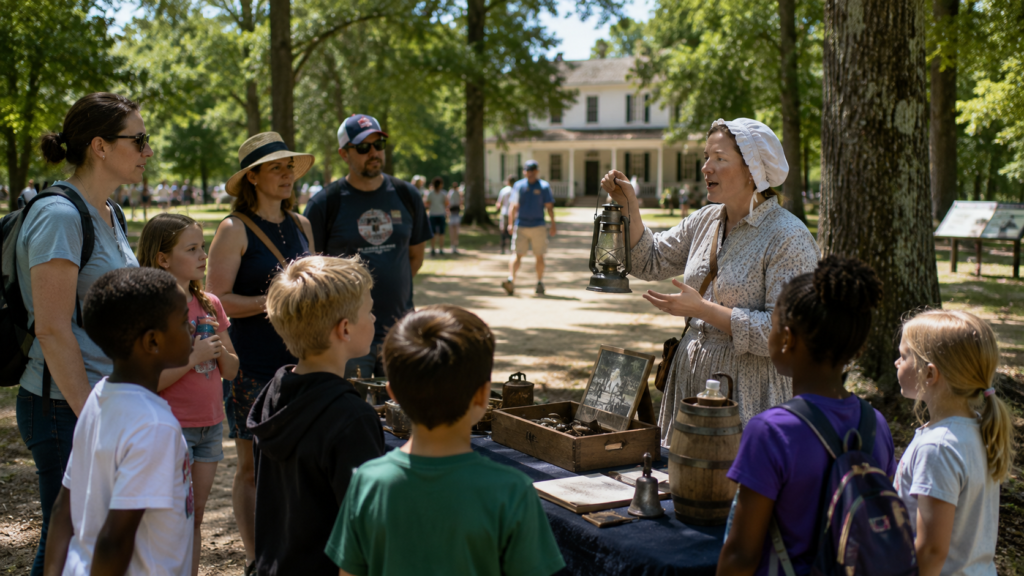
South Carolina has already been preparing for the 250th anniversary of the American Revolution through state and local initiatives.
The South Carolina American Revolution Sestercentennial Commission has promoted events, historical interpretation, tourism, preservation, and educational projects tied to the state’s Revolutionary War role.
That state role is not small.
South Carolina saw major Revolutionary War activity, including battles, militia campaigns, and civil conflict that shaped the Southern theater of the war. But the public memory of that history can vary widely by region.
Some communities have well-marked sites and active museums. Others have stories that are harder to find.
That is why a decentralized grant strategy may make sense. A statewide commemoration cannot be told from one stage or one museum. It has to be built through many smaller places.
What Happens Next
The announcement marks the close of Duke Energy Foundation’s South Carolina America250 grantmaking, not the end of the projects themselves.
The next phase is implementation.
That means museums, arts groups, parks, youth organizations, and history-focused nonprofits will need to turn grant dollars into programs people can actually use.
Some projects may become events. Others may become exhibits, student trips, performances, interpretation upgrades, outdoor improvements, or educational materials.
The public-facing results will likely appear unevenly over the next year because each organization has its own timeline.
That is normal for grant-funded community work.
The Bottom Line
Duke Energy Foundation says it has completed more than $550,000 in South Carolina grants tied to America’s 250th anniversary, including more than $260,000 in the final round for 14 organizations.
The funding is aimed at local history, civic learning, public spaces, and community-driven projects across the state.
The announcement should not be read as a complete solution to the funding needs of museums, schools, arts groups, or youth programs. It is not that.
But it does appear to give several local organizations more room to bring South Carolina’s story to students, families, visitors, and communities that may not otherwise have easy access to those experiences.
As the country moves toward its 250th birthday, the real question is not only how America celebrates.
It is whether people understand the local stories behind the celebration.