Aiman Tariq – Regional News Editor
Atlanta, GA –
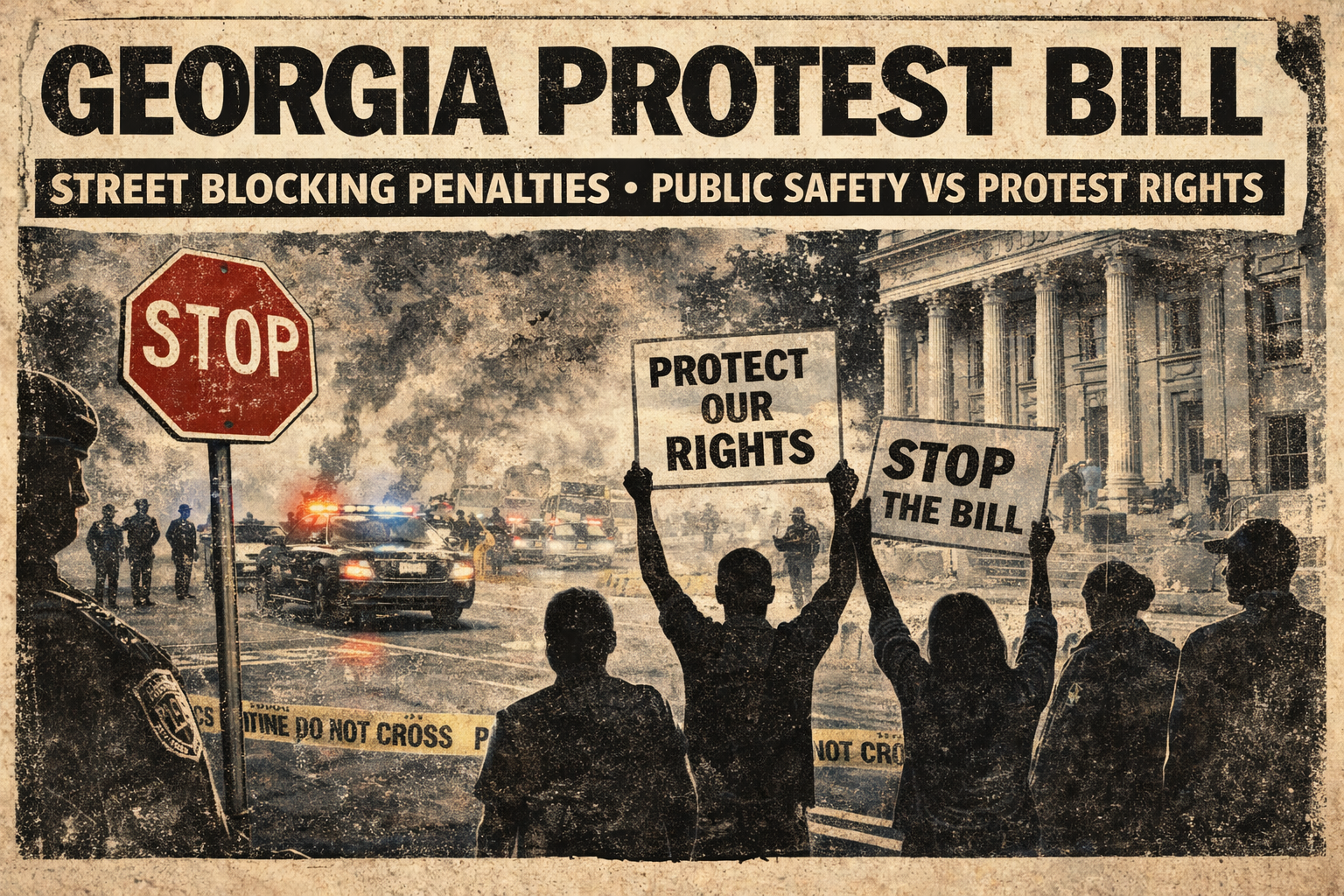
Georgia lawmakers have approved a measure that would increase penalties for protesters who block roads and highways, sending the legislation to the governor’s desk after a closely watched Georgia vote in the state House.
The bill, Senate Bill 443, passed largely along party lines, reflecting a broader divide over how states should balance public safety with the right to protest. Supporters say the measure is aimed at keeping roads clear for emergency services and everyday travel. Critics argue it could discourage public demonstrations and reshape how protest movements operate in Georgia.
That tension between order and expression is not new. But the details of how this bill is written, and how it might be enforced, are likely to shape what public demonstrations look like going forward.
What the Bill Would Do?
According to lawmakers who supported the measure, SB 443 would make it a high and aggravated misdemeanor to intentionally block a road or highway after being ordered to move by law enforcement.
In practical terms, that means individuals who violate the law could face penalties of up to one year in jail or fines of up to $5,000.
The bill also introduces a civil liability component. Protesters who block streets could be held financially responsible for costs tied to the disruption, including potential damages or emergency response expenses.
Supporters have framed the bill as a safety measure.
Rep. Noel Williams Jr., who sponsored the bill in the House, said the goal is to prevent situations where critical services are delayed.
“You think about ambulances trying to get through,” he said during debate, according to statehouse reporting. “You think about people in need and they’re obstructed.”
Why Lawmakers Say the Change Is Needed?
Backers of the legislation argue that protests blocking traffic can create risks that go beyond inconvenience.
Emergency vehicles, they say, can be delayed. Parents trying to reach schools or workplaces may be caught in gridlock. And in fast-moving situations, blocked roadways can complicate law enforcement response.
From that perspective, the bill is less about restricting protest and more about setting boundaries.
Supporters have also emphasized that demonstrations themselves are not being outlawed, only certain forms of disruption.
“I haven’t seen anything in the bill that criminalizes advocacy,” one Republican lawmaker said during debate, arguing that protest activity remains protected as long as it stays within legal limits.
Why Opponents See a Different Risk?
Democratic lawmakers raised concerns that the bill could have a chilling effect on public demonstrations.
They pointed to the role that disruptive protest has played historically in labor movements and civil rights campaigns — moments when blocking public space was part of drawing attention to injustice.
Rep. Park Cannon argued that under the proposed law, actions that have historically been part of protest movements could now carry higher legal and financial consequences.
That concern is tied to a broader question: why are people protesting in the first place.
Protests often emerge when people feel traditional channels are not producing results. When those protests carry higher penalties, critics say, it may shift how, and whether, people choose to demonstrate.
Another concern raised during debate involves the bill’s civil liability provision.
Opponents argue that introducing financial penalties changes the nature of protest itself. Instead of a question of free expression, it becomes a calculation of legal risk.
The Role of Civil Liability
The civil liability element may ultimately be one of the most consequential parts of the bill.
Criminal penalties are already part of many public-order laws. But civil liability adds a second layer, one that can extend beyond immediate arrest or fines.
Under the bill, individuals could face lawsuits tied to the costs of a blocked roadway, potentially including emergency response or other damages.
Critics say that kind of exposure may deter participation, particularly for individuals who cannot afford legal risks.
Supporters counter that accountability is necessary when protests disrupt essential services or create broader public costs.
That difference in interpretation reflects a deeper divide over how protest should function in modern public life.
How This Fits Into a Broader Trend?
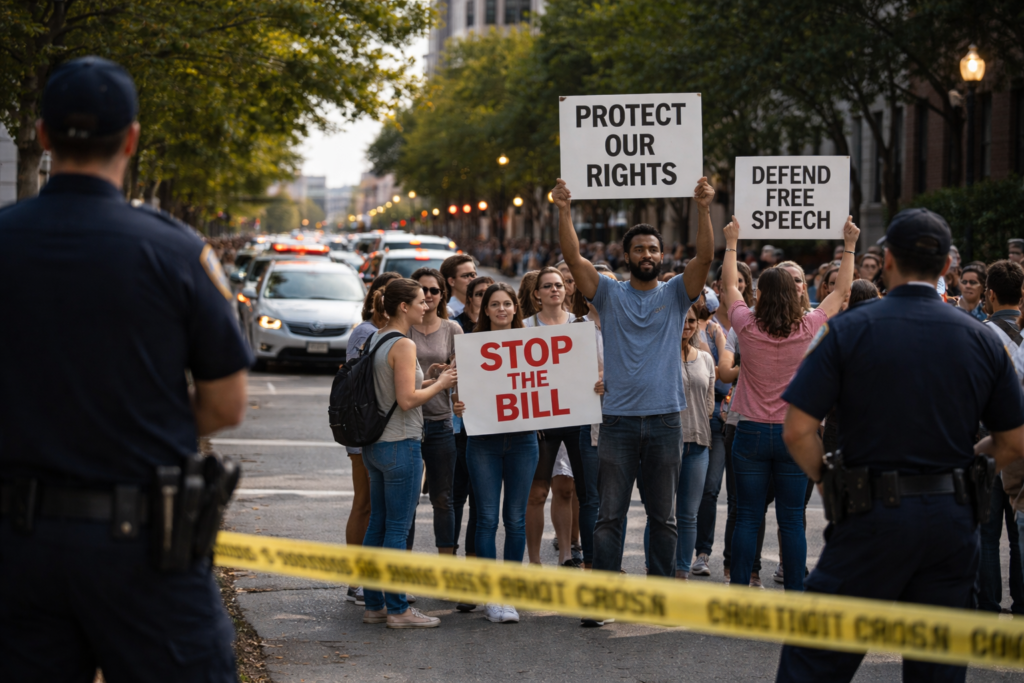
Georgia is not the only state considering or passing laws that affect protest activity.
Across the country, lawmakers have introduced measures addressing protests that block highways or other public infrastructure. Those efforts have often followed high-profile demonstrations where roadways were used as gathering points.
At the same time, debates over protest restrictions frequently intersect with broader political issues, from labor organizing to immigration policy to public funding disputes, sometimes tied to contentious moments like a house vote funding bill at the federal or state level.
That overlap makes it difficult to separate the mechanics of protest law from the political context in which protests occur.
Local Context and Public Space
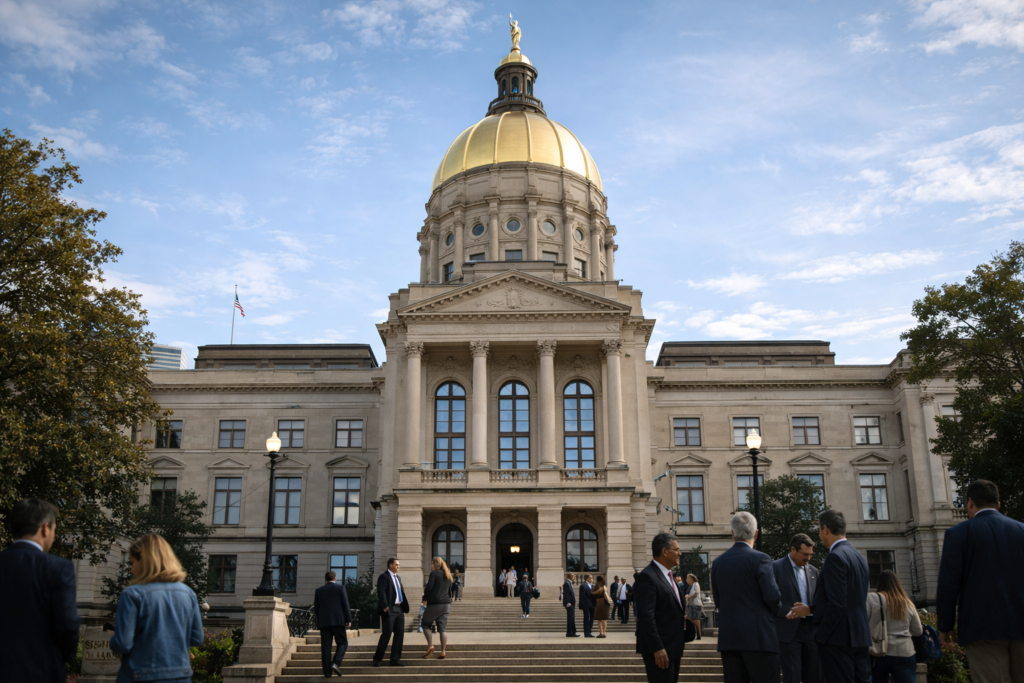
In Atlanta and other parts of Georgia, demonstrations have historically taken place in visible public spaces, from downtown streets to areas near the state Capitol.
Locations like cannon park have become associated with public gatherings and political expression, even if not all protests occur in the same setting.
The bill does not target any one location, but it does reshape how public space, including a Georgia street, can be used during demonstrations.
That raises practical questions for organizers: where demonstrations can occur, how they can be structured, and how quickly participants must respond to law enforcement orders.
What Happens Next?
The bill now heads to Gov. Brian Kemp, who will decide whether to sign it into law.
If signed, the measure would take effect as part of Georgia’s broader criminal code, with enforcement depending on how local law enforcement agencies interpret and apply its provisions.
Legal challenges are also possible. Laws affecting protest activity often face scrutiny in court, particularly when they intersect with First Amendment protections.
The Bottom Line
Georgia lawmakers have approved a bill that would increase penalties for protesters who block roads, sending it to the governor after a divided Georgia vote in the House.
Supporters say the measure is about public safety and ensuring access to critical services. Opponents warn it could discourage protest and shift the balance between public order and free expression.
The law does not eliminate protest. But it does change the cost of certain forms of it.
How much that matters will depend less on the text itself and more on how it is enforced, and how communities respond to those new boundaries.