Aiman Tariq – Regional News Editor
Athens, GA –
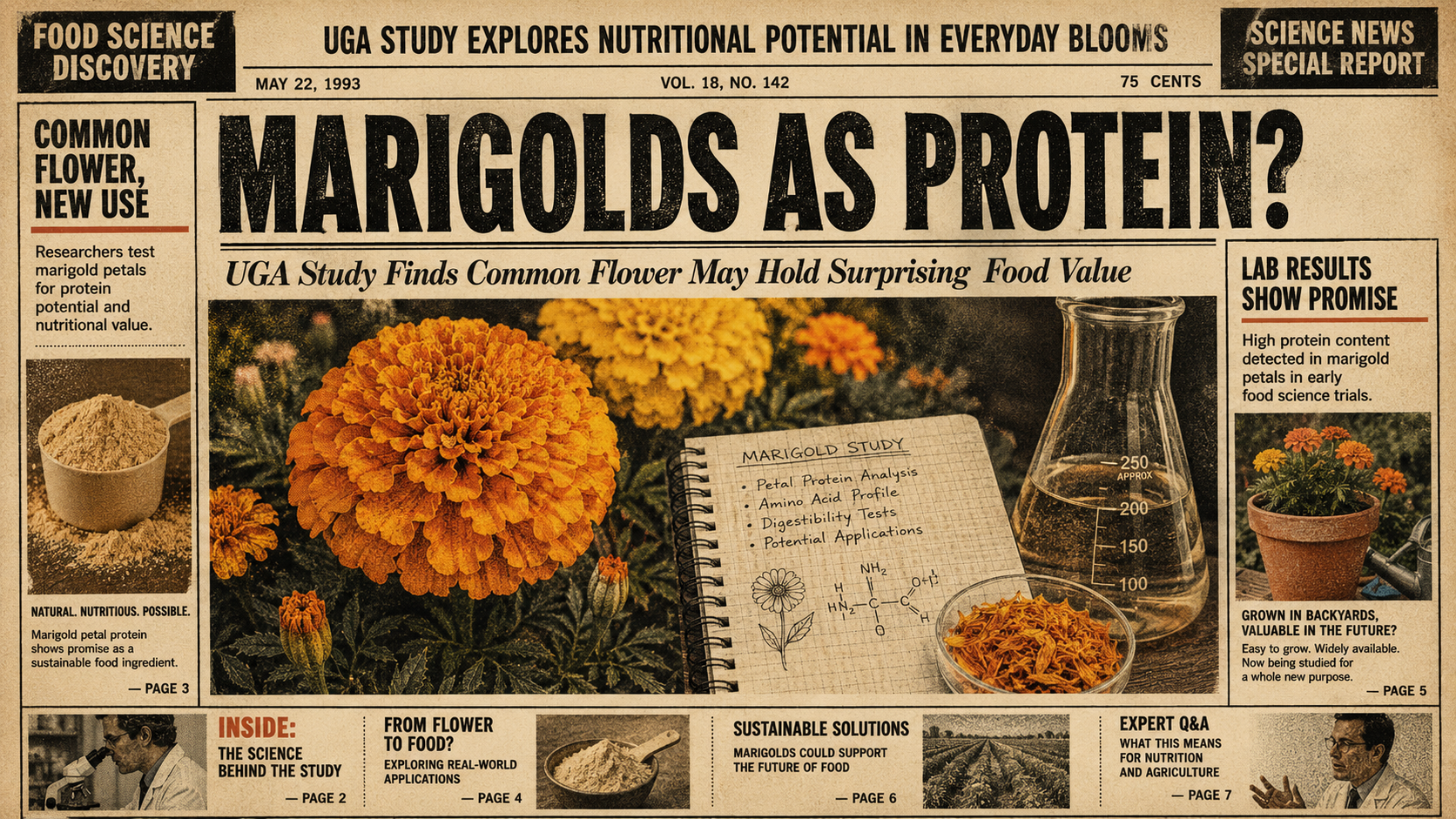
A common flower usually treated as decoration may have a second life as a source of plant-based protein, according to new research from the University of Georgia.
Researchers at UGA say marigold flowers contain about the same amount of protein as familiar plant-based sources such as quinoa. The findings do not mean marigolds are suddenly replacing soy, peas or chickpeas on grocery shelves. But they do suggest that a flower many people already grow in backyards and garden beds may have more food potential than most consumers realize.
That distinction matters. The study is not a consumer nutrition guide telling people to start eating flowers from the garden. It is an early food-science study looking at whether marigold protein could eventually become a useful ingredient in processed foods.
What the UGA Study Found?
According to UGA Today, researchers found that marigold flowers contain high amounts of protein, fiber and minerals, including calcium, potassium and iron. The research was conducted by Anand Mohan, an associate professor in UGA’s College of Agricultural and Environmental Sciences, doctoral student Fidele Benimana and other researchers.
The study was published in ACS Food Science & Technology under the title “Assessing Structural, Thermal, and Functional Characteristics of Marigold Flower Protein as a Sustainable Food Ingredient.”
Researchers found that some marigold protein extracts stayed stable at higher temperatures than other plant proteins such as chickpea and pea. That may make the ingredient useful in baking or other foods that require heat processing.
That does not make marigolds a “superfood” in the way the term is often used online. It means the protein performed in ways that food scientists consider useful.
Why Heat Stability Matters?
In food science, protein content is only one part of the question.
A protein also has to behave well when it is mixed, heated, dried, blended or added to a recipe. Some ingredients look promising on paper but break down when exposed to the conditions used in commercial food production.
That is where the marigold finding becomes more interesting.
According to UGA, marigold protein extracts stayed stable at higher temperatures and showed properties that may help bind foods together. Some of the extracts also supported emulsification, the process that helps oil and water stay mixed in products like salad dressings, sauces or dairy alternatives.
That is the difference between a broad nutritional claim and a practical food-ingredient claim.
A broad claim might say: marigolds have protein.
A more useful claim is narrower: certain extracted proteins from dried marigold flowers may hold up under heat and help improve texture or stability in food formulations.
A Flower Usually Treated as Waste
The sustainability angle is also part of the study.
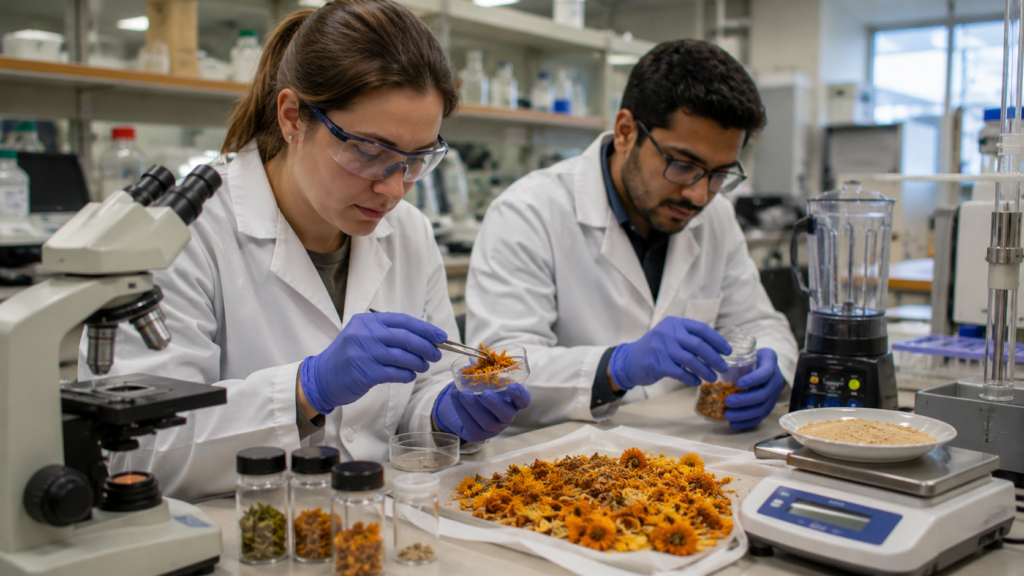
Marigolds are widely grown as ornamental flowers, but they are often discarded after their decorative use ends. The American Chemical Society release on the study says an estimated 40% of marigold production is discarded as waste, especially after ornamental use.
That figure is one reason researchers are interested in the flower. If usable food ingredients can be extracted from material that would otherwise be thrown away, the value of the crop changes.
Mohan framed the issue in those terms, saying that billions of dollars of flowers are discarded each year and asking whether those flowers could be used for food instead.
That is not a small question for agriculture. It connects food science, waste reduction and the growing market for plant-based proteins.
What Marigolds Might Add to Food?
The study also found that marigold proteins may affect taste.
According to UGA, some of the flower’s proteins have an amino acid composition that may lend an umami flavor to foods. Umami is often described as a savory taste, the kind of flavor associated with foods like mushrooms, tomatoes, soy sauce or aged cheese.
That does not mean a marigold protein product would automatically taste good. It means researchers identified a possible flavor advantage worth testing further.
The same cautious approach applies to texture. Food & Wine, summarizing the research, reported that the proteins showed strong heat stability and emulsifying ability, making them possible candidates for uses such as baked goods, sauces and dairy alternatives.
Those possibilities are still early. Food companies would need more testing, consumer evaluation and safety work before marigold protein appeared as a mainstream ingredient.
What Consumers Should Not Assume?
This is where the story can easily get oversold.
The study does not mean every backyard marigold should be treated as food. It does not mean people should start adding ornamental flowers from garden centers to meals. Flowers may be exposed to pesticides, fertilizers or growing conditions that are not intended for food use.
UGA’s own reporting notes that many cultures have used marigold petals in dishes or teas, but it also says the stems and leaves are bitter and most people consume only the petals.
That kind of detail matters. A food ingredient developed in a lab from dried, processed flowers is not the same thing as pulling a plant from a pot and eating it.
The safer takeaway is narrower: researchers are studying whether edible marigold flowers, handled and processed properly, could become a sustainable ingredient source.
Part of a Larger Edible-Flower Research Push
The marigold study also fits into a broader line of UGA research on edible flowers.
UGA reported in 2025 that researchers were already exploring how flowers such as marigolds and roses could be processed for use as food ingredients. That earlier work looked at ultrasound technology as a way to dry and preserve flowers while helping extract useful compounds such as protein, natural colorants and vitamins.
That context makes the latest study less of a one-off discovery and more of a continuation.
Researchers are not simply saying flowers are pretty and nutritious. They are asking whether flowers that are already grown at large scale can be processed in ways that make sense for food production.
That is a harder question — and a more useful one.
Why Georgia Research Matters Here?
For Georgia readers, the local connection is straightforward.
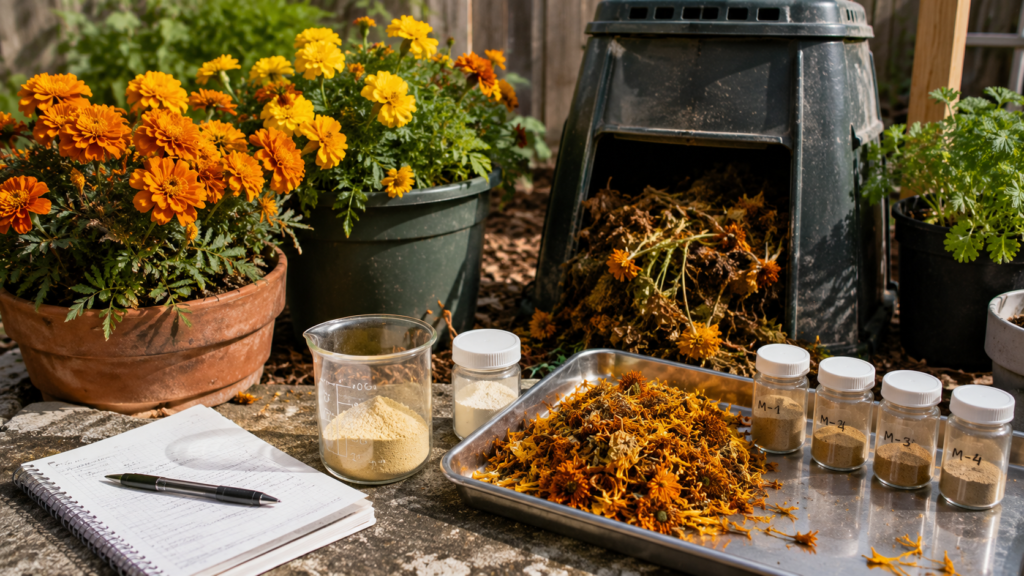
The work comes from the University of Georgia’s College of Agricultural and Environmental Sciences, which has long been tied to research on crops, food processing and agricultural innovation.
That does not mean marigolds are about to become a major Georgia crop for protein. But it does show how university research can identify value in materials that are often ignored.
If the findings hold up in future testing, marigold protein could become part of a wider push to use more agricultural byproducts rather than treating them as waste.
That is the practical promise of the study.
It is not that one flower suddenly solves the protein market. It is that a familiar plant may have properties that food scientists can use.
What Happens Next?
Researchers still have more work to do.
UGA says the team plans to continue studying potential health benefits and conduct consumer taste testing.
That next step is important because ingredient performance in the lab does not always translate cleanly into consumer acceptance. A protein can be stable, functional and sustainable, but if it affects flavor, color or texture in ways consumers dislike, its usefulness becomes limited.
The future of marigold protein will depend on that practical testing.
The Bottom Line
A new University of Georgia study suggests marigold flowers may be more than ornamental plants.
Researchers found that marigold flowers contain protein levels comparable to some familiar plant-based sources, with heat stability and functional properties that could make them useful in foods like baked goods, sauces or dairy alternatives.
The finding is promising, but still early. It does not mean consumers should start eating garden flowers or that marigolds are ready to replace existing plant proteins.
The more careful version is this: a common flower that often ends up as waste may have enough protein, structure and food-science value to deserve a closer look.
That may not be a revolution yet.
But it is a reminder that some future food ingredients may be hiding in places people already walk past every day.