Aiman Tariq – Regional News Editor
Atlanta, GA –
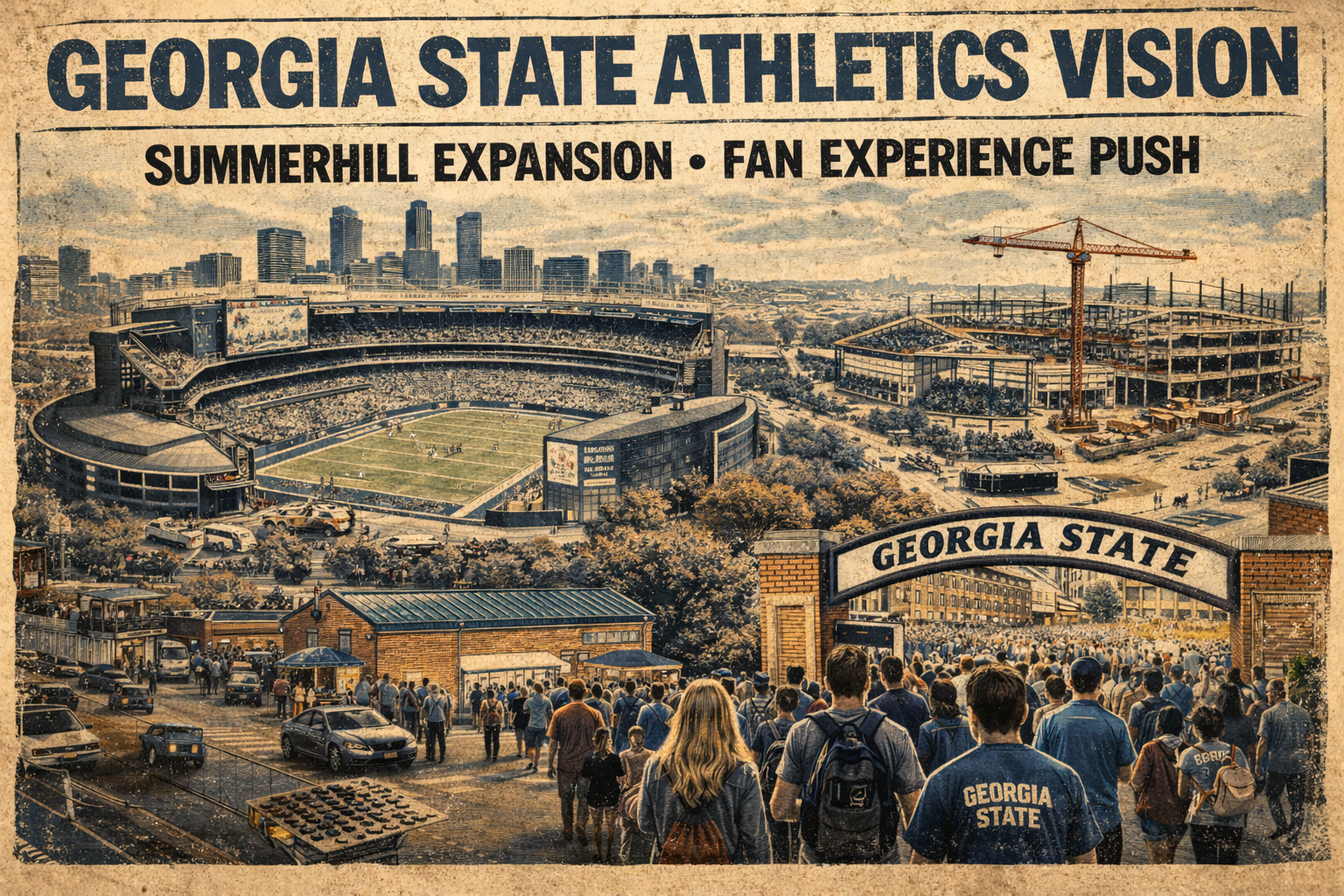
According to a new announcement from Georgia State University, the athletic department has rolled out a five-year plan aimed at improving competitive results, expanding facilities in Summerhill, increasing attendance, and strengthening the department’s long-term finances. The university is framing it as a broad roadmap, not a one-season fix.
That distinction matters. Athletic departments announce long-range plans all the time. What makes this one worth watching is not the language about momentum or growth — colleges use that language routinely — but the fact that Georgia State attached specific benchmarks to it, including fundraising targets, attendance goals, facility timelines and competitive expectations in football and men’s basketball.
The result is a document that reads less like a generic branding refresh and more like a public statement about where Georgia State wants to place its bets over the next several years: Summerhill, student-athlete support, and a stronger link between on-field performance and the fan experience.
What Georgia State Is Actually Promising?
According to the university, the plan is centered on what President M. Brian Blake described as a refreshed vision for the next three to five years, developed in partnership with athletics director Charlie Cobb. The school said the strategy is designed to strengthen the financial foundation of the department, improve competitive performance, and create a better overall environment for both student-athletes and fans.
Georgia State also said the plan includes deeper investment in name, image and likeness opportunities, along with the addition of a general manager role to help advance revenue initiatives. That is a notable part of the plan because it reflects how quickly college sports departments are adjusting to an environment where athlete support and donor strategy increasingly overlap.
The school’s own framing leans heavily on what might be called a success vision for the department. But as with most university rollouts, the real question is not whether the goals sound ambitious. It is whether the timelines, money and competitive results line up closely enough to make the vision feel concrete by year three, not just year five.
Summerhill Remains the Center of the Plan
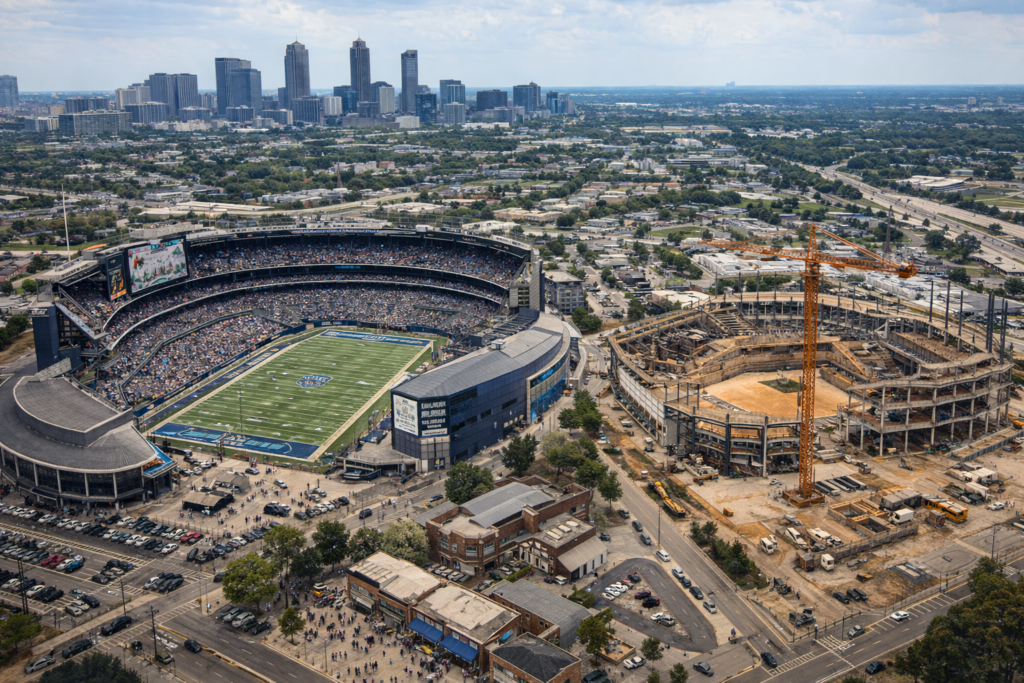
The most visible part of the announcement is the continued build-out of the athletics district in Summerhill.
According to Georgia State, the university plans to keep expanding that footprint by finishing a new baseball stadium in fall 2026 and moving forward on additional phases that could include a covered football practice field, a softball stadium, beach volleyball space, tennis courts, hospitality areas, practice facilities for basketball and volleyball, and even the possibility of future retail.
That matters because the athletics neighborhood has become one of the clearest ways Georgia State is trying to define itself physically. Center Parc Stadium, the Convocation Center, the soccer complex, the golf instruction facility and the under-construction ballpark are all being presented as part of one connected campus-adjacent hub rather than a loose collection of venues.
The Stadium Piece Is About More Than Football
The announcement makes clear that the university sees the georgia football stadium footprint as part of a broader redevelopment strategy, not just a game-day site. A rendering tied to the release shows the envisioned covered practice facility on the east side of Center Parc Stadium, with the university saying the project could support both weather-protected practice time and additional revenue generation.
The same goes for georgia state baseball, which the school says will get a new home in fall 2026 on the old Atlanta-Fulton County Stadium site between the Convocation Center and Center Parc Stadium. In practical terms, that places another major venue inside the same athletics corridor the university has been trying to turn into a recognizable neighborhood identity.
The Competitive Goals Are More Specific Than Usual
Universities often talk about competing at a high level. Georgia State’s release goes further than that.
According to the school, winning conference championships in football and georgia state men’s basketball is listed as a top priority, with both programs described as central to the department’s competitive identity.
That is a sharper commitment than a generic promise to “compete.” It gives fans something measurable to watch, even if it also raises the obvious question: what counts as progress if the championships do not come immediately, but attendance, fundraising and roster investment do?
The school also said it wants to finish consistently in the top half of conference standings across all sports, while targeting top-quartile performance in selected programs. That kind of metric sounds tidy on paper. In practice, it will depend on which programs improve first, how league strength shifts, and whether a benchmark like quartile game performance actually translates into something fans can feel from season to season.
Revenue, NIL and the Fan Experience Are Tied Together
Another major part of the plan is money.
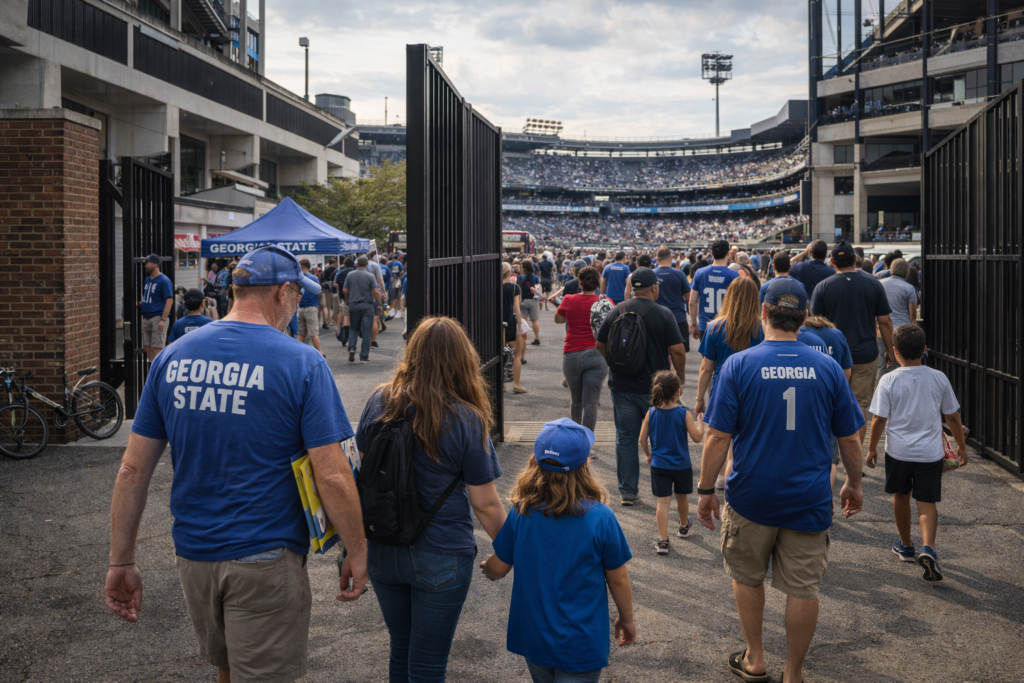
Georgia State said it wants to exceed $3 million in revenue sharing for student-athletes, while also reaching and sustaining $10 million annually in philanthropic and partnership support within five years. The school also said fan engagement is supposed to grow alongside those investments, with a goal of increasing overall attendance by 50 percent over that same period.
That is where the plan becomes more revealing. The university is not treating facilities, roster support and crowd growth as separate buckets. It is presenting them as one cycle: build more, support athletes better, improve the atmosphere, and hope the increased energy produces stronger attendance and more donor interest.
Why That Part Deserves Watching
It is easy for schools to promise better game-day experiences. It is harder to define what that means in a way that reliably changes fan behavior.
Georgia State says data-informed strategies, premium offerings, stronger sponsorship activity and broader alumni engagement will all be part of that push. That may be true. But attendance does not usually rise because a university says it wants it to. It rises when the product feels more central, more competitive, or more worth building a routine around.
So the interesting test is not whether the department can describe a better atmosphere. It is whether fans start responding to it before the five-year clock runs out.
What This Plan Is, and What It Is Not?
For now, this is still an announcement from the university about its own priorities. It is not an audited progress report, and it is not proof that every target will be met on schedule.
What it does provide is a clearer public outline of what Georgia State wants athletics to become: more visible in Summerhill, more competitive in its flagship sports, more aggressive about fundraising and NIL support, and more deliberate about tying infrastructure to the overall fan experience.
That makes the release useful even if some of its goals remain aspirational. It tells alumni, donors, fans and potential recruits where the department says it is headed, and what it will likely point to if it wants to show progress over the next several years.
The Bottom Line
According to Georgia State, the athletic department’s new five-year plan is built around a familiar set of priorities: facilities, athlete support, competitive results and fan growth.
What makes it more notable than a typical vision statement is the specificity. The university tied the plan to a fall 2026 baseball stadium opening, conference-title ambitions in football and men’s basketball, a $10 million annual fundraising target, more than $3 million in revenue sharing, and a 50 percent attendance growth goal over five years.
That does not guarantee the plan will work. But it does give Georgia State something more concrete than branding language.
Over the next few seasons, the question will be whether the projects move at the pace the school expects, and whether fans see the same momentum in the stands and on the field that administrators now see in the blueprint.