Aiman Tariq – Regional News Editor
Atlanta, GA –
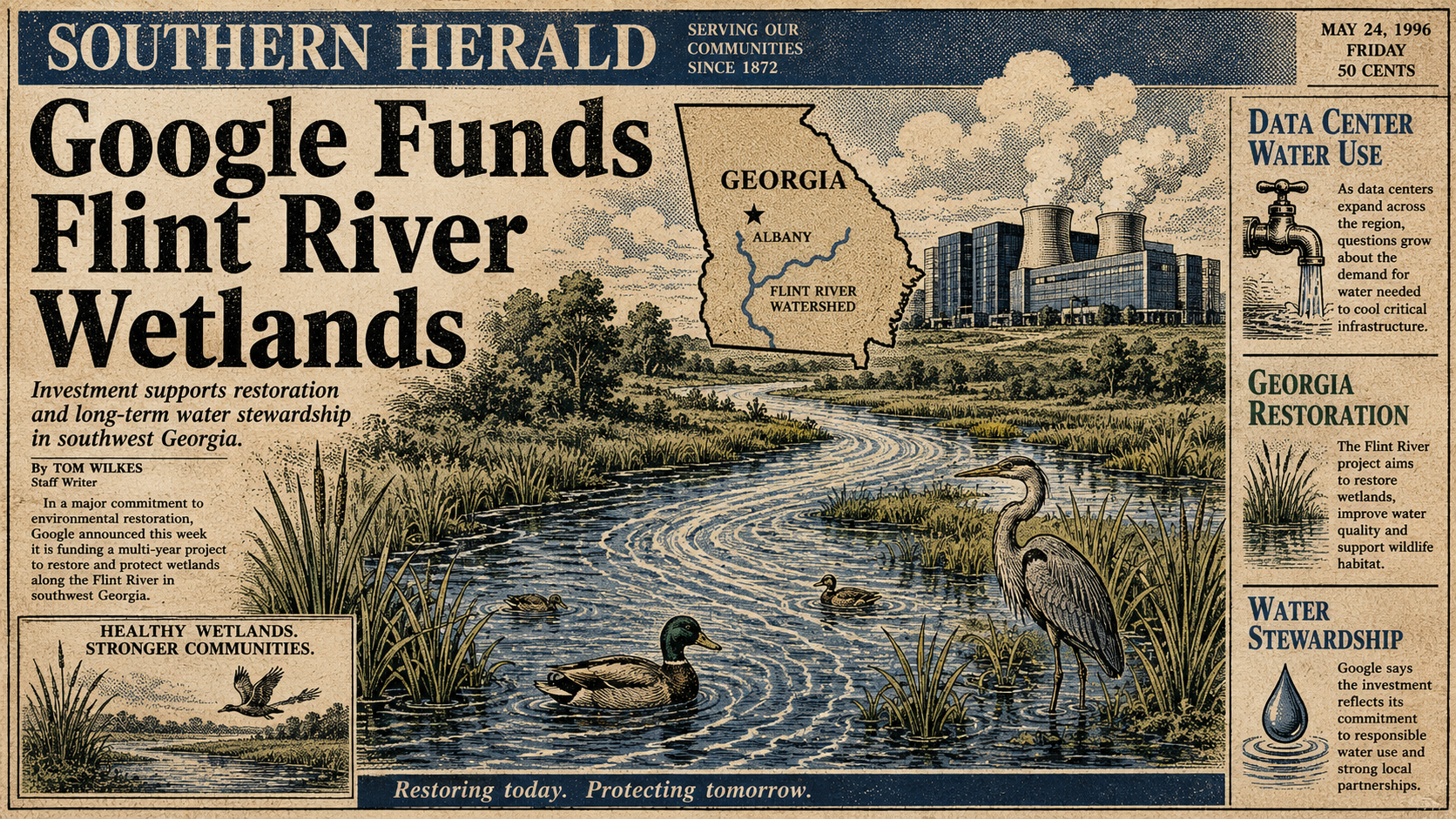
Google is helping fund a wetlands restoration project in Georgia’s Flint River basin, a move the company is presenting as part of a broader push to offset water use tied to its expanding data center footprint.
The project, announced through a partnership with Ducks Unlimited, will support restoration work at the Flint River Wildlife Management Area in Dooly County. According to Google and reporting from CBS Atlanta, the Georgia work is part of a larger $17 million package aimed at water conservation, restoration, and infrastructure projects in seven states.
That is the simple version.
The more complicated version is that data centers are becoming a much bigger part of Georgia’s water and power conversation. Google says it wants to replenish more water than it uses by 2030. But as AI and cloud infrastructure expand, the question for communities is not just whether companies fund conservation work. It is whether the water math actually holds up where the facilities are being built.
What Google Says It Is Funding?
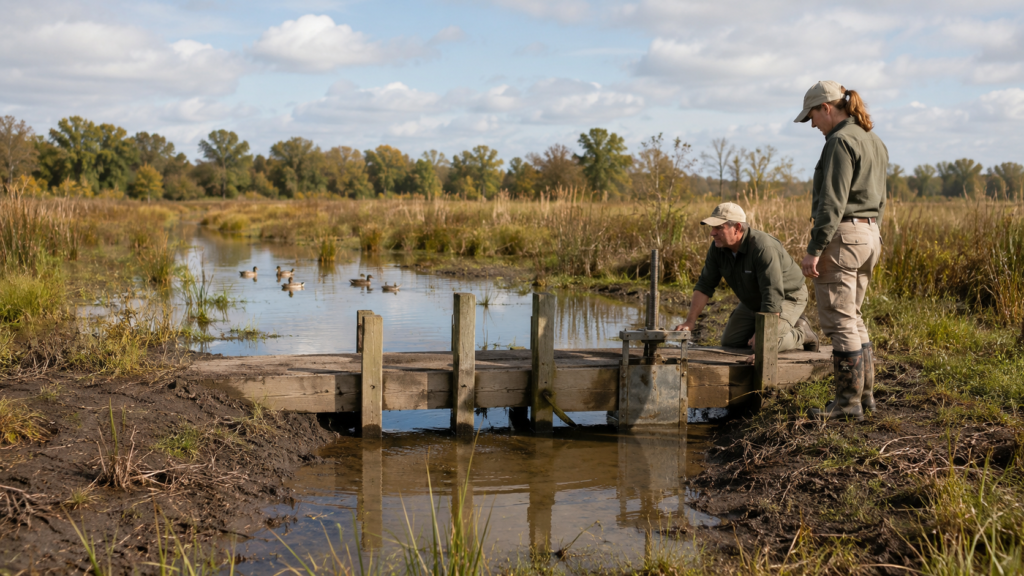
According to Google, the company is supporting a Ducks Unlimited project to enhance wetlands at the Flint River Wildlife Management Area.
The Flint River is one of Georgia’s major river systems and has long been central to farming, wildlife habitat, recreation, and regional water planning. Wetlands connected to a river system can help slow runoff, improve water quality, support wildlife, and reduce pressure on surrounding ecosystems.
In Dooly County, the project is expected to restore about 35 acres of wetland habitat. Reporting from the Columbus Ledger-Enquirer said Google is providing $1 million for the work, which will include improving water-control structures and habitat management at the wildlife management area.
That is not a small local project. But it is also not the whole water story.
The restoration work is being announced at the same time Google and other technology companies face more scrutiny over the water demands of data centers. That context matters because water-restoration announcements can sound simple in a press release while the broader tradeoffs remain harder to measure.
Why Do Data Centers Keep Showing Up in Water Stories?
Data centers need cooling. That is the basic engineering fact behind much of this debate.
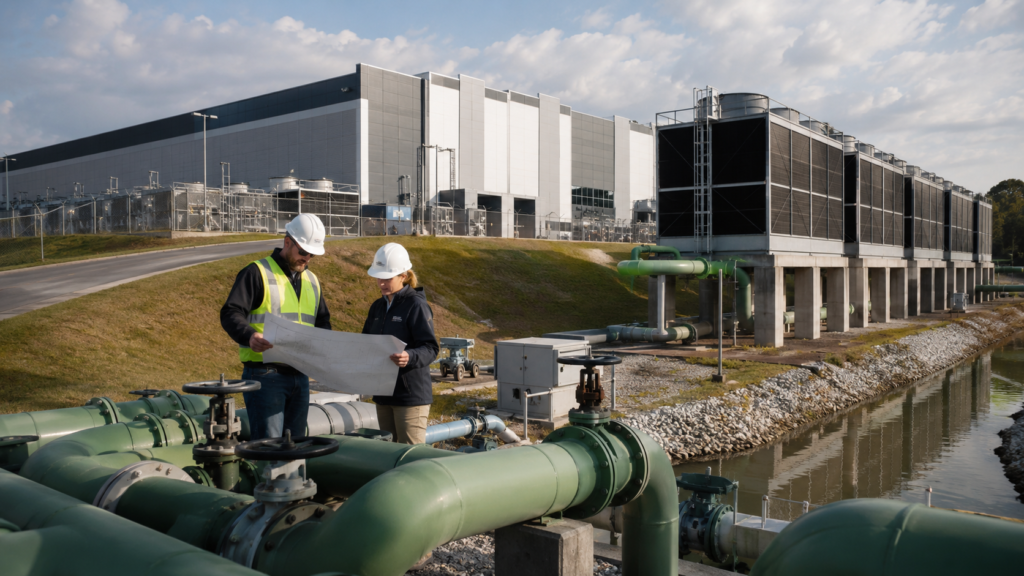
Servers generate heat, and the more demand grows for cloud computing and artificial intelligence, the more pressure there is to build large facilities that can keep those systems running. Some facilities use evaporative cooling, which can reduce electricity demand but uses water. Other systems rely more heavily on air cooling, which can reduce water demand but may use more electricity.
That is the tradeoff communities are now being asked to understand.
Google has argued that water-efficient design depends on local conditions. In some places, the company says evaporative cooling may be the better overall environmental choice because it reduces pressure on the electric grid. In other places, air cooling or alternative water sources may make more sense.
That may be true in broad terms. But it does not answer the local question by itself: how much water is being used, where it comes from, and whether the surrounding community can absorb that demand over time.
That is why water pledges need to be read carefully. They may be meaningful. They may also be incomplete.
Google’s Georgia Footprint Adds Context
Google already operates a major data center campus in Douglas County, west of Atlanta. The company says that facility was built in 2007 and later became one of its early examples of using recycled industrial water to cool servers.
That system matters because it is often cited as a model for reducing pressure on freshwater supplies. Instead of relying only on potable water, the Douglas County site uses treated wastewater for cooling.
That sounds like a clear improvement over drawing drinking-quality water for industrial cooling. But even then, the details matter. Recycled water still requires infrastructure, treatment, pipes, monitoring, and long-term coordination with local utilities.
Georgia is also seeing more data center activity beyond Douglas County. As those projects expand, the public debate is likely to follow the same pattern seen elsewhere: companies emphasize investment and sustainability, while communities ask whether power grids, water systems, and local infrastructure can keep up.
That concern is not unique to Google. It is now part of the broader data center boom.
What Water “Replenishment” Can and Cannot Prove?
Google says it replenished more than 7 billion gallons of water in 2025 through conservation and restoration projects and currently supports 165 water stewardship projects across 97 watersheds worldwide. The company says those projects are expected to replenish more than 19 billion gallons annually by 2030 once fully implemented.
Those numbers are large. They are also company-reported.
That does not mean they are meaningless. It means readers should understand what they measure.
Water replenishment projects can improve watersheds, restore habitat, reduce losses, or increase availability in certain places. But a gallon “replenished” in one watershed does not always function like a gallon consumed at a data center in another community. The location, timing, water source, and ecological condition all matter.
That is why the Flint River project should be viewed as one piece of a larger strategy, not as a complete answer to data center water concerns.
The project may help a Georgia watershed. It may improve habitat and water management at the Flint River Wildlife Management Area. But it does not by itself resolve every question about how fast data centers are growing or how much water they will require.
The Flint River Project’s Local Value
The strongest case for the project is local and practical.
Wetlands can provide real benefits when they are restored and properly managed. They can support waterfowl, fish, floodplain health, and recreation. Ducks Unlimited has described the Flint River Wildlife Management Area work as a way to improve habitat and strengthen water management infrastructure.
That matters for south Georgia.
The Flint River basin is tied to farming, hunting, fishing, conservation, and local economies. It is also part of a larger water system that has faced pressure from drought, agriculture, population growth, and legal fights over water in the Southeast.
A small restoration project will not solve all of that. But it can still make a meaningful difference at a specific site.
This is where the story should not become too cynical. Corporate funding can support real conservation work. Ducks Unlimited and similar groups often have the technical experience to turn grants into on-the-ground improvements.
The fair question is not whether the project has value. It likely does.
The fair question is whether projects like this are being used to keep pace with the scale of the water demands being created elsewhere.
Why Should Georgia Readers Pay Attention?
For Georgia readers, this is part of a bigger pattern.
Water has become a central issue in development stories across the state, from industrial projects to river basins to local utilities. In southeast Georgia, officials are already trying to shift some growth away from groundwater and toward surface-water systems — a topic we covered recently in our look at the region’s larger water-infrastructure buildout.
The Google announcement fits into that same broader question: how does Georgia grow without quietly overloading the water systems that growth depends on?
The answer is rarely simple.
Companies can fund conservation. Counties can expand treatment capacity. Utilities can reuse wastewater. State officials can revise permitting rules. But all of those pieces have to be measured against actual demand.
That is why water stories deserve more than a celebratory frame. They deserve follow-up.
The Industry-Wide Pressure Is Building
Nationally, data centers are facing closer scrutiny from residents, utilities, and lawmakers. The concern is not only water. It is also electricity demand, noise, land use, tax incentives, and whether local communities benefit enough from projects that can require enormous infrastructure support.
Google’s new water framework appears to be partly a response to that pressure.
The company says it will pursue alternatives such as reclaimed wastewater, avoid water-intensive cooling in water-stressed areas, help modernize water infrastructure, report water use publicly, and work toward replenishing more water than it consumes at its sites by 2030.
Those are serious commitments if they are measured transparently and applied consistently.
But the key phrase is “if they are measured transparently.”
Communities cannot evaluate water stewardship from slogans. They need site-level information, local watershed context, utility capacity, and clear reporting that separates conservation benefits from operational consumption.
What Happens Next?
The Flint River wetlands project is expected to move forward through Ducks Unlimited and its conservation partners, with Google funding attached to the work.
The larger question will play out over years, not weeks.
If Google and other data center operators expand in Georgia, local governments and residents will need to keep asking basic questions: how much water is used, what source supplies it, whether recycled water is available, and how projects affect nearby watersheds.
Those questions do not make conservation funding irrelevant. They make it more important to understand.
The Bottom Line
Google’s support for the Flint River wetlands project could bring real benefits to a south Georgia wildlife area and improve local water-management conditions.
But it also arrives at a moment when data center water use is receiving more scrutiny, not less.
The company says it wants to replenish more water than it uses by 2030 and is funding projects across multiple states to support that goal. In Georgia, the Flint River work is one visible piece of that effort.
The simplest version of the story is that Google is helping restore wetlands.
The more accurate version is that Google is funding a useful conservation project while the public debate over data center water demand continues to grow.
Both things can be true at once.