Aiman Tariq – Regional News Editor
Columbia, SC –
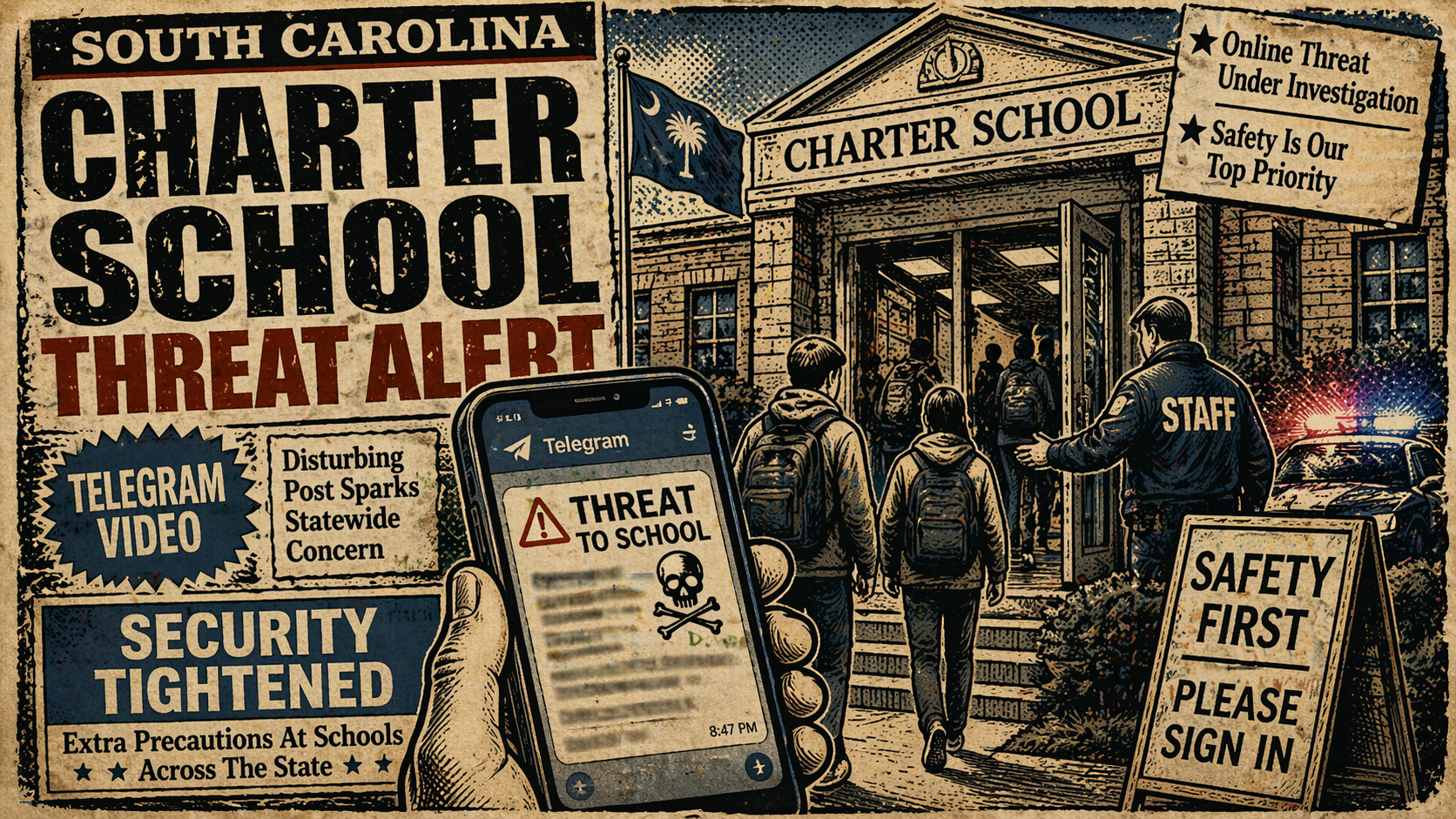
Charter schools across South Carolina took added precautions Thursday after the South Carolina Public Charter School District said it received an anonymous tip about a threatening video posted on Telegram. According to the district, the video referred broadly to “SC Charter Schools,” did not name a specific campus, and was later deleted. The district said it reported the threat to Columbia police and the South Carolina Law Enforcement Division, while advising schools to remain vigilant.
That broad wording is part of what made the situation difficult for schools to interpret. A threat without a named campus can still disrupt a large public charter system, particularly when decisions have to be made quickly and with limited information. In this case, the district’s footprint is substantial: the South Carolina Public Charter School District says it serves more than 22,000 students in 45 schools statewide.
What the District Said?
According to the Post and Courier, district spokesperson Brad Henry said the tip came in April 9 after someone reported seeing a Telegram video in which a person said harm would be done to South Carolina charter schools. Henry said the video did not identify schools by name and that there was “no current indication of an immediate threat,” but schools were advised to be watchful and report back if they heard anything further.
SLED confirmed to the newspaper that it was aware of the threat and was working with the appropriate authorities. That language is cautious, but familiar. In school-threat cases, agencies often avoid saying more publicly in the early hours, especially when they are still trying to determine whether a threat is credible, who made it, and whether any campus was specifically targeted.
Schools Responded With Visible Precautions
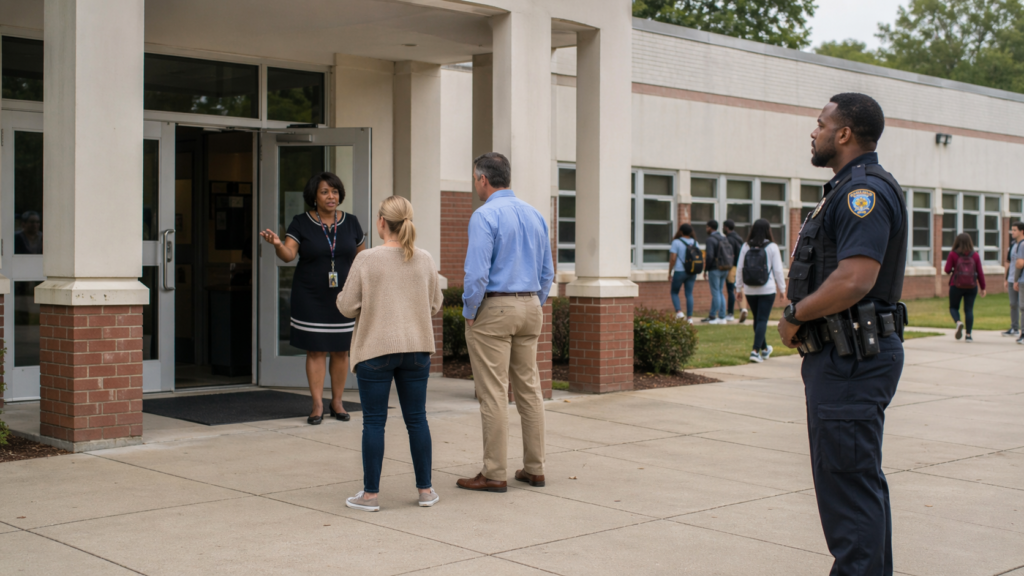
Some schools moved quickly even without a named target.
According to the Post and Courier, green charter schools — a statewide network that says it operates seven campuses — told families that all of its campuses would move into a soft lockdown for the rest of the school day. In that message, the network said outside visitors would not be permitted and outdoor activities would be moved inside.
LEAD Academy, a charter school in Greenville, also added an extra school resource officer and said an officer would remain on site for an evening event, according to the same report. Other administrators were still checking the information as it spread through school networks. The result was a response pattern that looked less like a statewide shutdown and more like individual campuses adjusting based on their own reading of the risk.
Why a Broad Threat Can Still Change a School Day
The challenge with threats like this is that schools do not need certainty to alter operations. They need enough concern to decide that normal routines are not worth the risk.
That is why a broad, vague message can still have immediate consequences. A deleted video with no named school may not justify a full closure, but it can be enough to restrict visitors, cancel outdoor activities, add officers, and put staff on edge. The effect is practical even when the underlying facts remain unclear.
The Charter Landscape Makes the Alert Wide-Reaching
South Carolina’s charter system is spread across multiple authorizers, which adds another layer to stories like this.
The Public Charter School District is one major player, but it is not the only one. The Charter Institute at Erskine oversees a separate network of charter schools, and traditional public school systems also sponsor some charter campuses. Charleston County School District, for example, says it sponsors nine charter schools. That helps explain why a threat aimed at “SC Charter Schools” created uncertainty beyond a single district office in Columbia.
The Post and Courier reported that Charleston County Schools Superintendent Anita Huggins said no report of threats to charter schools had reached her district. That does not mean concern was absent elsewhere. It means the threat appears to have circulated unevenly, with some school systems responding directly and others learning of it later or not at all.
This kind of patchwork response is common when alerts move through overlapping education networks. Families in places like Berkeley County schools SC or Aiken county public schools may not have seen the same notices Thursday, not because the issue was ignored, but because the warning appears to have been routed through charter-school channels first.
Why Are School Threats Treated Seriously?
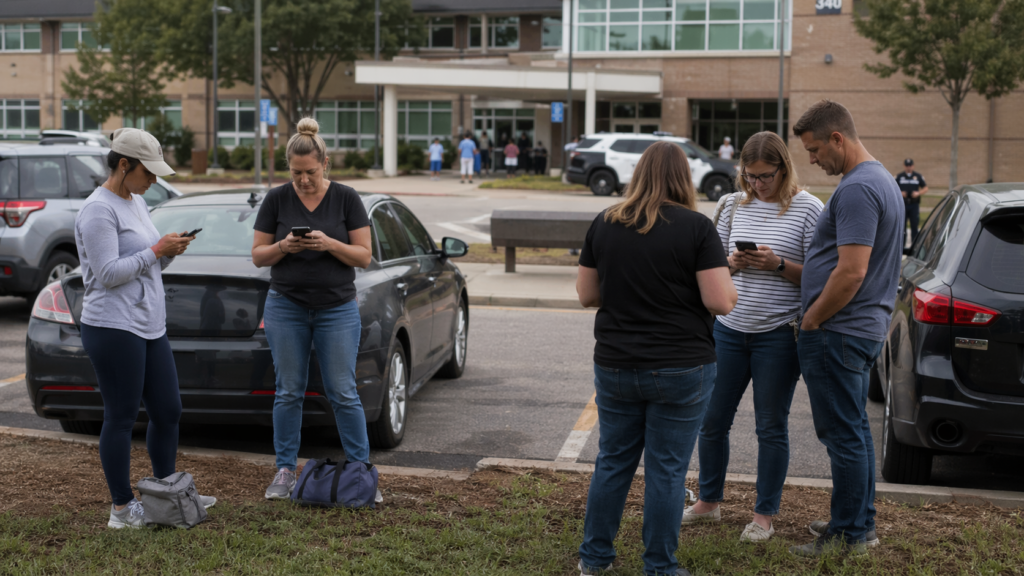
South Carolina law enforcement has spent much of the past two years warning that school threats are not a joke, even when they begin online and even when they turn out not to be credible.
SLED said in a 2024 public update that it had tracked more than 60 threats targeting schools in 23 counties over a short period, with multiple juvenile charges filed. That history matters because it helps explain why schools now tend to move quickly, even when details are thin. The goal is not to certify that a threat is real before acting. It is to avoid underreacting while agencies sort out what they actually have.
That same logic likely shaped Thursday’s response. Schools were not told there was an identified imminent attack, according to the district. But they were told enough to justify visible caution.
What Families Likely Wanted to Know First?
For parents, the most immediate questions in these situations are usually simple: Is my child’s school named? Is the campus locked down? Are students safe? Is dismissal changing?
In this case, the reported answers varied by campus. Some schools restricted visitors and moved activities indoors. Others added law enforcement presence. Some authorizers said they had not received comparable reports. Because the video did not name campuses, many families were left interpreting a statewide threat through whatever message their local school sent them.
That uncertainty is one reason these incidents travel quickly through parent networks. For families looking at school options — whether at charter campuses, traditional districts, or larger regional markets that include searches for high schools Columbia SC — security communication can matter almost as much as the security response itself. Schools do not control anonymous online threats, but they are judged on how clearly and calmly they explain what happens next.
What We Still Don’t Know
Several key questions remained unanswered in initial reporting.
It was not clear who made the video, whether investigators had identified the person who posted it, or whether the threat was tied to any one dispute, campus, or region. It also was not clear whether the video referred specifically to schools in the Public Charter School District or to charter schools more broadly across the state.
Those gaps matter because they shape how readers should understand the day’s disruption. At this stage, the known facts support caution. They do not yet support firm conclusions about motive, credibility, or intended target.
The Bottom Line
South Carolina charter schools tightened security Thursday after the Public Charter School District said it received an anonymous tip about a threatening Telegram video aimed broadly at “SC Charter Schools.” According to the district, the video did not name individual campuses and was later deleted.
Some schools responded with soft lockdowns, extra officers, and visitor restrictions, while law enforcement agencies began reviewing the threat. That response reflects the reality of modern school safety: even vague online threats can quickly alter school operations when officials are still sorting out what is credible and what is not.
For now, the clearest point is also the narrowest one. A threat was reported. Schools adjusted. Investigators are involved. Beyond that, much of the story remains incomplete — which is exactly why schools moved cautiously.