Aiman Tariq – Regional News Editor
Macon, GA –
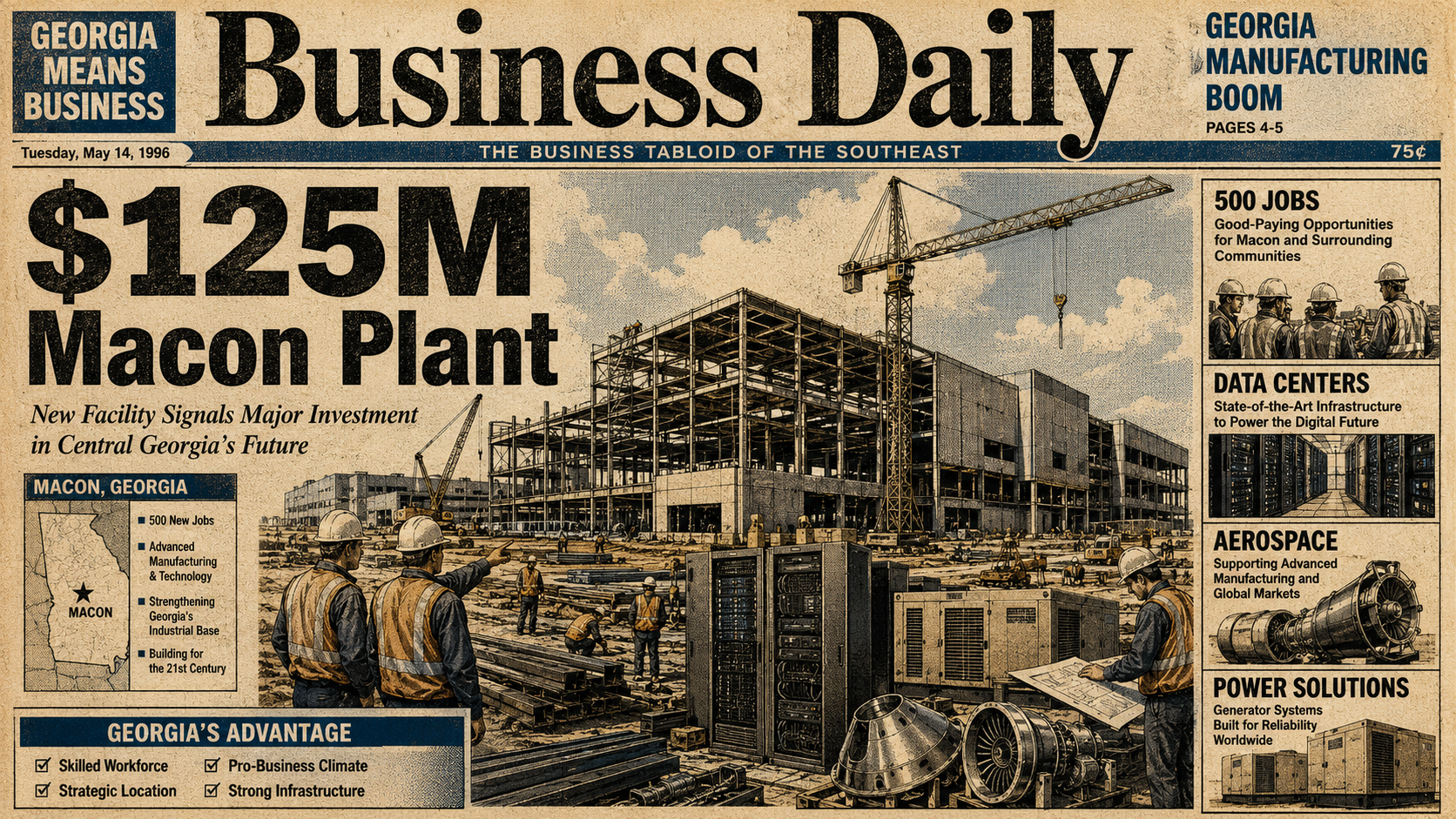
A Georgia-based manufacturing company is planning a $125 million expansion in Macon-Bibb County, adding another piece to the state’s growing network of suppliers tied to data centers, aerospace, defense and advanced industrial projects.
Unified Legacy, a precision metal fabrication and manufacturing company, will build a new facility on Barnes Ferry Road in Macon, according to an announcement from Gov. Brian Kemp’s office. The company is expected to create 500 jobs over the next several years.
The announcement is the kind of economic-development news Georgia officials like to highlight: a homegrown company expanding in-state, hundreds of promised jobs, and a project tied to industries that are already growing quickly.
But it also points to a broader shift. Georgia’s industrial boom is no longer only about the headline projects — the data centers, aerospace giants, defense contracts or electric-vehicle plants. It is also about the supplier network that grows around them.
What Unified Legacy Says It Will Build?
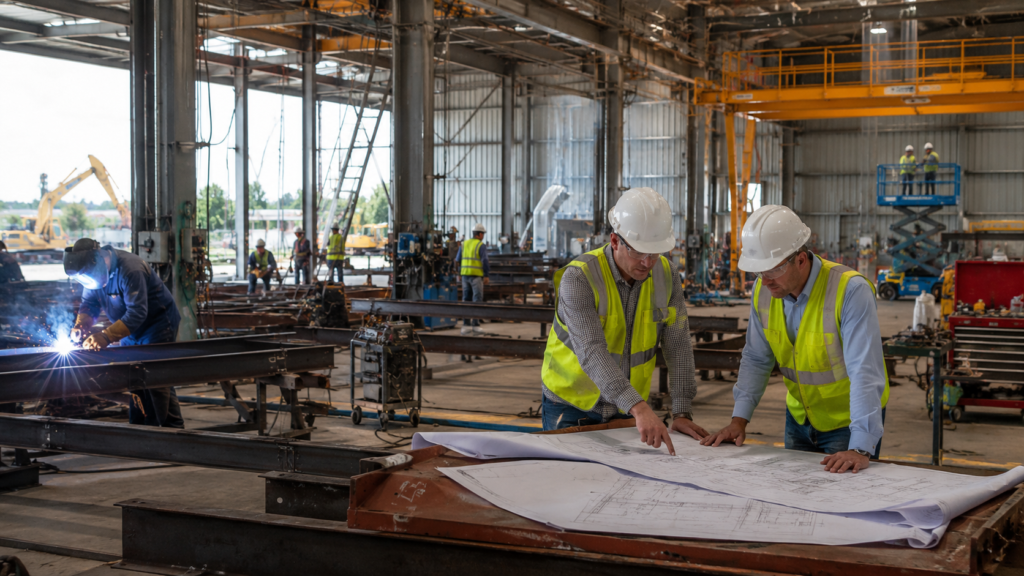
Unified Legacy’s new Macon facility is expected to support the company’s work in metal fabrication, machining and manufacturing for the defense, aerospace, data center and industrial markets.
According to the governor’s announcement, the company produces custom components including ground support equipment, welded assemblies, generator enclosures, fuel storage tanks and precision-machined parts. The company’s existing Unified Defense operation has been in Byron since 2022.
That matters because the Macon project is not being described as a stand-alone factory serving one customer. It is being framed as a capacity expansion for several sectors that Georgia has spent years trying to grow.
Construction is expected to begin in 2026. Parrish Construction is listed as the general contractor, according to commercial real estate coverage of the project.
The company plans to hire for manufacturing, skilled trades, engineering, logistics, quality control and administrative roles, according to local reporting and the state announcement.
Why Macon-Bibb Is Part of the Story?
Macon is not Atlanta, and that is part of the point.
For years, Georgia economic-development officials have tried to frame the state’s growth as broader than metro Atlanta. The Macon announcement fits that pattern: a manufacturing project in Middle Georgia, tied to statewide industrial sectors, with jobs that officials say will be spread across production, trades and technical roles.
Macon-Bibb County Mayor Lester Miller said the expansion would mean “500 more families” with a chance at careers and better lives, according to local coverage from 41NBC.
That kind of statement is standard in economic-development announcements, and it should be read that way. The jobs are planned over several years, not all at once. The real impact will depend on wages, hiring timelines, training pipelines and whether local workers can actually access the new positions.
Still, the location is significant. Macon sits along major transportation corridors and has been working to attract logistics, industrial and manufacturing investment. A 500-job manufacturing project gives the region a clearer role in Georgia’s larger supplier economy.
Data Centers Are Creating Demand Beyond Server Farms
The data center connection is important because Georgia’s data center boom is no longer just about large buildings filled with servers.
Those facilities require a long chain of supporting infrastructure: electrical systems, backup power equipment, cooling components, structural fabrication, fuel systems, generators, enclosures and maintenance-related manufacturing.
Unified Legacy’s work appears to fall into that supporting layer.
According to the Atlanta Journal-Constitution, the company provides parts and components for industries including data centers, aerospace and defense, and the new plant will help meet rising demand in those sectors.
That is the simpler version of the story.
The more complicated version is that Georgia’s data center expansion is already raising questions about power demand, land use, utility planning and whether growth is moving faster than public oversight. Earlier AJC reporting found that Georgia Power proposed adding roughly 10,000 megawatts of new capacity in five years, a major expansion tied in part to rising electricity demand from data centers and other large users.
That does not mean this Macon plant is responsible for those issues. It means the industries it serves are part of a broader growth pattern that comes with both jobs and infrastructure pressure.
Aerospace Gives the Project Another Anchor
The aerospace side may be just as important.
Georgia’s Department of Economic Development says aerospace products were the state’s No. 1 export in 2024, totaling $12.6 billion. The agency also describes aerospace as Georgia’s second-largest manufacturing industry, with a $57.5 billion economic impact and more than 800 aerospace companies operating in the state.
Those numbers help explain why a metal fabrication company would see room to grow in Georgia.
Aerospace and defense manufacturing often depend on specialized parts, precision machining, structural components and supplier reliability. When major sectors expand, smaller and mid-sized manufacturers can benefit if they are positioned to meet technical requirements and delivery schedules.
That appears to be the opportunity Unified Legacy is pursuing.
Company CEO Eric Williams said the investment reflects confidence in Middle Georgia and its workforce, adding that the new facility will expand capabilities, increase capacity and allow the company to take on “larger, more complex work,” according to the state announcement.
The Jobs Question Is Bigger Than the Number
Five hundred jobs is the figure most readers will remember.
But the number alone does not answer the most important questions.
What will the jobs pay? How many will be available to workers already living in Macon-Bibb County? How much training will be required? Will the company rely mostly on experienced workers, or will it build a pipeline for younger workers and people moving from other industries?
Those details are often not clear at the announcement stage.
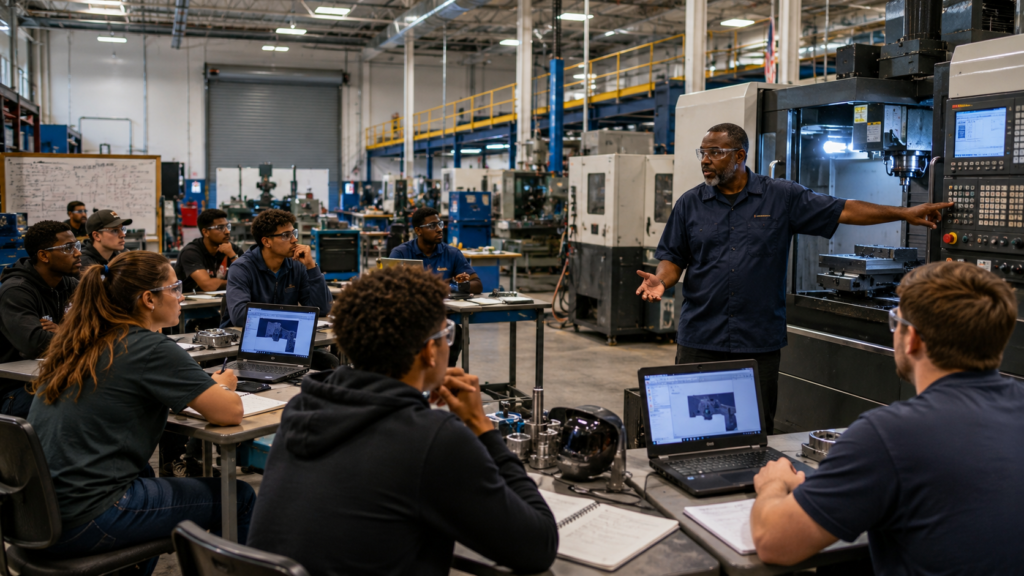
According to the state, hiring is expected across manufacturing, skilled trades, engineering, logistics, quality control and administrative roles. That mix suggests the project could include both technical and nontechnical positions, though the highest-paying roles may require specialized experience.
This is where the region’s workforce system becomes important. Large manufacturing projects do not automatically translate into broad local benefit. They work best when training programs, technical colleges, employers and local governments are aligned before the jobs arrive.
Why Supplier Projects Matter?
Supplier projects do not always draw the same attention as a corporate headquarters or a massive industrial campus.
But they can be more revealing.
When suppliers expand, it often signals that underlying demand is becoming durable enough to support secondary investment. In other words, companies are not just betting on one announcement. They are betting that an entire ecosystem will keep growing.
That is the case Georgia officials are trying to make here.
The AJC described the announcement as evidence of how Georgia’s industrial sectors — especially data centers and aerospace projects — are leading to additional investment from suppliers.
That is probably the right frame, with one caution: economic-development announcements are projections, not outcomes. The plant still has to be built. The jobs still have to be created. The demand still has to hold.
A strong announcement is not the same as a finished economic result.
Local Growth Comes With Local Questions
The Macon-Bibb project also lands at a time when Georgia communities are becoming more aware of what industrial growth requires.
Large facilities need roads, utilities, permitting, trained labor and sometimes new public infrastructure. Data centers in particular have drawn attention because of their energy demands. Aerospace and defense suppliers can raise a different set of questions around procurement, security, workforce skills and long-term contract stability.
Those questions do not make the Unified Legacy project a bad deal.
They simply mean the public should look past the press-release numbers and watch the implementation.
The reasonable questions are straightforward:
- How quickly will construction begin?
- What incentives, if any, are tied to the project?
- What wages will the new jobs pay?
- How many hires will come from Macon-Bibb and nearby counties?
- What infrastructure upgrades will be needed around Barnes Ferry Road?
- How will the project connect with local workforce training?
Those are the details that determine whether a project changes a local economy or simply adds another ribbon-cutting to the calendar.
What Happens Next?
For now, the project is in the announcement stage.
Construction is expected to begin in 2026, with job creation unfolding over the next several years. Local and state officials are expected to continue framing the project as part of Georgia’s broader advanced-manufacturing strategy.
The company has directed interested applicants to learn more through its employment channels, according to the governor’s office announcement.
The next meaningful milestones will be construction activity, permitting updates, hiring timelines and any additional local approvals or incentive disclosures.
The Bottom Line
Unified Legacy’s planned $125 million Macon facility is another sign that Georgia’s industrial growth is spreading into the supplier base.
The project is expected to create 500 jobs over several years and support sectors that are already expanding in the state, including data centers, aerospace, defense and advanced manufacturing.
That is the optimistic version.
The more careful version is that the announcement is still a promise, not a result. The public will need to watch how the project develops, what kinds of jobs are actually created, and whether the benefits reach local workers in Macon-Bibb County.
Georgia’s industrial economy is growing. This project suggests the supply chain around that growth is growing too.
Whether that becomes a durable win for Middle Georgia will depend on execution.