Aiman Tariq – Regional News Editor
Stephens County, GA –
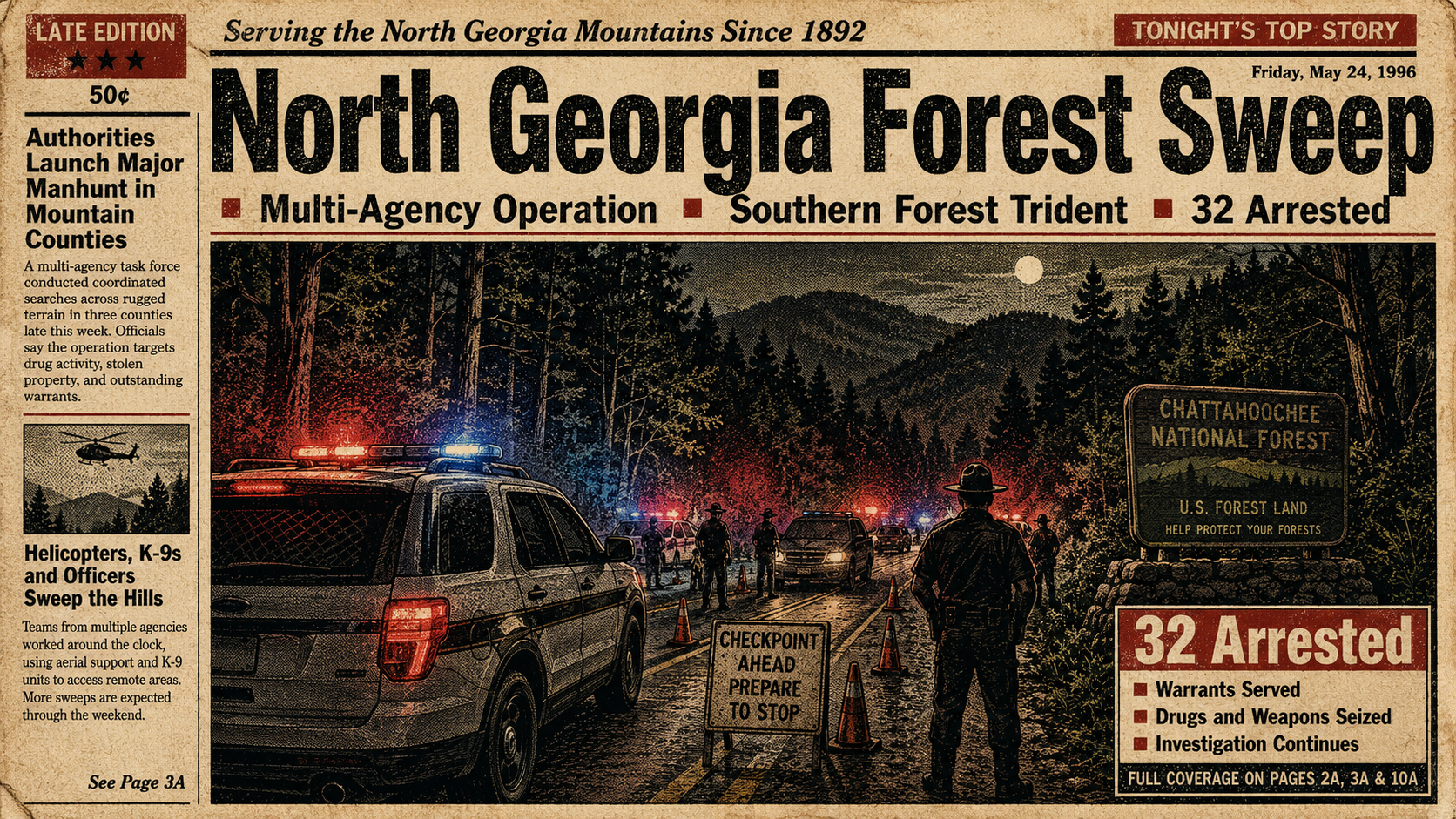
According to authorities, a multi-agency operation across national forest lands in north Georgia and neighboring states led to 32 arrests in Stephens County, along with dozens of federal, state and traffic citations.
The operation, called Southern Forest Trident, was conducted between May 1 and May 6 and involved the U.S. Forest Service, the Stephens County Sheriff’s Office, the Georgia State Patrol, Georgia Department of Natural Resources game wardens, the Department of Homeland Security and other law enforcement partners.
Officials described the effort as a coordinated push to deter and investigate criminal activity on and around national forest lands. That framing matters. These areas are often remote, unevenly patrolled and difficult for agencies to monitor in the same way they would a city street or a commercial corridor.
But, as with any law enforcement operation, the numbers should be read carefully. Arrest totals and citation counts show the scale of the sweep. They do not, by themselves, show how much crime was prevented, how many cases will hold up in court, or how many people ultimately will be convicted.
Operation Southern Forest Trident
According to the Stephens County Sheriff’s Office, Operation Southern Forest Trident was led by the U.S. Forest Service Law Enforcement and Investigations division and included activity in several states.
Local reporting says the operation covered Berkeley and Charleston counties in South Carolina, Stephens and Habersham counties in Georgia, and Burke County in North Carolina. In Stephens County, agencies conducted safety checks on roads leading into and out of forest service lands and increased patrols in surrounding areas.
The stated goal was to deter and investigate criminal activity taking place on national forest property.
That can include a wide range of conduct. In this case, officials reported federal citations, immigration arrests, drug-related arrests, traffic enforcement and hunting and fishing violations.
The broad mix is important. This was not one narrow investigation into a single alleged offense. It was a multi-agency enforcement sweep across several categories of public-safety and land-use enforcement.
Arrests and Citations Reported
Authorities said 32 people were arrested in Stephens County during the operation.
The Department of Homeland Security arrested 25 people accused of being in the country illegally, according to law enforcement statements reported by WSB-TV and other outlets. Officials said 14 of those arrested had previous felony convictions, and one person was identified by authorities as a confirmed cartel member.
That claim should be attributed carefully. At this stage, it is a law enforcement identification, not a finding tested in court.
The U.S. Forest Service issued 33 federal citations during the operation. Local reports say those citations covered offenses ranging from traffic-related violations to possession of drug-related objects and illicit controlled substances.
The Georgia Department of Natural Resources issued four warnings and six citations related to hunting and fishing violations.
The Georgia State Patrol issued 58 warnings and 36 traffic citations.
Stephens County deputies also reported five felony drug arrests and three warrant services.
On paper, that is a large enforcement footprint. But the details show why the operation is better understood as a broad sweep than a single case.
Sheriff’s Office Details Local Arrests
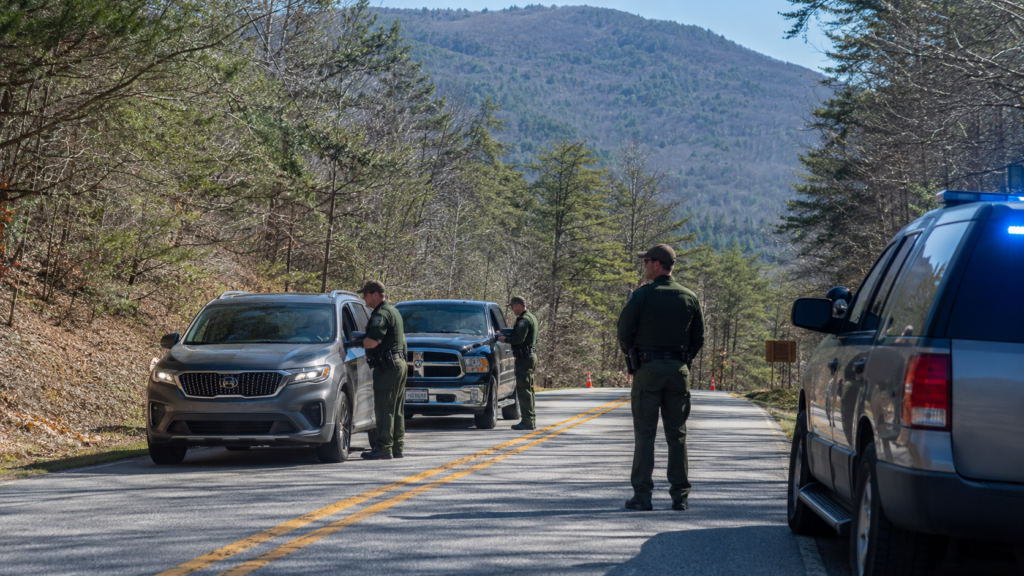
According to local reporting based on the Stephens County Sheriff’s Office account, deputies arrested several people during traffic stops and related enforcement activity.
Christian Villagomez, 29, of Clarkesville, was arrested during a traffic stop on an outstanding warrant connected to multiple fishing violations issued by Georgia DNR.
Victor Pena, 42, of Cornelia, and Kristen Sloan, 33, of Maysville, were arrested after deputies said they found about 3.2 grams of suspected methamphetamine and a glass smoking pipe during a traffic stop. Both were charged with possession of methamphetamine and possession of drug-related objects, according to reports citing the sheriff’s office.
Mark Justice, 48, of Eastanollee, and Rebecca Wood, 30, of Toccoa, were arrested during another traffic stop after authorities said they found 2.9 grams of suspected methamphetamine, a glass pipe and 4.2 grams of suspected marijuana. Reports say Wood was charged with possession of methamphetamine, while Justice was arrested on an outstanding Stephens County warrant.
Dakoda Ponder, 29, of Toccoa, was arrested after authorities said they found 2.1 grams of suspected cocaine and a suspected oxycodone pill. Ponder was charged with possession of cocaine and possession of a Schedule II controlled substance, and Georgia State Patrol also charged him with driving under the influence, according to local reporting.
Those are allegations at this stage. Prosecutors would have to prove any criminal charges in court.
Search After Two People Fled
One part of the operation involved a search after two people ran from a federal traffic stop, according to the sheriff’s office account reported by several outlets.
Authorities said the stop happened on Highway 365 near Rock Road. The Stephens County Sheriff’s Office, Georgia DNR and the Habersham County Sheriff’s Office assisted the U.S. Forest Service in searching the area. Reports say K-9 units were also used during the search.
One person, identified in reporting as Minton Carreto, was later captured near Highway 365 and Trestle Ridge Road. Authorities said Carreto was wanted out of the metro Atlanta area and was in the country illegally.
A second person had not been identified publicly in the initial reports and was believed to have left the area.
That portion of the operation is likely to draw attention because it involved multiple agencies and a search in difficult terrain. It also shows why forest-land enforcement can look different from routine patrol work. Roads are fewer. Visibility can be limited. And once someone leaves a vehicle and moves into wooded land, the search becomes much more complicated.
Why Forest Enforcement Is Different
National forest lands are public spaces, but they are not always easy places to police.
People use them for hiking, camping, hunting, fishing and recreation. At the same time, remote roads and low-visibility areas can create opportunities for illegal dumping, drug activity, unlawful hunting, traffic violations and other offenses that may go unnoticed for longer periods.
Stephens County Sheriff Rusty Fulbright said in a statement that many of these areas are not frequently patrolled in most counties and that crime can go unnoticed. He said the operation was meant to curb illegal drugs and other criminal activity while still allowing people to enjoy nature responsibly.
That is the law enforcement argument.
The public-interest question is slightly broader: how much enforcement is enough in remote public lands, and how should agencies balance safety, access and civil liberties when operations involve traffic checkpoints, immigration arrests and drug investigations at the same time?
The early reports do not answer that question. They mostly provide the operation’s results.
A Multi-State, Multi-Agency Sweep
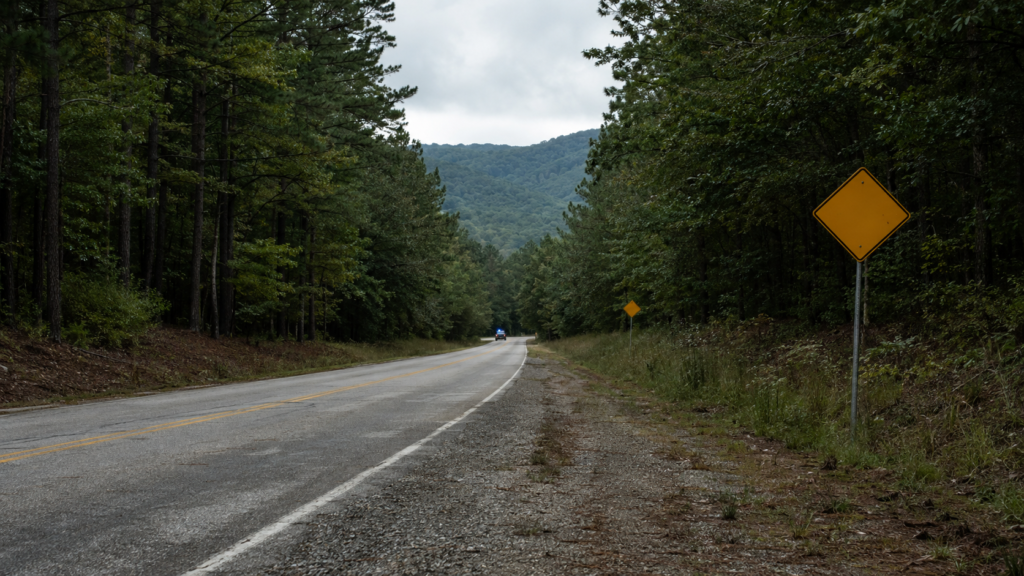
The scope of Southern Forest Trident also matters because it was not limited to one sheriff’s office.
The U.S. Forest Service led the operation. Federal immigration authorities, state troopers, game wardens, local deputies and other law enforcement partners all had roles. In Georgia, the operation focused on Stephens and Habersham counties. In neighboring states, it extended into parts of South Carolina and North Carolina.
That type of structure can increase enforcement capacity quickly. It can also make the public record more fragmented. Different agencies issue different kinds of citations. Federal arrests may move through one system. State charges may move through another. Local warrants may be handled separately.
That is why readers should be cautious about treating the operation as one clean number.
“32 arrested” is the headline figure. But underneath it are several different legal tracks: immigration enforcement, local felony charges, federal citations, traffic tickets, DNR violations and warrant service.
What Remains Unclear
Several questions remain unanswered in the initial coverage.
It is not yet clear how many of the arrests will lead to formal prosecution, how many citations will be contested, or whether additional charges could follow. It is also not clear from the early reports how agencies selected the roads, checkpoints or patrol areas used during the operation.
Authorities have said the operation targeted criminal activity on national forest lands, but the public filings and case details that usually clarify individual allegations may take time to appear.
That does not mean the operation was improper. It means the current public picture is still incomplete.
This is the point where newsroom language matters. It is accurate to say authorities reported 32 arrests. It is not the same thing as saying 32 people have been proven guilty of crimes.
What Happens Next
The next stage will likely depend on which agency handled each case.
Federal citations may move through federal channels. Local felony charges will move through state courts. DNR and traffic citations may follow separate processes. Immigration arrests handled by Homeland Security will proceed through federal immigration enforcement systems.
For Stephens County, the operation gives local officials a public-safety message: they are working with state and federal partners to patrol areas that might otherwise receive less routine attention.
For residents and visitors, the practical takeaway is simpler. Law enforcement agencies are paying closer attention to roads and access points around forest lands in northeast Georgia, at least for now.
The Bottom Line
According to authorities, Operation Southern Forest Trident led to 32 arrests in Stephens County, including 25 immigration-related arrests by the Department of Homeland Security and five felony drug arrests by Stephens County deputies.
The U.S. Forest Service, Georgia DNR and Georgia State Patrol also issued dozens of warnings and citations during the multi-day operation.
Officials say the goal was to deter criminal activity on national forest lands and increase enforcement in areas that are not always heavily patrolled.
The numbers are significant, but they should still be read carefully. Arrests are not convictions. Citations are not final findings. And a multi-agency operation can combine several different kinds of enforcement into one headline figure.
For now, the operation shows that law enforcement is paying closer attention to north Georgia forest areas. Whether that becomes a longer-term enforcement pattern remains to be seen.