Aiman Tariq – Regional News Editor
Atlanta, GA –
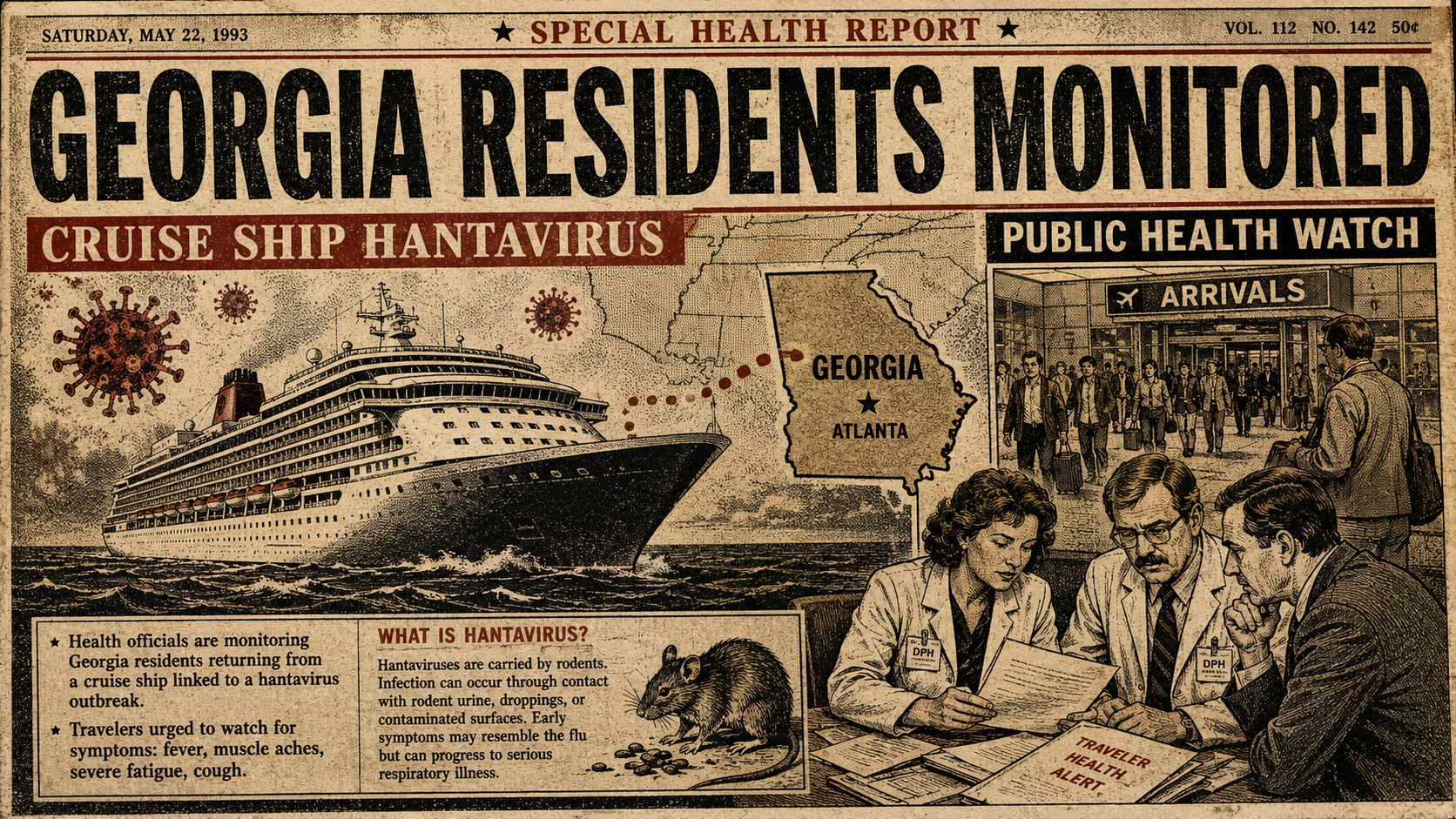
Two Georgia residents are being monitored after returning from the M/V Hondius, a cruise ship linked to a rare hantavirus outbreak that has drawn attention from federal, state and international health officials.
According to the Georgia Department of Public Health, the two residents were initially reported to be in good health and showing no signs of infection after leaving the ship. More recent reporting says two people believed to have been exposed later arrived in Atlanta for evaluation at Emory University Hospital.
That sequence is worth keeping in perspective. Monitoring does not mean someone is sick. Evaluation does not mean the public is in danger. It means health officials are trying to keep a rare outbreak contained before uncertainty becomes a larger problem.
What Health Officials Say Happened?
The M/V Hondius became the focus of international concern after passengers developed severe respiratory illness linked to hantavirus.
According to the World Health Organization, a cluster of illnesses connected to the ship was reported on May 2. As of May 4, WHO said seven cases had been identified, including two laboratory-confirmed cases, five suspected cases and three deaths.
The CDC said the U.S. government is actively monitoring and responding to the outbreak. The agency also said the risk to the American public remains “extremely low.”
That is the central balance in this story: the disease can be serious, but the risk to the broader public remains limited based on what health officials currently know.
Georgia Residents Under Watch
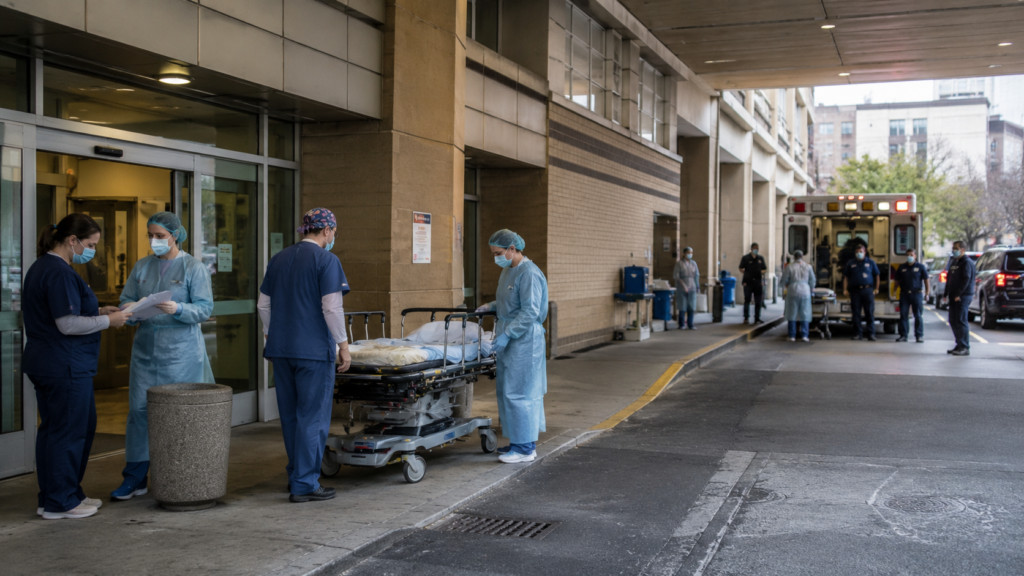
CBS Atlanta first reported that DPH was monitoring two Georgia residents who recently returned from the M/V Hondius. At that point, DPH said both were in good health and had shown no signs of infection.
Other Georgia outlets reported similar details, with DPH declining to provide exact locations for the residents being monitored. WALB reported that the two individuals were in good health and symptom-free, while WTOC reported that state officials did not provide additional details about where they live or exactly how monitoring was being handled.
That limited disclosure is not unusual in a case like this. Health departments often try to balance public information with medical privacy, especially when there is no evidence of local spread.
Still, the arrival of two exposed residents at Emory for evaluation raised the level of attention in Georgia. Emory has specialized infectious-disease and biocontainment experience, which makes it one of the facilities federal officials may use when a rare or serious exposure requires closer assessment.
Why Hantavirus Gets Attention?
Hantavirus is not a common everyday virus in Georgia.
According to the CDC, people usually become infected through contact with rodents, especially exposure to urine, droppings or saliva. A bite or scratch can also transmit the virus, but that is rare.
That matters because this is not the kind of virus that usually spreads easily from person to person.
The CDC says the Andes virus is the only type of hantavirus known to spread person-to-person, and even then the spread is usually limited to people with close contact, including direct physical contact or prolonged time in enclosed spaces with an ill person.
That is why public health officials can treat the cruise outbreak seriously without telling the general public to panic.
The Cruise Ship Context
The M/V Hondius case is unusual because hantavirus is most often discussed in connection with rodent exposure in homes, cabins, barns or other enclosed areas where droppings or contaminated dust may be present.
A cruise ship outbreak is different. It requires health officials to look at travel history, passenger contacts, possible environmental exposure and the movement of passengers across countries.
Reuters reported that U.S. officials arranged for passengers to be flown back from the ship, with some placed under medical observation. One person tested positive for the Andes strain, and another showed symptoms, according to federal health officials cited in Reuters coverage.
The same reporting said federal officials continued to emphasize that the broader public risk remained low.
That is the part readers should not lose in the noise. The response is large because the disease can be serious and the exposure network is international. It is not because officials believe hantavirus is spreading widely in Georgia.
Why Monitoring Can Last Weeks?
One reason health officials are cautious is that symptoms may not appear immediately.
Hantavirus illness can begin with symptoms that resemble other infections, including fever, muscle aches and fatigue. In more serious cases, the illness can progress to breathing problems and require hospital-level care. The Mayo Clinic describes hantavirus pulmonary syndrome as a rare infectious disease that can begin with flu-like symptoms and progress to severe lung and heart problems.
That does not mean every exposed person becomes ill.
It means public health monitoring has to last long enough to catch symptoms if they develop. The CDC’s current situation summary says monitoring and risk assessment are part of the response, especially because the Andes virus has limited potential for person-to-person spread under close-contact conditions.
That is why the process can look more dramatic than the actual risk to the public.
What Officials Are Trying to Prevent?
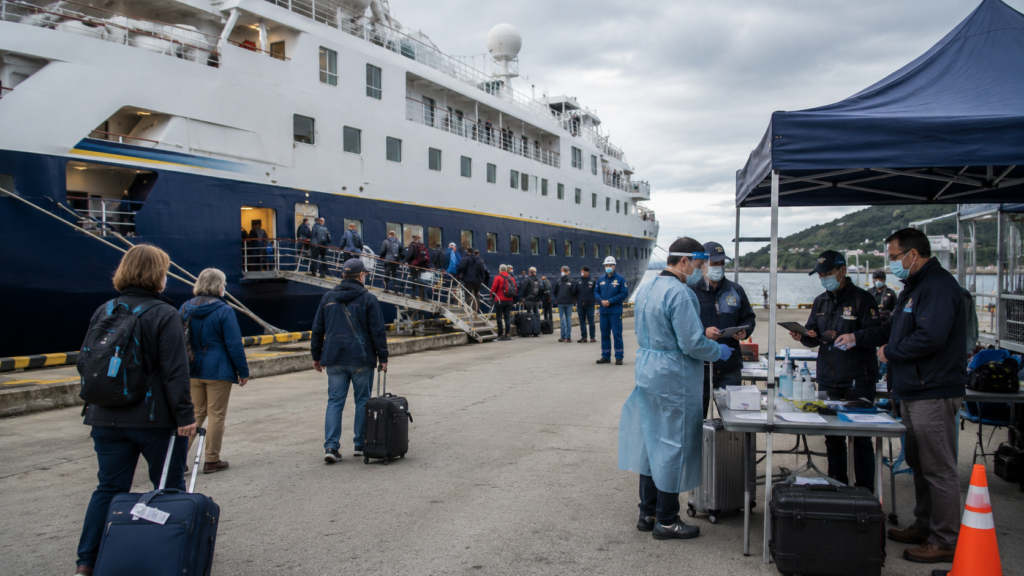
The purpose of monitoring is not only to treat patients. It is also to prevent uncertainty from becoming confusion.
If an exposed traveler develops symptoms, health officials need to know quickly. If someone does not develop symptoms, monitoring helps confirm that the exposure did not lead to illness.
The CDC said the U.S. response includes coordination with the State Department, domestic health authorities and international partners. The agency also said its priority is the health and safety of U.S. passengers.
That kind of coordination is expected when passengers from multiple countries are involved.
It is also why the public should be careful with language. A person being monitored is not necessarily a patient. A person being evaluated is not necessarily infected. And a rare outbreak connected to a cruise ship does not automatically mean there is a community outbreak in Georgia.
What Georgians Should Know?
For most Georgia residents, there is no action to take beyond following official public health updates.
The CDC says hantavirus is usually linked to rodent exposure. That makes ordinary prevention advice practical: avoid contact with rodents and their droppings, take care when cleaning areas with signs of rodent activity, and seek medical guidance if symptoms develop after a known exposure.
For people connected to the M/V Hondius, the guidance is more specific. They should follow CDC and state health department recommendations, monitor for symptoms and remain in contact with public health officials.
For everyone else, the risk remains extremely low, according to federal officials.
That does not make the outbreak unimportant. It means the story is about targeted monitoring, not broad public danger.
Why Emory’s Role Matters?
The fact that exposed people were brought to Emory does not mean Atlanta is facing a public health threat.
It means federal and state officials are using a hospital with experience in specialized infectious-disease evaluation. Emory has been involved in high-level infectious disease response before, and in cases like this, officials often prefer controlled evaluation over scattered local care.
That approach can make headlines. It can also reduce risk by keeping exposed or symptomatic travelers in systems designed for that purpose.
In other words, the visible response is part of containment.
The Bottom Line
Two Georgia residents have been monitored after returning from the M/V Hondius, the cruise ship linked to a rare hantavirus outbreak.
According to health officials, the broader risk to the American public remains extremely low.
The disease can be serious, and the outbreak has drawn an international response. But monitoring and evaluation are not the same as community spread.
For Georgia residents, the practical takeaway is straightforward: follow official updates, avoid speculation and understand that public health officials are treating the situation with caution because that is what rare infectious-disease events require.
The investigation and monitoring continue.