Aiman Tariq – Regional News Editor
Cohutta, GA –
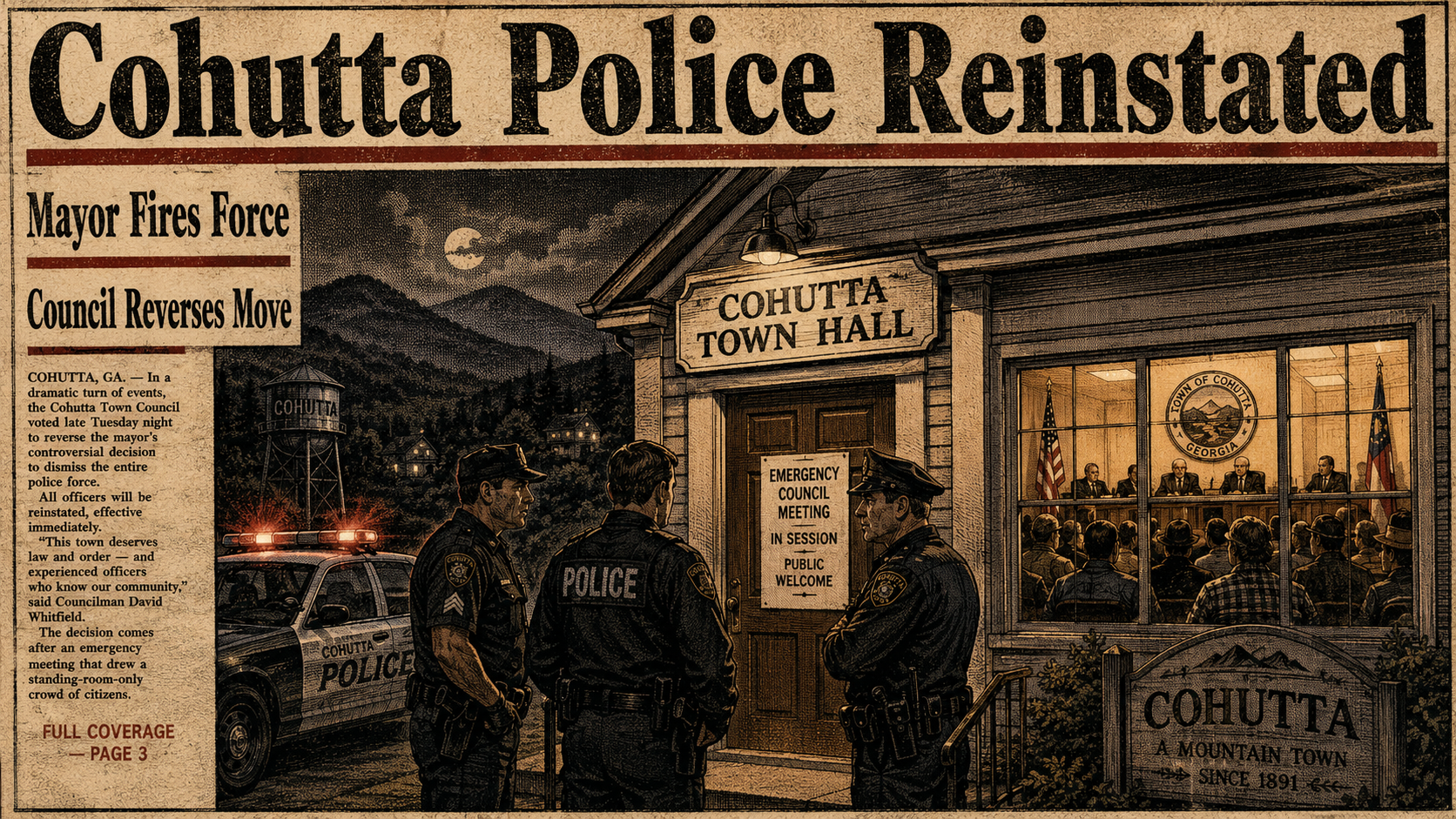
According to local and national reporting, the town council in Cohutta, Georgia, voted Friday to reinstate the town’s police department just two days after Mayor Ron Shinnick abruptly fired the police chief and all of the town’s officers.
The decision followed an emergency meeting in the small north Georgia town, where residents, officers and local officials gathered after a sudden move that left Cohutta without its local police force and raised immediate questions about procedure, public safety and the mayor’s authority.
That is the basic version of the story. The more complicated version is that the firings appear to have grown out of a dispute involving town leadership, police officers and the mayor’s wife, who had served as town clerk. Exactly why the mayor chose to dissolve the department remains contested.
Council Reinstates Officers After Emergency Meeting
The Cohutta Town Council voted unanimously to reinstate the police department, according to reporting from the Associated Press and local outlets.
A second emergency ordinance approved by the council temporarily prevents the mayor from disbanding the department again for 30 days.
Vice Mayor Shane Kornberg assumed control of the meeting after Shinnick voluntarily left, according to reports from the meeting. Kornberg later said the decision came down to whether the town charter had been followed.
“What we know is we had to make the best decision for the town,” Kornberg said, according to a report cited by The Guardian. “We needed to reinstate the police department because our charter was not followed.”
The council also moved to provide back pay to the reinstated officers, according to the Associated Press.
That part matters because the vote did not simply express disagreement with the mayor. It attempted to undo the personnel action and restore the department’s status quickly, before the temporary shutdown became a longer public-safety problem.
Town Attorney Says Charter Was Not Followed
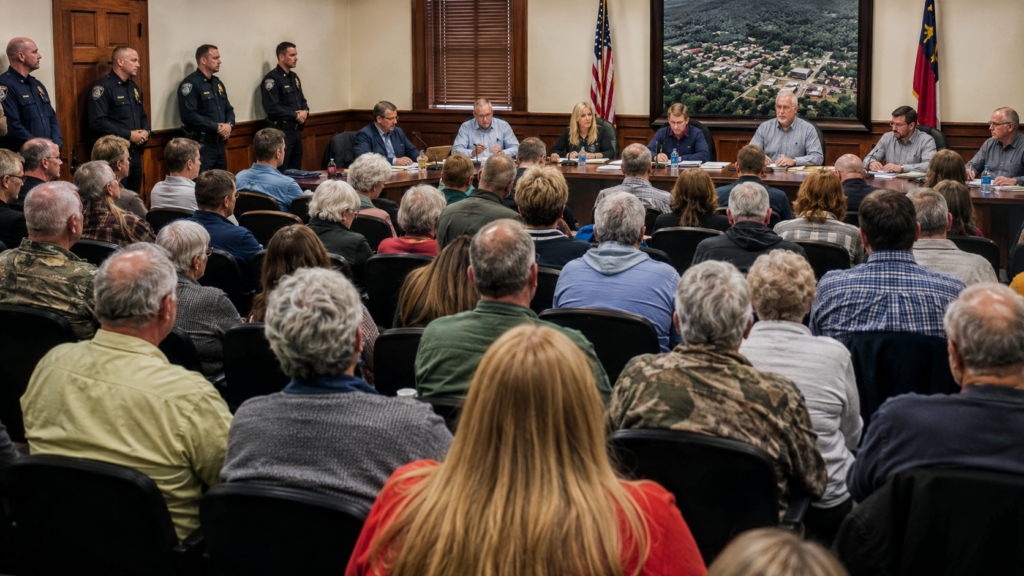
Before the vote, town attorney Bryan Rayburn told the council that Shinnick’s actions did not follow the policies and procedures of Cohutta’s town charter, according to reporting from The Guardian.
WDEF reported that Rayburn found the mayor did not follow town ordinances when he made the decision unilaterally.
That does not answer every question about what happened. It does, however, explain why the council moved quickly. If the town charter did not authorize the mayor to dissolve the department in that manner, then the issue becomes less about political preference and more about whether local government followed its own rules.
In small towns, the process can matter as much as the final decision. A mayor may have significant authority, but that authority usually operates within a charter, ordinances and council oversight.
Here, council members appeared to decide that the process had broken down.
Why the Mayor Said He Acted?
Shinnick has said the action was tied to comments officers made on social media, according to reporting from The Guardian and other outlets.
The exact comments have not been fully detailed in public reporting, and the mayor’s explanation has not ended the dispute.
Former police sergeant Jeremy May told WRCB that the issue involved a complaint he and other officers had raised about Pam Shinnick, the mayor’s wife, who had served as town clerk. May described the firings as a personal vendetta, according to local reporting carried by multiple outlets.
That is May’s allegation. The mayor has denied that the move was retaliatory, according to separate reporting.
For now, the public record shows competing explanations: the mayor pointing to officer conduct online, and former officers saying the firings followed their complaints about the mayor’s wife and town operations.
Those claims may require further review before residents get a clearer picture.
A Sign Announced the Department Was Dissolved
The department’s sudden shutdown became public in a strikingly simple way.
A sign posted at the police department announced that the department had been dissolved “per mayor Ron Shinnick,” according to reporting from The Guardian. The sign directed residents who needed help to contact a non-emergency county number.
According to local coverage, the terminations affected the police chief and roughly 10 officers.
That is not a minor administrative shakeup in a town of about 930 people. In a community that small, losing the entire local police department overnight changes who responds to calls, how quickly residents expect service and how much pressure falls on the county sheriff’s office.
The Whitfield County Sheriff’s Office stepped in to handle coverage while the town’s department was in limbo, according to reporting on the shutdown.
Public Safety Questions Came Quickly
When a town loses its entire police force, even briefly, the immediate concern is response time.
That does not mean residents were left with no law enforcement at all. County deputies were expected to cover calls. But countywide coverage is not the same as having a local department based in town.
That distinction is why the council’s emergency meeting mattered.
A small-town police department often handles the routine work that does not always make headlines: traffic stops, neighborhood disputes, welfare checks, local patrols and quick response to calls inside town limits.
When that department disappears suddenly, residents are left asking whether backup coverage is enough and how long it can realistically continue.
The council’s decision to reinstate the officers suggests members did not want that uncertainty to continue.
Dispute Involving Town Clerk Adds Context
Several reports have tied the controversy to a broader dispute involving Pam Shinnick, the mayor’s wife and former town clerk.
People reported that officers had protested her reinstatement as town clerk, after earlier workplace allegations and mediation involving town officials.
Other reporting said officers had raised concerns about her access to sensitive or confidential town information after her role had changed.
Those are claims reported by outside outlets based on statements and local coverage. They should be treated as part of the background, not as proven findings.
What is clear is that the police firings did not happen in a vacuum. They followed a period of tension between officers, the mayor and town administration.
That is why residents were looking for answers at Friday’s meeting.
Mayor’s Future Remains Unclear
The meeting notice reportedly included a request to consider the mayor’s “immediate resignation,” but that portion of the agenda was tabled, according to The Guardian.
That means the council restored the police department but did not resolve the broader political question.
Shinnick voluntarily left the meeting after the town attorney’s opening remarks. Vice Mayor Kornberg then presided over the rest of the meeting.
For now, the mayor remains a central figure in the dispute, but the immediate action was narrower: restore the department, protect the town from another sudden dissolution and leave the rest for later.
That may be the practical path for a town trying to stabilize basic services first and political accountability second.
What the Council’s Vote Actually Does?
The reinstatement vote appears to do three things at once.
First, it restores the police department and brings officers back to work.
Second, it signals that the council believes the mayor did not have the authority to act the way he did.
Third, it buys time.
The 30-day ordinance preventing the mayor from disbanding the department again gives the town a short window to sort through the legal and political questions without another immediate personnel shock.
That does not mean the dispute is over. It means the town has moved the issue from crisis mode into a more formal process.
Small-Town Government Under a Bigger Spotlight
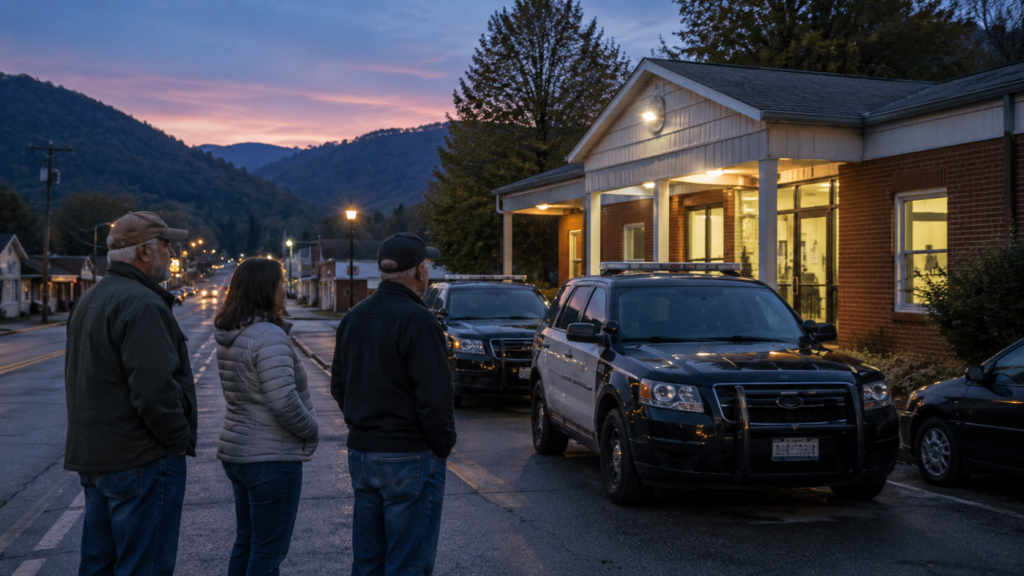
Cohutta is not a large city with layers of bureaucracy, multiple public-safety agencies and a deep bench of administrators.
It is a small mountain community near the Tennessee line, about 100 miles northwest of Atlanta.
That setting is part of why the story drew so much attention. A personnel dispute in a large city might affect one department or one division. In Cohutta, the mayor’s action wiped out the entire local police force, at least temporarily.
That is also why the council’s response was watched closely. The question was not simply whether the mayor had acted wisely. It was whether a small town’s essential public-safety structure could be removed by one official without the process required by local law.
Council members answered that question by reinstating the department.
The Bottom Line
Cohutta’s police department is back on the job after the town council voted to reinstate the chief and officers fired by Mayor Ron Shinnick.
According to the town attorney, the mayor’s action did not follow the town charter or local procedures.
The mayor has cited social media comments by officers. Former officers have said the firings were connected to complaints involving the mayor’s wife and town administration.
Those competing claims remain unresolved.
What is clear is that the council moved quickly to restore the police department, provide back pay and temporarily block another attempt to dissolve the force.
The larger political fight may continue. But for now, Cohutta has reversed the most immediate consequence of the mayor’s decision: a small town without its local police department.