Aiman Tariq – Regional News Editor
Bartow County, GA –
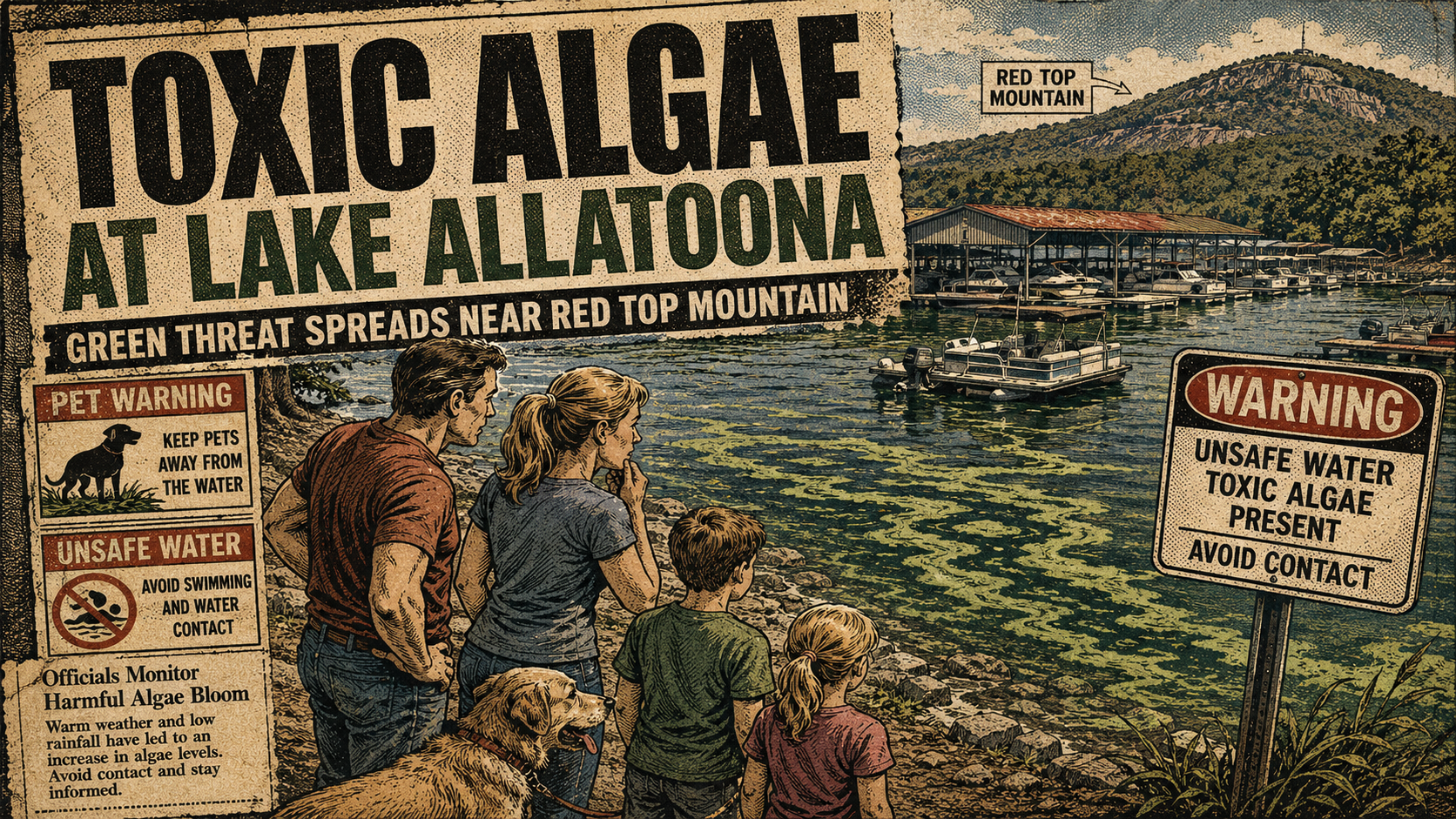
Visitors to Lake Allatoona are being warned to avoid parts of the water near Red Top Mountain Park Marina after officials reported a blue-green algae bloom that can produce toxins and foul odors.
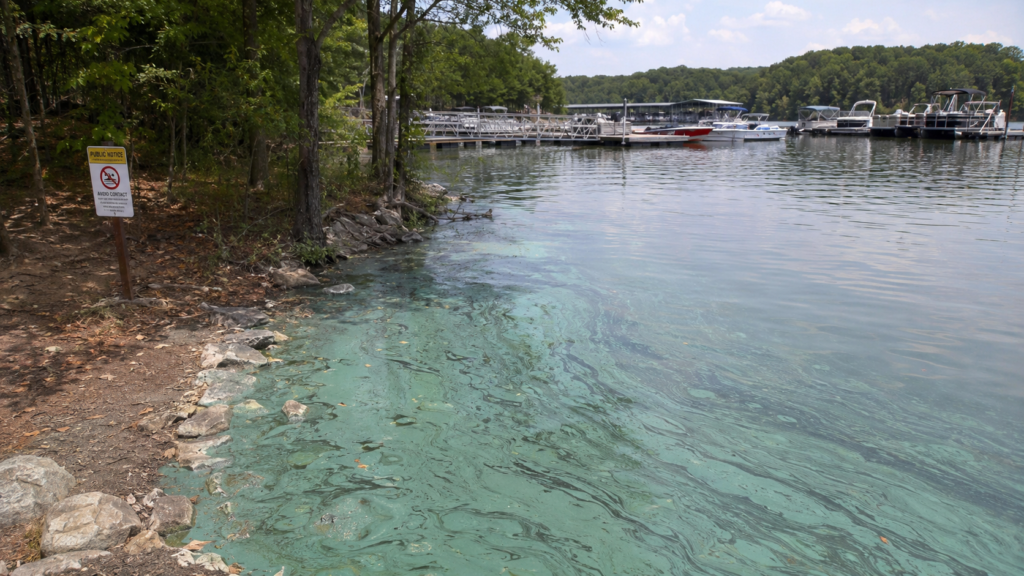
The warning is not a lakewide closure. It is a localized caution around affected coves and inlets where the water has appeared discolored, with some describing it as looking like spilled paint on the surface.
That distinction matters. A blue-green algae bloom does not automatically mean every part of Lake Allatoona is unsafe. But when officials say a bloom is present and advise people and pets to stay away from affected areas, the safest response is to treat the warning seriously.
What Officials Are Warning About?
According to the Cobb County-Marietta Water Authority, Park Marina reported a blue-green algae bloom in Lake Allatoona on May 7 near Red Top Mountain Park Marina. The authority said it was aware of the bloom and was continuing routine monitoring of the lake’s water quality.
Blue-green algae is another name for cyanobacteria. Not every bloom produces toxins, but some can. That uncertainty is part of why public agencies tend to use cautious language when blooms appear.
Georgia’s Environmental Protection Division describes harmful algal blooms as collections of blue-green algae, or cyanobacteria, that can become harmful in open water. The agency’s basic public guidance is blunt: “When in doubt, stay out.”
In this case, local reporting from WSB-TV said the bloom has appeared as a bluish-green film in coves and inlets around Red Top Mountain. Cole Blackwell, general manager of the Cobb County-Marietta Water Authority, told the station that the water can look like spilled paint, have a foul odor, and should be avoided.
The Drinking Water Question
One of the first questions in any lake contamination story is whether the public drinking water supply is affected.
According to the Cobb County-Marietta Water Authority, its treatment process has not been impacted by the bloom, and treated drinking water remains safe. The authority said its laboratory collects and analyzes water samples from its intake on Lake Allatoona, including checks for blue-green algae that may produce toxins or odors.
WSB Radio also reported that the authority said treatment processes had not been affected and that treated drinking water remained safe. Officials said treatment adjustments would be made if needed to maintain safety.
That is the important difference between untreated lake water and treated drinking water. Officials are warning people not to swim in or ingest water near the visible bloom. They are not saying the treated water coming through public systems is unsafe.
Still, that distinction can be easy to miss when people hear the words “toxic algae.” The practical message is narrower: avoid direct contact with affected lake water, especially where discoloration or odor is visible.
Why Pets Are a Major Concern?
The warning is especially serious for dog owners.
According to the CDC, harmful algal blooms can be deadly for pets and livestock. Animals can become sick and die within hours after swallowing toxins produced by harmful algae.
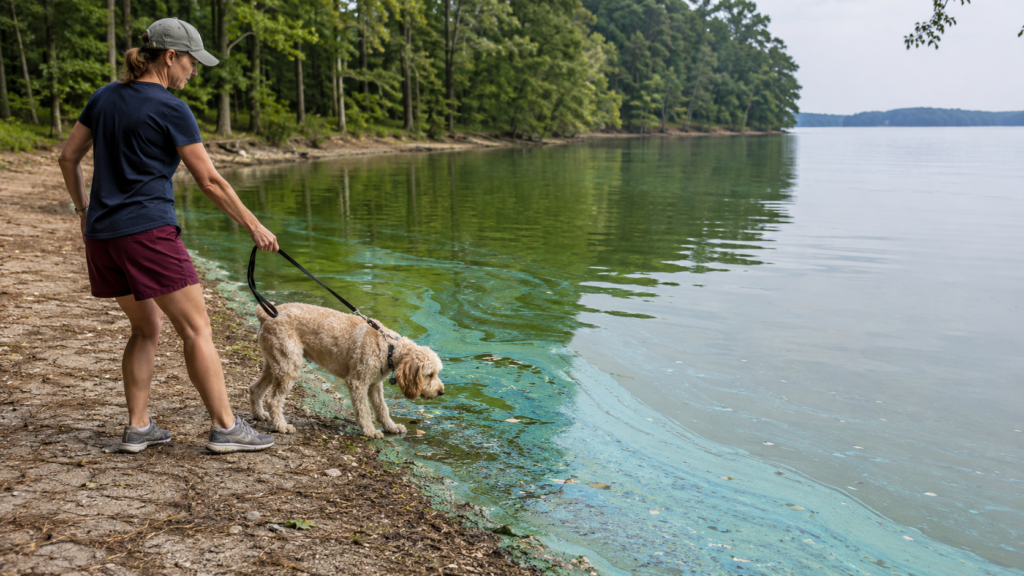
That is why local officials emphasized keeping pets away from the affected areas. Dogs are at higher risk because they may drink lake water, lick contaminated fur, or swim directly through scummy water without recognizing danger.
The CDC advises people to keep pets away from water that looks or smells bad. That includes water that appears discolored, scummy, dirty, or has a foul smell.
For Lake Allatoona visitors, that means a dog-friendly day at the lake can change quickly if the water looks wrong. A pet does not need to drink a large amount of contaminated water for the situation to become serious.
What People Should Watch For?
Health agencies generally advise avoiding water that looks bright green, blue-green, brown, red, cloudy, or scummy. Georgia EPD says blooms may look like pea soup or spilled green or blue-green paint, sometimes with thick floating mats.
CDC guidance says exposure to freshwater harmful algal blooms can cause symptoms when people touch the water, swallow it, or breathe in small droplets. Possible symptoms include rash, eye irritation, nose irritation, sore throat, and cough.
Local reporting also cited warnings about vomiting, diarrhea, and headaches in people exposed to toxic blue-green algae.
The difficulty is that people cannot reliably tell by sight whether a bloom is producing toxins. That is why the practical advice is not to inspect it closely or test it personally. It is to avoid the area and let water-quality monitoring guide the response.
Why the Bloom May Have Appeared?
Local officials told WSB-TV the drought likely contributed to the bloom and that the area may need substantial rain to help wash it away.
That explanation is plausible, but it should be understood as a likely contributing factor rather than a complete diagnosis. Harmful algal blooms can be influenced by several conditions, including heat, nutrients, stagnant water, low flow, and changing water levels.
Lake Allatoona is a reservoir, and the U.S. Army Corps of Engineers notes that the lake’s water depends on rainfall as it flows from the Blue Ridge Mountains into the project.
That means dry weather can matter. But so can where the bloom appears, how water circulates in coves and inlets, and how long conditions remain favorable for algae growth.
This is why lake conditions can look different from one spot to another. A marina cove can have visible scum while open water elsewhere appears normal.
What Lake Visitors Should Do Right Now?
The immediate advice is simple, even if the science behind algal blooms is more complicated.
If water looks discolored, smells bad, or has a surface film, stay out.
That applies to swimmers, boaters, anglers, and people walking dogs near the shoreline. It also applies to children, who may be more likely to splash, swallow water, or play close to the edge before adults notice a problem.
Visitors should also avoid letting pets drink from the lake in affected areas. If a dog swims through suspicious water, owners should keep the animal from licking its fur and contact a veterinarian if the pet appears sick.
Georgia EPD asks the public to use caution around possible blooms and provides reporting guidance for suspected harmful algal blooms.
That is the part that matters most for visitors: this is not a situation where guessing is helpful. If the water looks wrong, assume the risk is real enough to avoid.
The Public-Safety Challenge
Lake Allatoona is not a small local pond. It is a major recreation area used by boaters, families, anglers, marina customers, and visitors from across metro Atlanta and northwest Georgia.
That makes communication important.
According to WSB-TV, some marina workers said longtime lake users may recognize that bluish-green water is not normal. But renters and occasional visitors may not know what they are seeing.
That is a real gap in public safety. A warning can exist online, but people still need to understand it at the water’s edge. Signs, marina staff alerts, social media posts, and visible advisories all help reduce the chance that someone treats discolored water as harmless.
The challenge is especially sharp because blue-green algae does not look like the kind of danger people are trained to avoid. There may be no storm, no obvious spill, and no emergency scene. Just strange-looking water in a place people normally associate with recreation.
What Is Still Unclear?
There are still limits to what the public record tells us.
Officials have identified a bloom near Red Top Mountain Park Marina and said treated drinking water remains safe. But available public reporting does not yet provide a complete map of affected coves, how long the bloom may last, or whether toxin levels vary from one location to another.
That does not mean officials are withholding a major answer. It means algal blooms can shift, spread, fade, and reappear depending on conditions.
The more useful question for lake visitors is not whether every part of Allatoona is dangerous. It is whether the water in front of them looks suspicious.
If it does, the answer from public health agencies is consistent: stay out.
The Bottom Line
A blue-green algae bloom has been reported near Red Top Mountain Park Marina on Lake Allatoona, and officials are warning people and pets to avoid affected water.
The Cobb County-Marietta Water Authority says treated drinking water remains safe and that its water-quality monitoring is continuing.
That does not make the lake warning minor. Direct contact with a harmful bloom can make people sick, and CDC guidance says pets can become seriously ill or die within hours after swallowing toxins from harmful algae.
For now, the safest advice is also the simplest: if the water looks like spilled paint, smells foul, or appears scummy, do not swim in it, do not let pets near it, and do not drink it.
Officials say the bloom is being monitored. Visitors should treat affected coves and inlets as off-limits until conditions improve.