Aiman Tariq – Regional News Editor
Atlanta, GA –
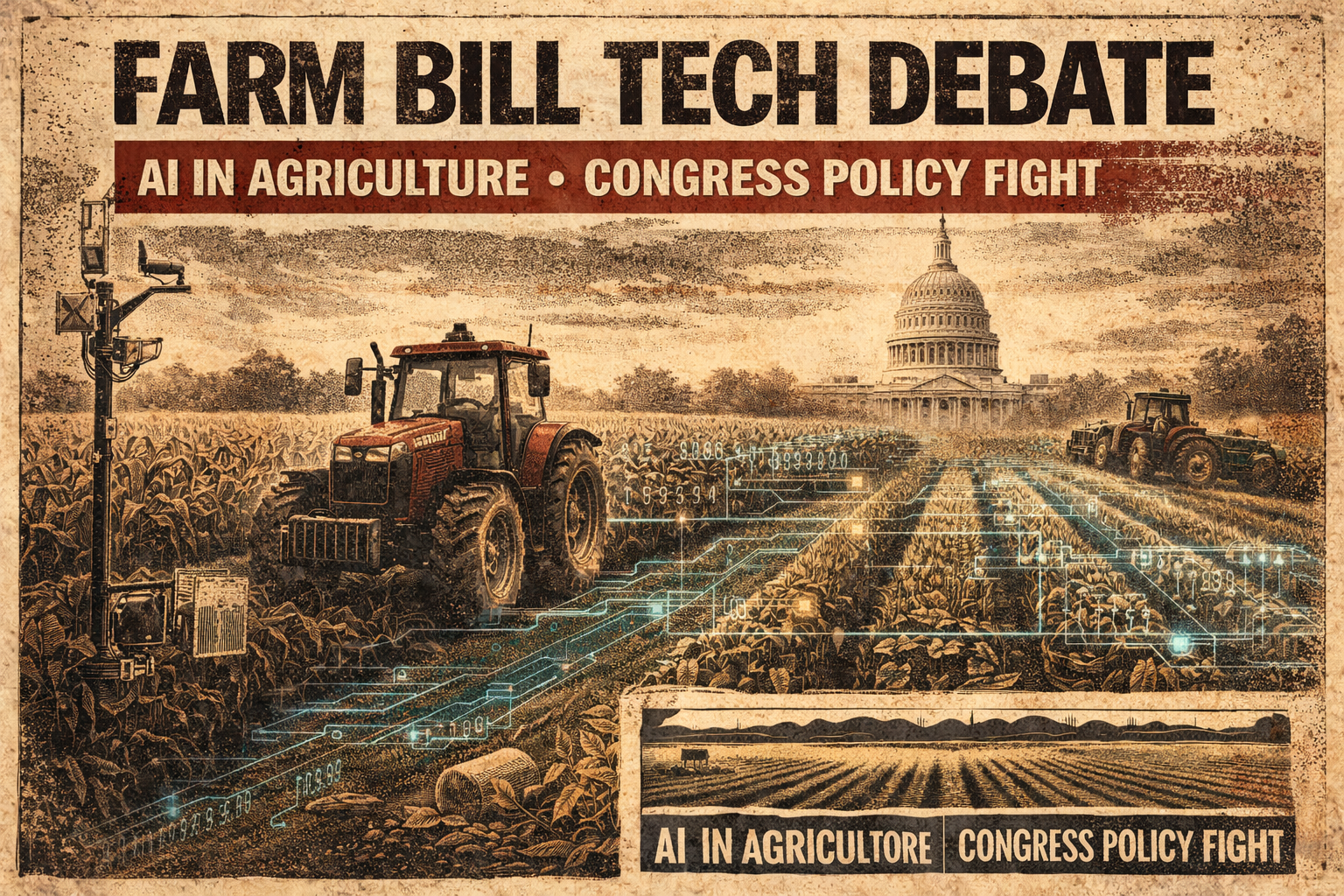
The latest debate over the farm bill is not just a Washington story. For Georgia, it has the potential to shape how producers manage risk, how conservation dollars are spent, and whether federal farm policy continues to reflect the realities of a state where agriculture and forestry remain central to the economy.
That matters because Georgia’s farm economy is not narrow. According to the University of Georgia’s 2024 Farm Gate Value report, the state’s total farm gate value topped $18.03 billion, with poultry and eggs accounting for $7.24 billion and row and forage crops adding another $2.81 billion. At the same time, the Georgia Farm Bureau says the state remains the nation’s top forestry state and notes that roughly one in seven Georgians works in agriculture, forestry, or a related field.
So when lawmakers argue over the next US farm bill, the question is not only what it means for commodity growers in the Midwest. It is also what it could mean for Georgia timber operators, peanut and cotton farmers, poultry producers, rural lenders, conservation programs, and local food systems.
Why Georgia Has a Stake in This Debate?
People are already aware of the broad outlines of the current House proposal. Farm Aid says the House Agriculture Committee voted 34-17 on March 5 to advance a new farm bill proposal, though the measure remains controversial and would still need to clear the full House, the Senate, and the president. Farm Aid also notes that the Senate Agriculture Committee has not yet released its own draft, leaving the timeline uncertain.
That uncertainty matters for Georgia because the existing 2018 law has already been stretched well past its original timeline. UGA’s agricultural economists have described the bill as a central safety net that affects not only farm income, but also conservation, nutrition, rural development, research, and crop insurance.
In other words, the bill is large enough to touch nearly every part of the rural economy. And in a state like Georgia, that reach extends well beyond traditional row-crop farming.
Why the Technology Fight Is Bigger in Georgia Than It May Look?
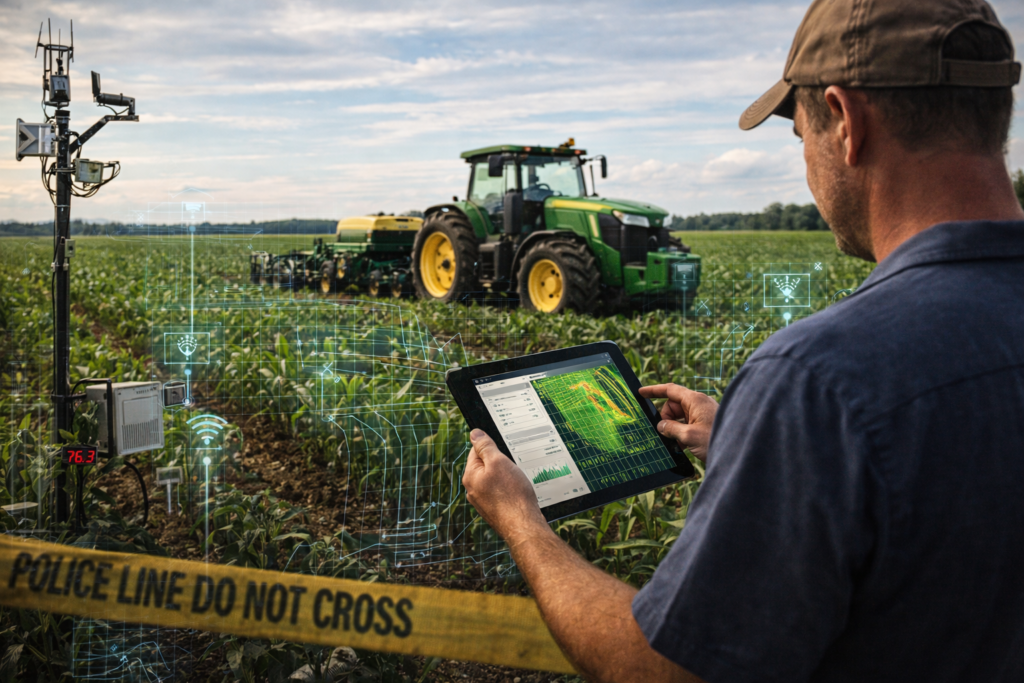
The current debate has drawn attention in part because of language around precision agriculture and AI-related farm technology. Commentary circulating around the proposal has argued that the bill could reimburse producers for up to 90 percent of certain technology adoption costs through EQIP-related conservation support.
That has prompted concerns from some farm advocates who say the incentives could strengthen the role of outside technology firms in day-to-day farm decision-making.
That concern may sound abstract until it is placed in a Georgia context.
Georgia agriculture is diverse, but it is also highly exposed to cost swings, weather pressure, and long supply chains. Producers already deal with expensive equipment, rising fuel and fertilizer costs, labor shortages, and increasingly sophisticated machinery.
A new subsidy structure that favors data-intensive systems could help some operations modernize. It could also deepen dependence on private software, subscription services, and equipment ecosystems that many growers do not fully control.
That does not make the technology push inherently bad. It does mean Georgia producers would likely feel both the benefits and the tradeoffs.
What It Could Mean for Georgia Farmers and Timber Producers
This is where the conversation becomes more practical.
Georgia’s farm economy includes peanuts, cotton, corn, poultry, cattle, specialty crops, and timber. WMAZ reported this month that Georgia farmers have been cautiously hopeful about long-awaited federal updates, especially around reference prices, crop insurance, and support tied to rising production costs.
The station noted that some producers have seen costs rise dramatically since the pandemic, even as commodity prices failed to keep pace.
For Georgia, that means the future of federal support is not only about abstract policy design. It is about whether farm programs reflect current input costs, whether risk-management tools remain usable, and whether rural communities see help flowing toward actual production needs instead of only toward the most capital-intensive technologies.
That question also matters for forestry. Georgia’s agricultural identity is often reduced to poultry, peanuts, or cotton, but forestry is deeply tied to the state’s rural economy. When federal policy shifts conservation incentives, research priorities, or rural development funding, those decisions do not stop at traditional crop fields.
Why This Is Not Just a Farm Story?
UGA’s public-facing explanation of the measure makes a useful point: the bill affects everyone who buys groceries, depends on nutrition programs, or cares about conservation and rural infrastructure. That is especially true in Georgia, where storm recovery, farm solvency, food prices, and environmental stewardship often overlap.
The same article notes that the bill covers a wide range of titles, including commodities, conservation, nutrition, rural development, forestry, energy, horticulture, and crop insurance. That is one reason debates over the farm bill tend to become sprawling. It is not one policy. It is a bundle of policies tied together under one giant federal framework.
That breadth also helps explain why so many groups are still fighting over what belongs in the next version and what does not.
The Georgia Question Is Really About Priorities
For Georgia readers, the most relevant question may be simpler than the legislative details suggest: does this version of the bill put money and policy attention where Georgia agriculture actually needs it?
Supporters of the draft argue that modernization, technology, and updated support tools are necessary if producers are going to stay competitive. Critics counter that some of those incentives may tilt too far toward large-scale, capital-heavy systems while leaving smaller and mid-sized operations more dependent on outside vendors and proprietary platforms.
That tension is part of what keeps farm bill negotiations so politically awkward. A measure can be pitched as pro-farmer and still leave major disagreements over which farmers benefit most, which programs lose leverage, and what kind of rural economy is being built.
That is also why calling any current draft a true bill in the common-sense political sense would be premature. The committee vote matters, but the larger legislative path remains unsettled, and the policy tradeoffs are still very much alive.
What Georgia and Augusta Readers Can Watch?
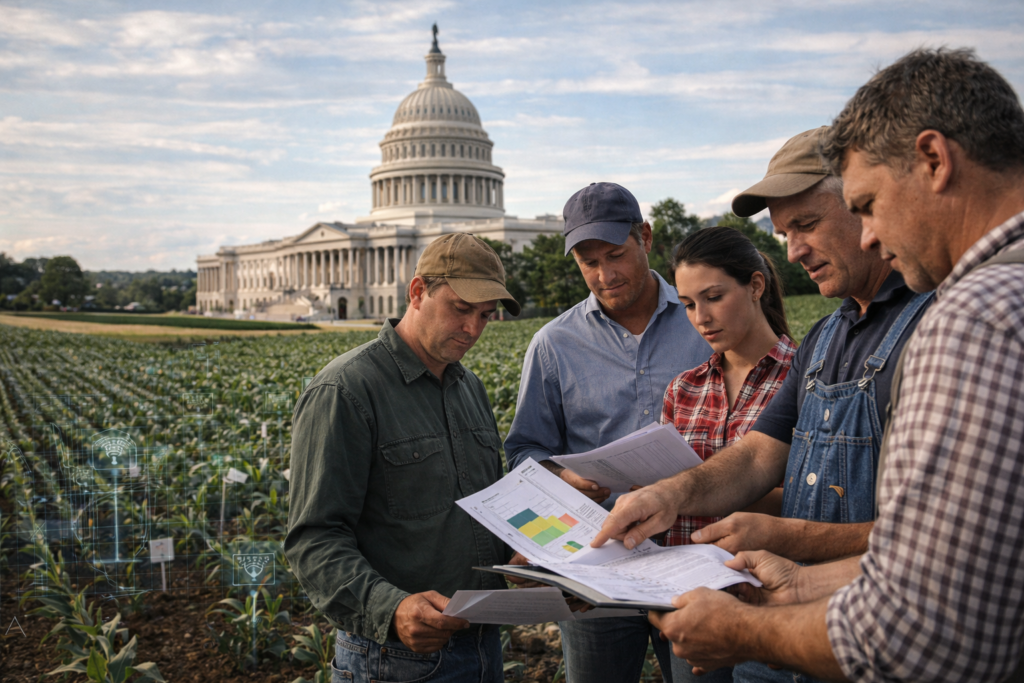
For Georgia, several issues deserve close attention as the debate continues:
- whether conservation and EQIP-related dollars tilt too heavily toward technology subsidies
- whether reference prices and risk protections reflect current farm economics
- whether forestry and rural-development priorities remain visible in the final legislation
- whether local and regional food systems receive enough support to matter on the ground
That last point is easy to miss in national coverage. But for readers interested in sustainable, local agriculture closer to home, Augusta already has working examples of community-based food networks through Augusta Locally Grown, which connects residents with local meats, fruits, and vegetables.
There is no Georgia-specific state farm bill that simply mirrors the federal one, but state and local food systems still rise or fall based on the broader policy environment created in Washington. Federal choices about conservation, crop insurance, credit, research, and rural development can ripple through Georgia counties long after the headlines move on.
What Happens Next?
Farm Aid says the House committee has moved its proposal forward, but the path from committee markup to final law remains uncertain. The Senate has not released its own version, and any final package would still need to survive cross-chamber negotiation before reaching the president’s desk.
So for now, the smartest way to read the debate is not as a settled outcome but as an argument over priorities — one that could carry very real consequences for Georgia agriculture if the final language stays close to the current House version.
The Bottom Line
Georgia has too much at stake to treat the farm bill as someone else’s fight.
In a state with an $18 billion-plus farm gate economy, a dominant forestry sector, and rural communities still dealing with cost pressure and weather shocks, federal farm policy shapes more than subsidies. Policy decisions shape resilience, drive investment, and leave some groups exposed when markets turn.
That does not mean every technology provision is a mistake, or that every critic is right. It does mean Georgia readers should look past the slogans.
The real question is whether the next federal bill helps producers stay on the land, keeps rural communities viable, and supports the broad agricultural base the state actually has — not just the version of farming that looks best in a committee summary.
To make an impact or follow advocacy around the bill, readers can learn more — and donate if they choose — through Farm Aid’s farm bill updates page.