By Charles Rollins, Publisher
Analysis / Local accountability
Editor’s note: This article discusses allegations involving human trafficking, child sexual exploitation, sexual assault, missing juveniles, child neglect, narcotics investigations and pending criminal cases. It does not identify minor victims. Charges, warrants and indictments are allegations unless and until proven in court. No local hotel named in this article is being accused by this article of civil liability under the Trafficking Victims Protection Reauthorization Act, or TVPRA. The local incidents are included as public-facing examples showing why property-specific investigation and record-building are warranted. This article is analysis and commentary, not legal advice.
Augusta’s worst repeat-risk hotels do not need another warning. They need a paper trail.
The familiar cycle is simple enough. A hotel becomes notorious. Police show up. A headline lands. A property changes hands, rebrands, changes managers or keeps operating through another company. Then the same building continues doing business as if the danger were attached only to the old paperwork.
That cycle is not inevitable.
A recent Atlanta-area trafficking verdict, a new Eleventh Circuit opinion and a related insurance ruling point toward a harder strategy: make the risk follow the building, the operator, the owner, the franchise relationship, the insurance file and the record.
In July 2025, an Atlanta jury in the Northern District of Georgia awarded $40 million to “J.G.,” a Georgia woman who survived being sex trafficked at United Inn, an Atlanta-area hotel. The jury awarded $10 million in compensatory damages and $30 million in punitive damages under the TVPRA. According to the a law firm representing the plaintiff, former DeKalb County vice detectives testified that United Inn was one of the top five sex-trafficking locations in DeKalb County, and testimony described a night manager who helped traffickers switch rooms, bought drugs from them and warned them when law enforcement might be nearby.1
That verdict is not an Augusta case. But it’s a story Augusta knows all too well.
The Eleventh Circuit’s Roadmap needs to be applied in Augusta, now.
In Doe #1 v. Red Roof Inns, Inc., the Eleventh Circuit held that a TVPRA beneficiary claim requires a plaintiff to plausibly allege four basic things: that the defendant knowingly benefited; that the benefit came from taking part in a common undertaking or enterprise involving risk and potential profit; that the undertaking violated the TVPRA; and that the defendant had actual or constructive knowledge of the TVPRA violation. In that 2021 case, the court held that the plaintiffs had not adequately pleaded claims against several franchisors. The court’s warning was blunt: “Observing something is not the same as participating in it.”4 That sentence is important for fairness. It prevents the lazy argument that every hotel where trafficking happens is automatically liable.
But the Eleventh Circuit’s March 2026 opinion in A.G. v. Northbrook Industries, Inc. and related consolidated appeals is the more important roadmap for Augusta. The court did not make hotel liability easy. It made the evidence question sharper. It’s only been a couple of months since that decision was handed down, but there is no reason to delay taking action now that we have a clear map showing us when and how to take action, and the information that’s needed to determine much of that is already in the hands of various local law enforcement agencies.
The court held that merely renting a hotel room to a trafficker, even with actual or constructive knowledge of trafficking, is not enough by itself. There must be “something more” than an ordinary arms-length room rental. But the court also held that victims had produced enough evidence to let a jury consider TVPRA claims against two Atlanta-area hotel operators. That “something more” is precisely within the scope of investigations into local hotels with a nexus to criminal activity. If a hotel says they are unaware that a major drug-trafficking operation was underway, that should be followed up on, right? Shouldn’t the same be true with respect to the trafficking of our children?
At United Inn, two 17-year-old girls were trafficked through several hotels, but their traffickers returned to United Inn three times. The Eleventh Circuit pointed to evidence that traffickers spent 15 to 20 minutes each day talking with front-desk staff; that a front-desk employee let the girls back into a room after a trafficker called, even though the girls produced no identification and were not on the reservation; that United Inn had failed to post a required anti-trafficking notice; that police had recommended more security; and that the hotel had a documented history of prostitution and narcotics activity. That was enough, the court said, for a reasonable jury to infer personal support of a sex-trafficking operation.
At Hilltop Inn, the court pointed to different evidence: a registered sex offender who was a weekly renter; a second next-door room rented to him by the night; instructions that housekeeping not clean the second room; former employee testimony that sex offenders were placed in a particular area of the hotel; and testimony that management viewed prostitution as part of the hotel’s revenue environment. Again, the court said a jury could hear the claim.
Those facts should matter to Augusta because they show what civil accountability is built from. Not slogans. Not moral panic. Not bad reputation standing alone. Records.
The same opinion also matters for Georgia premises-liability claims. The Eleventh Circuit rejected the idea that two minor trafficking victims were automatically mere licensees because they were being trafficked. They were also guests of paying traffickers, used hotel services and bought items from the lobby convenience store. “They were also victims of illegal child sex trafficking at United Inn,” the court wrote. “One does not negate the other.”5
That sentence belongs in every Augusta file involving a child exploited through a hotel room.
Why Augusta belongs in this conversation
The Georgia Attorney General’s office has already recognized that trafficking enforcement cannot be treated as an Atlanta-only problem.
In April 2025, Attorney General Chris Carr announced that his Human Trafficking Prosecution Unit was expanding to Augusta with one new prosecutor and two new investigators assigned to regional work beginning May 1. The office identified the new prosecutor as former Toombs Judicial Circuit Assistant District Attorney Megan Adams and the investigators as Patrick Brown and William Loomer. Carr tied the expansion to a broader regional strategy and said Georgia would pursue both buyers and sellers because “Georgia’s children are not for sale.”6
The state later connected that Augusta-region expansion directly to Columbia County trafficking indictments.
In January 2026, Carr’s office announced indictments in two Columbia County cases involving underage females who had previously been reported missing and recovered by the AG’s team and area law enforcement. In one case, a Grovetown man was accused of purchasing and transporting a 16-year-old who had been reported missing out of Richmond County. In another, Monica Daughtery and Keshawn Bennett, both of Augusta, were accused of financially benefiting from the sale of a 16-year-old who had been reported missing out of Clayton County. According to the AG’s release, Daughtery and Bennett allegedly harbored and maintained the child for commercial sex by renting rooms at several area hotels. The AG’s release included the required caution: indictments contain allegations, defendants are presumed innocent, and the government bears the burden of proof at trial.7
That is the strongest local public anchor for the hotel-liability discussion. It does not prove any hotel is liable. It does show that the state’s own trafficking prosecutors are seeing hotel rooms in the fact pattern of Augusta-region missing-child trafficking cases.
WGAC had reported the October 2025 arrest of Daughtery at the Comfort Inn & Suites on Jimmie Dyess Parkway, where the station said the 16-year-old victim, reported missing from Clayton County, was found with the accused trafficker. WGAC also reported that the arrest warrant alleged Daughtery collected about $500 per day from the victim while she was being trafficked for sexual servitude.8
Again, that is not a civil-liability finding against the hotel. It is a public-facing example of why the hotel setting cannot be treated as incidental.
Other local reporting points in the same direction and should be read with the same caution. In March 2026, AugustaCrime.com reported that James Raleigh Bryant, a 58-year-old Athens man, had been arrested after investigators alleged that he transported a 15-year-old girl to America’s Best Value Inn and paid her for sex. The report said Bryant faced charges including trafficking of persons for sexual servitude, aggravated child molestation, enticing a child for indecent purposes and statutory rape.9
In February 2024, AugustaCrime.com reported felony charges after two juvenile girls, ages 14 and 15, were allegedly sexually assaulted at the Quality Inn on Gordon Highway. The article reported that family members were alerted to a livestream, contacted the hotel, and that a clerk went to the room before the girls ran out. That is not described here as a trafficking case. It is included because it is a child-safety and hotel-risk example involving minors, a room rental and a staff-visible emergency.10
In March 2026, AugustaCrime.com reported that five children, ages 3 to 12, were removed from unsafe living conditions at a Super 8 on Washington Road after a DFACS caseworker requested sheriff’s-office assistance. Deputies reportedly found the room cluttered with trash, flies, odor and unsanitary conditions; the children were transported for medical evaluation and custody was transferred to DFACS. That is not a trafficking case. It belongs in this discussion only because it shows how motel rooms can become part of Augusta’s child-welfare emergency housing landscape.11
In June 2025, AugustaCrime.com reported that a Richmond County narcotics investigation led to the arrest of a suspected drug trafficker at the Quality Inn on Gordon Highway and the seizure of fentanyl, methamphetamine, cocaine, marijuana and cash from a hotel room. In May 2026, WRDW/WAGT reported that deputies investigating a drug-trafficking organization executed a search warrant at the West Bank Inn on Washington Road and seized additional marijuana from a room there, after earlier airport arrests in the same operation. These are narcotics cases, not human-trafficking cases. They are relevant only to the narrower public-safety point that some hotel properties can become recurring nodes for high-risk criminal activity if ownership, management and enforcement systems fail.12
That is the responsible line. But it should not be the end of the story.
Some of the local examples involve alleged child sex trafficking. Some involve child sexual exploitation. Some involve child welfare. Some involve narcotics. They should not be collapsed into one category. But together, they show why Augusta should build property-specific records, and have a comprehensive plan in place, before the next child is found in a hotel room.
The hotel is not always just the backdrop
The hospitality industry has long been part of the trafficking discussion because hotels and motels offer anonymity, transient occupancy, cash-friendly transactions, easy access to highways and a steady stream of rooms that can be used for short-term exploitation. A 2025 American Bar Association framework article described hotels as favored venues for traffickers and argued that the industry increasingly functions as a gatekeeper rather than a passive backdrop. It also identified red flags that frontline staff may be positioned to see: minors with unrelated adults, frequent visitors to one room, repeated linen requests paired with refused housekeeping, little luggage, cash, condoms or drug paraphernalia, visible distress, injuries or signs of control.13
The point is not that every front-desk clerk becomes a detective. The point is that hotels are businesses that sell controlled access to private rooms. They decide who gets keys, who is listed on reservations, whether identification is required, whether housekeeping enters, whether security exists, whether cameras work, whether notices are posted, whether staff are trained, whether complaints are logged and whether repeat patterns are escalated.
That is why the Eleventh Circuit’s “something more” standard matters. A single room rental is not enough. A reputation is not enough. But staff interaction, room-access decisions, housekeeping patterns, ignored police recommendations, failure to post required notices, cash practices, known prostitution or narcotics activity, repeated law-enforcement calls and management indifference can change the question.
At that point, a hotel is no longer merely where something happened. It may become part of how it was allowed to continue.
The insurance question
The most overlooked part of Augusta’s strategy is insurance.
A 2025 Northern District of Georgia order in Liberty Mutual Fire Insurance Company v. Red Roof Inns, Inc. shows why insurance cannot be treated as an afterthought. Liberty Mutual sought a declaration that it had no duty to defend or indemnify Red Roof-related defendants in underlying TVPRA lawsuits. The court held that Liberty Mutual had a duty to defend the remaining underlying suit. It reasoned that allegations based on constructive knowledge and “should have known” language sounded in negligence and could fall within policy language covering bodily injury caused by an occurrence. The court also rejected the argument that Georgia public policy automatically barred coverage, emphasizing the difference between intentional conduct and an intent to injure.14
The practical lesson is significant: TVPRA and premises-liability litigation can force insurers into the conversation. Once insurers are in the conversation, underwriting, renewals, exclusions, defense costs, settlement costs, claims history, prior notice and property conditions all matter.
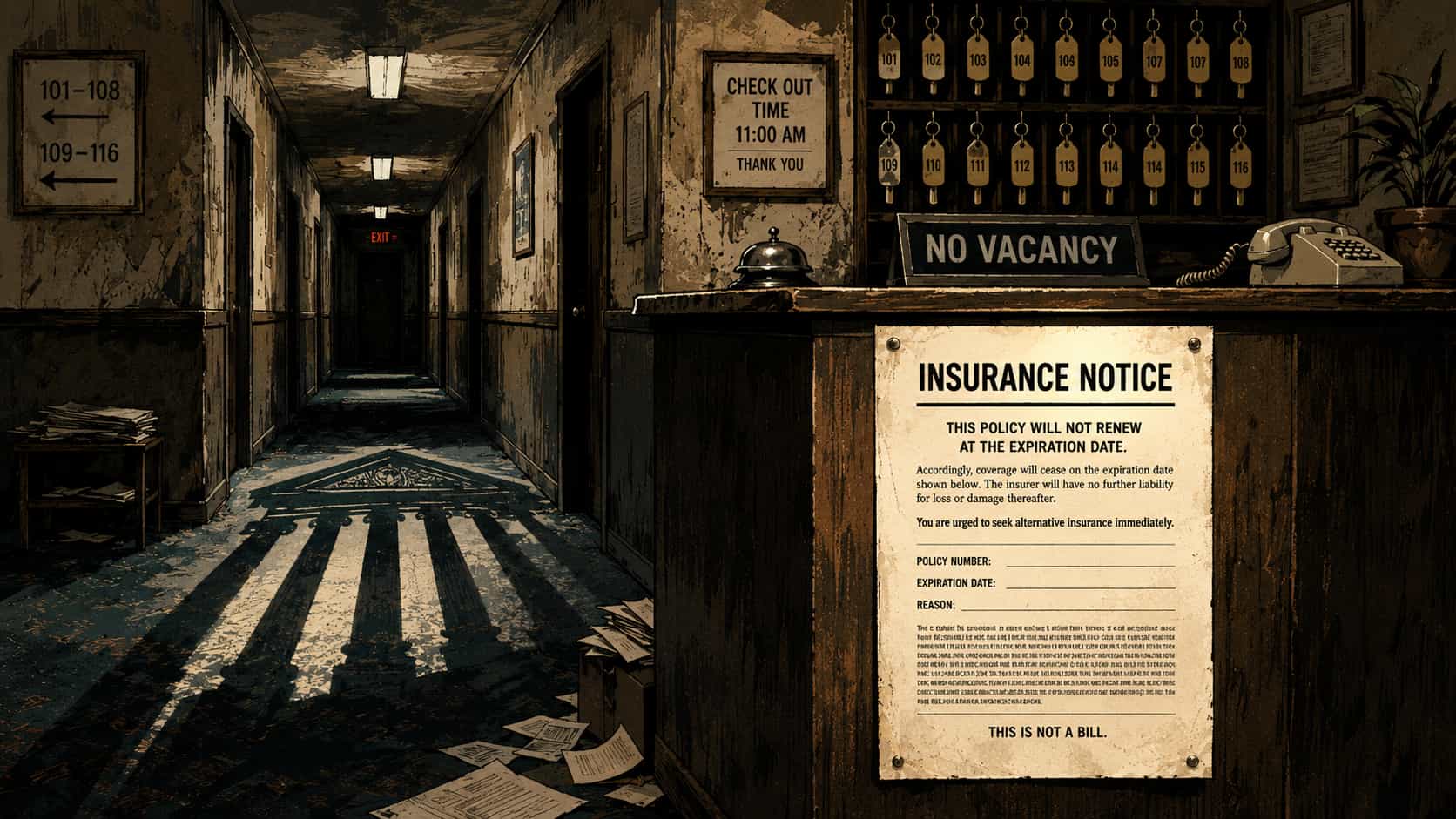
That is where Augusta’s current public-safety approach appears weakest. If a dangerous hotel can change ownership, obtain a cheap new insurance policy and reopen with the same risk profile, the public has not been protected. The paper changed. The building remained.
Civil litigation can attack that reset button.
What Augusta should build now
Augusta should not start by declaring hotels liable. It should start by building the records that would allow survivors, prosecutors, insurers and courts to separate rumor from proof.
For repeat-risk properties, Augusta-Richmond County should know the basics: calls for service, incident reports, missing-child recoveries, trafficking arrests, sexual-assault reports, narcotics cases, code violations, fire and health inspections, nuisance complaints, ownership changes, business-license history, franchise relationships, manager identities, anti-trafficking notice compliance, staff training records, security-camera practices, prior lawsuits, insurance certificates and prior notices to management.
That is not just a law-enforcement file. It is a civil-accountability file.
When a child is recovered from a hotel room, when a missing juvenile is found at a motel, when repeated police calls show the same property appearing again and again, the question should not end with the arrest. The next questions should be: Who owned the property? Who operated it? Who managed the front desk? What did staff see? What did management know? What did the insurer know? Was there prior notice? Were rooms being rented in suspicious patterns? Were minors entering with unrelated adults? Were guests refusing housekeeping while requesting linens? Were there repeated visitors to a single room? Were anti-trafficking notices posted as required? Were police recommendations ignored?
Those are the facts that matter under the law.
The Attorney General’s Augusta expansion should make that work easier, not optional. Carr’s office says the Human Trafficking Prosecution Unit is based in Atlanta with regional satellite prosecutors and investigators in Macon and Augusta. The office says the unit has secured more than 70 convictions and rescued or assisted more than 200 children since its creation in 2019.15
That state-level capacity should be matched locally with a hotel-trafficking accountability protocol.
First, identify repeat-risk properties from public records and law-enforcement data without publicly branding them as liable. Second, preserve evidence when missing children, trafficking allegations, sexual assaults, narcotics activity or child-welfare emergencies intersect with hotel rooms. Third, create a referral pathway so survivors are connected with qualified civil counsel, not treated only as witnesses in criminal cases. Fourth, force ownership, operation and insurance questions into the record before a troubled property quietly reopens under another name.
This is not a substitute for criminal prosecution. It is not a substitute for foster-care reform, emergency housing, addiction treatment, victim services or competent code enforcement. It is one missing tool in a city that keeps watching hotels appear in the same kinds of stories.
Do not confuse caution with passivity
There are real legal risks in writing, litigating and talking about this issue carelessly.
A hotel can be a crime scene without being a civil defendant. A single allegation does not prove knowledge. A single room rental does not prove participation in a trafficking venture. A property’s poverty, age or clientele should not be treated as evidence of trafficking. Extended-stay residents should not be stigmatized because Augusta has failed to build enough stable housing. And no article, lawsuit, press conference or task force should identify minor victims or publish details that make them identifiable.
But caution is not passivity.
The Eleventh Circuit has now told litigants what “something more” can look like: personal support, repeated staff interaction, suspicious room-access practices, ignored security recommendations, failure to post required notices, staff-visible red flags, management policies that accommodate exploitation and a record showing the business knew or should have known what was happening.
Augusta should be documenting those facts before the next child is found in a hotel room.
The Atlanta verdict shows the financial stakes. The 2026 Eleventh Circuit opinion shows the evidentiary roadmap. The Liberty Mutual order shows why insurance can become part of the leverage. The Attorney General’s Augusta expansion shows the state already sees the region as important to Georgia’s trafficking fight. The local reporting shows why hotels and motels cannot be left out of the conversation.
Now Augusta has to decide whether it wants to keep reacting property by property, headline by headline, or whether it wants to build a record strong enough to make the economics change.
Because if a trafficking-tolerant hotel can simply change hands, buy a new policy and reopen, the city has not shut anything down. It has only watched the paperwork move.
If you or someone you know has been a victim or survivor of human trafficking, help is available. To report suspected human trafficking in Georgia, call the Statewide 24-Hour Human Trafficking Hotline at (866) 363-4842. If someone is in immediate danger, call 911 or local law enforcement. For confidential national help, call the National Human Trafficking Hotline at 1-888-373-7888, TTY 711, text 233733, or use the hotline chat at humantraffickinghotline.org.16
Notes
- Finch McCranie LLP, “Atlanta’s Finch McCranie, LLP Wins Largest Sex Trafficking Verdict in U.S. History: $40 Million Against Atlanta-Area Hotel,” PR Newswire, July 17, 2025, https://www.prnewswire.com/news-releases/atlantas-finch-mccranie-llp-wins-largest-sex-trafficking-verdict-in-us-history-40-million-against-atlanta-area-hotel-302507371.html. The release is from plaintiffs’ counsel; the underlying verdict form, judgment and post-trial docket should be reviewed for follow-up reporting. ↩︎
- 18 U.S.C. § 1595, civil remedy, Legal Information Institute, https://www.law.cornell.edu/uscode/text/18/1595. ↩︎
- 18 U.S.C. § 1591, sex trafficking of children or by force, fraud or coercion, Legal Information Institute, https://www.law.cornell.edu/uscode/text/18/1591. ↩︎
- Doe #1 v. Red Roof Inns, Inc., 21 F.4th 714, 723–27 (11th Cir. 2021). ↩︎
- A.G. v. Northbrook Industries, Inc., Nos. 25-10816, 25-10829 & 24-13294, slip op. (11th Cir. Mar. 30, 2026). ↩︎
- Georgia Attorney General’s Office, “Carr Expands Regional Team in Augusta with New Human Trafficking Prosecutor and Investigators,” April 14, 2025, https://law.georgia.gov/press-releases/2025-04-14/carr-expands-regional-team-augusta-new-human-trafficking-prosecutor-and. ↩︎
- Georgia Attorney General’s Office, “Carr Indicts Three in Columbia County for Trafficking of Missing Teens,” Jan. 5, 2026, https://law.georgia.gov/press-releases/2026-01-05/carr-indicts-three-columbia-county-trafficking-missing-teens. ↩︎
- Mary Liz Nolan, “Augusta Woman Charged In Human Trafficking Case,” WGAC, Oct. 22, 2025, https://wgac.com/2025/10/22/augusta-woman-charged-in-human-trafficking-case/. ↩︎
- Greg Rickabaugh, “58-Year-Old Arrested in Richmond County Child Sex Trafficking Investigation,” AugustaCrime.com, March 20, 2026, https://augustacrime.com/58-year-old-arrested-in-richmond-county-child-sex-trafficking-investigation/. ↩︎
- Greg Rickabaugh, “Sex Assault on Underage Girls Goes Live on Social Media from Augusta Hotel,” AugustaCrime.com, Feb. 6, 2024, https://augustacrime.com/sex-assault-on-underage-girls-goes-live-on-social-media-from-augusta-hotel/. ↩︎
- Greg Rickabaugh, “Five Children Rescued From Filthy Motel Room; Mother Faces Multiple Charges,” AugustaCrime.com, March 20, 2026, https://augustacrime.com/five-children-rescued-from-filthy-motel-room-mother-faces-multiple-charges/. ↩︎
- Greg Rickabaugh, “Pounds of Drugs Worth $650K Seized in Augusta Hotel Bust,” AugustaCrime.com, June 27, 2025, https://augustacrime.com/pounds-of-drugs-worth-650k-seized-in-augusta-hotel-bust/; WRDW/WAGT Staff, “Deputies make high-flying weed-trafficking bust in Augusta,” May 13, 2026, https://www.wrdw.com/2026/05/13/deputies-make-high-flying-weed-trafficking-bust-augusta/. ↩︎
- Nadeem Bezar, “Human Trafficking and Hotel Liability: A Framework for Civil Accountability,” The Judges’ Journal, American Bar Association, July 24, 2025, https://www.americanbar.org/groups/judicial/resources/judges-journal/2025-summer/human-trafficking-hotel-liability-framework-civil-accountability/. ↩︎
- Liberty Mutual Fire Insurance Company v. Red Roof Inns, Inc., No. 1:23-cv-02047-LMM, 2025 WL 2685867 (N.D. Ga. Aug. 15, 2025). ↩︎
- Georgia Attorney General’s Office, “Human Trafficking,” https://law.georgia.gov/key-issues/human-trafficking; Georgia Attorney General’s Office, “Carr Indicts Three in Columbia County for Trafficking of Missing Teens,” Jan. 5, 2026, https://law.georgia.gov/press-releases/2026-01-05/carr-indicts-three-columbia-county-trafficking-missing-teens. ↩︎
- Georgia Attorney General’s Office, “Human Trafficking,” https://law.georgia.gov/key-issues/human-trafficking; National Human Trafficking Hotline, “Get Help,” https://humantraffickinghotline.org/en. ↩︎