
Aiman Tariq – Regional News Editor
Atlanta, GA –
Georgia lawmakers are again moving to reshape how elections are run in the state. This time, the debate is less about whether to use paper ballots and more about how quickly that change should happen.
According to reporting from WABE, a proposal requiring a rapid transition to hand-marked paper ballots cleared the Georgia Senate on a party-line senate vote, setting up a conflict with a competing House plan that would delay the shift until 2028.
The bill’s passage signals momentum for a long-debated change in Georgia’s voting system. But it also raises a more practical question: whether a system used statewide for years can be replaced in a matter of months without creating new risks.
What the Senate Bill Would Do?
The measure passed by the georgia state senate would require voters to fill out paper ballots by hand, replacing the touchscreen system currently used across the state.
Instead of selecting candidates on electronic machines, voters would mark ovals on printed ballots. Those ballots would then be scanned and counted.
Supporters say the change improves transparency because voters can directly see their selections.
Sen. Greg Dolezal, a Republican from Cumming, said on the Senate floor that most Americans already vote using hand-marked paper ballots and that Georgia should align with that approach.
But even among those who support paper ballots in principle, the timeline has become the central issue.
Why Is the Timing Driving the Debate?
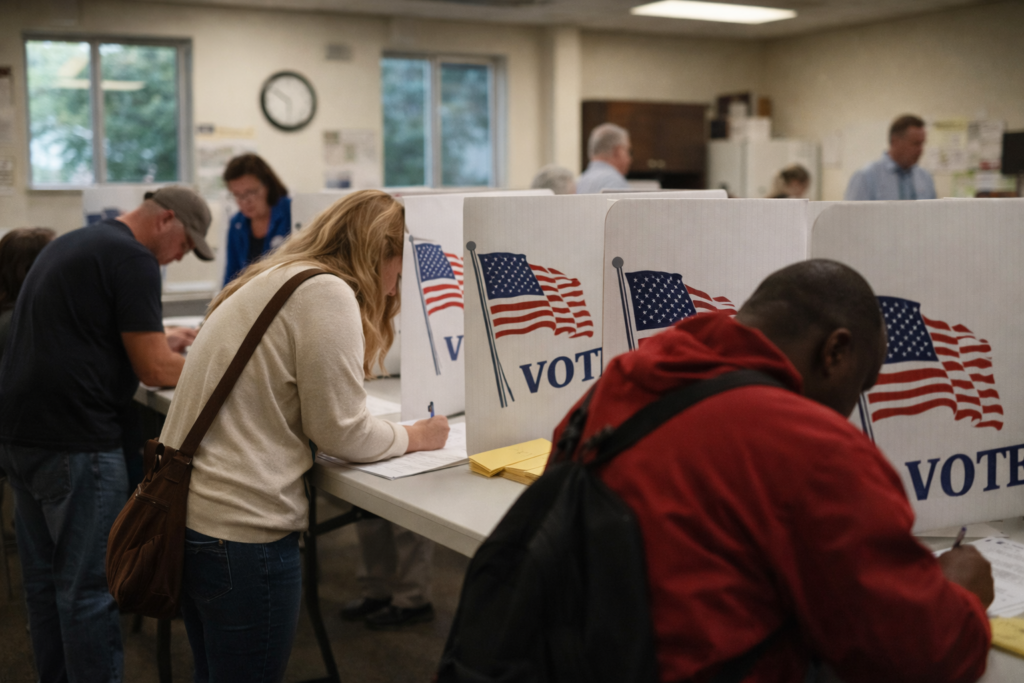
The Senate bill would require the transition to happen before the 2026 elections — a timeline election officials say could be difficult to manage.
Joseph Kirk, president of the Georgia Association of Voter Registration and Election Officials, said in comments reported by WABE that making such a change quickly would be “irresponsible and unrealistic.”
“It’s just not enough time,” Kirk said, pointing to the need for training, testing, and logistical preparation before a major election cycle.
That concern reflects a broader pattern in election administration: system changes are often debated in terms of security or trust, but implementation tends to hinge on capacity — staffing, training, and infrastructure.
That’s why two things can be true at once: a shift to paper ballots may address some concerns about transparency, and the speed of the proposed rollout may introduce new operational challenges.
The Competing House Proposal
The Senate’s plan is not the only option on the table.
A competing proposal in the Georgia House would delay the transition to paper ballots until 2028, allowing additional time to develop and deploy new systems.
That version would rely on ballot-on-demand printers, which produce ballots when voters arrive, rather than requiring large numbers of ballots to be printed and stored in advance.
The difference between the two approaches is not just technical — it reflects two competing ideas about risk.
- The Senate approach emphasizes immediate change.
- The House approach emphasizes gradual transition.
For georgia voters, the outcome will determine not only how ballots are cast but how smoothly elections are administered in the near term.
Security, Trust, and Competing Claims
The debate over Georgia’s voting system has been shaped in part by long-running concerns about election security.
Some critics of the current touchscreen system argue that it is less transparent because voters cannot directly verify how their selections are recorded in machine-readable formats such as QR codes.
Supporters of the existing system, including many election officials, say Georgia’s elections have been repeatedly audited and found to be accurate, and that claims of widespread fraud have not been substantiated.
That divide has led to a situation where both sides are arguing about trust — but using different definitions of it.
For some, trust comes from a physical, hand-marked ballot. For others, it comes from tested systems and verified outcomes.
Practical Challenges Beyond the Headlines
The mechanics of switching systems quickly are complex.
The Senate proposal would require millions of ballots to be printed ahead of time and stored securely until Election Day.
Critics say that introduces new risks, including potential human error and questions about chain-of-custody for large quantities of printed ballots.
Sen. Kim Jackson, a Democrat from Stone Mountain, raised concerns that preprinting ballots could create vulnerabilities.
“We have built in all kinds of opportunities for human error,” Jackson said during debate, according to WABE.
Those concerns do not necessarily mean the system would fail. But they highlight the difference between designing a system and executing it at scale.
That gap — between policy and practice — is where many election disputes tend to emerge.
Additional Provisions in the Bill
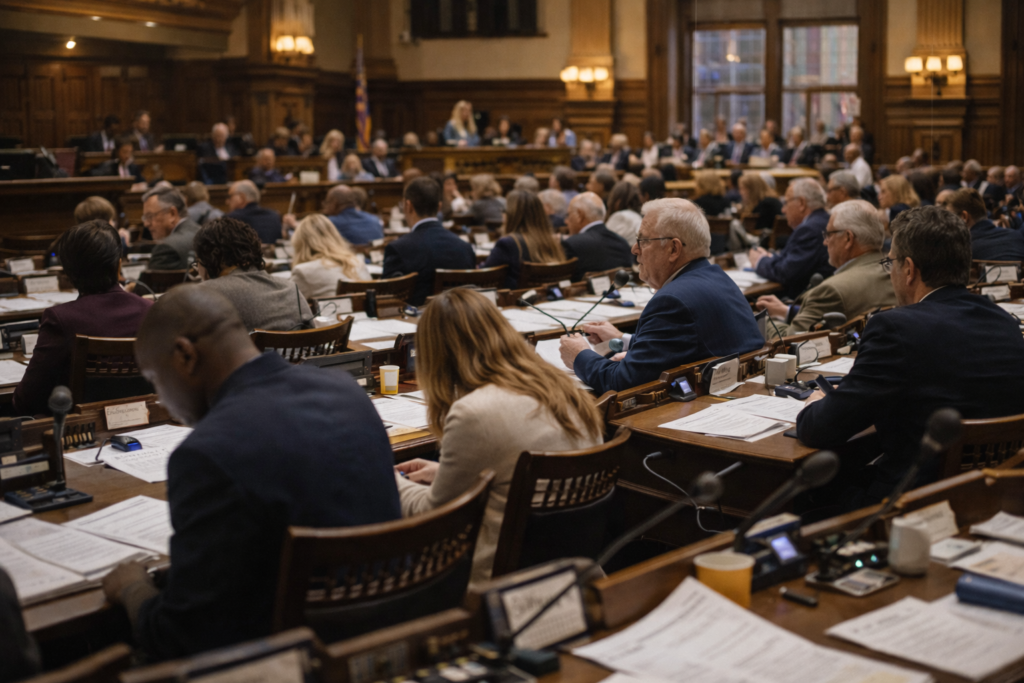
The Senate measure includes several other changes beyond ballot format.
Among them:
- Fines for county governments that fail to cancel outdated voter registrations
- Requirements to publish voter lists by midnight on Election Day
- Mandatory hand recounts in certain circumstances
Each of those provisions adds another layer to the debate about how elections should be managed and verified.
Some supporters see these steps as increasing accountability. Critics argue they could increase administrative burden and introduce new points of failure.
What Happens Next?
The legislation now heads toward a potential showdown between the Senate and House versions, with only limited time left in the current legislative session.
Lawmakers will need to decide whether to adopt the Senate’s faster timeline or the House’s more gradual approach.
That decision will likely determine whether Georgia’s election system changes this year or remains largely in place until the next presidential cycle.
The outcome may also shape how future election reforms are approached — whether through rapid shifts or phased transitions.
The Bottom Line
The Georgia Senate has approved a plan to move quickly to hand-marked paper ballots, passing the measure in a party-line senate votes split that reflects ongoing divisions over election policy.
Supporters argue the change would increase transparency and align Georgia with voting practices used elsewhere.
Critics do not necessarily reject paper ballots, but question whether a rapid transition can be implemented without introducing new risks.
For georgia voters, the debate is less about whether paper ballots are used and more about how — and how soon — the state should make the switch.
As lawmakers work to reconcile competing proposals, the central question remains the same: not just what system Georgia should use, but whether the state can change it quickly without disrupting the elections it is meant to support.