Aiman Tariq – Regional News Editor
Brantley County, GA –
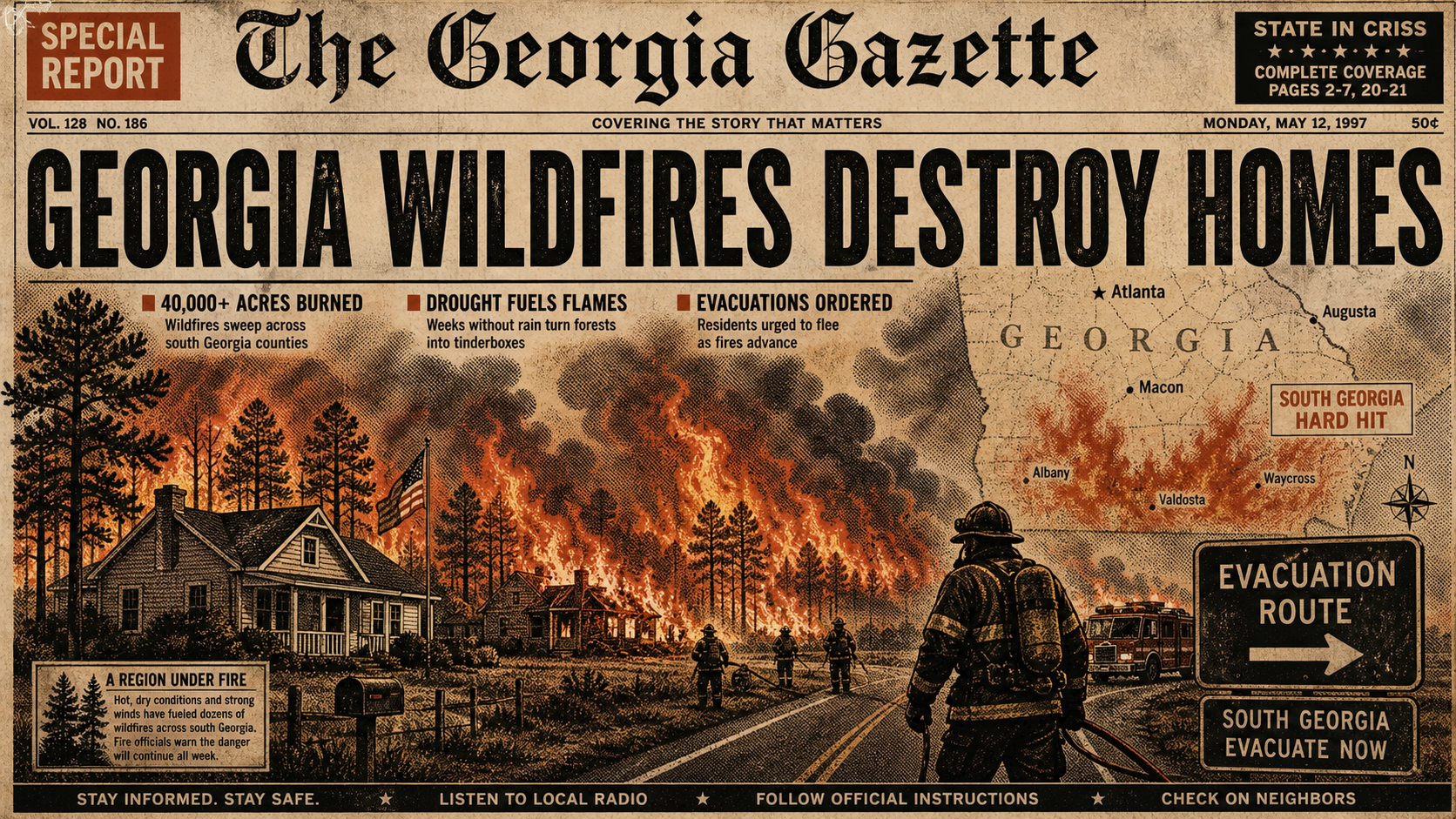
Two major wildfires in south Georgia have destroyed more than 120 homes and burned tens of thousands of acres, as extreme drought, wind and dry fuel continue to make containment difficult for firefighters.
According to state and national reporting, the Highway 82 Fire in Brantley County and the Pineland Road Fire in Clinch and Echols counties have become the central focus of Georgia’s wildfire response, with evacuations ordered in some communities and officials warning residents not to wait if they are told to leave.
That is the simplest version of the story: two large fires, major property loss, and dangerous conditions.
The more accurate version is that south Georgia is dealing with several problems at once — drought, wind, rural evacuation challenges, strained fire crews, and fires moving through areas where homes, pine forest and debris can sit close together.
Two Fires Drive Most of the Damage
The Highway 82 Fire has been burning in Brantley County, while the Pineland Road Fire has burned farther southwest near the Georgia-Florida line in Clinch and Echols counties.
The Associated Press reported that the Highway 82 Fire had destroyed at least 87 homes, while the Pineland Road Fire had destroyed at least 35 homes. Together, the fires had destroyed more than 120 homes and burned more than 40,000 acres.
Those numbers have continued to shift as crews update acreage and containment.
The Georgia Forestry Commission’s later updates placed the Pineland Road Fire at more than 32,000 acres and the Highway 82 Fire at more than 22,000 acres, with containment improving but both fires still requiring active response.
That is why readers should treat any single number as a snapshot, not a final count.
In fast-moving wildfire response, acreage, containment, damaged structures and evacuation zones can change quickly. The useful question is not only how large the fires are, but whether conditions are improving fast enough to keep more homes out of danger.
Officials Urge Residents to Leave When Ordered
Local officials have been blunt with residents in evacuation zones.
Brantley County Manager Joey Cason urged people to leave if they were ordered to evacuate, warning that the fire was moving quickly and that officials did not have full control over where it would move next, according to CBS and AP reporting.
That kind of warning matters because evacuation decisions can be difficult in rural areas.
Some residents are reluctant to leave homes, animals, businesses or equipment behind. Others may wait because they believe the fire is still far enough away. But wildfire movement can change with wind shifts, dry vegetation and access limitations.
In that setting, an evacuation order is not just a precaution. It is a signal that officials believe the risk has already crossed a threshold.
Drought Turned the Region Into Fuel
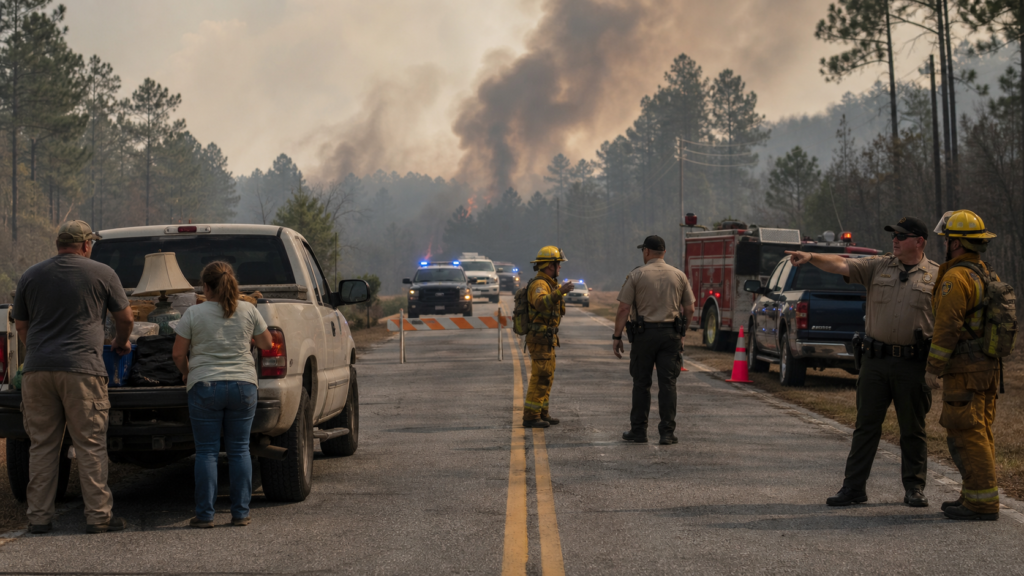
The fires are burning through a region that officials describe as extremely dry.
CBS reported that extreme drought turned parts of south Georgia into a “tinderbox,” allowing flames to spread more easily and making containment harder when winds increased.
The Georgia Forestry Commission has also continued to warn that wildfire activity remains elevated, noting multiple new wildfires across the state even apart from the two largest blazes.
This is the difference between a large fire and a regional fire environment.
A single ignition can be dangerous. But when drought, wind and dry fuel line up, small fires can grow quickly, and fire crews can find themselves managing not one incident but a wider outbreak of fire activity.
That is what appears to be happening across parts of Georgia and Florida.
What Officials Say Started the Fires?
According to AP reporting, officials believe the Highway 82 Fire started when a foil balloon hit a power line and created a spark.
The Pineland Road Fire, according to the same reporting, was started by sparks from a welding operation.
Those causes may sound ordinary. That is part of the point.
In extreme fire conditions, everyday ignition sources can become major events. A spark that might normally burn out can spread quickly when vegetation is dry, winds are active and crews are already responding to other fires.
That does not mean every accident becomes a disaster. But it does show why officials often tighten warnings and outdoor burning restrictions during drought periods.
Property Loss Is the Central Story
Gov. Brian Kemp said the Highway 82 Fire represented the most destructive wildfire in Georgia history in terms of property loss, according to AP and Reuters reporting.
That is a narrow but important measure.
Georgia has seen major wildfire activity before, especially in forested and rural regions. But when officials describe this event as historically destructive, they are focusing on the number of homes and structures lost, not just acreage.
That distinction matters for residents.
A fire that burns thousands of acres in remote forest is serious. A fire that burns into neighborhoods, destroys homes and threatens nearly 1,000 more properties changes the human impact immediately. Reuters reported that nearly 1,000 additional homes were threatened as the fires continued.
Firefighters Face a Moving Target
Firefighters have been working across multiple counties while also responding to new fire starts.
The Georgia Forestry Commission reported responding to additional wildfires statewide even as crews continued working the Pineland Road and Highway 82 fires.
That creates a resource problem.
Crews have to build and hold fire lines, protect homes, respond to flare-ups, monitor weather changes, and support evacuation areas. When new fires start, those same resources can be stretched across more ground.
This is also why containment percentages do not tell the whole story.
A fire can become more contained and still remain dangerous if heat, wind or dry conditions create opportunities for new growth. Containment is progress. It is not the same as the fire being over.
Smoke Spreads Beyond the Fire Zone
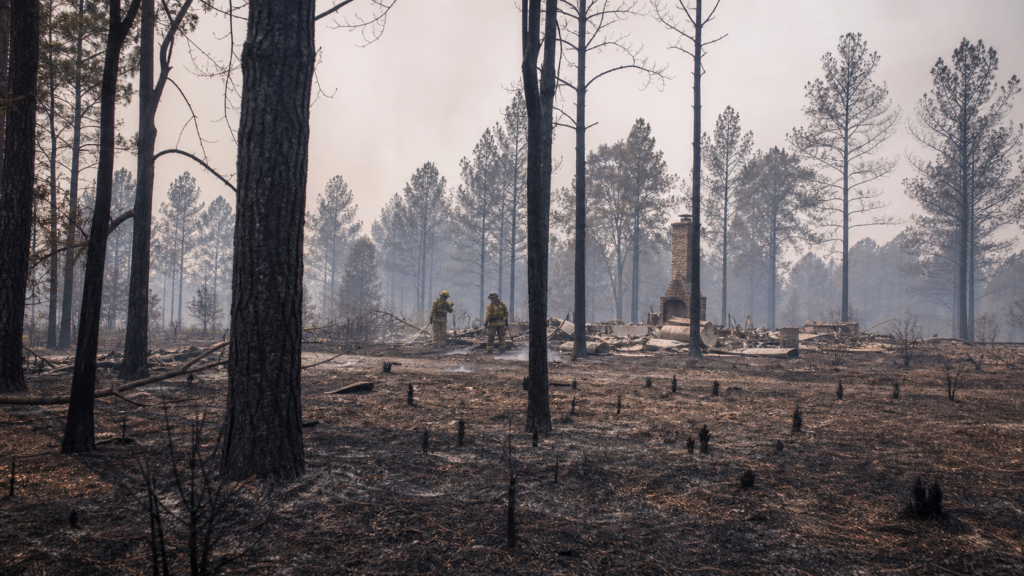
The fires have also affected communities far from the flames.
AP reported that more than 150 wildfires across Georgia and Florida sent smoky haze into areas away from the immediate fire zones, triggering air quality warnings in some places.
That kind of smoke impact can make a wildfire feel regional even for people who are not under evacuation orders.
For residents with asthma, heart disease, respiratory issues, or other health concerns, smoke can become a public health issue before flames are anywhere nearby. It can also reduce visibility and complicate outdoor work, school activities and travel.
That is why fire updates often include more than acreage and evacuation zones. Air quality is part of the event.
Weather Remains the Key Variable
Kemp said officials needed a change in weather but would continue working to contain the fires until that happened, according to CBS/AP reporting.
That is the hard part about wildfire response.
Crews can cut lines, move equipment, protect structures and coordinate evacuations. But if drought continues and winds stay active, suppression remains difficult.
Rain can slow a fire. So can higher humidity and lower winds. But officials have repeatedly warned that light rain may not be enough to end the threat if deeper drought conditions remain.
That is why the question is not simply whether the area gets rain. It is whether conditions change enough to reduce fire behavior in a meaningful way.
Why Does This Matters Across Georgia?
For much of Georgia, wildfires can feel like a south Georgia problem until smoke, road closures, emergency declarations or resource needs spread outward.
But this event shows why rural fire response matters statewide.
South Georgia includes large stretches of forest, agricultural land, small towns and scattered homes. When fires move through that kind of landscape, the damage may not look like a dense urban disaster, but the impact on families and local economies can be severe.
Homes are not the only loss. Small businesses, vehicles, equipment, livestock areas, timberland and community infrastructure can also be affected.
That makes recovery slower than the fire itself.
The Bottom Line
Two major wildfires in south Georgia have destroyed more than 120 homes and burned tens of thousands of acres, with the Highway 82 Fire in Brantley County and the Pineland Road Fire near the Florida line driving most of the damage.
Officials say drought, wind and dry conditions have made containment difficult, while local leaders have urged residents to evacuate when ordered.
The early cause reports point to ordinary ignition sources — a balloon hitting a power line in one case and welding sparks in another — becoming major threats in unusually dangerous fire conditions.
The fires are not just an acreage story. They are a property-loss story, an evacuation story, and a reminder that wildfire risk in Georgia is not limited to the western United States.
For now, crews continue working the fire lines, residents in affected areas remain under pressure, and the region is waiting for the one thing firefighters cannot command: a meaningful change in the weather.