
Aiman Tariq – Regional News Editor
Atlanta, GA –
Residents and businesses in three South Georgia counties affected by recent wildfires will get more time to meet some state and federal tax deadlines, according to announcements from the IRS and the Georgia Department of Revenue.
The relief applies to taxpayers in Clinch, Echols and Brantley counties, where the Georgia Highway 82 Wildfire and the Pineland Road Wildfire have disrupted homes, businesses and recovery efforts. The state had earlier declared a wider emergency covering 91 counties because of drought and fire risk, but the tax-deadline relief is narrower. It applies only to the three counties listed in the disaster area.
Federal Deadlines Move to August
According to the IRS, affected individuals and businesses in Clinch, Echols and Brantley counties now have until Aug. 20, 2026, to file several federal returns and make tax payments that were originally due during the covered disaster period.
The IRS said the relief applies to certain deadlines falling on or after April 18, 2026, and before Aug. 20, 2026. That includes some individual income tax returns, business returns, quarterly payroll filings and excise tax returns.
That does not mean every tax deadline is erased or every late payment is forgiven.
It means affected taxpayers have additional time for specific federal filings and payments covered by the disaster declaration. Payroll and excise tax deposit penalties for deposits due between April 18 and May 4 may also be abated if those deposits were made by May 4, according to the IRS.
State Relief Has Its Own Timeline
Georgia’s state tax relief follows a separate schedule.
According to the Georgia Department of Revenue, April sales and use tax returns and payments normally due May 20, 2026, have been extended to June 22, 2026. The same June 22 deadline applies to monthly excise tax returns covered by the relief.
Other state deadlines move later.
Taxpayers with valid extensions for 2025 individual or business returns that would have expired Oct. 15, 2026, now have until Feb. 12, 2027, to file. However, the Department of Revenue says payments tied to those 2025 returns were due April 15, 2026, and overdue payments are not eligible for this relief.
Quarterly estimated income tax payments due June 15, 2026, are now due Oct. 13, 2026. Quarterly payroll returns due June 30, 2026, are now due Oct. 28, 2026.
That difference matters for affected taxpayers. Federal relief and state relief are related, but they are not identical.
Who Qualifies for the Extensions?

The relief applies to individuals and businesses in Clinch, Echols and Brantley counties.
According to the state, relief may also apply to taxpayers whose records are located in the disaster area, relief workers affiliated with recognized government or philanthropic organizations assisting in the covered area, and individuals visiting the covered area who were injured or killed as a result of the disaster.
Affected taxpayers filing paper returns with the state are being told to write “Georgia Wildfires – Clinch, Echols, Brantley” across the top of forms submitted to the Department of Revenue.
That instruction is easy to overlook, but it may matter for processing.
In disaster relief situations, the tax agency’s systems need to connect a filing with the declared event. A taxpayer who believes they qualify but does not receive relief may need to contact the Department of Revenue or the IRS directly.
What the Relief Does Not Cover?
There are limits.
According to the Georgia Department of Revenue, the extensions do not apply to W-2 and 1099 series information returns, Forms 1042-S, employment and excise tax deposits, International Fuel Tax Agreement interest, or scheduled payments resulting from installment payment agreements entered into before the disaster.
That is the less headline-friendly part of the announcement, but it is important.
Tax relief after a disaster is not usually a blanket waiver. It is a targeted extension for certain filings and payments. People who assume everything has been postponed may still run into penalties if their specific obligation is outside the relief.
The safer reading is narrower: if the taxpayer is in the covered area and the deadline falls within the covered window, they should check the IRS and Georgia Department of Revenue guidance before assuming the extension applies.
Why the Wildfires Triggered Tax Relief?
Gov. Brian Kemp declared a state of emergency on April 22 for 91 counties, citing exceptional drought conditions and dry fuel that had increased the fire threat across South Georgia.
The tax relief announced afterward is tied specifically to the Georgia Highway 82 and Pineland Road wildfires in Clinch, Echols and Brantley counties.
Those fires have been part of a wider regional emergency. In our earlier coverage of two major South Georgia wildfires destroying homes as drought kept fire risk high, the key issue was not only the size of the fires, but the conditions around them: dry fuel, stretched local response, and families trying to figure out what recovery looks like after evacuation or property loss.
Tax deadlines may seem secondary in that context.
But for families who lost access to records, businesses facing disruption, and workers dealing with displacement, time can matter. An extension does not rebuild a home or replace lost property, but it can remove one pressure point while recovery is still unfolding.
Officials Frame the Move as Recovery Support
Kemp said the state is trying to help residents affected by the drought conditions that led to the wildfires.
According to the state release, Kemp said officials were “leaving no stone unturned” in assisting those affected as families work on rebuilding homes and livelihoods. State Revenue Commissioner David Burge said the extensions are meant to give affected individuals and businesses more time and flexibility to meet tax obligations.
Those statements are worth noting, but the practical impact will depend on how clearly residents understand the rules.
Taxpayers still need to know which deadlines changed, which did not, and whether they need to take action to make sure relief is applied correctly.
Federal and State Relief Can Be Confusing
Disaster tax relief often comes in layers.
The IRS handles federal deadlines. The Georgia Department of Revenue handles state deadlines. Local governments, insurers, lenders and relief agencies may operate on different timelines entirely.
That can create confusion for residents who are already managing fire damage, smoke damage, evacuation expenses, business interruption or lost documents.
The IRS says federal taxpayers in the disaster area will receive relief automatically if their address of record is in the covered disaster zone. But people whose records are in the area, or who moved after filing their most recent return, may need to contact the IRS if relief is not applied automatically.
The same basic caution applies at the state level.
If a taxpayer believes they qualify but does not receive relief, the Department of Revenue says they may contact DOR Headquarters at 1-877-423-6711.
What Affected Taxpayers Should Check?
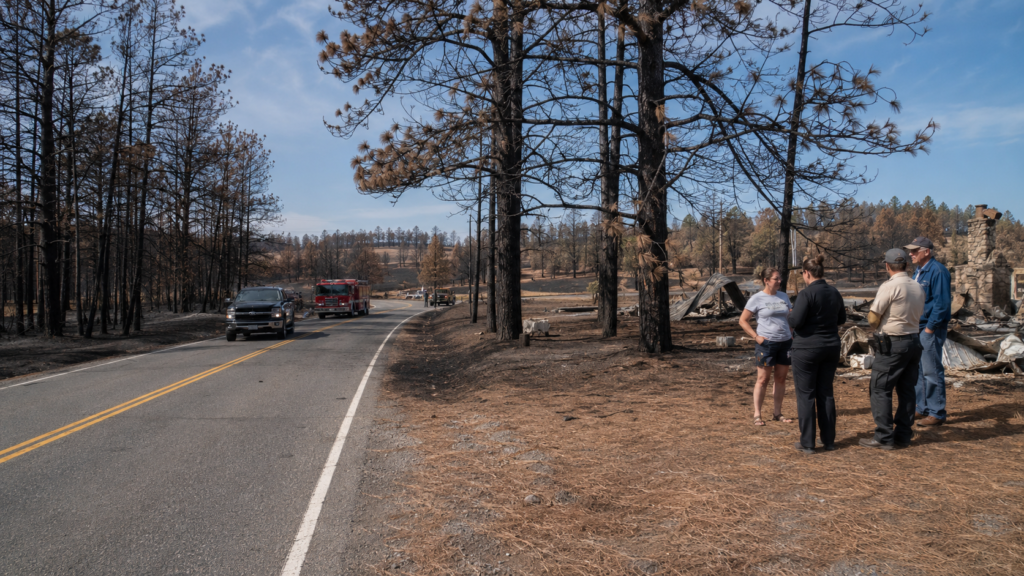
The first question is location.
The announced tax relief applies to Clinch, Echols and Brantley counties. A taxpayer in another county covered by the broader state emergency should not assume they are covered by this specific tax extension unless federal or state agencies later add more counties.
The second question is the type of deadline.
Income tax filings, estimated payments, payroll returns and sales tax deadlines may be treated differently depending on whether the taxpayer is dealing with federal or state obligations.
The third question is timing.
Some deadlines moved to Aug. 20 under IRS relief. Some Georgia state deadlines moved to June, October, February or March depending on the type of taxpayer and filing involved.
For people affected by the fires, the key is not simply knowing that “deadlines were extended.” It is knowing which deadline applies to which obligation.
The Bottom Line
Taxpayers in Clinch, Echols and Brantley counties affected by the South Georgia wildfires now have additional time to meet several state and federal tax deadlines.
The IRS has moved many covered federal deadlines to Aug. 20, 2026. Georgia has extended several state deadlines on a separate schedule, including June 22 for certain sales, use and excise tax filings.
The relief is limited. It does not apply to every taxpayer in the 91 counties covered by the broader state emergency, and it does not cover every tax obligation.
For affected residents and businesses, the announcement is still meaningful. It gives people dealing with wildfire disruption more time to get records together, speak with tax professionals, and avoid missing deadlines during a recovery period that is still ongoing.
As with most disaster relief, the headline is simple. The details are where taxpayers need to be careful.