Aiman Tariq – Regional News Editor
Atlanta, GA –
Georgia lawmakers have approved a bill that would significantly change how the state describes and regulates its medical cannabis program. But readers should be careful not to confuse that with a broader legalization move.
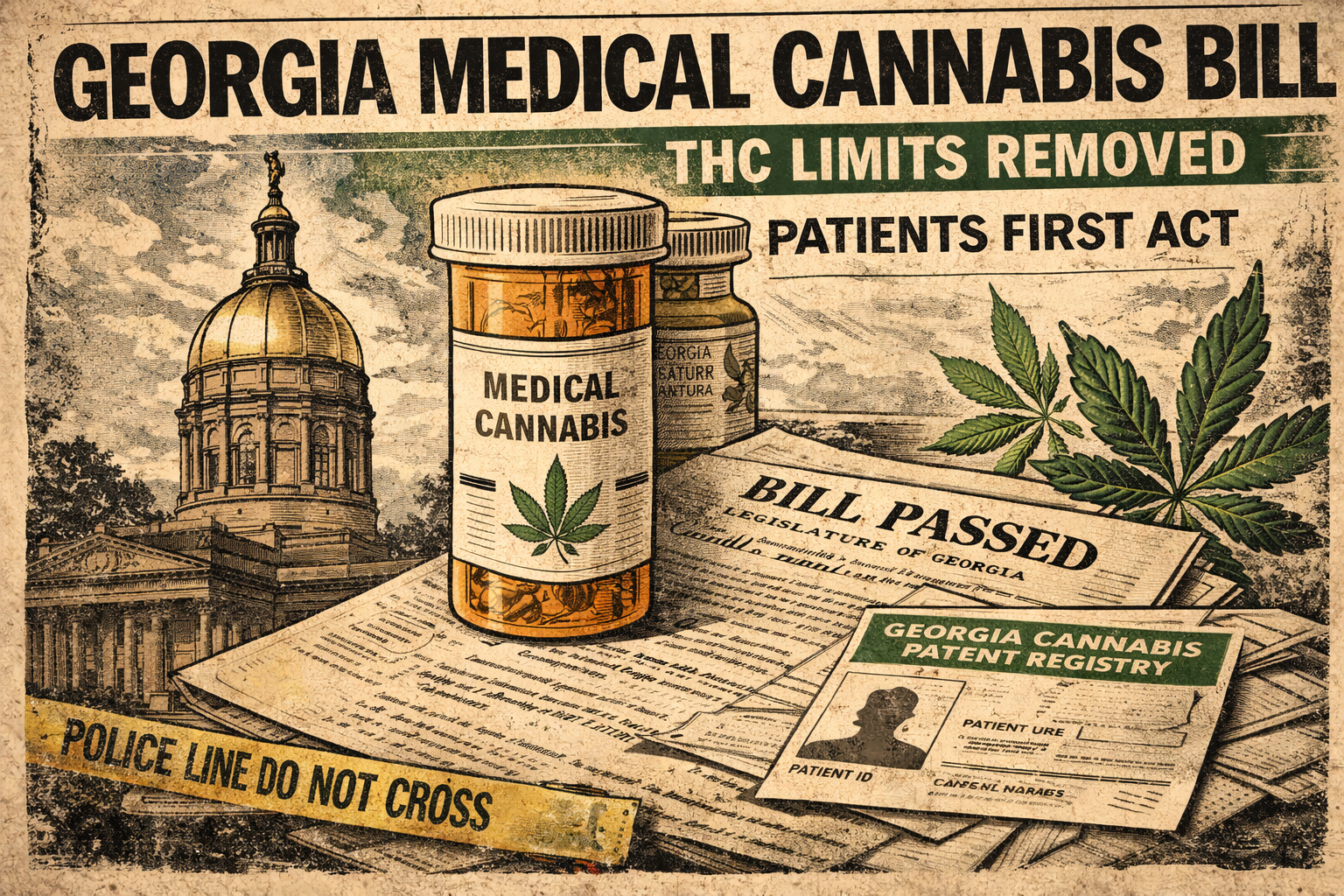
According to CBS Atlanta, the Georgia House voted 144 to 21 to approve Senate Bill 220, known as the “Putting Georgia’s Patients First Act,” sending the measure to Gov. Brian Kemp for consideration. The bill would drop the state’s old 5% THC cap, rename “low THC oil” as “medical cannabis,” and allow certain adults in the program to use vaporized products.
That is a meaningful change. It is not the same thing as Georgia embracing recreational marijuana. And it is not, at least yet, a done deal.
What Lawmakers Actually Approved?
According to CBS Atlanta, the current program centers on what state law calls “low THC oil,” a label many patients and advocates have argued is outdated and confusing. Senate Bill 220 would replace that term with “medical cannabis” and remove the 5% THC concentration cap. In its place, the bill would allow products containing a cumulative total of 12,000 milligrams or less of THC.
The bill would also allow registered patients 21 and older to vape medical cannabis, something Georgia has not previously authorized under the program. CBS reported that the bill would further expand the list of qualifying conditions by removing some “severe” and “end-stage” limitations and by adding lupus.
The legislative status documents from the Georgia General Assembly show SB 220 moving through both chambers and the Senate agreeing to the House substitute in late March, putting it on a path to the governor’s desk.
Why the Old Label Became a Problem?
The state’s own medical cannabis commission has been signaling for a while that the phrase “low THC oil” was creating confusion.
CBS Atlanta, citing a 2026 commission report, said patients told regulators that the old label sounded like a lower-quality product, a cheaper product, or even something closer to hemp than medicine. Some told the commission they wanted “the real stuff,” not something they viewed as watered down or mislabeled.
That confusion matters because Georgia’s system has always been unusually narrow. The Georgia Access to Medical Cannabis Commission itself says it oversees a regulated, limited in-state system for low-THC oil dispensing to registered patients.
So this bill is partly about potency. But it is also about language.
Why This Is Not the Same as Broad Legalization?

This is where Georgia readers need to slow down.
The proposed changes would make the medical program less restrictive. They would not legalize recreational georgia marijuana use. CBS Atlanta was explicit on that point: marijuana would remain illegal for recreational purposes even if SB 220 becomes law.
That distinction can get lost because cannabis legislation often gets compressed into easy headlines. “THC limits removed” sounds sweeping. In practice, the bill still operates inside a tightly controlled medical framework, with physician approval, qualifying conditions, and registered patients.
According to WABE’s reporting from earlier in the legislative process, House lawmakers moved away from a simple percentage-based model and toward a 12,000-milligram approach because they said it better reflected how doctors actually prescribe and how medical products are used.
That may be a cleaner system. It is still a medical-access bill, not a recreational one.
Why the THC Fight Matters More Than It Looks?
The politics around this thc bill are not really just about percentages. They are about what Georgia wants its medical cannabis program to be.
Supporters argue the current structure is too limited and too confusing to serve real patients well. Critics argue that raising allowable THC and adding vaporized products moves the state closer to a looser cannabis culture than lawmakers originally intended.
That tension showed up clearly in reporting from The Current Georgia. Supporters said faster-acting products could help patients who need relief without waiting for oil products to take effect, especially people dealing with chronic pain. Opponents warned that higher-potency products and inhalation methods look less like the old low-THC system and more like a broader cannabis expansion.
That does not make either side automatically right. It does show why this bill has drawn more attention than a routine technical rewrite.
The Hemp Shadow Over the Debate
There is another layer here that lawmakers are navigating quietly: hemp.
Georgia’s tightly limited medical program has existed alongside a booming hemp-derived THC market, and some industry coverage has argued that the state’s restrictive rules helped create space for that parallel system. MJBizDaily reported that Georgia had just over 33,000 registered medical cannabis patients as of mid-2025, up from about 25,000 in late 2024, but still described the broader medical market as relatively stagnant compared with demand.
That is part of why the old low-THC framing became so muddy. Patients who heard terms like weed oil or “low THC oil” could easily confuse Georgia’s regulated medical products with hemp-derived items sold in a much looser retail environment.
And as long as that confusion exists, any georgia hemp company operating in the gray edge of the market has room to compete for public attention in ways the state’s official medical program may not.
What This Means for Georgia Patients?

For registered patients, the bill could matter in practical ways.
It would widen product flexibility, ease some condition requirements, and drop terminology that many participants say never reflected how they understood their treatment options. According to CBS Atlanta, the measure would also add lupus to the qualifying conditions list and remove some language that limited access to only “severe” or “end-stage” cases.
That could make Georgia’s system easier to navigate. But the larger structure would remain narrow by national standards.
Even some supporters frame the bill less as a breakthrough than a correction. It is meant to make the state’s medical program function more like a medical program, and less like a heavily restricted exception written around old political compromises.
What the Law Still Does Not Do?
Even if SB 220 becomes law, Georgia will still not have an open-ended cannabis framework.
The program would remain restricted to approved patients and specific medical conditions. Recreational use would remain illegal. The state would still regulate who can dispense products and how those products move through the system. That is the larger context of georgia marijuanas law, awkward phrase and all: the state is adjusting a narrow medical structure, not abandoning it.
That is also why the current debate feels more technical than cultural on the surface, even though the stakes are political underneath. The bill is about labels, dosage models, product forms, and patient eligibility. But it also reflects a broader argument over whether Georgia’s medical system has been too constrained to work as intended.
What Happens Next?
As of the latest coverage and legislative tracking, SB 220 had cleared both chambers and was awaiting the governor’s decision. CBS Atlanta reported the bill “could now become law if it is signed by Gov. Brian Kemp,” and recent outside coverage continued to describe it as awaiting his signature.
That means the biggest question is no longer what lawmakers approved. It is whether the governor is willing to sign a bill that expands patient access while also giving critics a fresh opening to argue the state is drifting beyond its original low-THC model.
The Bottom Line
Georgia lawmakers have approved a substantial rewrite of the state’s medical cannabis program, but the change is narrower than some headlines may suggest.
According to CBS Atlanta and legislative records, SB 220 would remove the old 5% THC cap, rename low-THC products as medical cannabis, allow vaporized use for some adult patients, and broaden parts of the eligibility framework.
That is a real shift in how the program would operate.
It is not recreational legalization. It is not a free-market cannabis bill. And it does not erase the fact that Georgia has spent years trying to balance patient access against political caution.
What lawmakers approved looks less like a revolution than a recognition that the old system was increasingly hard to explain, harder to defend, and, for some patients, too limited to work the way it was supposed to.