Aiman Tariq – Regional News Editor
Atlanta, GA –
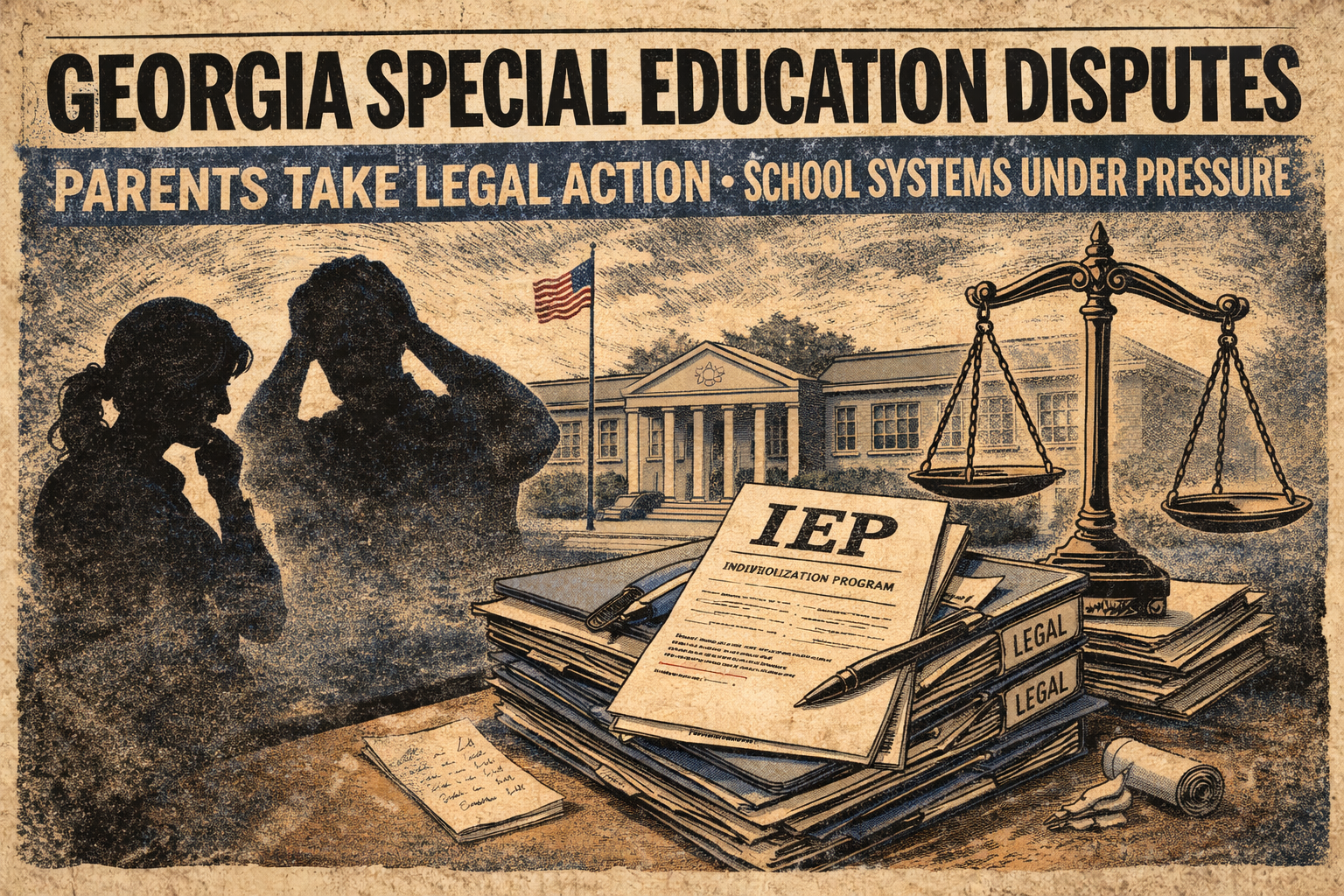
Parents have always fought with school systems over special education services. What appears to be changing in Georgia is the volume — and the level at which those fights are now playing out.
According to state data cited by Atlanta News First, due process hearing requests in Georgia special education cases have risen sharply over the past five years, with the first two months of 2026 alone already nearing double the total number of requests filed in all of 2021. That does not prove every complaint is valid, and it does not mean every district is failing. But it does suggest that more families are deciding ordinary school-level disagreements are no longer enough.
That matters because due process hearings are not routine parent-teacher disputes. Under federal special education law, they are among the most formal and adversarial tools available when families believe a school system has failed to identify, evaluate, place, or appropriately serve a child with a disability.
What the New Numbers Actually Show?
According to the Georgia Department of Education data cited in local reporting, due process hearing requests have increased 141 percent over the past five years. The same reporting says 111 hearing requests were filed in just the first two months of 2026, compared with 73 total in all of 2021.
Those are striking numbers on their face. They do not, by themselves, tell us whether districts are violating the law more often, whether parents are simply becoming more willing to challenge schools, or whether both things are happening at once.
That is the first caution worth keeping in mind with any action surge story: a rise in formal disputes can reflect worsening services, but it can also reflect greater awareness of legal rights, better access to advocates, or a breakdown in earlier attempts to resolve problems informally.
Why Due Process Matters?
Under the Individuals with Disabilities Education Act, due process hearings are used to resolve disputes involving the identification, evaluation, educational placement, or provision of a free appropriate public education for a child with a disability. Georgia’s own dispute-resolution materials describe due process hearings as one of the state’s formal mechanisms for resolving those disagreements, alongside mediation and formal complaints.
The hearings are heard by an administrative law judge through the state process, not by a local school board. Georgia’s Office of State Administrative Hearings, which handles administrative cases across the state, publishes hearing information and decisions through its system.
That is part of why the numbers matter. When more families move into due process, it usually means lower-level conflict resolution has already broken down.
Why Parents Say They Are Escalating Disputes?
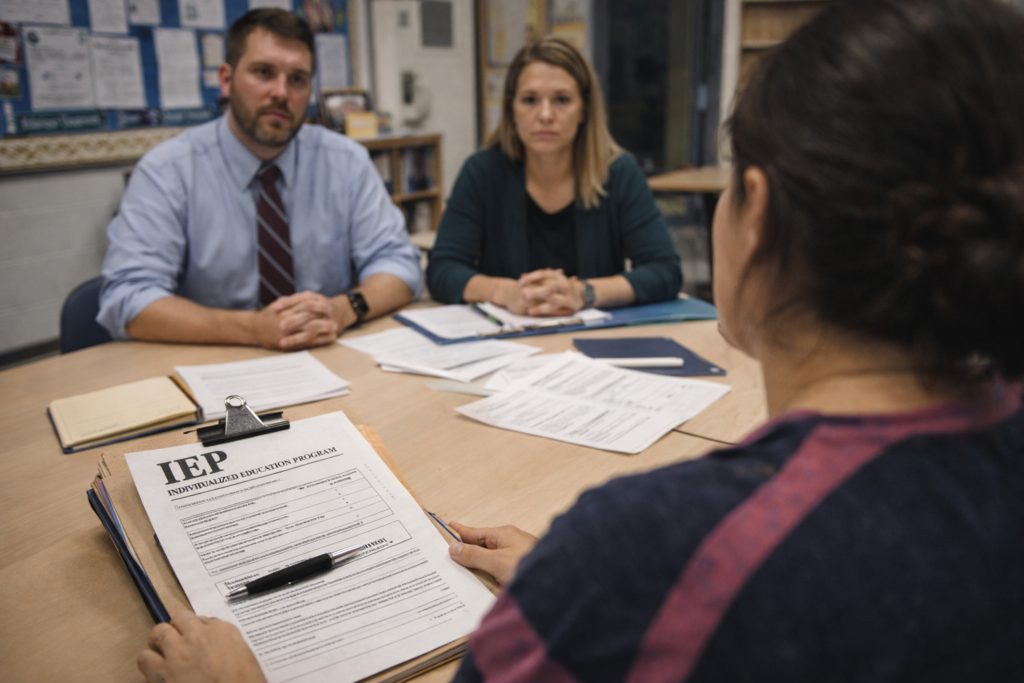
The Atlanta News First reporting centers on parents who say they spent months — and in some cases years — trying to secure services they believed their children were entitled to under federal law.
One parent, Heather Kinsinger, described a long conflict with the Fayette County School District over reading instruction for her daughter, who has dyslexia and other learning disabilities. According to that reporting, Kinsinger says the district did not provide the tailored reading support her daughter needed, and the dispute later escalated to the point that the district filed a police report alleging fraud over a medical evaluation. Police later dismissed the case after confirming the underlying expert recommendation.
That is one family’s account, and school officials declined to comment in the reporting. But the case helps explain why some parents do not describe these disputes as paperwork problems. They describe them as long fights over services, time, money, and trust.
For families navigating special education, delays are not neutral. A child who misses targeted reading instruction or classroom support does not simply pause in place while adults argue. The educational gap often widens.
The Complaint Numbers Suggest the Problem Is Broader
Due process hearings are only part of the picture.
Earlier Atlanta News First reporting said formal complaints against school districts more than doubled in recent years, rising from 156 in 2021 to 318 in 2024. In fiscal year 2025, the state found districts out of compliance 190 times, according to the same report.
The most common findings involved failure to provide a free appropriate public education, failure to implement individualized education programs, and failure to properly develop, review, and revise those IEPs.
That does not mean every district is in crisis. But it does suggest that the disputes are not isolated to one county or one kind of disability.
The 2025 state presentation cited in reporting also noted that more complaints were being filed by current school staff and that more complaints were emerging in districts that historically had few such disputes. That is the kind of detail that makes this look less like a narrow procedural spike and more like a broader pressure point across georgia districts.
Staffing, Capacity, and the “Perfect Storm” Problem
One explanation offered in the reporting came from Dr. Brandi Tanner, a school psychologist and former teacher, who said the rise reflects “a perfect storm” of more students needing support and fewer people available to provide it because of staffing shortages.
That does not excuse noncompliance if it exists. But it does add context.
Special education disputes often sit at the intersection of law, staffing, budgeting, and expectations. A district can be overwhelmed and still be legally responsible. A parent can be frustrated and still have to prove the district failed in a way the law recognizes. Those realities can coexist.
What the State’s Dispute Process Can — and Cannot — Tell You?
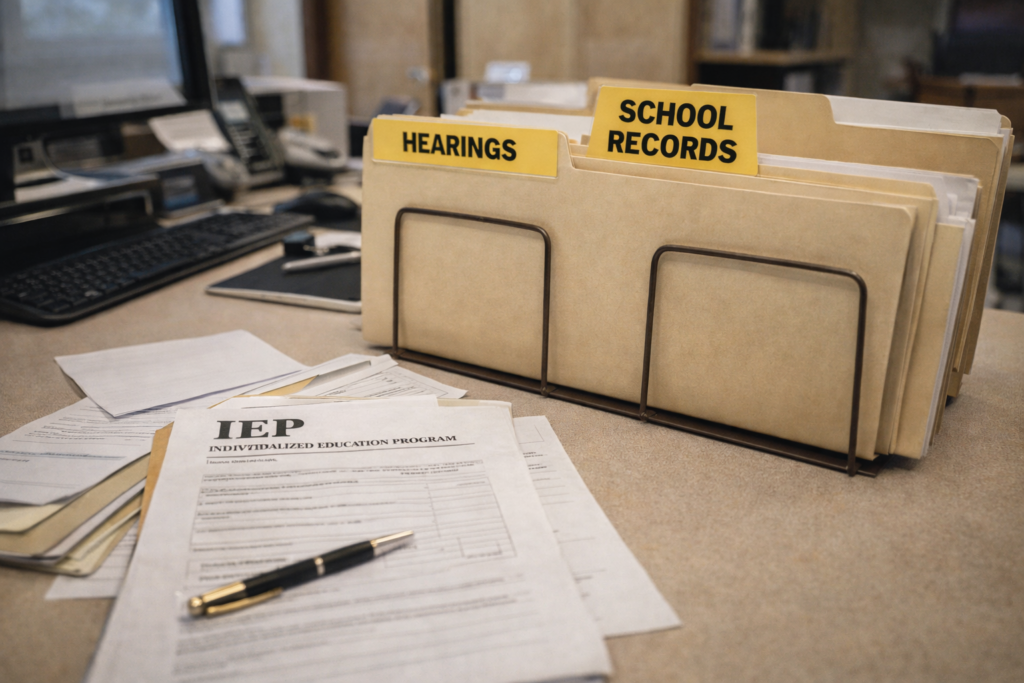
The state’s dispute-resolution system is useful because it provides a structured way to challenge school decisions. Georgia’s dispute-resolution page lays out mediation, formal complaints, and due process hearings as separate tracks, each with different levels of formality and different consequences.
Still, these numbers have limits.
A rise in hearing requests does not automatically tell you how many parents won, how many cases settled, or how many disputes could have been resolved earlier with better communication or more available services. In other words, the Georgia office of dispute resolution process can show where conflict is surfacing, but not always why it began in the first place.
The same caution applies to any reference to the Georgia department of education data in public debate. The numbers are useful. They are not self-explanatory, they show escalation. They do not, by themselves, assign blame in each case.
Why This Matters Beyond Education Law?
There is a temptation to see special education disputes as niche legal fights affecting only a small number of families. The available data suggests that is too narrow a view.
When complaints rise, staffing is strained, and parents increasingly turn to lawyers and judges, the issue stops being a private disagreement between one family and one school. It becomes a sign of institutional stress.
That is especially true when complaints appear in districts that have not historically generated many of them. It suggests the strain may not be limited to the largest systems or the most visible metro counties.
And while legal filings draw the most attention, the underlying disputes are often about something more basic: reading support, accommodations, service minutes, evaluations, classroom placement, or whether an IEP is actually being followed.
The Bottom Line
Georgia is seeing a real increase in formal special education disputes, and the rise in due process hearing requests appears too large to dismiss as random noise.
That does not mean every complaint is justified, and it does not mean every school district is failing its students. But it does suggest more families believe the ordinary channels are not resolving serious disagreements over services their children need.
The broad picture is straightforward enough: more parents are escalating, more complaints are being filed, and more school systems are facing scrutiny under federal special education law.
The harder question is what sits underneath those numbers — whether it is staffing, compliance, parent awareness, or some mix of all three.
That is the part Georgia’s schools, families, and state officials will have to answer more clearly as the cases continue to mount.