Aiman Tariq – Regional News Editor
Atlanta, GA –
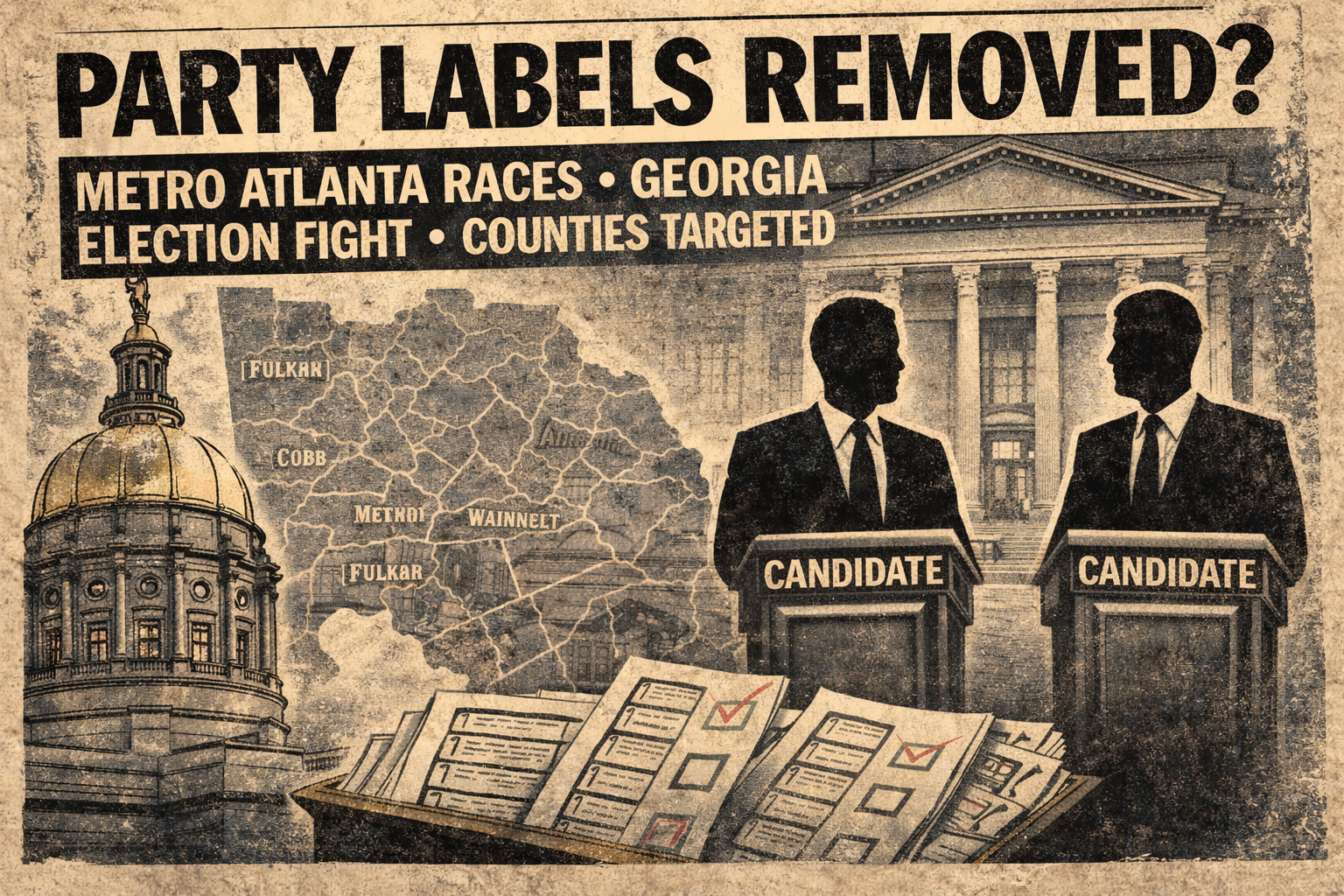
Georgia Republicans have advanced a bill that would remove party labels from a wide swath of local races in the five biggest metro Atlanta counties, a move that supporters describe as a public-safety measure and critics describe as an attempt to reshape elections where Democrats have been winning.
The Georgia House gave the measure final passage in late March, sending it to Gov. Brian Kemp’s desk. That headline is straightforward enough. The harder question is what, exactly, the bill is trying to fix.
According to the Associated Press, the proposal would require nonpartisan elections beginning in 2028 for district attorneys, solicitors general, county commissioners, court clerks, and tax commissioners in Fulton, Clayton, Cobb, DeKalb, and Gwinnett. Sheriffs in those same counties would still run with party labels.
That distinction matters. If the argument is that party labels distort local governance, leaving sheriffs untouched makes the bill look less like a general principle and more like a selective rewrite of the ballot.
What Will the Bill Change?
According to legislative tracking and news coverage, the measure targets the five most populous metro Atlanta counties: Fulton, DeKalb, Gwinnett, Cobb, and Clayton. Those are not just any counties in Georgia. They are among the most politically consequential jurisdictions in the state, and several have moved sharply toward Democrats over the past decade.
The bill would shift a range of county-level offices to nonpartisan ballots. Voters would still choose the same offices, but without the “D” or “R” next to the candidates’ names. According to AP, the change would take effect in 2028.
For readers trying to keep track of which GA counties would be affected, the answer is narrow by design: the bill does not apply statewide. That was one of the concerns raised even by at least one Republican lawmaker, who argued that if the idea is sound policy, it should apply across Georgia rather than only in a handful of metro jurisdictions.
Why Critics See a Political Target?
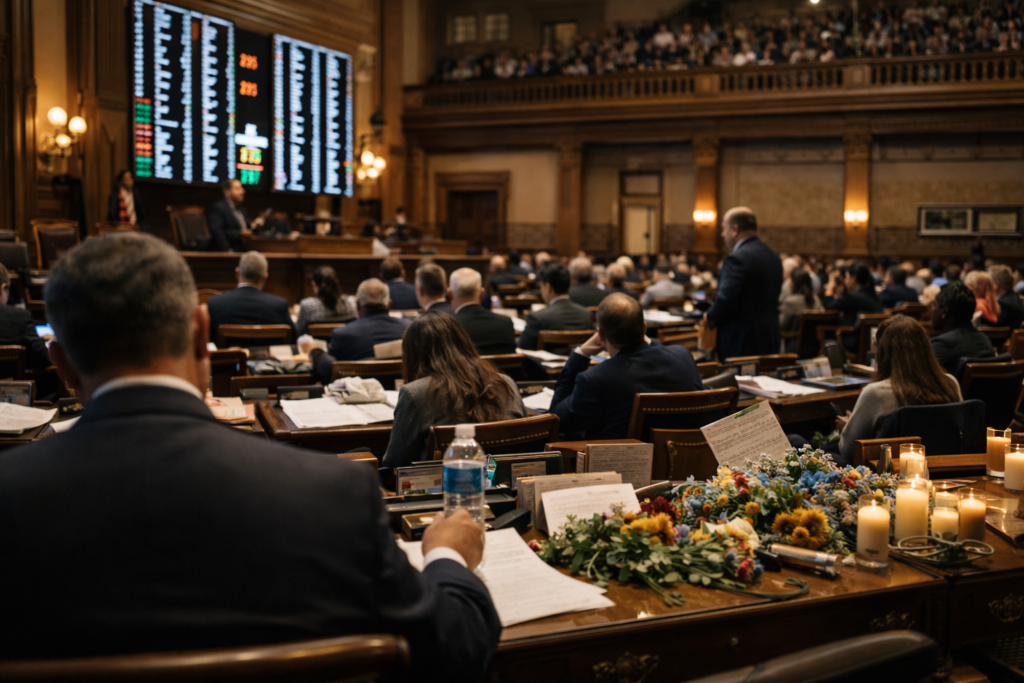
Republican supporters have framed the measure as a way to reduce partisanship in local government and promote public safety. State Sen. John Albers said during debate that people backing the bill were choosing safety over politics.
But critics have pointed to the map.
The five counties covered by the bill include the core of Democratic metro Atlanta. Fulton, DeKalb, and Clayton are among the most important Democratic strongholds in the state, while Cobb and Gwinnett — once central to the suburban Republican coalition — have trended Democratic in recent election cycles.
That is why Democrats have argued the bill is less about neutral election design and more about changing the rules in places where Republicans have been losing. According to AP, Democratic lawmakers said the proposal would let Republican candidates run without visible party labels in jurisdictions where those labels have become a liability.
That does not automatically make the bill unlawful or unworkable. But it does make the motive harder to separate from the map.
The Fulton County Question Hanging Over the Debate
Even when lawmakers deny that the measure is aimed at one person, the debate has repeatedly circled back to Fulton County District Attorney Fani Willis.
Willis has been a frequent target of Georgia Republicans because of her prosecution of Donald Trump and others over efforts to overturn Georgia’s 2020 election results. AP reported that the bill would affect officials like Willis, and some Republican lawmakers came close to saying the quiet part out loud by arguing that voters should have a chance to remove prosecutors they see as overly political.
That does not mean the bill is only about Willis. But it is difficult to ignore that the legislation arrives after repeated Republican efforts to curb, discipline, or politically isolate prosecutors in metro Atlanta.
In that sense, this is not just a technical debate over ballot design. It is also part of a broader fight over who controls the political direction of atlanta elections and the offices around them.
What Nonpartisan Elections Do — and Don’t Do?
Nonpartisan ballots are not inherently suspicious. Many local offices around the country are already elected that way. In theory, removing party labels can push voters to focus more on candidates’ records and less on straight-ticket reflexes.
But theory depends on context.
In a low-information local race, removing labels does not remove partisanship. It often just shifts the burden onto name recognition, fundraising networks, insider endorsements, and outside messaging. Candidates still have ideologies. Parties still know who their preferred candidates are. Voters just get less information directly on the ballot.
That is why the same reform can look very different depending on where and how it is used. Applied broadly, it can be defended as a structural choice. Applied only in a cluster of politically inconvenient metro counties, it invites a different reading.
Why the County-Only Approach Draws So Much Attention?
One of the cleanest critiques of the bill is also the simplest: if nonpartisan local elections are good policy, why stop at five counties?
That question came up in the debate because the bill does not cover rural Republican areas, smaller counties, or the state as a whole. It focuses on the metro counties where Democrats have become hardest to beat.
That selective design is likely to keep this fight alive even if the bill becomes law. Georgia has a long history of local legislation that treats different counties differently. But when those differences line up so neatly with partisan geography, skepticism is not hard to understand.
This is especially true in a state where elections in Georgia already carry an unusual level of national attention, legal scrutiny, and political messaging.
What Comes Next?
As of early April, Gov. Brian Kemp had not publicly committed to signing or vetoing the measure, and according to 11Alive he said he had not really looked at the bill when asked about it in early April. Coverage after the final passage described the measure as heading to his desk.
If it is signed, the shift would not take effect until 2028. That means the immediate impact would be political and strategic rather than electoral. Candidates, county parties, civic groups, and organizations such as the young democrats of georgia would have time to adjust to a system in which party identification may matter just as much as before, but in less direct ways.
That may end up being the larger point. A nonpartisan ballot does not erase partisanship. It changes where it shows up.
The Bottom Line
Georgia Republicans have passed a bill that would strip party labels from many local races in five major metro counties, including Fulton, DeKalb, Gwinnett, Cobb, and Clayton. Supporters say the change would reduce political gamesmanship and improve public safety. Critics say it targets Democratic-leaning counties where Republican candidates have been losing.
Both of those arguments are now part of the story.
What is harder to avoid is the selective shape of the bill. It does not create a uniform statewide system. It does not remove labels from every local office. And it does not touch sheriffs in the very counties it says need less partisanship.
That does not settle the debate. But it does explain why opponents see this less as a cleanup measure than as a strategic rewrite of the ballot in places where partisan math has changed.
Whether Gov. Kemp signs it or not, the fight says something larger about Georgia politics: when one side stops winning under the current rules, the next battle is often over the rules themselves.